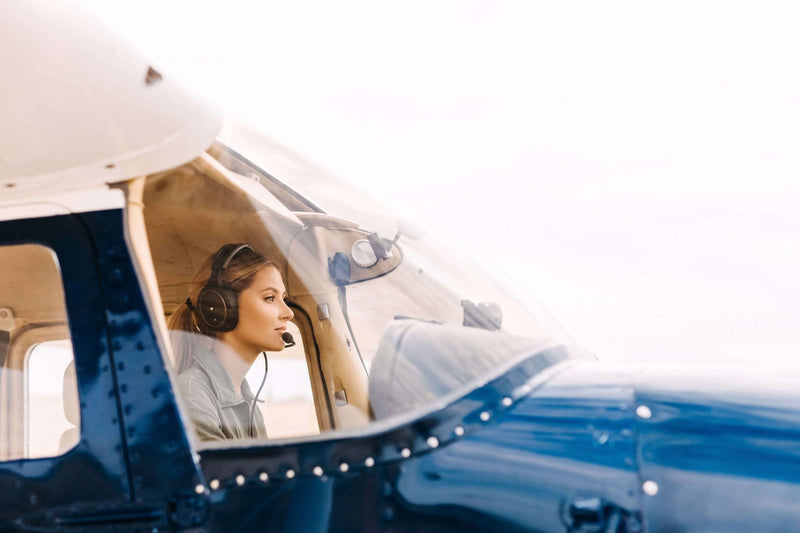
SAFETY FIRST
★★★★★
Very safety and detail oriented. Pre-flight briefing explained everything there was. To my knowledge, this flight school is exceptional in their ability.

The private pilot ACS is FAA-S-ACS-6C, the Private Pilot for Airplane Category Airman Certification Standards, effective 31 May 2024. It replaced the old private pilot practical test standards in 2016 and is now the full rulebook for the PPL checkride: 12 areas of operation, 61 tasks across all classes and 45 for a single-engine land airplane. Here is each one, with the number you fly to.
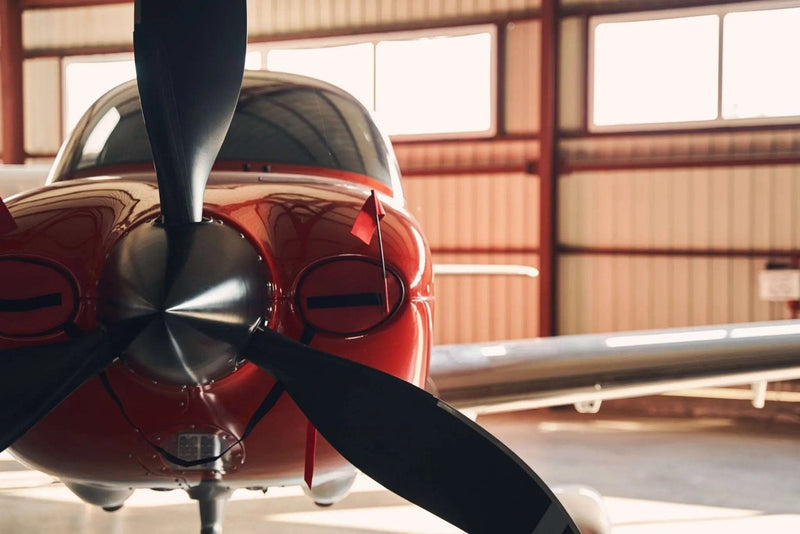
Part of the LA Flight School training fleet on the ramp at the end of a day of lessons.
The private pilot ACS is the FAA standard every private pilot checkride in an airplane is conducted against. The current edition is FAA-S-ACS-6C, dated November 2023 and effective 31 May 2024, and the FAA’s Airman Certification Standards page still lists it as current at the end of October 2026. It superseded FAA-S-ACS-6B with Change 1.
If you have been searching for the private pilot practical test standards, this is what they became. The last private pilot PTS, FAA-S-8081-14B, dated November 2011, was replaced by the first private pilot ACS in June 2016. The flying standards carried over almost unchanged. What changed is that each task now lists three kinds of element — knowledge, risk management and skill — and each element has a code that ties it to the knowledge test.
The ACS is not a study guide and it is not optional reading. Under 14 CFR 61.43(a) you pass by performing the tasks in the areas of operation of the applicable ACS within its standards, and failing any area fails the test. For what happens on the day itself, from paperwork to debrief, see our private pilot checkride guide; the wider picture is in the FAA checkride guide. This page stays inside the document.
Every area and task in FAA-S-ACS-6C, with the task letters your knowledge test report and the examiner use. The last column counts the tasks that apply to a single-engine land airplane such as a Piper Warrior or Diamond DA20.
| Area Of Operation | Tasks In FAA-S-ACS-6C | ASEL Tasks |
|---|---|---|
| I. Preflight Preparation | A. Pilot Qualifications · B. Airworthiness Requirements · C. Weather Information · D. Cross-Country Flight Planning · E. National Airspace System · F. Performance and Limitations · G. Operation of Systems · H. Human Factors · I. Water and Seaplane Characteristics (seaplane only) | 8 |
| II. Preflight Procedures | A. Preflight Assessment · B. Flight Deck Management · C. Engine Starting · D. Taxiing (ASEL, AMEL) · E. Taxiing and Sailing (ASES, AMES) · F. Before Takeoff Check | 5 |
| III. Airport and Seaplane Base Operations | A. Communications, Light Signals, and Runway Lighting Systems · B. Traffic Patterns | 2 |
| IV. Takeoffs, Landings, and Go-Arounds | A. Normal Takeoff and Climb · B. Normal Approach and Landing · C. Soft-Field Takeoff and Climb · D. Soft-Field Approach and Landing · E. Short-Field Takeoff and Maximum Performance Climb · F. Short-Field Approach and Landing · G–L. Confined Area, Glassy Water and Rough Water Takeoffs and Landings (seaplane only) · M. Forward Slip to a Landing · N. Go-Around/Rejected Landing | 8 |
| V. Performance Maneuvers and Ground Reference Maneuvers | A. Steep Turns · B. Ground Reference Maneuvers (rectangular course, S-turns or turns around a point) | 2 |
| VI. Navigation | A. Pilotage and Dead Reckoning · B. Navigation Systems and Radar Services · C. Diversion · D. Lost Procedures | 4 |
| VII. Slow Flight and Stalls | A. Maneuvering During Slow Flight · B. Power-Off Stalls · C. Power-On Stalls · D. Spin Awareness | 4 |
| VIII. Basic Instrument Maneuvers | A. Straight-and-Level Flight · B. Constant Airspeed Climbs · C. Constant Airspeed Descents · D. Turns to Headings · E. Recovery from Unusual Flight Attitudes · F. Radio Communications, Navigation Systems/Facilities, and Radar Services | 6 |
| IX. Emergency Operations | A. Emergency Descent · B. Emergency Approach and Landing (Simulated) · C. Systems and Equipment Malfunctions · D. Emergency Equipment and Survival Gear · E–G. Engine Failure and Inoperative-Engine Tasks (multiengine only) | 4 |
| X. Multiengine Operations | A. Maneuvering with One Engine Inoperative · B. VMC Demonstration · C. One Engine Inoperative by Reference to Instruments · D. Instrument Approach and Landing with an Inoperative Engine (all multiengine only) | 0 |
| XI. Night Operations | A. Night Operations | 1 |
| XII. Postflight Procedures | A. After Landing, Parking, and Securing (ASEL, AMEL) · B. Seaplane Post-Landing Procedures (ASES, AMES) | 1 |
Source: FAA-S-ACS-6C table of contents, November 2023, effective 31 May 2024. The regulation, 14 CFR 61.107(b)(1), lists twelve areas for a single-engine airplane, and so does the ACS — but they are not the same twelve. The ACS combines performance maneuvers and ground reference maneuvers in Area V and adds Area X for multiengine applicants, so a single-engine land checkride uses eleven of the twelve ACS areas while still covering all twelve regulatory ones.
These are the private pilot checkride standards for the maneuvers that decide most results, quoted from the skill elements of FAA-S-ACS-6C.
| Task | Standard In The ACS | Element Code |
|---|---|---|
| Steep turns | 45° bank ±5°, entry altitude ±100 ft, airspeed ±10 kt, roll out on entry heading ±10° | PA.V.A.S3, S5 |
| Ground reference maneuvers | Entered at 600 to 1,000 ft AGL; altitude ±100 ft, airspeed ±10 kt | PA.V.B.S3, S7 |
| Normal landing and forward slip to a landing | Touch down within 400 ft beyond or on a specified point, with no side drift | PA.IV.B.S10, PA.IV.M.S8 |
| Soft-field landing | No distance tolerance: touch down at minimum sink rate, nose wheel held off until elevator effectiveness is lost | PA.IV.D.S9, S10 |
| Short-field landing | Touch down within 200 ft beyond or on a specified point | PA.IV.F.S10 |
| Slow flight | Altitude ±100 ft, heading ±10°, airspeed +10/−0 kt, bank ±10°, completed no lower than 1,500 ft AGL | PA.VII.A.S2, S5 |
| Basic instrument maneuvers | Altitude ±200 ft, heading ±20°, airspeed ±10 kt | PA.VIII.A.S2 |
| Pilotage and dead reckoning | Position within 3 NM of the planned route, checkpoints within 5 minutes, altitude ±200 ft, heading ±15° | PA.VI.A.S5–S7 |
Two notes in Appendix 3 change how those numbers are read. In slow flight, a momentary stall warning caused by turbulence is not a fail if you recognize it and correct promptly. And in stalls, the ACS tells the examiner not to set a fixed altitude loss for the recovery. The recovery is judged on the order of the inputs: reduce angle of attack first. Spin awareness, Task D of Area VII, is a knowledge and risk task only; no spin is flown on a private pilot checkride.
The rules below are from Appendix 1 of FAA-S-ACS-6C. They describe how the PPL practical exam is built, and they are identical in spirit across every pilot ACS.
The test is a scenario, not a list. The examiner must write a plan of action covering every required area and task, built around scenarios wherever possible. For most applicants that is the cross-country you were asked to plan in advance; the oral examines it and the flight starts it.
Sampling has a floor. For each task the examiner must test at least one knowledge element, at least one risk management element, all skill elements unless a note says otherwise, and every element you missed on the knowledge test. The examiner may combine tasks, so one question about a diversion can cover weather, airspace and fuel at once.
The ground portion is a gate. You must pass it before the flight begins, and oral questions continue in the airplane. Area XI, Night Operations, has no skill elements at all — it is knowledge and risk only — so it is normally covered on the ground even on a daytime checkride.
Repeating is not practicing. If a task is incomplete or the result unclear, the examiner may ask you to repeat it. The ACS is explicit that this does not permit instruction or practice of an unsatisfactory task during the test.

The private pilot knowledge test is code PAR: 60 questions, minimum age 15, and 70 percent to pass. The ACS prints an allotted time of 2.5 hours, but the FAA has published a correction table showing 2.0 hours, which matches the Airman Knowledge Testing Matrix. Your Airman Knowledge Test Report does not show the questions you missed. It shows ACS codes such as PA.I.C.K2 — Private Airplane, Area I, Task C, knowledge element 2 — and each one becomes something your instructor must retrain and endorse under 14 CFR 61.39(a)(6) and the examiner must test. The report is valid for 24 calendar months under 61.39(a)(1). Practice with our private pilot written exam practice test before booking the real one.
Appendix 1 lists the typical grounds for disapproval: examiner intervention, poor scanning to clear the area, consistently exceeding tolerances, slow correction and failure to manage risk. The risk elements show where those come from.
Area I Task E names various classes and types of airspace as its risk element. From Van Nuys that means the Class D, the Class B shelf above it and the airports around it. Expect a question that starts with a sectional and ends with what you would say to the tower.
Area I Task C asks you to manage the go/no-go and continue/divert decisions, including personal weather minimums and hazardous conditions. A forecast that is legal but marginal is the most common scenario, and the right answer always has a reason attached.
Area VII Task B lists factors that lead to an inadvertent stall, the limits of stall warning devices, secondary stalls and the effect of high density altitude. Most stall failures are a late or reversed recovery, not the entry.
Area VI Task C asks you to recognize when a diversion is prudent, choose an airport and use automation, ATC and planning aids. Applicants who can fly the heading but cannot estimate time and fuel to the new airport lose the task.
Area IX Task B lists altitude, wind, terrain, gliding distance and low-altitude stall or spin among its risks. The examiner is watching what you pick and when, then whether you keep flying the airplane while you pick it.
Area III lists communication, non-standard phraseology, collision hazards and wake turbulence. At a busy towered field, a readback that is late or vague is noticed long before the landing is.
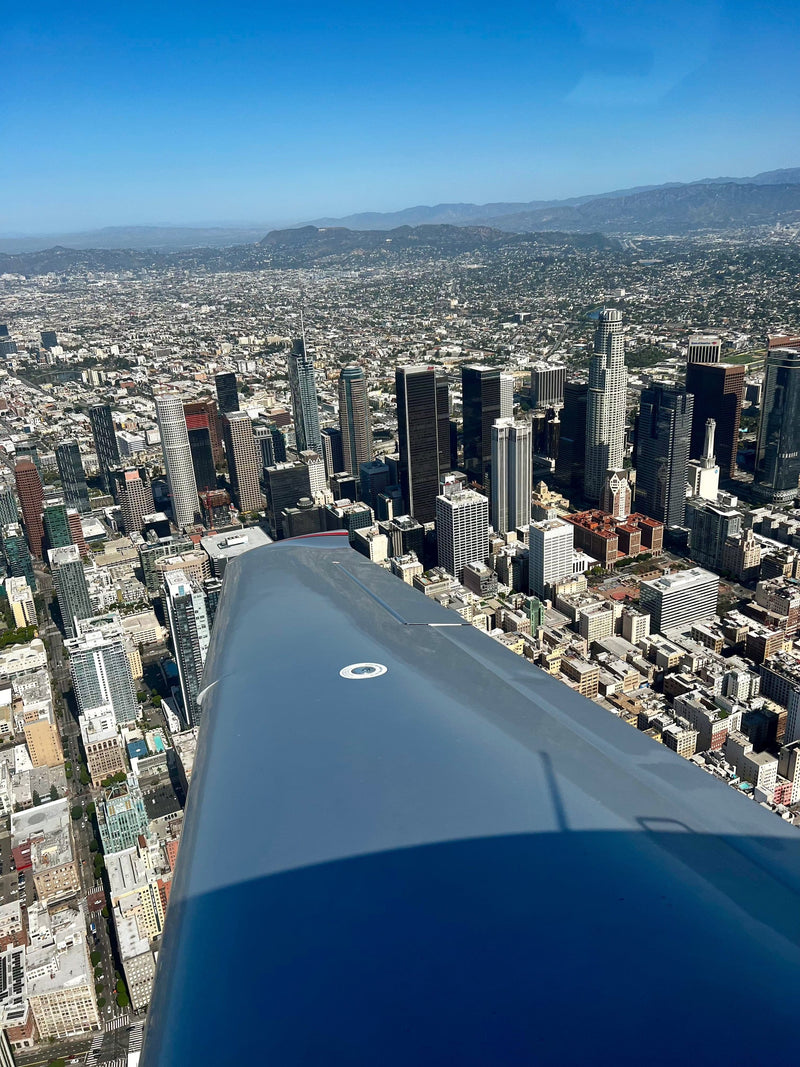
Van Nuys is a towered Class D airport under the Los Angeles Class B shelf, with two parallel runways. A private pilot trained here meets several ACS tasks on every flight.
Area III, every lesson. Each departure and arrival needs two-way radio communication with the tower under 14 CFR 91.129. By checkride day that is dozens of repetitions of Task A, and the light-gun signals in the same task are drilled before solo. Our Class D airspace page explains the entry rule in detail.
Area IV, two runways. The FAA lists Runway 16R/34L at 8,001 feet and 16L/34R at 4,013 feet. The shorter runway makes short-field and accuracy work feel real. Our guide to runway markings and airport signs covers the hold-short lines that Area II taxi tasks examine.
Areas V and VII, the practice area. Steep turns, ground reference maneuvers, slow flight and stalls are flown away from the airport, in practice areas such as the one in our Malibu practice area guide. Summer heat at Van Nuys, field elevation 802 feet, makes the density altitude questions in Area I Task F concrete.
Area II, the walk-around. Task A is the preflight assessment, and our preflight inspection checklist shows the inspection the examiner will watch.


Private pilot training here is flown in the Cessna 162 Skycatcher, the Piper Warrior and the Diamond DA20, and in the Cirrus SR22T on the Premium program. Whichever airplane you test in, Area I Tasks F and G examine its own performance charts and systems, so the airplane you train in is the one to test in.
The SR22T carries a whole-airframe parachute, and the ACS addresses that directly: Appendix 3 requires you to follow the manufacturer’s arming and disarming procedure and allows the examiner to test how and when you would use it by briefing, never deployment.
The Redbird MCX full-motion simulator covers the tasks that are hard to rehearse safely in the air: Area VIII basic instrument maneuvers and unusual attitudes, and the Area IX systems and equipment malfunctions. It does not replace any flight test task. Appendix 3 states that an aviation training device cannot be used for the practical test.
Six steps that turn the document into a training plan. Each one rests on a rule in 14 CFR 61.39, 61.109 or the ACS.
Get the current edition from faa.gov. Highlight every skill element with a tolerance, and every task that applies to your airplane. Ignore the seaplane and multiengine tasks.
Sixty questions, 2.0 hours, 70 to pass. Taking it around the time of your first solo cross-country leaves time to retrain each missed code before the checkride.
Ask your instructor to grade lessons against the ACS numbers. A steep turn at 120 feet low is not nearly right; it is outside tolerance, and the examiner will treat it that way.
For each task, practice saying what could go wrong and what you would do. The examiner must test at least one risk element per task, and most are tested by scenario.
Build the trip with real weather, performance from your airplane’s handbook, the Class B on the route and a diversion airport chosen in advance. Then defend it.
14 CFR 61.109(a)(4) requires 3 hours of test preparation within 2 calendar months, and 61.39(a)(6) an endorsement in the same window. Fly them as a mock checkride.
Programs here start at $10,600 for 40 hours, with the Comprehensive Private Pilot program at $14,900 for 60 hours and the Premium program in the SR22T at $21,300. The full eligibility list is on private pilot license requirements, the solo cross-country rules are on private pilot cross-country requirements, and the questions that come up on the ground are in the private pilot oral exam guide.
The private pilot document is the base layer. Every later ACS repeats its structure and tightens its numbers.
The instrument rating ACS turns Area VIII into a whole test, with tolerances of ±100 feet and ±10 degrees. A combined private and instrument checkride is allowed, but failing any task fails both.
The commercial pilot ACS keeps most of these tasks, raises steep turns to 50 degrees, halves the landing tolerance and adds chandelles, lazy eights, steep spirals and eights on pylons.
Every private pilot ACS begins with a lesson. A discovery flight at Van Nuys is 60 minutes with an instructor, you fly the airplane, and the $229 is credited if you enroll. Already training elsewhere? Book a free consultation and we will read your logbook against the ACS. Call (818) 290-8249.
7900 Balboa Blvd. Suite 108A, Van Nuys, CA 91406 · (818) 290-8249 · Open 9am–9pm, seven days · 5.0 from 120+ Google reviews
FAA-S-ACS-6C, Private Pilot for Airplane Category Airman Certification Standards. It is dated November 2023, took effect on 31 May 2024 and superseded FAA-S-ACS-6B with Change 1. The FAA's Airman Certification Standards page, last updated in September 2026, still shows 6C as the current edition at the end of October 2026. The examiner must use the edition in effect on your test date, so download the document from faa.gov shortly before your checkride rather than trusting an old printout.
No. The Private Pilot Practical Test Standards for Airplane, FAA-S-8081-14B, dated November 2011, were replaced by the first private pilot ACS in June 2016. Since then every private pilot airplane checkride has been flown to an ACS, now FAA-S-ACS-6C. Many study materials still say PTS out of habit, and the maneuvers are largely the same, but the ACS adds risk management elements to every task and codes every element so it links to your knowledge test report.
Sixty-one tasks across twelve areas of operation, counting every class of airplane. Many apply only to seaplanes or multiengine airplanes. For an airplane single-engine land checkride, 45 tasks apply: eight in preflight preparation, five in preflight procedures, two in airport operations, eight takeoff and landing tasks, two maneuver tasks, four navigation tasks, four in slow flight and stalls, six basic instrument tasks, four emergency tasks, one night task and one postflight task. Area X, Multiengine Operations, does not apply at all.
Three things in every task: knowledge, risk management and skill. For each task the examiner must test at least one knowledge element, at least one risk management element and all skill elements unless a note says otherwise, plus any elements you missed on the knowledge test. Skill is graded against published tolerances, such as plus or minus 100 feet in steep turns. Appendix 1 lists the usual grounds for failure, including examiner intervention, poor scanning, consistently exceeding tolerances and failure to manage risk.
Usually not. Area XI, Night Operations, contains knowledge and risk management elements only; its skill section is intentionally left blank in FAA-S-ACS-6C. The examiner tests it by questions on night vision, lighting systems, required equipment, visual illusions, night taxi and currency versus proficiency, which can be done on the ground or in the air in daylight. You must still have logged the night training required by 14 CFR 61.109(a)(2) before the test.
No. Area VII, Task D, Spin Awareness, is assessed on knowledge and risk only: the causes of an unintentional spin, the conditions that lead to one and the recovery procedure. No spin is flown on a private pilot checkride. Stalls are flown, both power-off and power-on, and the ACS directs examiners not to require a fixed altitude loss during recovery. What they watch is a prompt reduction in angle of attack and a coordinated return to level flight.
It identifies a specific element you answered incorrectly. A code such as PA.I.C.K2 reads as Private Airplane ACS, Area of Operation I, Task C, knowledge element 2. The report lists codes rather than questions. Before the checkride your instructor must give you training in each listed area and endorse that you have demonstrated satisfactory knowledge, as 14 CFR 61.39(a)(6) requires, and the examiner must test each coded element again during the practical test.
At LA Flight School at Van Nuys Airport, 7900 Balboa Blvd. Suite 108A. Private pilot programs are $10,600 for 40 hours, $14,900 for 60 hours and $21,300 for the Premium program in the Cirrus SR22T, trained under 14 CFR Part 61 from a towered Class D field. Book a discovery flight for $229, credited if you enroll, or a free consultation. Call (818) 290-8249, open 9am to 9pm, seven days.
Every standard on this page is taken from the FAA document itself or from Title 14 of the Code of Federal Regulations. These links open the primary source.
Areas, tasks, tolerances and appendix rules are quoted from FAA-S-ACS-6C as downloaded from faa.gov on 31 October 2026; the FAA ACS page lists it as current, effective 31 May 2024. The PAR allotted time of 2.0 hours is from the FAA’s correction table (October 2024). Runway lengths are from FAA airport data as published by AirNav, October 2026. Prices current at 31 October 2026.
The three private pilot packages, what each one includes, the financing options and a realistic timeline built around how often you can actually fly. Sent to you in one email. Nobody will pressure you.
Loved On Google
Every review below is real and shown verbatim, in the reviewer’s own words — written by the people who learned to fly here, not by us.
SAFETY FIRST
Very safety and detail oriented. Pre-flight briefing explained everything there was. To my knowledge, this flight school is exceptional in their ability.
 DISCOVERY FLIGHT
I recently had the chance to take my first-ever discovery flight, and it was nothing short of amazing! From the moment I stepped into the cockpit, the...
 SUNSET CIRRUS
It was a great flight! I did a sunset flight and Alex let us fly an awesome. Website was easy to book, and the plane itself was really fun to fly...
 FLYING LESSON
We had a great flying lesson with Ralph and came away with a much better understanding of both the aircraft and the principles of flight. Ralph is a...
 KIDS LUXURY FLIGHT
I got 2 luxury discovery flights for my kids. I wanted them to have the experience of flying. Our instructor Alex was amazing he made sure they feel...
 HONEYMOON SURPRISE
Last minute booking to surprise my wife on our honeymoon. She had no experience with flying and was scared of flying, but Alex was very easygoing and knew...
 FULL-MOTION SIM
Amazing flight school in van nuys airport. I have been a student here for the past few months and i could not be happier. I started doing a lot of...
 DISCOVERY FOR TWO
I booked a Discovery Flight for Two for my girlfriend's birthday and it was the perfect gift for her. She couldn't have been more excited to get to...
 SIMULATORS
Very professional and great airplanes. I love the flight simulators. The pricing is very fair compared to any other flight school
 TEEN FIRST LESSON
We gifted our teenage son his first flying lesson. He was so excited! Alex greeted us and gave a reassuring brief that made us all feel comfortable and at...
 FIRST-TIME FLYER
Flying is my husband's hobby and I was incredibly anxious and apprehensive about the discovery flight. However, I felt completely safe and at ease once we...
SAFETY FIRST
Very safety and detail oriented. Pre-flight briefing explained everything there was. To my knowledge, this flight school is exceptional in their ability.
DISCOVERY FLIGHT
I recently had the chance to take my first-ever discovery flight, and it was nothing short of amazing! From the moment I stepped into the cockpit, the...
SUNSET CIRRUS
It was a great flight! I did a sunset flight and Alex let us fly an awesome. Website was easy to book, and the plane itself was really fun to fly...
FLYING LESSON
We had a great flying lesson with Ralph and came away with a much better understanding of both the aircraft and the principles of flight. Ralph is a...
KIDS LUXURY FLIGHT
I got 2 luxury discovery flights for my kids. I wanted them to have the experience of flying. Our instructor Alex was amazing he made sure they feel...
HONEYMOON SURPRISE
Last minute booking to surprise my wife on our honeymoon. She had no experience with flying and was scared of flying, but Alex was very easygoing and knew...
FULL-MOTION SIM
Amazing flight school in van nuys airport. I have been a student here for the past few months and i could not be happier. I started doing a lot of...
DISCOVERY FOR TWO
I booked a Discovery Flight for Two for my girlfriend's birthday and it was the perfect gift for her. She couldn't have been more excited to get to...
SIMULATORS
Very professional and great airplanes. I love the flight simulators. The pricing is very fair compared to any other flight school
TEEN FIRST LESSON
We gifted our teenage son his first flying lesson. He was so excited! Alex greeted us and gave a reassuring brief that made us all feel comfortable and at...
FIRST-TIME FLYER
Flying is my husband's hobby and I was incredibly anxious and apprehensive about the discovery flight. However, I felt completely safe and at ease once we...
Reviews shown verbatim, exactly as each reviewer published them.
Aviation News
Notes from the flight line at Van Nuys — weather, regulation changes, checkride questions and the cost of training, written up as they come.
Open 7 days · 9:00 AM – 9:00 PM
Los Angeles Flight School