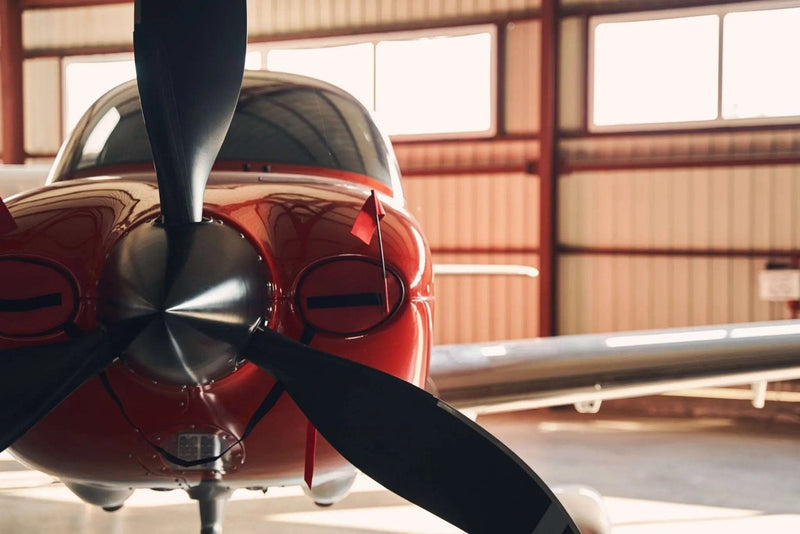
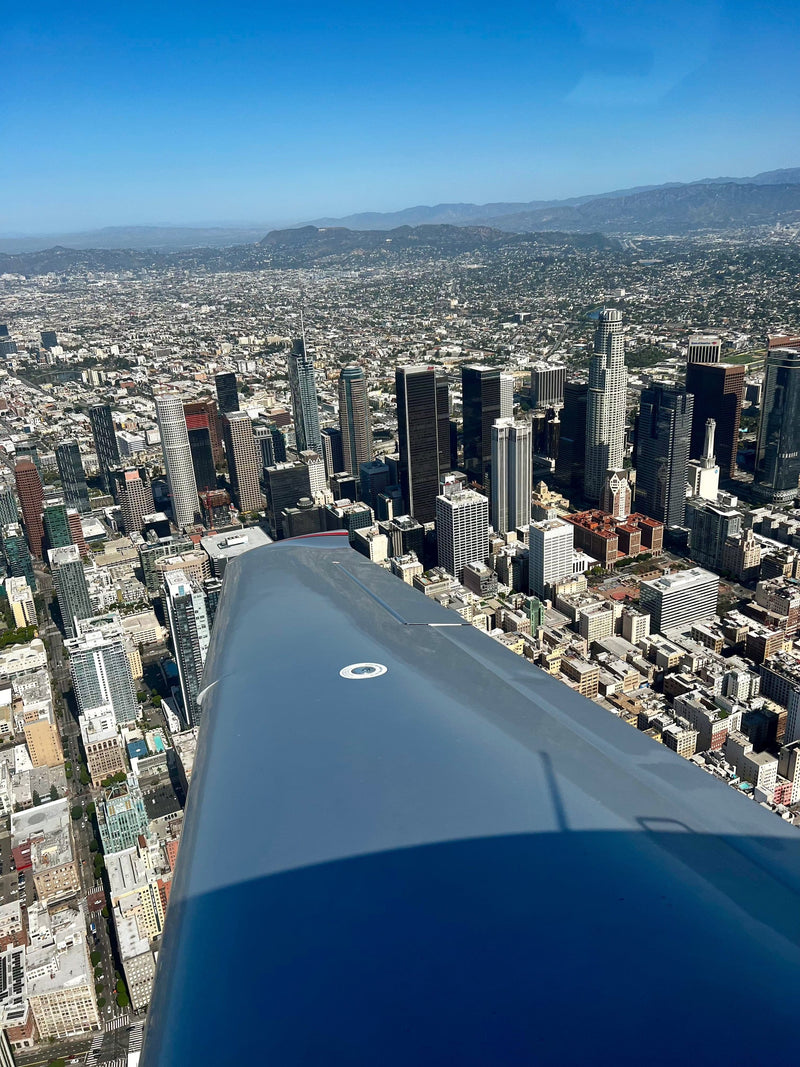
SAFETY FIRST
★★★★★
Very safety and detail oriented. Pre-flight briefing explained everything there was. To my knowledge, this flight school is exceptional in their ability.

The instrument ACS is FAA-S-ACS-8C, the Instrument Rating – Airplane Airman Certification Standards, in effect since 31 May 2024. It has 8 areas of operation and 22 tasks, 20 of them for a single-engine applicant, and it is the whole of the instrument checkride. Below is every task, the tolerances you fly to, and how each one is trained from Van Nuys.
The Redbird MCX flight deck at LA Flight School, where most instrument procedures are rehearsed before they are flown.
The instrument ACS is the FAA document that defines the instrument rating practical test for airplanes. The current edition is FAA-S-ACS-8C, dated November 2023 and effective 31 May 2024, and the FAA’s Airman Certification Standards page still lists it as current at the end of October 2026. It replaced FAA-S-ACS-8B. Every instrument rating airplane checkride since that date has been conducted against it, whether the evaluator is a designated pilot examiner or an FAA inspector.
Its eight areas of operation are the same eight that 14 CFR 61.65(c) requires you to be trained in: preflight preparation, preflight procedures, ATC clearances and procedures, flight by reference to instruments, navigation systems, instrument approach procedures, emergency operations and postflight procedures. The regulation names the subjects. The ACS turns each one into tasks, and each task into three lists: what you must know, what risks you must be able to identify and manage, and what you must be able to fly, with a number attached.
The instrument ACS also does a second job most applicants never notice. Its appendix sets the minimum tasks for an instrument proficiency check under 14 CFR 61.57(d), so the standard you are tested to for the rating is the same one you will be held to every time you need an IPC afterward. If you want the bigger picture of how every FAA practical test works, start with our FAA checkride guide; this page stays inside the instrument document.
Taken directly from the table of contents of FAA-S-ACS-8C. The task letters below are the letters the examiner and your knowledge test report use.
| Area Of Operation | Tasks In FAA-S-ACS-8C | What It Means On The Day |
|---|---|---|
| I. Preflight Preparation | A. Pilot Qualifications B. Weather Information C. Cross-Country Flight Planning | Currency versus proficiency, personal minimums, the go/no-go call, an IFR cross-country you planned and must defend |
| II. Preflight Procedures | A. Aircraft Systems Related to IFR Operations B. Aircraft Flight Instruments and Navigation Equipment C. Instrument Flight Deck Check | Icing equipment and its limits, the pitot-static and gyro systems, avionics and database currency, the IFR cockpit check |
| III. ATC Clearances and Procedures | A. Compliance with Air Traffic Control Clearances B. Holding Procedures | Copying and reading back a clearance, flying it, and a hold with the correct entry and timing |
| IV. Flight by Reference to Instruments | A. Instrument Flight B. Recovery from Unusual Flight Attitudes | Attitude instrument flying to the full tolerance set, then recovering from attitudes the examiner puts you in |
| V. Navigation Systems | A. Intercepting and Tracking Navigational Systems and DME Arcs B. Departure, En Route, and Arrival Operations | Course intercepts, GPS and VOR tracking, DME arcs only if charted, departure procedures and arrivals |
| VI. Instrument Approach Procedures | A. Non-precision Approach B. Precision Approach C. Missed Approach D. Circling Approach E. Landing from an Instrument Approach | Two different non-precision approaches, one precision approach to DA, a missed, a circle and a landing |
| VII. Emergency Operations | A. Loss of Communications B. One Engine Inoperative during Straight-and-Level Flight and Turns (AMEL, AMES) C. Instrument Approach and Landing with an Inoperative Engine (AMEL, AMES) D. Approach with Loss of Primary Flight Instrument Indicators | Lost-communication procedures, and an approach on backup instruments. Tasks B and C are for multiengine applicants only |
| VIII. Postflight Procedures | A. Checking Instruments and Equipment | Recording and reporting any equipment that failed or misbehaved |
Source: FAA-S-ACS-8C, Instrument Rating – Airplane Airman Certification Standards, November 2023, effective 31 May 2024. A single-engine applicant sees 20 of the 22 tasks. Always download the current edition from faa.gov before your test, because the evaluator must use the ACS in effect on the day you fly.
Most instrument tasks share one set of skill tolerances. Learn the set once and you know the standard for nearly the whole flight.
| Phase Of Flight | Standard In The ACS | Element Code |
|---|---|---|
| Straight-and-level and turns, full panel | Altitude ±100 ft, heading ±10°, airspeed ±10 kt, bank ±5° | IR.IV.A.S1 |
| Flying a clearance or a hold | Airspeed ±10 kt, heading ±10°, altitude ±100 ft, course within ¾-scale CDI | IR.III.A.S5, IR.III.B.S4 |
| Intercepting and tracking a course | Airspeed ±10 kt, altitude ±100 ft, headings ±5°, no more than ¾-scale deflection; DME arc ±1 NM | IR.V.A.S5, IR.V.A.S6 |
| Non-precision final approach segment | ¾-scale CDI or less, airspeed ±10 kt, MDA +100/−0 ft to the VDP or missed approach point | IR.VI.A.S12 |
| Precision approach, FAF to DA | No more than ¾-scale deflection of vertical or lateral guidance, airspeed ±10 kt | IR.VI.B.S12 |
| Circling approach | Airspeed ±10 kt, heading or track ±10°, altitude +100/−0 ft until descending to land | IR.VI.D.S5 |
The ¾-scale rule is the one that ends checkrides. The ACS defines it precisely: a needle is at three-quarter scale when it has traveled three-quarters of the distance it can move from centered. On a GPS approach in a glass cockpit that can happen in seconds once the final approach course is active, which is why the scan matters more than the hand-flying. Note the asymmetry too: at minimum descent altitude the standard is +100 feet and minus nothing. Going below MDA before you have the required visual references is not a tolerance problem; it is a fail.
If those tolerances sound like more than you can hold, it helps to remember what you are actually reading. Our guide to flight instruments explained walks through the attitude indicator, the heading indicator and the pitot-static instruments the whole scan is built on.
The checkride is one test in two parts, and the ACS sets the rules for both. These come from Appendix 1 of FAA-S-ACS-8C.
The examiner writes a plan of action first. It must include every required area and task and should use scenarios that cover as many of them as possible. In practice that means you are handed a trip: a departure, a route, a destination with weather, and an alternate question. The oral and the flight both hang off it.
The ground portion comes first and you must pass it before you fly. The ACS says so in as many words. The oral does not end at the airplane, though. Questioning continues through the whole test, so expect to be asked why you chose an entry while you are flying it.
Not every element is tested, but some always are. From each task the evaluator must test at least one knowledge element, at least one risk management element, every skill element unless a note says otherwise, and every element your knowledge test report shows you missed. That last item is the one people forget.
There are three outcomes. A temporary certificate; a Notice of Disapproval listing the areas not met; or a Letter of Discontinuance when weather, illness or the airplane stop the test. Under 14 CFR 61.43(f) you keep credit for the areas you passed if you finish within 60 days.

Every element in the ACS has a code. IR.I.B.K4 means Instrument Rating, Area I, Task B, knowledge element 4. When you sit the IRA knowledge test — 60 questions, a 2.0-hour allotted time, minimum age 15 and 70 percent to pass — the report you get back lists codes, not questions, for everything you answered wrong. Your instructor must retrain those areas and endorse that you have done it, which 14 CFR 61.39(a)(6) requires, and the examiner must test them again. Two practical points follow. First, the ACS itself prints 2.5 hours for the IRA test, but the FAA has published a correction: the allotted time is 2.0 hours, as shown in its ACS Knowledge Test Table and the Airman Knowledge Testing Matrix. Second, the test is valid for 24 calendar months under 61.39(a)(1). Our FAA written exam guide covers booking and the test center itself.
The ACS lists the typical grounds for an unsatisfactory result in Appendix 1: corrective intervention by the examiner, poor visual scanning, consistently exceeding tolerances, slow correction and failure to manage risk. The risk elements show where those failures come from.
Area III Task B lists risk elements for holding entry and wind correction, and for recalculating fuel when ATC gives you an unanticipated expect-further-clearance time. A hold flown on the wrong side, or with no fuel arithmetic behind it, fails on judgment as well as skill.
Management of automated navigation and autoflight systems appears as a risk element in Areas II, V and VI. If the GPS sequences to the wrong leg and you cannot say why, the examiner will see it. At least one approach must also be flown without the autopilot.
Area VII Task D requires an approach with loss of primary flight instrument indicators, and Area VI Task A requires one non-precision approach on backup or partial-panel instruments. Scan breakdown here is the classic route to busting the ¾-scale limit.
Area I Task B asks you to manage the go/no-go and continue/divert decisions, including icing and turbulence aloft and your own personal minimums. Expect a forecast designed to sit exactly at your limits, and a question about what you would do next.
Area IV lists spatial disorientation, optical illusions and situations that degrade the cross-check as risk elements, and Task B makes you recover from an unusual attitude the examiner set up. Recovery is graded on the order of your inputs, not only on the result.
Area III Task A names four risks, starting with less than full understanding of a clearance and ending with clearances meant for an aircraft with a similar call sign. Reading back what you did not understand is the failure; asking ATC to say again is the skill.
Van Nuys is a towered Class D field under the Los Angeles Class B shelf, with procedures that cover almost every approach type the ACS asks for. That makes the home airport part of the syllabus.
Area III, clearances. Every IFR departure from Van Nuys begins with a clearance that has to be copied, read back and flown underneath the Class B. Students meet the Class D and the shelf in their first private pilot lesson; the instrument rating adds the clearance and the handoff to Southern California Approach. Our page on Van Nuys airspace shows how the layers stack.
Area VI, approaches. The FAA’s terminal procedures for Van Nuys list two ILS procedures to Runway 16R, an LDA approach and two VOR approaches. The ILS gives you the precision task. The VOR and LDA procedures carry letter designations, which means they have circling minimums only — exactly what Area VI Task D needs — and the Van Nuys VOR/DME sits on the field for holding practice.
Area I, weather. The marine layer that covers the basin on many late-spring and early-summer mornings turns into real instrument conditions for instrument students, and into a weather decision for everyone. The flyable days study shows by the hour when it usually burns off.


The Redbird MCX full-motion simulator is where Areas III, V, VI and VII are drilled. A hold entry can be flown, frozen, discussed and flown again in minutes. An attitude indicator can be failed halfway down an approach, which no instructor should do in the airplane in cloud.
Two rules set the limits. Under 14 CFR 61.65(i) and (j), up to 20 of the 40 instrument hours may come from an FAA-approved aviation training device, with an authorized instructor, and no more than 20 from all devices combined outside a Part 142 program. And Appendix 3 of the ACS states that an aviation training device cannot be used for the practical test itself. The checkride is flown in an airplane. The simulator is where you make sure it is not the first time you have seen the procedure.
Six steps, in the order they pay off. Each is built from a requirement in 14 CFR 61.65 or the ACS.
Print it or keep it on your tablet. Highlight each skill element with a number in it. Those numbers are the test, and you should know them before you fly the first approach.
Sixty questions, 2.0 hours, 70 to pass. Take it before the 250-nautical-mile cross-country so your missed codes can be retrained in the airplane, not crammed the week of the ride.
50 hours of cross-country PIC, 40 hours of actual or simulated instrument time with 15 from a CFII, and the 250 NM IFR cross-country with an approach at each airport and three different kinds of approach.
Two different non-precision approaches, one with a course reversal and one partial panel, plus a precision approach, a missed, a circle and a hold. Fly each until it is boring.
Plan a real IFR trip from Van Nuys with an alternate, then defend every choice to your instructor: weather products, fuel, equipment, personal minimums and what changes your mind.
The 3 hours of instrument training in an airplane under 61.65(d)(2)(i) and the endorsement under 61.39(a)(6) must both fall inside that window. Use them for a full mock ride.
The order matters because the knowledge test feeds the practical. Every code on your report becomes an item the examiner must test, so the earlier you sit it, the more time you have to turn weak areas into strong ones. Our instrument rating program in Los Angeles is $11,700 complete and is built around this sequence; the line-by-line breakdown is on the instrument rating cost page. If you are still deciding whether the rating is for you, what IFR means and VFR vs IFR are the place to start.
The instrument rating sits between two other tests, and the documents overlap more than most applicants expect.
Area VIII of the private pilot ACS already tests basic instrument maneuvers and unusual attitudes. A combined private and instrument test is allowed under 61.65(a) and (g), but failing any task fails both.
The commercial pilot ACS has no instrument area of its own. Without an instrument rating, 14 CFR 61.133(b) limits a commercial pilot from carrying passengers for hire beyond 50 NM or at night.
An instructor will look at your logbook against 14 CFR 61.65 and the ACS and tell you exactly what stands between you and the instrument checkride. Book a free consultation, or start with a discovery flight if you are not yet a pilot. Questions: call (818) 290-8249.
7900 Balboa Blvd. Suite 108A, Van Nuys, CA 91406 · (818) 290-8249 · Open 9am–9pm, seven days · 5.0 from 120+ Google reviews
FAA-S-ACS-8C, Instrument Rating - Airplane Airman Certification Standards. The document is dated November 2023 and took effect on 31 May 2024, replacing FAA-S-ACS-8B. The FAA's Airman Certification Standards page, last updated in September 2026, still lists 8C as the current edition at the end of October 2026. Because the examiner must use the ACS in effect on the day of your test, download a fresh copy from faa.gov in the week before your checkride rather than relying on a printout from the start of training.
Twenty-two tasks across eight areas of operation. Area I has three, Area II three, Area III two, Area IV two, Area V two, Area VI five, Area VII four and Area VIII one. Two of the Area VII tasks, flying with one engine inoperative and an instrument approach with an inoperative engine, apply only to multiengine applicants, so a single-engine checkride covers 20 tasks. The examiner must include every applicable task in the plan of action, although not every knowledge or risk element inside each task is tested.
At least four approach tasks are required in practice. Appendix 3 of the ACS says the examiner must select at least two different non-precision approaches: one with a course reversal, one flown from an initial approach fix without the autopilot or radar vectors, and one on backup or partial-panel instruments. You must also fly a precision approach to decision altitude, a missed approach, a circling approach and a landing from an approach. Several of those requirements are often combined into one procedure, which is why examiners build the flight as a scenario.
Not in an aviation training device such as a Redbird. Appendix 3 of FAA-S-ACS-8C states that an ATD cannot be used to accomplish a practical test. A full flight simulator or flight training device qualified under 14 CFR part 60 can be used for all or part of a test only within an FAA-approved training program. For a Part 61 applicant the checkride is flown in an airplane. The simulator still counts for training: 14 CFR 61.65 allows up to 20 hours of the 40 instrument hours in approved devices.
It is the limit for how far the course or glidepath needle may move from center during the final approach. The ACS defines it as the needle being displaced three-quarters of the distance it can travel from the on-course indication, and it applies to both lateral and vertical guidance. Briefly touching three-quarter scale and correcting promptly is different from sitting there, but consistently exceeding the limit, or failing to correct, is listed in the ACS as grounds for an unsatisfactory result.
Yes. Appendix 1 of FAA-S-ACS-8C sets the minimum tasks for an instrument proficiency check under 14 CFR 61.57(d): holding, recovery from unusual attitudes, intercepting and tracking navigation systems, every task in the instrument approach area, the loss-of-primary-instruments approach, the one-engine-inoperative tasks if you fly a twin, and postflight procedures. The standards are the same ones used on the checkride, so the tolerances on this page stay relevant for as long as you fly under IFR.
It depends on which airplane you test in. The ACS says that if you hold both class ratings and take the instrument checkride in a single-engine airplane, your certificate will carry the limitation Multiengine Limited to VFR Only. If you take the test in a multiengine airplane, instrument privileges are conferred for the single-engine rating automatically. The limitation can later be removed by flying the two one-engine-inoperative tasks from Area VII in a multiengine airplane with a published VMC.
At LA Flight School at Van Nuys Airport, 7900 Balboa Blvd. Suite 108A. The instrument rating program is $11,700 complete, including aircraft, instructor, ground instruction and Redbird MCX simulator time, and it is trained under 14 CFR Part 61 from a Class D field with ILS, VOR and LDA procedures on the home airport. Book a free consultation and an instructor will review your logbook against the ACS, or call (818) 290-8249, open 9am to 9pm, seven days.
Every standard on this page is taken from the FAA document itself or from Title 14 of the Code of Federal Regulations. These links open the primary source.
Areas, tasks, tolerances and appendix rules are quoted from FAA-S-ACS-8C as downloaded from faa.gov on 31 October 2026; the FAA ACS page lists it as current, effective 31 May 2024. The IRA allotted time of 2.0 hours is from the FAA’s correction table (October 2024). Van Nuys procedure names are from the current terminal procedures as listed in October 2026; always brief from the current chart. Price current at 31 October 2026.
The three private pilot packages, what each one includes, the financing options and a realistic timeline built around how often you can actually fly. Sent to you in one email. Nobody will pressure you.
Loved On Google
Every review below is real and shown verbatim, in the reviewer’s own words — written by the people who learned to fly here, not by us.
SAFETY FIRST
Very safety and detail oriented. Pre-flight briefing explained everything there was. To my knowledge, this flight school is exceptional in their ability.
 DISCOVERY FLIGHT
I recently had the chance to take my first-ever discovery flight, and it was nothing short of amazing! From the moment I stepped into the cockpit, the...
 SUNSET CIRRUS
It was a great flight! I did a sunset flight and Alex let us fly an awesome. Website was easy to book, and the plane itself was really fun to fly...
 FLYING LESSON
We had a great flying lesson with Ralph and came away with a much better understanding of both the aircraft and the principles of flight. Ralph is a...
 KIDS LUXURY FLIGHT
I got 2 luxury discovery flights for my kids. I wanted them to have the experience of flying. Our instructor Alex was amazing he made sure they feel...
 HONEYMOON SURPRISE
Last minute booking to surprise my wife on our honeymoon. She had no experience with flying and was scared of flying, but Alex was very easygoing and knew...
 FULL-MOTION SIM
Amazing flight school in van nuys airport. I have been a student here for the past few months and i could not be happier. I started doing a lot of...
 DISCOVERY FOR TWO
I booked a Discovery Flight for Two for my girlfriend's birthday and it was the perfect gift for her. She couldn't have been more excited to get to...
 SIMULATORS
Very professional and great airplanes. I love the flight simulators. The pricing is very fair compared to any other flight school
 TEEN FIRST LESSON
We gifted our teenage son his first flying lesson. He was so excited! Alex greeted us and gave a reassuring brief that made us all feel comfortable and at...
 FIRST-TIME FLYER
Flying is my husband's hobby and I was incredibly anxious and apprehensive about the discovery flight. However, I felt completely safe and at ease once we...
SAFETY FIRST
Very safety and detail oriented. Pre-flight briefing explained everything there was. To my knowledge, this flight school is exceptional in their ability.
DISCOVERY FLIGHT
I recently had the chance to take my first-ever discovery flight, and it was nothing short of amazing! From the moment I stepped into the cockpit, the...
SUNSET CIRRUS
It was a great flight! I did a sunset flight and Alex let us fly an awesome. Website was easy to book, and the plane itself was really fun to fly...
FLYING LESSON
We had a great flying lesson with Ralph and came away with a much better understanding of both the aircraft and the principles of flight. Ralph is a...
KIDS LUXURY FLIGHT
I got 2 luxury discovery flights for my kids. I wanted them to have the experience of flying. Our instructor Alex was amazing he made sure they feel...
HONEYMOON SURPRISE
Last minute booking to surprise my wife on our honeymoon. She had no experience with flying and was scared of flying, but Alex was very easygoing and knew...
FULL-MOTION SIM
Amazing flight school in van nuys airport. I have been a student here for the past few months and i could not be happier. I started doing a lot of...
DISCOVERY FOR TWO
I booked a Discovery Flight for Two for my girlfriend's birthday and it was the perfect gift for her. She couldn't have been more excited to get to...
SIMULATORS
Very professional and great airplanes. I love the flight simulators. The pricing is very fair compared to any other flight school
TEEN FIRST LESSON
We gifted our teenage son his first flying lesson. He was so excited! Alex greeted us and gave a reassuring brief that made us all feel comfortable and at...
FIRST-TIME FLYER
Flying is my husband's hobby and I was incredibly anxious and apprehensive about the discovery flight. However, I felt completely safe and at ease once we...
Reviews shown verbatim, exactly as each reviewer published them.
Aviation News
Notes from the flight line at Van Nuys — weather, regulation changes, checkride questions and the cost of training, written up as they come.
Open 7 days · 9:00 AM – 9:00 PM
Los Angeles Flight School