SAFETY FIRST
★★★★★
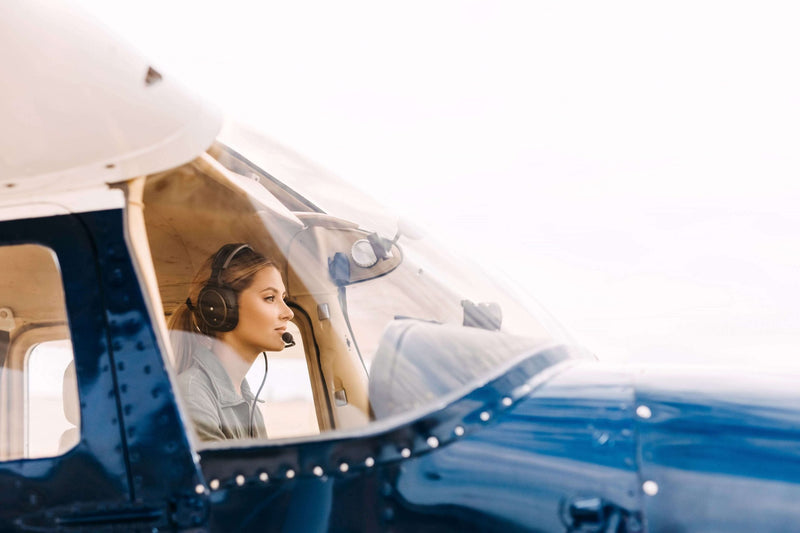
Very safety and detail oriented. Pre-flight briefing explained everything there was. To my knowledge, this flight school is exceptional in their ability.
$500 off every Private Pilot Program and $5,000 off the Airline Pilot Course — applied automatically at checkout.
See Back to School Prices →
Send the enrollment request and an instructor reads it, rings you back within one business day, and helps you pick the program that matches your schedule and budget.
Enrollment is a conversation, not a purchase button. The form on this page tells us three things: what you want to fly toward, roughly when you can fly, and how to reach you. Everything else happens on a call. That is deliberate. A pilot program bought blind is the commonest way people waste money in this industry, because the right package depends entirely on how often you can realistically get to the airfield, and no form can work that out for you.
We are at 7900 Balboa Blvd, Suite 108A, on the western edge of Van Nuys Airport. It is a working general aviation field with a control tower, which shapes the training in a way a quiet airport cannot: you talk to controllers from your first lesson, you learn to hold your own in a busy pattern, and radio work stops being frightening long before your checkride. Students who learn here tend to find towered airports elsewhere unremarkable, which is worth a great deal later.
There is no entrance exam and no assessment flight to pass before we take you on. You do not need any prior experience, a mathematics background, or perfect eyesight. What you do need is to be able to read, speak and understand English, and eventually to hold the medical certificate that matches your chosen license. Age matters less than people assume: teenagers can start well before they can drive, and plenty of our students began in their fifties and sixties.
Once you send the form, an instructor calls you. Not a sales desk, not an offshore call center. The conversation covers what each certificate involves, what it costs, what your week would look like, and whether a discovery flight or a free in-person consultation is the sensible next step. Nobody will push you toward the largest program, and a fair number of these calls end with somebody deciding to start in six months, which is a perfectly reasonable outcome.

Courses & Pricing
Course prices are packages, not hourly rates - the aircraft, your instructor, ground school and simulator time are all in the figure. Van Nuys Airport, KVNY. Financing Available Through Stratus & In-House Plans.

Start Here
The First Hour At The Controls. Credited Toward Your Training If You Enroll Within 24 Hours Of Landing.
All Prices In USD. 7900 Balboa Blvd, Suite 108A, Van Nuys, CA 91406 · Open 9 AM–9 PM, Seven Days. Free In-Person Tour Of The School
Book It Or Gift It
Every discovery flight below can be booked for yourself in the next few minutes, or bought as a gift certificate that is emailed within minutes and never expires. Same flight, same price, either way.
 Most Given
 Two Seats
 The Nice One
 Twin Engine
One person, one instructor, and no audience. Hands on the controls from the left seat, briefed before you go and debriefed after you land.
Hands-On Stick TimePre-Flight BriefingLoggable Flight Time
Flight Length
$229Book It Or Gift It
Same Price Either Way
The same flight with a passenger in the back seat, briefed and on the intercom. Couples book it; so do parents who would rather watch than hear about it.
One Passenger SeatPiper Warrior Or ArcherHeadsets For Both
Flight Length
$299Book It Or Gift It
Same Price Either Way
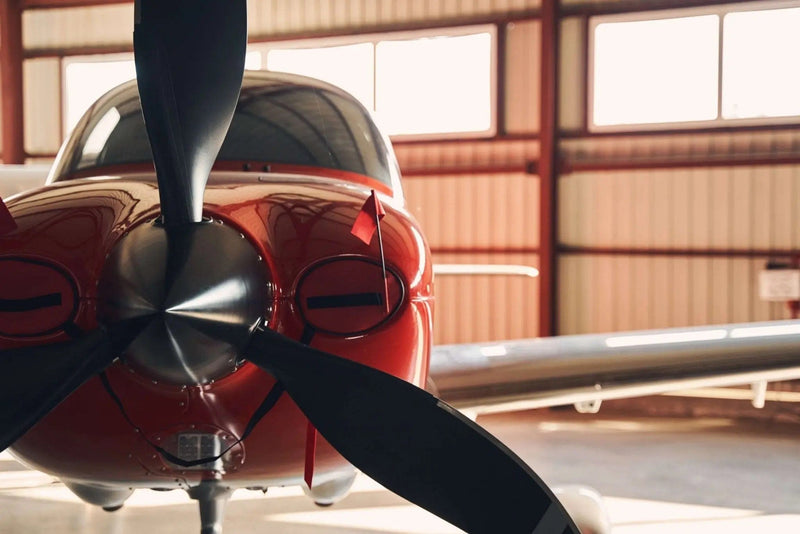
The nicest airplane we put a first-time flyer in. Glass cockpit, air conditioning, leather seats, and a parachute built into the airframe rather than strapped to the person.
Turbocharged Cirrus SR22Air ConditioningWhole-Airframe Parachute
Flight Length
$499Book It Or Gift It
Same Price Either Way
Two engines, and the airplane instrument-rated pilots move into when they start thinking about a career. Flown from the left seat with a multi-engine instructor.
Piper Seminole TwinMulti-Engine DepartureCareer-Track Instructor
Flight Length
$499Book It Or Gift It
Same Price Either Way
Gift It issues a real gift certificate, emailed within minutes, which never expires and credits in full toward training. Flights are limited to 180 lb per person, 370 lb combined. Questions: (818) 290-8249, 9 AM–9 PM, seven days.
Your request arrives at the desk in Suite 108A, not in a queue somewhere out of state. If you send it during opening hours you will usually hear back the same day, and always within one business day. The first call is short and diagnostic: what you want, when you can fly, whether you have flown before. From those three answers we can tell you which program fits and roughly how many months it will take at your flying frequency.
The second step is either a discovery flight or a free in-person consultation, and you can do both. The consultation runs about thirty minutes at the airport. You see the aircraft, sit in the Redbird MCX simulator, meet an instructor, and leave with written numbers rather than a brochure. Nothing is signed at it. Bring a diary, because the most useful part is blocking out which days of the week you can actually commit to.
Once you decide, enrollment itself takes a few minutes. We set up your payment route, whether that is a Stratus Financial loan or our interest-free in-house plan, book your first lessons, and point you at the paperwork below. Most students fly their first real lesson within a week of enrolling. Getting here is simple: from the 405, exit at Roscoe or Victory and head west to Balboa Boulevard, then turn north and follow the airport fence up to the 7900 block. From the 101, come off at Balboa in Encino and drive north through the Sepulveda Basin. Parking outside our door is free and ungated, and Suite 108A sits inside a shared hangar complex, so look for the suite number rather than a sign on the street. Call (818) 290-8249 if you would rather skip the form entirely; the phone is answered between 9 AM and 9 PM every day of the week.

Scheduling is the hidden variable in flight training. A school with more students than airplanes stretches a nine-month certificate into two years. We size the fleet and the instructor roster around the students actually enrolled, and we are open seven days a week including evenings, which is when most working people can fly.
You are taught by the same person through the phases that matter, so nobody re-teaches you what you already know or assumes you were shown something you were not. Continuity is the difference between forty hours and sixty. Where a swap is unavoidable, the handover is a conversation between instructors rather than your problem.
The Redbird MCX is a full-motion device, not a desktop trainer, and it is built into the syllabus rather than sold as an extra. Emergencies, instrument approaches and weather scenarios can be repeated until they are dull, then flown for real. That is safer and cheaper than learning the same lesson in the aircraft.
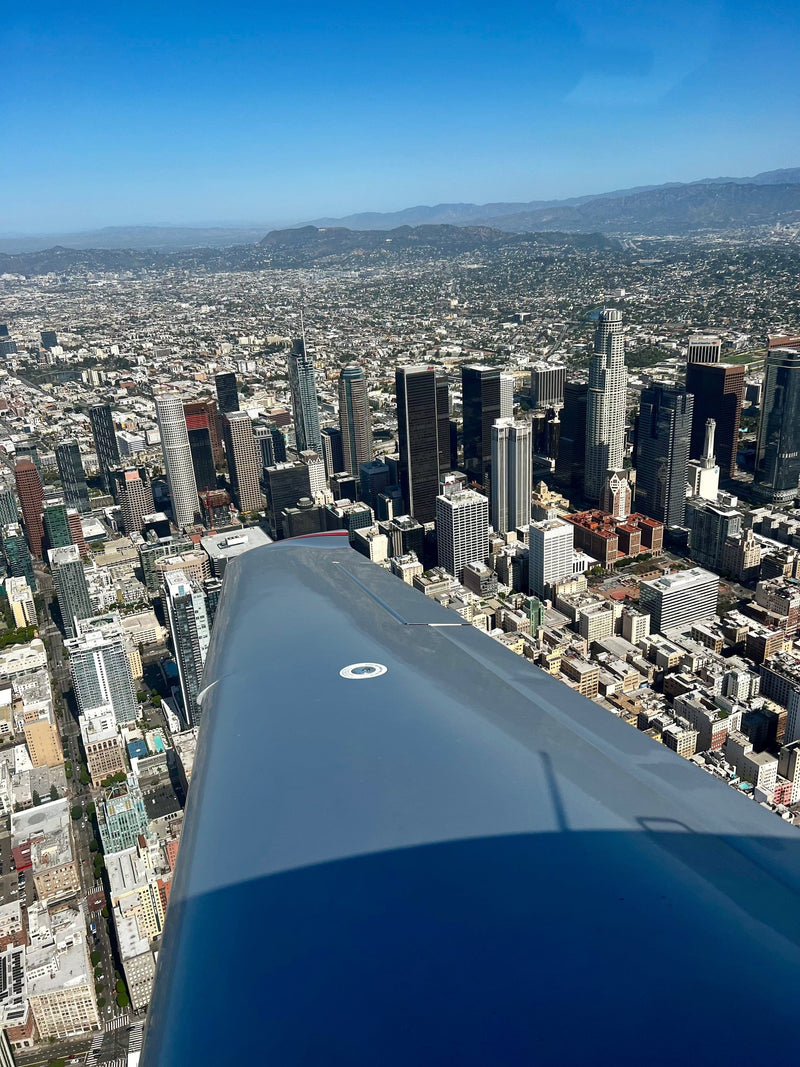
Van Nuys is one of the busiest general aviation airports in the country. You learn to fly inside a live traffic pattern, talk to controllers on every flight, and share the sky with jets and helicopters. It is a demanding place to be a student and an easy place to have been one.
Primary training happens in the Cessna 162 Skycatcher, the Diamond DA20 and the Piper Warrior. The 162 is light, modern and forgiving, which makes it the natural sport pilot aircraft. The DA20 has a bubble canopy and beautiful visibility, and students who like a responsive control feel usually gravitate to it. The Warrior is the traditional low-wing four-seater that generations of private pilots have learned in, and it is the one to sit in if you eventually want to carry a family.
Beyond primary training the fleet keeps going, which matters if you intend to continue past the private certificate. The Piper Arrow II gives you retractable gear and a constant-speed propeller for complex time, the Cirrus SR22 Turbo brings a glass cockpit and an airframe parachute, and the twin-engine Piper Seminole is where multi-engine ratings are flown. Add the Redbird MCX full-motion simulator and every rating from first lesson to multi-engine can be completed without changing schools.

None of these blocks your first lesson, but all four are easier dealt with in week one than in month three.
US citizens show a passport or birth certificate with photo ID to their instructor before flight training begins. Non-citizens must be approved through the TSA's Alien Flight Student Program first, which takes a little time, so start it early.
A private pilot certificate needs at least a third-class FAA medical from a designated examiner, while sport pilot training can use a valid US driver's license instead. If you have any doubt about a medical history, raise it before you spend money.
You can borrow a headset for the first few lessons, but owning one that fits properly makes radio work noticeably easier. A paper logbook is the one aviation tradition worth keeping; every hour you fly with us goes in it.
Two lessons a week is the pace where progress compounds and nothing is forgotten between flights. One a fortnight costs you real money in re-learning. Decide which days are genuinely yours before you enroll, not after.
No. It is a request for a conversation and nothing more. There is no deposit attached to it and no obligation created by it. Plenty of people submit it, talk to an instructor, and decide the timing is wrong for them this year. We would far rather that than have somebody enroll into a schedule they cannot keep.
Within one business day, and usually much faster than that if you send it while we are open. Our hours are 9 AM to 9 PM, seven days a week. If you would rather not wait at all, call (818) 290-8249 and you will reach the same desk your request lands on.
Not to enroll, and not for your first lessons. You need one before you fly solo as a private pilot student, which is typically a couple of months in. Sport pilot students can use a valid US driver's license instead of an FAA medical. If your medical history is complicated, get the examination out of the way early.
There is no minimum age to start taking lessons, and we teach students still in middle school. You must be 16 to fly solo, 17 to hold a private or sport pilot certificate, and 18 for a commercial certificate. At the other end there is no upper limit at all, provided you can hold the medical your license requires.
The FAA minimum is forty flight hours, but frequency decides the real answer. Flying twice a week, most students finish in six to nine months. Flying once a month, it can stretch past two years and cost considerably more, because each lesson starts by rebuilding what the last one taught. That is why we ask about your schedule first.
Yes, and most of our students do. We are open until 9 PM seven days a week, which puts evening and weekend slots within reach for people working ordinary hours. Night flying is a required part of the private certificate anyway, so evening lessons are not a compromise. Tell us your working pattern on the call.
It is usually the better order. For $229 you spend sixty minutes flying the aircraft yourself with an instructor beside you, which tells you more about whether this is for you than any amount of reading. The hour is logged toward your license, and the full cost comes off your program if you enroll within 24 hours.
Two main routes. A loan through Stratus Financial, our aviation lending partner, or our own in-house plan with a deposit and equal monthly installments and no interest. Program prices run from $5,500 for the Solo Certificate to $89,000 for the Airline Pilot Program, and we will put a monthly figure against whichever one you choose.
Fill in the enrollment request and an instructor will ring you within one business day with straight answers on cost, timing and the next available slots. If you would rather talk now, (818) 290-8249 is answered from 9 AM to 9 PM every day.
The three private pilot packages, what each one includes, the financing options and a realistic timeline built around how often you can actually fly. Sent to you in one email. Nobody will pressure you.
Loved On Google
Every review below is real and shown verbatim, in the reviewer’s own words — written by the people who learned to fly here, not by us.
SAFETY FIRST
Very safety and detail oriented. Pre-flight briefing explained everything there was. To my knowledge, this flight school is exceptional in their ability.
 DISCOVERY FLIGHT
I recently had the chance to take my first-ever discovery flight, and it was nothing short of amazing! From the moment I stepped into the cockpit, the...
 SUNSET CIRRUS
It was a great flight! I did a sunset flight and Alex let us fly an awesome. Website was easy to book, and the plane itself was really fun to fly...
 FLYING LESSON
We had a great flying lesson with Ralph and came away with a much better understanding of both the aircraft and the principles of flight. Ralph is a...
 KIDS LUXURY FLIGHT
I got 2 luxury discovery flights for my kids. I wanted them to have the experience of flying. Our instructor Alex was amazing he made sure they feel...
 HONEYMOON SURPRISE
Last minute booking to surprise my wife on our honeymoon. She had no experience with flying and was scared of flying, but Alex was very easygoing and knew...
 FULL-MOTION SIM
Amazing flight school in van nuys airport. I have been a student here for the past few months and i could not be happier. I started doing a lot of...
 DISCOVERY FOR TWO
I booked a Discovery Flight for Two for my girlfriend's birthday and it was the perfect gift for her. She couldn't have been more excited to get to...
 SIMULATORS
Very professional and great airplanes. I love the flight simulators. The pricing is very fair compared to any other flight school
 TEEN FIRST LESSON
We gifted our teenage son his first flying lesson. He was so excited! Alex greeted us and gave a reassuring brief that made us all feel comfortable and at...
 FIRST-TIME FLYER
Flying is my husband's hobby and I was incredibly anxious and apprehensive about the discovery flight. However, I felt completely safe and at ease once we...
SAFETY FIRST
Very safety and detail oriented. Pre-flight briefing explained everything there was. To my knowledge, this flight school is exceptional in their ability.
DISCOVERY FLIGHT
I recently had the chance to take my first-ever discovery flight, and it was nothing short of amazing! From the moment I stepped into the cockpit, the...
SUNSET CIRRUS
It was a great flight! I did a sunset flight and Alex let us fly an awesome. Website was easy to book, and the plane itself was really fun to fly...
FLYING LESSON
We had a great flying lesson with Ralph and came away with a much better understanding of both the aircraft and the principles of flight. Ralph is a...
KIDS LUXURY FLIGHT
I got 2 luxury discovery flights for my kids. I wanted them to have the experience of flying. Our instructor Alex was amazing he made sure they feel...
HONEYMOON SURPRISE
Last minute booking to surprise my wife on our honeymoon. She had no experience with flying and was scared of flying, but Alex was very easygoing and knew...
FULL-MOTION SIM
Amazing flight school in van nuys airport. I have been a student here for the past few months and i could not be happier. I started doing a lot of...
DISCOVERY FOR TWO
I booked a Discovery Flight for Two for my girlfriend's birthday and it was the perfect gift for her. She couldn't have been more excited to get to...
SIMULATORS
Very professional and great airplanes. I love the flight simulators. The pricing is very fair compared to any other flight school
TEEN FIRST LESSON
We gifted our teenage son his first flying lesson. He was so excited! Alex greeted us and gave a reassuring brief that made us all feel comfortable and at...
FIRST-TIME FLYER
Flying is my husband's hobby and I was incredibly anxious and apprehensive about the discovery flight. However, I felt completely safe and at ease once we...
Reviews shown verbatim, exactly as each reviewer published them.
Aviation News
Notes from the flight line at Van Nuys — weather, regulation changes, checkride questions and the cost of training, written up as they come.
Open 7 days · 9:00 AM – 9:00 PM
Los Angeles Flight School