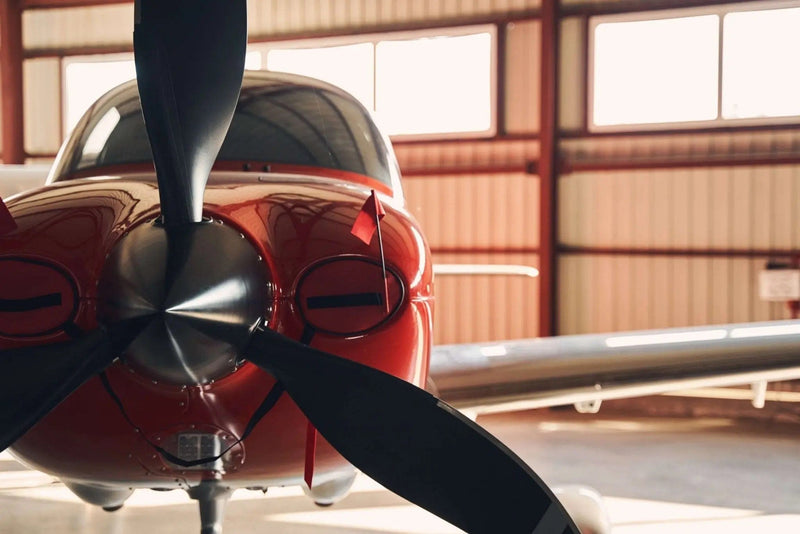
Training aircraft flying above the San Fernando Valley with a broken cloud layer near Van Nuys Airport
Definitions · FAR 91.155 minimums

VFR vs IFR: What They Mean and Which One You Need

VFR is Visual Flight Rules — you fly by looking outside, and the weather has to be good enough to do that. IFR is Instrument Flight Rules — you fly by reference to instruments under air traffic control, and you may legally fly in cloud. Every pilot starts VFR. Here is what separates them, down to the visibility numbers.

The 3-mile ruleClass D and the Class B shelfWhat an instrument rating buys
3 SMbasic VFR visibility in Class D, day or night
40 hrsinstrument time required under FAR 61.65
$11,700our instrument rating program
$229discovery flight, credited in full if you enrol within 24h
The short answer

One is about what you can see. The other is about who is responsible for keeping you apart from other aircraft

Under Visual Flight Rules, you are responsible for seeing and avoiding everything — other aircraft, terrain, obstacles. That only works if you can actually see, which is why the regulations attach specific visibility and cloud-clearance numbers to VFR flight. Fly into cloud without an instrument rating and you have removed the one thing the whole system depends on.

Under Instrument Flight Rules, you file a flight plan, you receive a clearance, and air traffic control separates you from other IFR traffic. You navigate and control the aircraft by reference to instruments, and cloud stops being a legal obstacle. In exchange you accept a much more structured environment: assigned altitudes, assigned routes, published approach procedures flown to specific tolerances.

People assume IFR is about bad weather. It is more accurate to say IFR is about not needing the weather to cooperate. Plenty of IFR flights happen on cloudless days, because filing simply gets you a cleaner ride through busy airspace.

Instrument panel of a training aircraft during instrument flight training at Van Nuys Airport
The numbers

VFR weather minimums under FAR 91.155

These are the ones you will be asked on your checkride and the ones that decide whether your lesson goes ahead. Cloud clearance is written as feet below / feet above / feet horizontal.

Visibility and cloud clearance by airspace

Below is the day VFR picture for the airspace you will actually fly in around Los Angeles. Night and high-altitude values differ, and the full table lives in FAR 91.155.

  • Class B — 3 statute miles visibility, clear of clouds. No specific clearance distance, because ATC is separating everyone inside it. Entry requires an explicit clearance.
  • Class C — 3 statute miles, 500 ft below cloud, 1,000 ft above, 2,000 ft horizontal.
  • Class D — 3 statute miles, 500 / 1,000 / 2,000. This is Van Nuys, and this is the number that governs most of your training.
  • Class E below 10,000 ft MSL — 3 statute miles, 500 / 1,000 / 2,000.
  • Class E at or above 10,000 ft MSL — 5 statute miles, 1,000 ft below, 1,000 ft above, 1 statute mile horizontal.
  • Class G, day, at or below 1,200 ft AGL — 1 statute mile, clear of clouds. The lowest legal VFR anywhere, and a bad idea long before it becomes illegal.
  • Special VFR — a clearance you can request in Class B, C, D or E surface areas that reduces the requirement to 1 statute mile and clear of clouds during the day. It is legal. It is also how a lot of VFR pilots have got themselves into trouble, and most instructors will tell you to treat it as an option for departing an airport that is marginal, not for arriving at one.

The shorthand you will hear on the radio and in forecasts

  • VMC — Visual Meteorological Conditions. Weather at or better than the VFR minimums above.
  • IMC — Instrument Meteorological Conditions. Weather below those minimums. Flying in IMC requires an instrument rating and an IFR clearance.
  • MVFR (Marginal VFR) — ceiling 1,000 to 3,000 ft and/or visibility 3 to 5 statute miles. Legal for a VFR flight, uncomfortable for a low-time one.
  • IFR conditions — ceiling below 1,000 ft or visibility below 3 statute miles.
  • LIFR — ceiling below 500 ft or visibility below 1 statute mile. Everything stays on the ground except the airlines.
  • Ceiling — the height above ground of the lowest broken or overcast cloud layer. Scattered cloud does not constitute a ceiling, which is why a forecast can read worse than the sky looks.
Los Angeles specifically

The marine layer is why this argument matters here

From roughly May through August, low coastal stratus pushes into the LA basin overnight and sits there until mid-morning. Locals call it May Gray and June Gloom. The layer is usually only a thousand feet or so thick and there is brilliant sunshine on top of it, which is precisely what makes it so frustrating: the weather is beautiful, and you cannot legally get to it.

A VFR pilot looks at an overcast at 1,200 feet and cancels, or waits until eleven. An instrument-rated pilot files, departs Van Nuys on a clearance, climbs through about ninety seconds of grey, and is in clear air above it. Same aeroplane, same morning, completely different day.

That is the practical case for the instrument rating in Southern California, and it is a better one than the case usually made. Nobody in Los Angeles needs an instrument rating to fly in thunderstorms. They need it so that a predictable, thin, entirely benign layer of cloud stops dictating their calendar four months a year.

The second argument is precision. Instrument training rebuilds how you fly — altitudes held to fifty feet, headings to five degrees, approaches flown to published tolerances. Most pilots describe it as the point at which they stopped feeling like a student.

May–August marine layerClass D under the LAX Class B shelf~300 flyable days a year
Aircraft above the coastal marine layer near Santa Monica, Los Angeles
Order of operations

Which one do you need first?

There is no choice to make here. The sequence is fixed by regulation and by common sense.

01

Private pilot certificate first — VFR

You cannot hold an instrument rating without at least a private pilot certificate. 40 flight hours minimum under FAR 61.109, our program at $10,900, six to nine months at two or three lessons a week. Everything you fly in this phase is VFR, and it includes three hours of basic instrument training purely so that inadvertently entering cloud is survivable rather than fatal.

02

Fly for a while — this step is real

An instrument rating requires 50 hours of cross-country pilot-in-command time, of which at least 10 must be in aeroplanes, under FAR 61.65. Most new private pilots do not have that on the day of their checkride, so there is a natural gap in which you go and use the certificate. Do not resent it. Those hours are the ones where flying becomes normal rather than an event.

03

Instrument rating — IFR

40 hours of actual or simulated instrument time, at least 15 of it with an authorised instructor, plus a 250-nautical-mile IFR cross-country flying three different kinds of approaches. $11,700 with us. A large share of the simulated time can be flown in the Redbird MCX at $189 a session, which is why the instrument rating is the certificate where a simulator saves genuine money.

04

Then keep it alive

Instrument currency requires six instrument approaches, holding procedures and course intercepting and tracking within the preceding six calendar months. Let it lapse and you need an instrument proficiency check with an instructor. This is the rating that punishes neglect hardest, which is worth knowing before you buy it.

The aircraft and the airspace

Where you will actually fly this

Van Nuys is Class D, tucked under the LAX Class B shelf, with the coast, the mountains and the high desert all inside an hour.

Flight instructor and student wearing headsets in the cockpit of a training aircraft
Instrument work is flown with an instructor beside you until the rating is signed off.
Redbird MCX full-motion FAA-approved flight simulator at Van Nuys Airport
The Redbird MCX lets you fly an approach to a 400-foot overcast without leaving the ground.
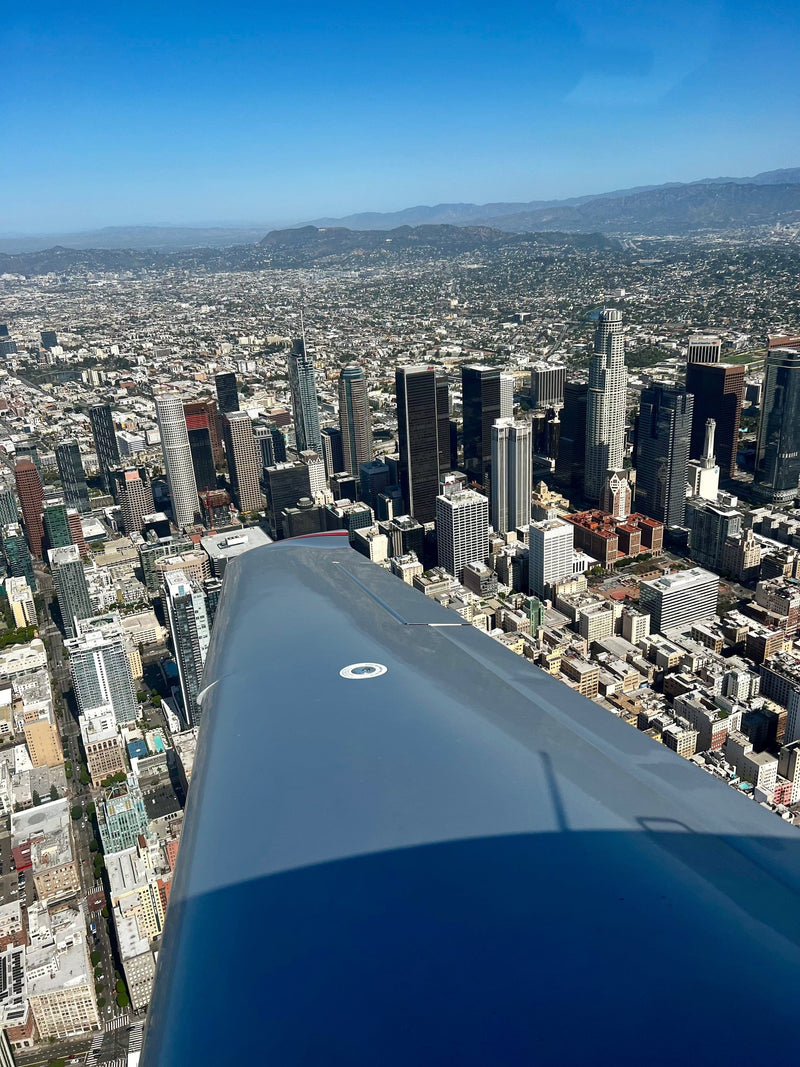
Aerial view of downtown Los Angeles from a training aircraft
VFR over Los Angeles — the view that makes the visibility minimums worth understanding.
Honest assessment

What an instrument rating does and does not get you

1

It does not make you weatherproof

You still cannot legally or safely fly into ice, embedded thunderstorms, or conditions below the minimums of the approach at your destination. An instrument rating expands the envelope. It does not remove it.

2

It makes you a measurably better VFR pilot

Precise altitude and heading control, disciplined radio work, and a habit of thinking three steps ahead of the aircraft all transfer straight back to visual flying.

3

It is required if you want this professionally

A commercial certificate without an instrument rating carries a limitation against carrying passengers for hire on cross-country flights over 50 nautical miles or at night. Every airline path includes it.

4

It is the hardest rating to keep current

Six approaches in six months is not much flying, but it is regular flying. Pilots who fly twice a year should be honest with themselves about whether they will maintain it.

Try it before you theorise about it

The fastest way to understand the difference is to fly both

A discovery flight is a real lesson — you fly the aircraft, the time is loggable dual instruction, and the full price is credited against any program if you enrol within 24 hours. The Redbird will let you fly an approach in cloud on your first visit, legally and on the ground.

Redbird Simulator Session

$189 / 1 hr

Full-motion and FAA-approved. Set the weather to a 400-foot overcast and fly an ILS into Van Nuys on day one.

Book a session
Most booked

Discovery Flight For One

$229 / 60 min

VFR over Los Angeles with your hands on the controls. Logged as dual instruction. 90 min $299, 120 min $399.

Book now

Free Consultation

$0

Talk through the private-then-instrument sequence against your own budget and calendar. No obligation.

Book a consultation

Instrument rating program $11,700. Private pilot $10,900. Aircraft wet rates from $269 an hour in a Cessna 162 or Piper Warrior.

Next step

Sixty minutes of VFR, and you will understand the rest of this page

Hands on the controls over Los Angeles, logged as real dual instruction. If you enrol within 24 hours the full $229 comes off your program. Call (818) 290-8249 or book online.

Discovery Flight For One
$229
60 minutes · you fly the aircraft · fully loggable · credited on enrolment
Book now
FAQ

VFR and IFR questions

IFR stands for Instrument Flight Rules. It is a set of regulations permitting a pilot to fly by sole reference to the aircraft instruments, under an air traffic control clearance, including inside cloud. Flying IFR requires an instrument rating on top of a pilot certificate, and it requires the aircraft to be equipped and inspected for instrument flight.

VFR stands for Visual Flight Rules — flying by looking out of the window, with the pilot personally responsible for seeing and avoiding other aircraft and terrain. It requires specific weather: in Class D airspace such as Van Nuys, 3 statute miles visibility and cloud clearance of 500 feet below, 1,000 feet above and 2,000 feet horizontally, under FAR 91.155.

Under VFR you navigate visually and separate yourself from other traffic, so the weather must be good enough to see. Under IFR you navigate by instruments on a filed flight plan and air traffic control separates you, so cloud is not a barrier. Every pilot trains VFR first; IFR is a rating added to an existing certificate.

In Class D and Class E below 10,000 feet MSL, 3 statute miles visibility with 500 feet below, 1,000 feet above and 2,000 feet horizontal cloud clearance. Class B requires 3 statute miles and clear of clouds. Class G during the day at or below 1,200 feet AGL drops to 1 statute mile and clear of clouds. The full table is in FAR 91.155.

No. A private pilot certificate is a VFR certificate and stands on its own — 40 flight hours minimum under FAR 61.109, $10,900 in our program. The instrument rating is added afterwards, and it requires 50 hours of cross-country pilot-in-command time plus 40 hours of instrument time under FAR 61.65.

$11,700 at LA Flight School in Van Nuys, which covers the instruction and aircraft time to meet the FAR 61.65 requirements. A meaningful share of the 40 required instrument hours can be flown in our Redbird MCX full-motion simulator at $189 a session, which is the single largest saving available on this rating.

No. VFR requires you to remain a specific distance from cloud — 500 feet below, 1,000 feet above and 2,000 feet horizontally in most airspace you will use. Entering cloud without an instrument rating and clearance is both illegal and one of the most consistently fatal situations in general aviation, which is why private pilot training includes three hours of basic instrument work.

Yes, and for an unexpected reason. LA weather is excellent — around 300 flyable days a year — but from May through August a thin coastal marine layer sits over the basin every morning. An instrument-rated pilot files, climbs through it in about ninety seconds and flies in sunshine. A VFR pilot waits until it burns off or cancels.