SAFETY FIRST
★★★★★
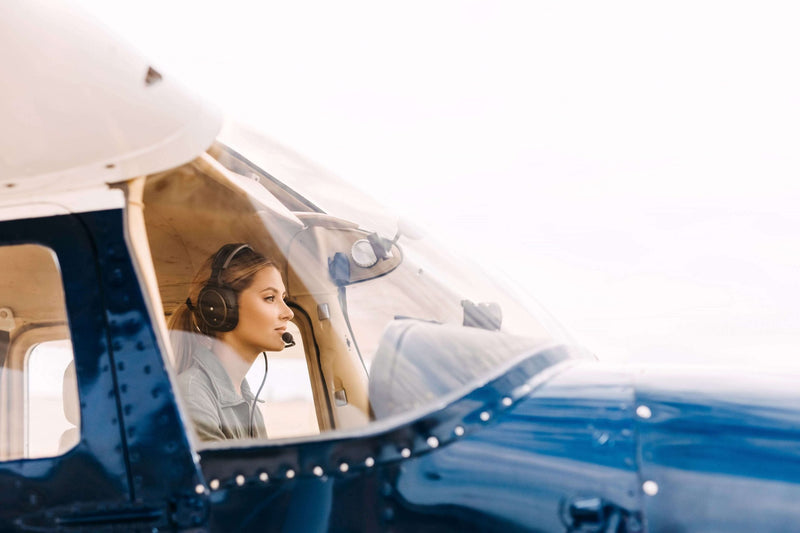
Very safety and detail oriented. Pre-flight briefing explained everything there was. To my knowledge, this flight school is exceptional in their ability.

A working flight school on the west side of Van Nuys Airport, run by people who fly here every day and teach one student at a time.
I started this school because of what happened on my own first flight. Aviation stopped being an interest that afternoon and became the thing I organized my life around, and after enough years teaching I wanted a place where that transition could happen properly: where students were prepared for flying rather than merely coached through a test, and where the instructor sitting beside you had done this long enough to know the difference. That is the whole idea behind LA Flight School, and it has not changed.
In practice it means a school built on a small number of deliberate decisions. We own our aircraft rather than leasing them in. We hire career instructors rather than pilots waiting for an airline call, so the person who teaches your first landing is still here for your checkride. We teach one instructor to one student. And we publish our prices, because the flight training industry has a long-standing reputation for quotes that grow after you have paid, and it deserves that reputation.
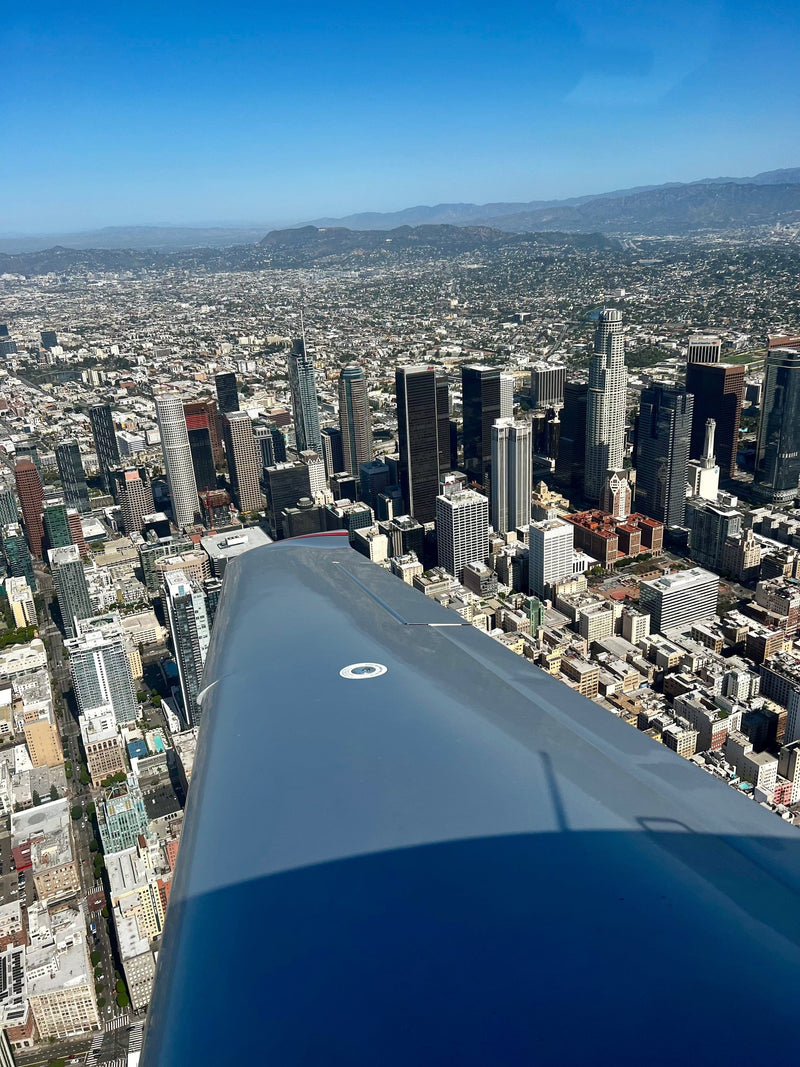
Van Nuys is a deliberate choice too. It is one of the busiest general aviation airports in the country, with a control tower, a mile of ramp and traffic ranging from two-seat trainers to business jets. That is more demanding for a beginner in the first few weeks and considerably better after that. Radio work, traffic awareness and the habit of thinking ahead of the aircraft become ordinary here rather than skills acquired painfully after the certificate.
What I would rather you did than read about us is come and look. We are at 7900 Balboa Blvd, Suite 108A, open from nine in the morning until nine at night, every day of the week, and there is free parking on the lot. Ask to see the aircraft, sit in the Redbird MCX, and ask the instructors whatever you like. Nothing needs to be decided while you are here.

Courses & Pricing
Course prices are packages, not hourly rates - the aircraft, your instructor, ground school and simulator time are all in the figure. Van Nuys Airport, KVNY. Financing Available Through Stratus & In-House Plans.

Start Here
The First Hour At The Controls. Credited Toward Your Training If You Enroll Within 24 Hours Of Landing.
All Prices In USD. 7900 Balboa Blvd, Suite 108A, Van Nuys, CA 91406 · Open 9 AM–9 PM, Seven Days. Free In-Person Tour Of The School
Book It Or Gift It
Every discovery flight below can be booked for yourself in the next few minutes, or bought as a gift certificate that is emailed within minutes and never expires. Same flight, same price, either way.
 Most Given
 Two Seats
 The Nice One
 Twin Engine
One person, one instructor, and no audience. Hands on the controls from the left seat, briefed before you go and debriefed after you land.
Hands-On Stick TimePre-Flight BriefingLoggable Flight Time
Flight Length
$229Book It Or Gift It
Same Price Either Way
The same flight with a passenger in the back seat, briefed and on the intercom. Couples book it; so do parents who would rather watch than hear about it.
One Passenger SeatPiper Warrior Or ArcherHeadsets For Both
Flight Length
$299Book It Or Gift It
Same Price Either Way
The nicest airplane we put a first-time flyer in. Glass cockpit, air conditioning, leather seats, and a parachute built into the airframe rather than strapped to the person.
Turbocharged Cirrus SR22Air ConditioningWhole-Airframe Parachute
Flight Length
$499Book It Or Gift It
Same Price Either Way
Two engines, and the airplane instrument-rated pilots move into when they start thinking about a career. Flown from the left seat with a multi-engine instructor.
Piper Seminole TwinMulti-Engine DepartureCareer-Track Instructor
Flight Length
$499Book It Or Gift It
Same Price Either Way
Gift It issues a real gift certificate, emailed within minutes, which never expires and credits in full toward training. Flights are limited to 180 lb per person, 370 lb combined. Questions: (818) 290-8249, 9 AM–9 PM, seven days.
You arrive at the lot on Balboa Blvd, park for free, and knock on the numbered door at Suite 108A. Somebody at the desk will find whichever instructor is on the ground. Most first visits start with a coffee and a conversation about what you want out of flying rather than a sales pitch, because the honest recommendation depends entirely on whether you want a weekend hobby, a career or an answer to a curiosity you have carried for thirty years.
Then you go and look at the airplanes. Walking round the flight line and sitting in the left seat of a Cessna 162 or a Diamond DA20 settles more questions than any brochure, and the cockpit is usually smaller and simpler than people expect. If the Redbird MCX is free you can spend a few minutes in it. Airside access is supervised, so stay with whoever is showing you round once you are past the gate.
Nothing is signed on a first visit and no deposit is taken. If you want to go further, we can book a discovery flight, a free in-person consultation or a first lesson while you are standing there. If you would rather go away and think, that is the end of it; there is no follow-up campaign. Call (818) 290-8249 an hour ahead so we can be sure someone is free rather than airborne.

The most common reason students stall at other schools is an instructor leaving for an airline halfway through training. Ours are career instructors with fifteen or more years behind them, teaching because they want to teach. Continuity means your training record lives in someone's head as well as in a file, which changes how quickly problems get solved.
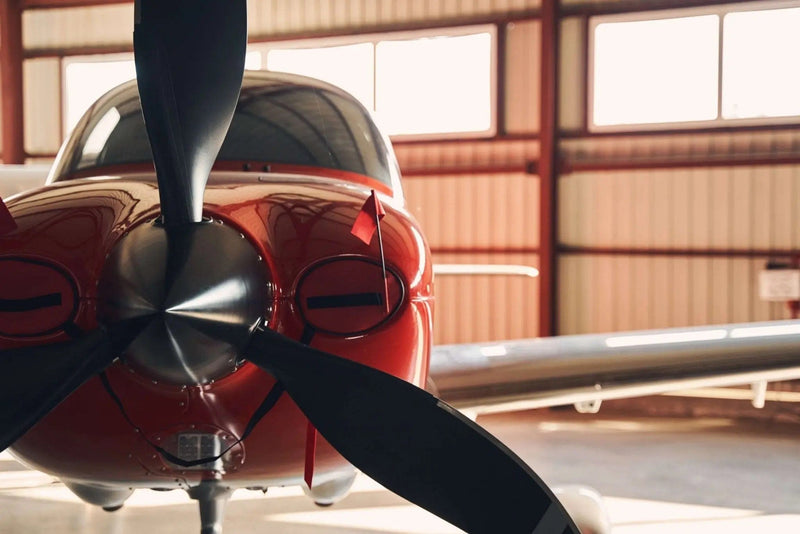
The fleet belongs to the school rather than to private owners on leaseback. That removes the tension between an owner who wants an airplane earning and a school that wants it in the hangar. Inspections run on our calendar rather than at the last legal hour, and a snag gets fixed rather than deferred to a more convenient week.
Every lesson is one instructor and one student, with a plan written for that person. Someone flying twice a week toward a career and someone flying twice a month for pleasure should not follow the same schedule, and here they do not. Progress is signed off when it is genuinely solid rather than when the calendar says so.
Every package price is published on this site, and at a consultation we will itemise what sits outside it: the FAA medical, the examiner fee, books, charts, a headset. Meeting those costs one at a time later is how a training budget quietly doubles, and we would rather you saw the whole number before you started.
There are seven aircraft on the line and the range matters more than the number. The Cessna 162 Skycatcher and the Diamond DA20 are light two-seaters for early training. The Piper Warrior carries four and does the cross-country work. The Piper Arrow II covers complex training with retractable gear and a constant-speed propeller. At the top sit the Cirrus SR22 Turbo, with a full glass panel and a whole-airframe parachute, and the twin-engine Piper Seminole. A student can start and finish here without ever changing schools.
The Redbird MCX is a genuine full-motion simulator on a moving platform, not a desktop program with a joystick, and instructors use it as a teaching tool rather than a wet-weather fallback. Engine failures on takeoff, instrument approaches in conditions nobody would launch into, and the same procedure repeated ten times in an hour are all things it does better and far more cheaply than an airplane. Time in it counts toward the instrument rating within the limits the FAA sets.

Four parts of the operation, all of which you are welcome to look at before deciding anything.
Whichever aircraft are not airborne sit out on the ramp during the day. Sitting in the left seat of a trainer with the door open is the fastest way to find out whether the cockpit feels exciting or claustrophobic.
The full-motion simulator lives indoors and is usually the thing visitors most want to try. Instructors will happily let you fly a circuit at Van Nuys in it if the schedule allows.
Small on purpose, because almost all teaching here is one instructor and one student rather than a lecture. This is where the pre-flight brief and the honest post-flight debrief happen, and where most of the actual learning gets consolidated.
Beyond our aircraft the field stretches for a mile, with business jets, helicopters and the traffic pattern in constant motion. Standing there for ten minutes explains what training at a towered airport gives you better than any description.
LA Flight School was founded by Alex Abbassi, who still runs it and is usually on site. It is a working flight school rather than a franchise or a branch of a larger operation, which means decisions about aircraft, maintenance and scheduling are made here at Van Nuys by the people affected by them rather than at a head office elsewhere.
7900 Balboa Blvd, Suite 108A, Van Nuys, CA 91406, on the western perimeter of Van Nuys Airport. Use the street address rather than the airport name for satnav and rideshare, because the field has several gates along a mile of frontage and the main terminal on Waterman Drive is on the opposite side entirely.
Nine in the morning until nine at night, seven days a week, including weekends. Flying begins early because the air is smoothest in the first few hours after sunrise, and evening slots exist for people who work. Phone (818) 290-8249 at any point in that window and someone will pick up.
Every instructor here holds FAA certification and has fifteen or more years of experience. They are career instructors rather than pilots building hours toward an airline job, which is the difference that shows up in continuity. You are unlikely to lose your instructor partway through training, which is the most common cause of a stalled certificate.
Both, and beginners are the majority. Most people who walk through the door have never handled the controls of a small aircraft and are not sure whether they will enjoy it. That is exactly what a $189 simulator hour or a $229 discovery flight is for. Nobody expects you to arrive knowing the terminology.
Yes, during opening hours. Calling an hour ahead is worth it because instructors spend much of the day airborne and an unannounced visit at two in the afternoon may involve waiting. Bring family if you like; parents, partners and children are all regular visitors and everybody gets a look at the aircraft.
You ask, and it is arranged for your next lesson with no awkwardness whatsoever. Teaching is a relationship and not every pairing works well. Your training record moves across so nothing is repeated and no progress is lost. It happens regularly enough that nobody here takes it personally.
Yes, through Stratus Financial and through in-house payment plans that spread the cost across your training rather than requiring it up front. Come in for a free consultation and we will work through the monthly figures with you, since that is the number that decides whether training is actually workable rather than merely appealing.
Walk the flight line, sit in the simulator and ask the instructors anything you like, with nothing to sign at the end of it. Call (818) 290-8249 or come to 7900 Balboa Blvd, Suite 108A, open 9 AM to 9 PM daily.
The three private pilot packages, what each one includes, the financing options and a realistic timeline built around how often you can actually fly. Sent to you in one email. Nobody will pressure you.
Loved On Google
Every review below is real and shown verbatim, in the reviewer’s own words — written by the people who learned to fly here, not by us.
SAFETY FIRST
Very safety and detail oriented. Pre-flight briefing explained everything there was. To my knowledge, this flight school is exceptional in their ability.
 DISCOVERY FLIGHT
I recently had the chance to take my first-ever discovery flight, and it was nothing short of amazing! From the moment I stepped into the cockpit, the...
 SUNSET CIRRUS
It was a great flight! I did a sunset flight and Alex let us fly an awesome. Website was easy to book, and the plane itself was really fun to fly...
 FLYING LESSON
We had a great flying lesson with Ralph and came away with a much better understanding of both the aircraft and the principles of flight. Ralph is a...
 KIDS LUXURY FLIGHT
I got 2 luxury discovery flights for my kids. I wanted them to have the experience of flying. Our instructor Alex was amazing he made sure they feel...
 HONEYMOON SURPRISE
Last minute booking to surprise my wife on our honeymoon. She had no experience with flying and was scared of flying, but Alex was very easygoing and knew...
 FULL-MOTION SIM
Amazing flight school in van nuys airport. I have been a student here for the past few months and i could not be happier. I started doing a lot of...
 DISCOVERY FOR TWO
I booked a Discovery Flight for Two for my girlfriend's birthday and it was the perfect gift for her. She couldn't have been more excited to get to...
 SIMULATORS
Very professional and great airplanes. I love the flight simulators. The pricing is very fair compared to any other flight school
 TEEN FIRST LESSON
We gifted our teenage son his first flying lesson. He was so excited! Alex greeted us and gave a reassuring brief that made us all feel comfortable and at...
 FIRST-TIME FLYER
Flying is my husband's hobby and I was incredibly anxious and apprehensive about the discovery flight. However, I felt completely safe and at ease once we...
SAFETY FIRST
Very safety and detail oriented. Pre-flight briefing explained everything there was. To my knowledge, this flight school is exceptional in their ability.
DISCOVERY FLIGHT
I recently had the chance to take my first-ever discovery flight, and it was nothing short of amazing! From the moment I stepped into the cockpit, the...
SUNSET CIRRUS
It was a great flight! I did a sunset flight and Alex let us fly an awesome. Website was easy to book, and the plane itself was really fun to fly...
FLYING LESSON
We had a great flying lesson with Ralph and came away with a much better understanding of both the aircraft and the principles of flight. Ralph is a...
KIDS LUXURY FLIGHT
I got 2 luxury discovery flights for my kids. I wanted them to have the experience of flying. Our instructor Alex was amazing he made sure they feel...
HONEYMOON SURPRISE
Last minute booking to surprise my wife on our honeymoon. She had no experience with flying and was scared of flying, but Alex was very easygoing and knew...
FULL-MOTION SIM
Amazing flight school in van nuys airport. I have been a student here for the past few months and i could not be happier. I started doing a lot of...
DISCOVERY FOR TWO
I booked a Discovery Flight for Two for my girlfriend's birthday and it was the perfect gift for her. She couldn't have been more excited to get to...
SIMULATORS
Very professional and great airplanes. I love the flight simulators. The pricing is very fair compared to any other flight school
TEEN FIRST LESSON
We gifted our teenage son his first flying lesson. He was so excited! Alex greeted us and gave a reassuring brief that made us all feel comfortable and at...
FIRST-TIME FLYER
Flying is my husband's hobby and I was incredibly anxious and apprehensive about the discovery flight. However, I felt completely safe and at ease once we...
Reviews shown verbatim, exactly as each reviewer published them.
Aviation News
Notes from the flight line at Van Nuys — weather, regulation changes, checkride questions and the cost of training, written up as they come.
Open 7 days · 9:00 AM – 9:00 PM
Los Angeles Flight School