SAFETY FIRST
★★★★★
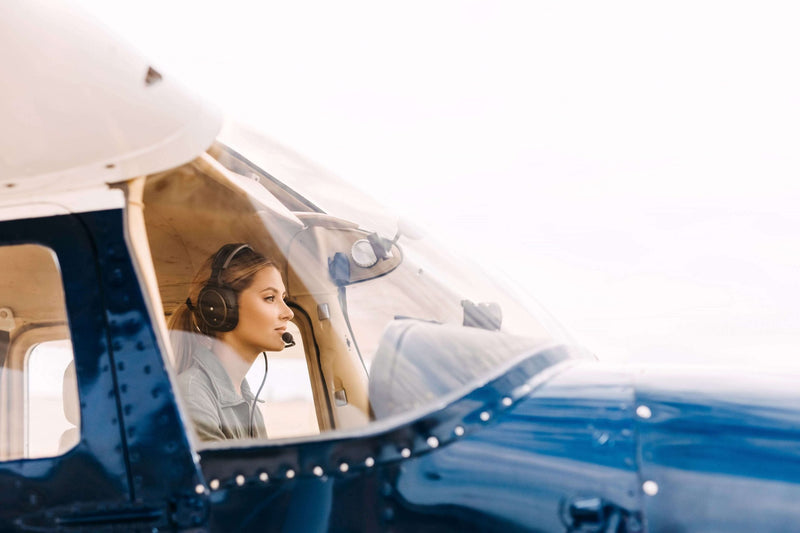
Very safety and detail oriented. Pre-flight briefing explained everything there was. To my knowledge, this flight school is exceptional in their ability.

The Cessna 150, Cessna 152 and Cessna 172 Skyhawk are the best-known training airplanes ever built. The 150 and 152 are two-seat trainers of 100 and 110 horsepower, built from 1958 to 1985. The 172 is the four-seat Skyhawk, certificated in 1955 and still in production, with more than 44,000 built. Below: their handbook specs side by side, what each costs to rent and own in 2026, and which suits training. One thing first: we do not fly any of the three at Van Nuys, and we show what we fly instead.
Three airplanes, one design family, and seventy years of flight schools. The 172 came first, the 150 followed, and the 152 replaced the 150.
The Cessna 172 was approved by the FAA on 4 November 1955, under type certificate 3A12. The first Skyhawks flew on a six-cylinder Continental O-300. From 1968 Cessna switched to four-cylinder Lycoming engines, and every 172 built since uses one. The carbureted Lycoming airplanes were built until 1986. After a ten-year pause, Cessna restarted the line in 1996 with the fuel-injected 172R and then the 180 hp 172S, which, with Garmin G1000 NXi glass, is the Skyhawk Textron Aviation sells today. More than 44,000 have been produced, more than any other airplane.
The Cessna 150 was approved on 10 July 1958 as the successor to the tailwheel Cessna 140. It moved to tricycle landing gear, squared-off wing and tail tips and large Fowler flaps, and changed a little every model year: maximum weight rose from 1,500 to 1,600 lb in 1964, the 150D of that year added the wraparound rear window, and the 1967 150F brought the swept fin. Every 150 has the 100 hp Continental O-200.
The Cessna 152 replaced the 150 for the 1978 model year. Cessna fitted a 110 hp Lycoming O-235, for more power and to run better on the then-new 100LL avgas, changed to a 28-volt electrical system and raised the maximum weight to 1,670 lb. Production of both ended in 1985, after 31,533 Cessna 150s and 152s. Every one flying today is at least forty years old, which shapes what they cost to buy, insure and keep flying.
Figures from Cessna’s own handbooks: the 1977 Cessna 150M and 1980 Cessna 152 pilot’s operating handbooks, and Textron Aviation’s current Cessna 172S Skyhawk specifications. Fuel burn is a typical figure from PlanePhD. Individual airplanes vary with year and equipment, so the handbook in the airplane you fly is the final word.
| Specification | Cessna 150M (1977) | Cessna 152 (1980) | Cessna 172S Skyhawk (current) |
|---|---|---|---|
| Seats | 2 | 2 | 4 |
| Engine | Continental O-200-A | Lycoming O-235-L2C | Lycoming IO-360-L2A, fuel-injected |
| Horsepower | 100 | 110 | 180 |
| Maximum takeoff weight | 1,600 lb | 1,670 lb | 2,550 lb |
| Standard empty weight | 1,111 lb | 1,109 lb | 1,680 lb |
| Useful load | 489 lb | 566 lb | 878 lb |
| Usable fuel, standard tanks | 22.5 gal | 24.5 gal | 53 gal |
| Usable fuel, long-range tanks | 35 gal | 37.5 gal | — |
| Cruise speed | 106 kt at 75% power, 7,000 ft | 107 kt at 75% power, 8,000 ft | 124 kt maximum cruise |
| Maximum speed, sea level | 109 kt | 110 kt | — |
| Range, standard tanks | 340 nm at 75%; 420 nm at best range | 320 nm at 75%; 415 nm at best range | 640 nm maximum |
| Rate of climb, sea level | 670 fpm | 715 fpm | 730 fpm |
| Service ceiling | 14,000 ft | 14,700 ft | 14,000 ft |
| Takeoff ground roll | 735 ft | 725 ft | 960 ft |
| Stall speed (CAS) | 48 kt flaps up, 42 kt flaps down | 48 kt flaps up, 43 kt flaps down | 48 kt |
| Typical cruise fuel burn | About 6.5 gph | About 7 gph | About 9.5 gph |
Cessna 150 vs 152: the 152 is heavier, not faster. The extra 10 horsepower bought one knot of cruise and 45 feet a minute of climb. What it really bought was weight: 77 lb more useful load. With full standard tanks a 150M can carry about 354 lb of people and bags, and a 152 about 419 lb. That gap is often the difference between two adults flying with full fuel and two adults stopping to buy fuel.
The 172 is a different class of airplane. It has twice the seats, about 1.6 times the useful load and more than twice the fuel of a 152, and it cruises roughly 17 knots faster. Textron lists a 560 lb payload with full fuel for the 172S, enough for two adults, an instructor or a third passenger, and bags, while still carrying 53 gallons. Range figures for the 150 and 152 include fuel for start, taxi, climb and a 45-minute reserve, per the handbooks.
A Cessna 172 is not one airplane. The letter after the number tells you the engine and the maximum weight, which matter more to a pilot than the paint does.
| Model | Built | Engine | Max Weight |
|---|---|---|---|
| 172 to 172D | 1956 to 1963 | Continental O-300, six-cylinder | 2,200 lb |
| 172I to 172M | 1968 to 1976 | Lycoming O-320-E2D, 150 hp | 2,300 lb |
| 172N | 1977 to 1980 | Lycoming O-320-H2AD, 160 hp | 2,300 lb |
| 172P | 1981 to 1986 | Lycoming O-320-D2J, 160 hp | 2,300 lb |
| 172Q | 1983 to 1984 | Lycoming O-360-A4N, 180 hp | 2,550 lb |
| 172R | 1996 onward | Lycoming IO-360-L2A, 160 hp | 2,450 lb |
| 172S Skyhawk SP | 1998 onward | Lycoming IO-360-L2A, 180 hp | 2,550 lb |
Engine and weight are from the FAA type certificate as summarized in New Zealand’s type acceptance report for the 172 series. For a renter the practical split is between the carbureted Lycoming airplanes of 1968 to 1986, which need carburetor heat and usually have round gauges unless upgraded, and the fuel-injected 172R and 172S, most of which from the mid-2000s left the factory with glass panels. A 172M with 150 hp and a 2,300 lb gross weight is a noticeably weaker airplane on a hot Van Nuys afternoon than a 180 hp 172S at 2,550 lb.
Cessna wrote a handbook for each model and year, and later airplanes carry a Pilot’s Operating Handbook; the first 172s were delivered with an Owner’s Manual. The one that counts lists the serial number range of the airplane you fly.
A 172M carries 38 usable gallons in standard tanks; a 172S carries 53. Gross weight runs from 2,300 to 2,550 lb. A speed, weight or fuel figure from the wrong year’s PDF is a planning error waiting to happen.
A Cessna 172 checklist condenses the normal and emergency procedures in that airplane’s handbook. It is a memory aid in the cockpit, not a substitute for reading sections 2, 3 and 4 of the book on the ground.
Published rental rates and market estimates found in October 2026, each with its source and date. Rental rates are for the aircraft only, wet (fuel included). An instructor is billed on top.
| Rented From | Airport | Aircraft | Rate Per Hour, Wet |
|---|---|---|---|
| A flight school | Santa Paula (KSZP) | Cessna 150/152 | $140 |
| A flight school | Santa Paula (KSZP) | Cessna 172 (VFR to 180 hp) | $170–$190 |
| A flight school | Long Beach (KLGB) | Cessna 152 (IFR-equipped $155) | $140 |
| A flight school | Long Beach (KLGB) | Cessna 172 (analog or G1000) | $190–$200 |
| A flight school | Santa Monica (KSMO) | Cessna 172 (G1000 $197) | $195 |
Rates from three Southern California flight schools’ published rate pages (2025–2026); one lists instructor time at $90 an hour. Across the three, a Cessna 150 or 152 rents for about $140 an hour and a 172 for $170 to $200. Over a 60-hour private pilot certificate, the $55 an hour between a $140 Cessna 152 and a $195 Cessna 172 adds up to $3,300 in aircraft time alone.
| Aircraft | Typical Value | Cash Cost Per Year | Per Hour At 100 Hrs |
|---|---|---|---|
| Cessna 150M (1975) | $53,000 | $9,700 | $97 |
| Cessna 152 (1978) | $64,500 | $10,600 | $106 |
| Cessna 172P (1981) | $150,000 | $17,300 | $173 |
| Cessna 172S (1998) | $259,500 | $27,500 | $275 |
Typical values are PlanePhD estimates from asking prices, as of March 2026, for the model year shown. Annual cash costs are PlanePhD’s estimates at 100 hours a year with hangar storage and local fuel prices, covering fuel, insurance, the annual inspection, storage and maintenance. Avionics, engine time and damage history move any single airplane’s price far more than its year does. Textron Aviation sells new Skyhawks through its sales team rather than publishing a list price on its Skyhawk page.
Read the per-hour column carefully. A Cessna 150M at about $97 an hour beats a $140 rental only if you fly around 100 hours a year, and only until the first big engine or corrosion bill. Most student pilots fly 40 to 70 hours across a year, which is why most of them rent or train inside a program rather than buy. At Van Nuys our single-engine trainers fly at $179 an hour, wet, for enrolled students, inside fixed program prices such as the $10,900 Private Pilot program; see our aircraft rates for what that covers.
For most adult students, the 172 is the better trainer and the 152 the cheaper one. Two numbers decide it: your weight plus your instructor’s, and what you can spend per hour.
The lowest rental rate on most Cessna fleets, gentle handling and an engine designed around 100LL. The catch is weight and space: about 419 lb for two people and bags with full tanks, in a narrow two-seat cabin.
The least expensive of the three to buy and simple to maintain, with a 100 hp Continental. A 150M with full standard tanks carries about 354 lb, so two average adults are often at or over gross weight. Fewer schools still train in one.
Four seats, room for a large student and instructor with full fuel, a stable instrument platform, and the airplane most rental fleets and flying clubs fly after you finish. It costs roughly $30 to $60 an hour more to rent than a 152.
Under the MOSAIC rule, possibly, and that is new. Since 22 October 2025, what a sport pilot may fly is decided by 14 CFR 61.316, not the old light-sport definition: an airplane qualifies if its clean stall speed (VS1) at maximum weight is no more than 59 knots CAS, it has no more than four seats, fixed landing gear and a fixed or ground-adjustable propeller, and it has met those criteria since original certification. Cessna publishes a 48-knot flaps-up stall for the 150M and 152, and Textron lists a 48-knot stall speed for the 172S, so on published figures all three sit well inside the limit. Confirm in the flight manual for the specific serial number. A sport pilot still may not carry more than one passenger under 14 CFR 61.315(c)(4), so a 172 flown on a sport certificate carries two people. Our MOSAIC aircraft eligibility guide and sport pilot license page cover the details.
We do not fly a Cessna 150, 152 or 172. Our trainers are the Cessna 162 Skycatcher, the Piper Warrior and the Diamond DA20-C1, all at $179 an hour wet for students enrolled in a course. This is how they line up against the Cessnas most people search for.
| Specification | Cessna 152 | Cessna 162 (ours) | Diamond DA20-C1 (ours) | Cessna 172S | Piper Warrior II (ours) |
|---|---|---|---|---|---|
| Seats | 2 | 2 | 2 | 4 | 4 |
| Horsepower | 110 | 100 | 125 | 180 | 160 |
| Wing | High | High | Low, composite | High | Low |
| Maximum weight | 1,670 lb | 1,320 lb | 1,764 lb | 2,550 lb | 2,325 lb |
| Useful load | 566 lb | 490 lb | 584 lb | 878 lb | 800–900 lb typical |
| Usable fuel | 24.5 gal | 24 gal | 24 gal | 53 gal | 48 gal |
| Cruise | 107 kt at 75% | Up to 118 kt | 138 kt at 75% | 124 kt max | 115–128 kt typical |
| Panel | Round gauges as built | Garmin G300 glass | Garmin 430 GPS | Garmin G1000 NXi (new) | IFR-equipped panel |
| At Van Nuys | Not flown here | $179/hr wet, enrolled | $179/hr wet, enrolled | Not flown here | $179/hr wet, enrolled |
The Cessna 162 Skycatcher does the 152’s job. It is Cessna’s later two-seat, high-wing trainer, designed as a light-sport aircraft, with a Garmin G300 glass display instead of round gauges and a cruise of up to 118 knots. We run five of them, identically equipped, and both the Sport Pilot ($8,400) and Private Pilot ($10,900) programs can be flown start to finish in one.
The Piper Warrior does the 172’s job. Four seats, 160 hp, an IFR panel and a similar mission, with the wing below you instead of above. Our private pilot students fly it through the instrument rating without changing airplanes. The high-wing versus low-wing question is covered in Cessna vs Piper for training.
The Diamond DA20-C1 is the faster two-seater. A composite airframe, a control stick and a bubble canopy, and Diamond quotes 138 knots at 75% power on 5.5 gallons an hour, roughly 30 knots quicker than a 152 on less fuel.
Coming from a 172 or a 152? Moving to any of these takes a checkout with an instructor, not an FAA endorsement: none of them is complex or high-performance under 14 CFR 61.31. Every aircraft we fly is on the training fleet page, and a $229 discovery flight is the quickest way to try one.
Specs only tell you so much. A discovery flight puts you in the left seat with an instructor beside you, the time logs toward your certificate, and the $229 is credited if you enroll.
7900 Balboa Blvd. Suite 108A, Van Nuys, CA 91406 · (818) 290-8249 · Open 9am–9pm, seven days · 5.0 from 120+ Google reviews
The engine and the weight. The 150 has a 100 hp Continental O-200 and the 152 a 110 hp Lycoming O-235, chosen partly to run better on 100LL fuel. The 152 also has a 28-volt electrical system and a 1,670 lb maximum weight against 1,600 lb for a 150M, which gives it 77 lb more useful load. Speeds are almost identical: 106 and 107 knots at 75% power.
Every Cessna 150 has a Continental O-200, a carbureted four-cylinder engine. The 1977 Cessna 150M handbook lists the O-200-A at 100 brake horsepower at 2,750 rpm, turning a 69-inch fixed-pitch propeller. The 152 that replaced it moved to the 110 hp Lycoming O-235.
About 106 knots true at 75% power at 7,000 ft, with a maximum of 109 knots at sea level, per the 1977 Cessna 150M handbook. Older 150s are a few knots slower or faster depending on year and wheel fairings. Most students fly lessons at lower power settings, closer to 90 to 100 knots.
340 nautical miles at 75% power with the standard 22.5 usable gallons, or 420 nautical miles at best-range power at 10,000 ft, per the 1977 Cessna 150M handbook. Both figures include fuel for start, taxi, climb and a 45-minute reserve. With the optional 35-gallon long-range tanks the handbook gives 580 and 735 nautical miles.
26 US gallons in standard tanks, of which 24.5 are usable, per the 1980 Cessna 152 handbook. Optional long-range tanks hold 39 gallons, 37.5 usable. At about 6 to 7 gallons an hour that is roughly three hours at 75% power with a reserve, or more than five hours with long-range tanks.
For the current Cessna 172S, Textron lists a 180 hp Lycoming IO-360-L2A, a 124-knot maximum cruise, 640 nautical miles maximum range, a 2,550 lb maximum takeoff weight, an 878 lb useful load, 53 usable gallons and a 14,000 ft service ceiling. Older 172s have smaller engines and maximum weights from 2,200 to 2,550 lb, depending on the model letter.
Typically about 8 gallons an hour for a 160 hp 172N or 172P and about 9.5 gallons an hour for a 180 hp 172S, using PlanePhD's typical cruise figures. Training flights with lots of climbs and pattern work burn a little more. The handbook's cruise performance table for your airplane gives the exact figure at each altitude and power setting.
About $170 to $200 an hour wet at three Southern California schools whose rates we checked for 2025 and 2026, with glass-panel 172s at the top of that range. An instructor is extra, $90 an hour at one of them. A Cessna 150 or 152 rents for about $140 an hour at the same schools. Rates at your local airport will differ.
Possibly, since MOSAIC. 14 CFR 61.316 now lets a sport pilot fly an airplane with a clean stall speed of 59 knots CAS or less, up to four seats, fixed gear and a fixed-pitch propeller, if it met those criteria since original certification. The 150, 152 and 172 publish stall speeds near 48 knots. A sport pilot may still carry only one passenger under 61.315(c)(4).
No. We do not fly a Cessna 150, 152 or 172 at Van Nuys. Our trainers are five Cessna 162 Skycatchers, the four-seat Piper Warrior and the Diamond DA20-C1, all at $179 an hour wet for enrolled students. A discovery flight is $229 and is credited if you enroll. Call (818) 290-8249 with any question.
Specifications come from the manufacturers’ handbooks and specification pages and from the FAA type certificates. Market figures carry the date and source they were published with.
Handbook figures are for the model years named and standard equipment. Rental rates and values were checked on 15 October 2026 and change often; confirm with the operator. LA Flight School prices current at 15 October 2026.
The three private pilot packages, what each one includes, the financing options and a realistic timeline built around how often you can actually fly. Sent to you in one email. Nobody will pressure you.
Loved On Google
Every review below is real and shown verbatim, in the reviewer’s own words — written by the people who learned to fly here, not by us.
SAFETY FIRST
Very safety and detail oriented. Pre-flight briefing explained everything there was. To my knowledge, this flight school is exceptional in their ability.
 DISCOVERY FLIGHT
I recently had the chance to take my first-ever discovery flight, and it was nothing short of amazing! From the moment I stepped into the cockpit, the...
 SUNSET CIRRUS
It was a great flight! I did a sunset flight and Alex let us fly an awesome. Website was easy to book, and the plane itself was really fun to fly...
 FLYING LESSON
We had a great flying lesson with Ralph and came away with a much better understanding of both the aircraft and the principles of flight. Ralph is a...
 KIDS LUXURY FLIGHT
I got 2 luxury discovery flights for my kids. I wanted them to have the experience of flying. Our instructor Alex was amazing he made sure they feel...
 HONEYMOON SURPRISE
Last minute booking to surprise my wife on our honeymoon. She had no experience with flying and was scared of flying, but Alex was very easygoing and knew...
 FULL-MOTION SIM
Amazing flight school in van nuys airport. I have been a student here for the past few months and i could not be happier. I started doing a lot of...
 DISCOVERY FOR TWO
I booked a Discovery Flight for Two for my girlfriend's birthday and it was the perfect gift for her. She couldn't have been more excited to get to...
 SIMULATORS
Very professional and great airplanes. I love the flight simulators. The pricing is very fair compared to any other flight school
 TEEN FIRST LESSON
We gifted our teenage son his first flying lesson. He was so excited! Alex greeted us and gave a reassuring brief that made us all feel comfortable and at...
 FIRST-TIME FLYER
Flying is my husband's hobby and I was incredibly anxious and apprehensive about the discovery flight. However, I felt completely safe and at ease once we...
SAFETY FIRST
Very safety and detail oriented. Pre-flight briefing explained everything there was. To my knowledge, this flight school is exceptional in their ability.
DISCOVERY FLIGHT
I recently had the chance to take my first-ever discovery flight, and it was nothing short of amazing! From the moment I stepped into the cockpit, the...
SUNSET CIRRUS
It was a great flight! I did a sunset flight and Alex let us fly an awesome. Website was easy to book, and the plane itself was really fun to fly...
FLYING LESSON
We had a great flying lesson with Ralph and came away with a much better understanding of both the aircraft and the principles of flight. Ralph is a...
KIDS LUXURY FLIGHT
I got 2 luxury discovery flights for my kids. I wanted them to have the experience of flying. Our instructor Alex was amazing he made sure they feel...
HONEYMOON SURPRISE
Last minute booking to surprise my wife on our honeymoon. She had no experience with flying and was scared of flying, but Alex was very easygoing and knew...
FULL-MOTION SIM
Amazing flight school in van nuys airport. I have been a student here for the past few months and i could not be happier. I started doing a lot of...
DISCOVERY FOR TWO
I booked a Discovery Flight for Two for my girlfriend's birthday and it was the perfect gift for her. She couldn't have been more excited to get to...
SIMULATORS
Very professional and great airplanes. I love the flight simulators. The pricing is very fair compared to any other flight school
TEEN FIRST LESSON
We gifted our teenage son his first flying lesson. He was so excited! Alex greeted us and gave a reassuring brief that made us all feel comfortable and at...
FIRST-TIME FLYER
Flying is my husband's hobby and I was incredibly anxious and apprehensive about the discovery flight. However, I felt completely safe and at ease once we...
Reviews shown verbatim, exactly as each reviewer published them.
Aviation News
Notes from the flight line at Van Nuys — weather, regulation changes, checkride questions and the cost of training, written up as they come.
Open 7 days · 9:00 AM – 9:00 PM
Los Angeles Flight School