SAFETY FIRST
★★★★★
Very safety and detail oriented. Pre-flight briefing explained everything there was. To my knowledge, this flight school is exceptional in their ability.

Van Nuys handles more general aviation traffic than any airport on earth, and we teach on the field at 7900 Balboa Blvd. Your first flying lesson costs $229, you fly the aircraft yourself, and the hour goes in a logbook with your name on it.
Book It Or Gift It
Every discovery flight below can be booked for yourself in the next few minutes, or bought as a gift certificate that is emailed within minutes and never expires. Same flight, same price, either way.
 Most Given
 Two Seats
 The Nice One
 Twin Engine
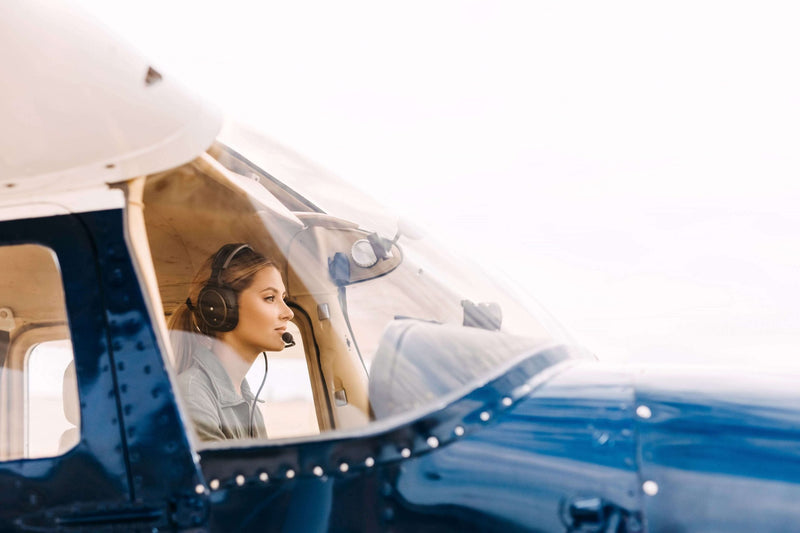
One person, one instructor, and no audience. Hands on the controls from the left seat, briefed before you go and debriefed after you land.
Hands-On Stick TimePre-Flight BriefingLoggable Flight Time
Flight Length
$229Book It Or Gift It
Same Price Either Way
The same flight with a passenger in the back seat, briefed and on the intercom. Couples book it; so do parents who would rather watch than hear about it.
One Passenger SeatPiper Warrior Or ArcherHeadsets For Both
Flight Length
$299Book It Or Gift It
Same Price Either Way
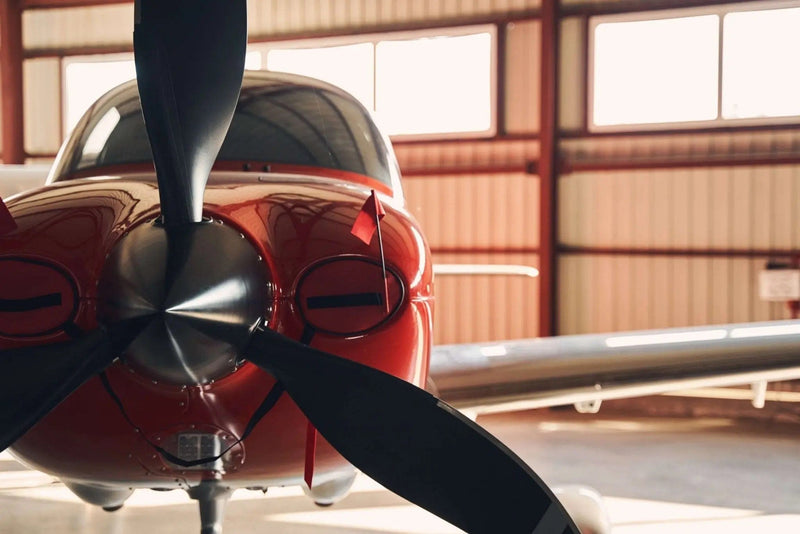
The nicest airplane we put a first-time flyer in. Glass cockpit, air conditioning, leather seats, and a parachute built into the airframe rather than strapped to the person.
Turbocharged Cirrus SR22Air ConditioningWhole-Airframe Parachute
Flight Length
$499Book It Or Gift It
Same Price Either Way
Two engines, and the airplane instrument-rated pilots move into when they start thinking about a career. Flown from the left seat with a multi-engine instructor.
Piper Seminole TwinMulti-Engine DepartureCareer-Track Instructor
Flight Length
$499Book It Or Gift It
Same Price Either Way
Gift It issues a real gift certificate, emailed within minutes, which never expires and credits in full toward training. Flights are limited to 180 lb per person, 370 lb combined. Questions: (818) 290-8249, 9 AM–9 PM, seven days.
SAFETY FIRST
Very safety and detail oriented. Pre-flight briefing explained everything there was. To my knowledge, this flight school is exceptional in their ability.
 DISCOVERY FLIGHT
I recently had the chance to take my first-ever discovery flight, and it was nothing short of amazing! From the moment I stepped into the cockpit, the...
 SUNSET CIRRUS
It was a great flight! I did a sunset flight and Alex let us fly an awesome. Website was easy to book, and the plane itself was really fun to fly...
 FLYING LESSON
We had a great flying lesson with Ralph and came away with a much better understanding of both the aircraft and the principles of flight. Ralph is a...
 KIDS LUXURY FLIGHT
I got 2 luxury discovery flights for my kids. I wanted them to have the experience of flying. Our instructor Alex was amazing he made sure they feel...
 HONEYMOON SURPRISE
Last minute booking to surprise my wife on our honeymoon. She had no experience with flying and was scared of flying, but Alex was very easygoing and knew...
 FULL-MOTION SIM
Amazing flight school in van nuys airport. I have been a student here for the past few months and i could not be happier. I started doing a lot of...
 DISCOVERY FOR TWO
I booked a Discovery Flight for Two for my girlfriend's birthday and it was the perfect gift for her. She couldn't have been more excited to get to...
 SIMULATORS
Very professional and great airplanes. I love the flight simulators. The pricing is very fair compared to any other flight school
 TEEN FIRST LESSON
We gifted our teenage son his first flying lesson. He was so excited! Alex greeted us and gave a reassuring brief that made us all feel comfortable and at...
 FIRST-TIME FLYER
Flying is my husband's hobby and I was incredibly anxious and apprehensive about the discovery flight. However, I felt completely safe and at ease once we...
SAFETY FIRST
Very safety and detail oriented. Pre-flight briefing explained everything there was. To my knowledge, this flight school is exceptional in their ability.
DISCOVERY FLIGHT
I recently had the chance to take my first-ever discovery flight, and it was nothing short of amazing! From the moment I stepped into the cockpit, the...
SUNSET CIRRUS
It was a great flight! I did a sunset flight and Alex let us fly an awesome. Website was easy to book, and the plane itself was really fun to fly...
FLYING LESSON
We had a great flying lesson with Ralph and came away with a much better understanding of both the aircraft and the principles of flight. Ralph is a...
KIDS LUXURY FLIGHT
I got 2 luxury discovery flights for my kids. I wanted them to have the experience of flying. Our instructor Alex was amazing he made sure they feel...
HONEYMOON SURPRISE
Last minute booking to surprise my wife on our honeymoon. She had no experience with flying and was scared of flying, but Alex was very easygoing and knew...
FULL-MOTION SIM
Amazing flight school in van nuys airport. I have been a student here for the past few months and i could not be happier. I started doing a lot of...
DISCOVERY FOR TWO
I booked a Discovery Flight for Two for my girlfriend's birthday and it was the perfect gift for her. She couldn't have been more excited to get to...
SIMULATORS
Very professional and great airplanes. I love the flight simulators. The pricing is very fair compared to any other flight school
TEEN FIRST LESSON
We gifted our teenage son his first flying lesson. He was so excited! Alex greeted us and gave a reassuring brief that made us all feel comfortable and at...
FIRST-TIME FLYER
Flying is my husband's hobby and I was incredibly anxious and apprehensive about the discovery flight. However, I felt completely safe and at ease once we...
Van Nuys is a Class D controlled field with a live tower and two parallel runways. 16R/34L is the long one and belongs mostly to the jets. 16L/34R is the shorter parallel, and that is the training runway — the strip you will use on very nearly every lesson you fly here.
The field sits at 802 feet on the floor of the San Fernando Valley. The Santa Monica Mountains wall it in to the south, the San Gabriels stand off to the northeast, and the whole box sits underneath the shelf of LAX Class B airspace. Van Nuys tower owns the surface up to 3,100 feet. Above that you are either talking to SoCal Approach or you are staying out, and knowing the difference is part of what you are here to learn.
That geography is the entire reason this is a good place to take flying lessons. Nothing about it is simplified. There is no version of a lesson at Van Nuys where the frequency is empty, the pattern is yours alone and the terrain is flat — which means there is no bad habit here that you will have to unlearn later.

A student who solos at Van Nuys can fly into almost any field in the country. That is not a slogan, it is a consequence of what this airport demands. From lesson one you are on a real tower frequency, reading back a real instruction, sequencing behind something with two turbines on it, and flying a pattern that already has four other aircraft in it.
Compare that with the standard quiet-field education. Students trained at sleepy airports often reach their cross-country phase having never once spoken to a controller under pressure. Then a busy tower fires an instruction at them and they freeze. We have watched transfer students go through exactly that, and fixing it costs hours and confidence. Both are expensive.
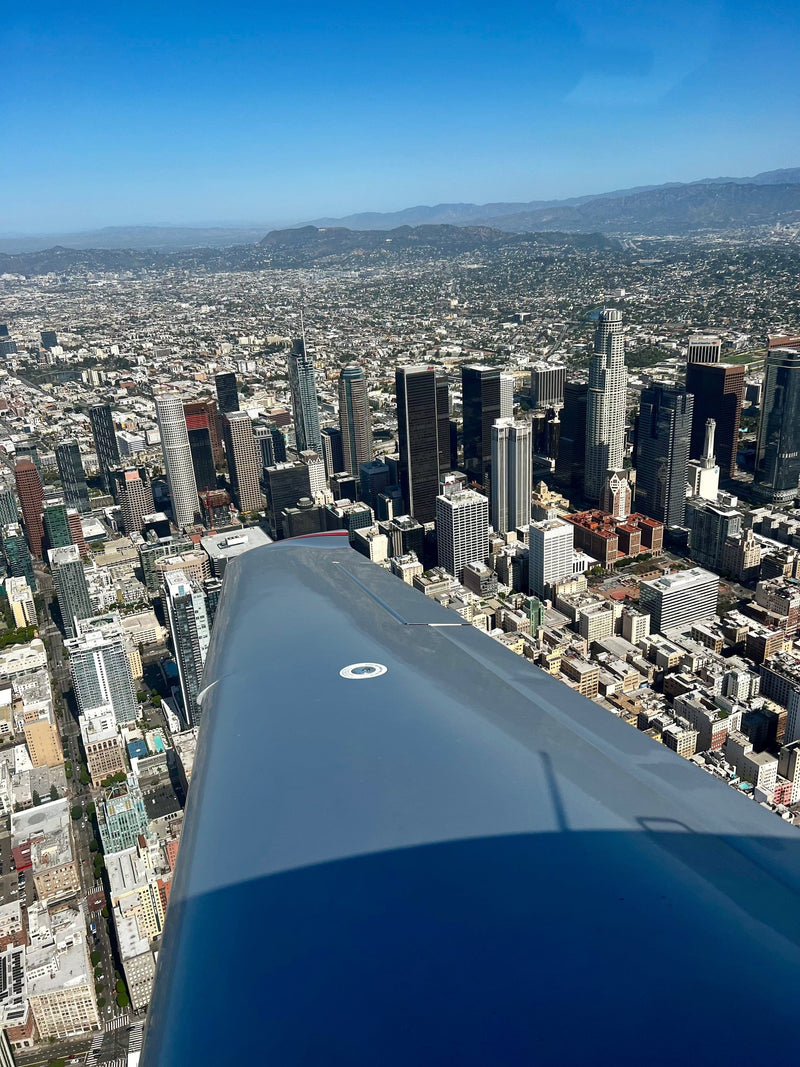
Then there are the transitions. Getting from Van Nuys to the coast, or over the hill toward downtown Los Angeles, means planning a route through some of the most congested airspace in the country and then flying it precisely — altitudes held, calls made, corridors respected. That is real navigation and you are doing it in your first month rather than your sixth.
The practical version of all this: when you eventually fly into a strange airport on a trip, the radio will be the easy part. Most private pilots never get to say that.

$229 for the first one. Then $179 an hour inside a package, and $10,900 for a complete private pilot program.
Start with the first lesson, because for most people that is the only number that matters today. A discovery flight is $229 for 60 minutes. It is not a sightseeing ride and it is not a sales pitch with wings — you fly the aircraft from the left seat, an FAA-certificated instructor sits beside you as pilot in command, and the hour is logged as dual instruction received. Enroll in any program within 24 hours and the full $229 comes straight off the price. You can book a discovery flight near you at Van Nuys on the same calendar this page uses.
After that, the honest structure. We sell training packages rather than hourly lessons, because packages are how people actually finish. Enrolled students fly a single-engine trainer at $179 an hour wet, and that rate sits inside the program price instead of being bolted onto it. The Standard Private Pilot Program is $10,900 and covers 40 hours of logged flight time. The Comprehensive is $15,900 and covers 60 hours, and it is the one most people should buy — the national average to a private certificate is 60 to 75 hours, not the 40-hour minimum FAR 61.109 sets on paper. The Premium is $22,500 and flies the Cirrus SR22 Turbo, glass cockpit and whole-airframe parachute included.
If you are 17 and starting from nothing, or 52 and finally doing the thing you have been saying you would do since 1994, the number to think about is $229. Financing starts at $2,500 down when you get to the program stage, through Stratus Financial or an in-house payment plan. Nobody here is going to push a $10,900 decision at you on the day you book a first flying lesson.
A busy airport costs you time on the ground. We would rather tell you now than let you discover it on your third lesson.
On a weekday morning a run-up queue of four or five aircraft at 16L is completely normal. Ten minutes between engine start and takeoff clearance is a realistic figure. On the worst mornings it is longer, and no amount of goodwill from the tower changes that.
The meter runs from engine start, so waiting costs money. At a field like this, a tenth or two of an hour per flight goes to taxi and holding. Across a 40-hour program that adds up to real dollars, and pretending otherwise would be insulting to anyone who can do arithmetic.
Beginners get scheduled into early morning and mid-afternoon slots when the queue is shortest. Every flight is briefed on the ground before the propeller turns. And procedure work — checklists, phraseology, emergencies, instrument scan — moves into the Redbird MCX, where the clock is cheaper and nothing is ever held short of 16L.
Roughly 90 minutes door to door for a 60-minute flight. This is what flying lessons for beginners actually consist of at Van Nuys, in order, with nothing left out.
You sit down at 7900 Balboa Blvd with your instructor, a sectional chart and a little model airplane on the table. You cover what each control does, where you are going and what the hour will look like. Ask everything now. There is no stupid question in a preflight brief and your instructor has already heard all of them twice.
You do the preflight inspection, not the instructor. Fuel drained into a tester and checked for water, oil dipped, control surfaces moved by hand, tires, brakes, pitot cover off, static ports clear. It takes about ten minutes and it is the part most people remember, because it is the moment the aircraft stops being an idea.
You get in the left seat, because the left seat is the pilot's seat and today it is yours. Your instructor works the radio on lesson one while you follow through on the rudder pedals during the taxi. At the run-up area you watch a magneto check and a full control sweep before we call the tower ready.
Feet on the pedals, right hand on the yoke, and you push the throttle forward yourself. Your instructor's hands stay close but off. The aircraft flies itself off 16L at around 55 knots and the Valley drops away underneath you. Almost nobody expects how gentle it feels.
Climb out, turn toward the practice area, level off. You will fly medium turns onto a heading, a climb, a descent, and hold an altitude within a couple of hundred feet — harder than it sounds and much easier than you fear. This is the segment where people stop wondering whether they could do this.
Back into the Van Nuys pattern, in sequence, on the radio. Your instructor lands it while you keep your hands on the controls and feel what the inputs are doing. Then you shut down, walk in, and sign the logbook: 1.0 hours of dual instruction received, in ink. It counts toward the 40 hours FAR 61.109 requires.
Three places. You will get to know all of them, and the third one is where the license starts to feel real.


North first. Ten minutes off 34R puts you over the hills above Santa Clarita and Newhall, and that is where most of the airwork happens — slow flight, stalls, steep turns, and eventually the maneuvers a designated examiner will ask you to fly. It is far enough out to have room and close enough that you are not burning half the lesson getting there.
Then the coast. Over the Santa Monica Mountains, down to the water, and west along the shoreline past Malibu toward Point Dume. Nothing quite prepares a student for how flat the horizon looks over the Pacific. It is also, in our experience, the flight where a lot of people quietly decide they are going to finish the certificate.
Then the cross-country. The standard long trip out of Van Nuys runs up the coast and inland to the Santa Ynez Valley and Lake Cachuma — real terrain, real fuel planning, a real decision to make if the marine layer pushes in behind you. Fly that route once and the 50-nautical-mile cross-country requirement stops being a rule in a book and becomes a thing you did.
Los Angeles gives you 355 flyable days a year. Put a number on what that is worth. A student flying twice a week somewhere with real winters loses whole months to ceilings, ice and crosswinds, and a private pilot certificate that should take five months takes twelve. Here, the same student flies almost every lesson they booked.
Two lessons a week at Van Nuys gets most people to a checkride in about five months. Three a week pulls that down to roughly three months. Full-time and focused, six to eight weeks is genuinely achievable, though it is harder than it sounds and it is the wrong pace for anyone holding down a job.
The one thing that does cancel here is the marine layer, and the marine layer burns off. Low morning cloud pushes into the Valley on some days between May and July — locals call it May Gray and June Gloom — which is why we schedule beginners mid-morning in early summer rather than at first light. When it does not clear, you fly the Redbird instead. That is a lesson, not a consolation prize. Weather is the single most underrated reason to take flying lessons in Los Angeles rather than almost anywhere else in the country.

We own them. They live on this ramp at Van Nuys, they are inspected on our schedule under FAR 91.409(b), and the same instructors fly them every single day.


Single-engine training on the Standard and Comprehensive programs is flown in the Cessna, Piper and Diamond aircraft. The Premium program is flown in the Cirrus SR22 Turbo with its full glass cockpit.
FAA-approved, fully enclosed, and it actually moves. At Van Nuys it does a second job: it takes procedure work off the Hobbs meter and out of the run-up queue.
Simulator hours are built into every private pilot program — 2 hours on Standard and Premium, 5 hours on Comprehensive. A standalone session is $189, and it never gets canceled for weather or held short of a runway.
Every instructor here holds a commercial or ATP certificate plus a CFI and a current medical, and is legally pilot in command on every flight you fly. There are 11 of them. That matters for a boring reason: your lesson does not evaporate because one person got sick or picked up a charter that week.
It matters more at Van Nuys specifically. An instructor who has worked this tower for years knows which runway you are likely to get at 8am, which taxiway saves four minutes on a Saturday, and what a controller means when the words come fast. None of that is in a syllabus, and over a 40-hour program it is worth real money.
You are matched to one instructor and you keep them. If the fit is wrong — and sometimes it is, teaching is personal — you say so and we move you. No awkwardness, no penalty, no conversation with a manager. The worst outcome in flight training is a student who quietly stops booking because they did not want to raise it.

On Google, the same three things come up about learning to fly here.
The most repeated compliment in our reviews is not the aircraft and it is not the price. It is the debrief — the twenty minutes after shutdown where somebody explains what just happened and what to fix next time.
Eleven instructors and a fleet we own outright means lessons happen when the calendar says they will. Students who transfer in from elsewhere mention this before anything else.
The number you enroll at is the number you finish at. Reviewers bring this up constantly, which tells you something about the rest of the industry.
Three ways in. Most people take the first one, and most people who take the first one come back.
You fly it from the left seat with a certificated instructor beside you. Logged as dual instruction and credited in full against any program if you enroll within 24 hours. 90 minutes is $299, 120 minutes is $399.
An hour in the full-motion FAA-approved simulator on the field at Van Nuys. Good if you want to try the controls before you commit to an aircraft, and good on a June morning when the Valley is gray.
Come to 7900 Balboa Blvd, walk the ramp, meet an instructor and leave with a written training plan and a real timeline. Nothing gets sold to you. Plenty of people do this before booking a flight.
All three include the aircraft, your instructor, Redbird time, ground school and books. Financing starts at $2,500 down.
40 hours of logged flight time. The FAR 61.109 route, and the right choice if you can fly three times a week and keep the skills warm between lessons.
60 hours of logged flight time, which is where the national average actually lands. If you are flying twice a week around a job, buy this one and stop worrying about the hour count.
40 hours of logged flight time, flown in the Cirrus SR22 Turbo. Glass cockpit, CAPS whole-airframe parachute, and an airplane you would genuinely want to own afterwards.
You do not need a medical certificate, a study plan or a decision about the next three years. You need one hour, an instructor and runway 16L. We are at 7900 Balboa Blvd, Suite 108A, on the field at Van Nuys, open 9am to 9pm seven days a week.
A first flying lesson at Van Nuys Airport is $229 for 60 minutes, and it is a real logged lesson rather than a sightseeing ride — you fly the aircraft from the left seat with an FAA-certificated instructor beside you. That $229 is credited in full against any program if you enroll within 24 hours. After that, enrolled students train at $179 an hour wet in a single-engine trainer, and a complete Standard Private Pilot Program is $10,900.
No. An FAA medical certificate is required before your first solo, not before your first lesson, so you can fly the $229 discovery flight and several lessons after it without one. Most students book a third-class medical somewhere around hour 10 to 15, comfortably ahead of solo. Sport pilot training, which is $8,400 with us, needs only a valid US driver's license.
There is no minimum age to take flying lessons. You must be 16 to solo an airplane and 17 to hold a private pilot certificate, so younger students are put on a schedule that lands their first solo on their 16th birthday. We also run a dedicated program for ages 10 to 15 at $4,200.
Yes, and you will fly most of the hour. On a $229 discovery flight you sit in the left seat, push the throttle forward for the takeoff and hand-fly the climb, the turns and the airwork over the San Fernando Valley. Your instructor is legally pilot in command and takes the radio and the landing, but roughly 40 of the 60 minutes are yours on the controls.
Yes. The $229 discovery flight is built for people who have never touched an airplane — no experience, no medical certificate and no study required before you arrive. You need a photo ID and about 90 minutes. You will fly roughly 40 of the 60 minutes yourself with an FAA-certificated instructor next to you.
Flying two lessons a week, most students at Van Nuys reach a checkride in about five months. Three lessons a week pulls that down to roughly three months, and a full-time student can finish in six to eight weeks. Los Angeles gives us 355 flyable days a year, which is why timelines here hold up better than in most of the country.
Judge any Van Nuys airport flight school on three things: whether it owns the aircraft you will fly, how many instructors it employs, and whether its prices are published. We own our fleet, we have 11 instructors, and every program price is on this page — $10,900, $15,900 and $22,500 for the three private pilot programs. We hold 5.0 stars across 100+ reviews on Google.
We are at 7900 Balboa Blvd, Suite 108A, Van Nuys, CA 91406, on the field at Van Nuys Airport, open 9am to 9pm seven days a week. That is under 20 minutes from Sherman Oaks, Encino, Burbank, Woodland Hills and Studio City, and about 35 minutes from the Westside. Call (818) 290-8249 to book a $229 first lesson.
No — the traffic is the advantage. Van Nuys is a Class D field with two parallel runways, so you get controlled-field radio work and real traffic sequencing from lesson one rather than month six. The honest cost is time on the ground: expect around ten minutes between engine start and takeoff clearance on a weekday morning, which is why beginners get early and mid-afternoon slots.
Most students at Van Nuys solo between 15 and 25 hours of dual instruction, and the busy pattern here tends to push people toward the upper end because the radio work is harder than at a quiet field. You need a third-class medical and a student pilot certificate in hand before solo day. Flying twice a week, that is typically three to four months in.
Yes. Every lesson we fly, including the $229 discovery flight, is logged as dual instruction received and counts toward the 40 hours FAR 61.109 requires for a private pilot certificate. Your instructor signs your logbook before you leave. The national average to a certificate is 60 to 75 hours, which is why our Comprehensive program is built around 60 logged hours at $15,900.
Bring a photo ID, sunglasses and shoes you can work rudder pedals in. That is the entire list — headset, charts, kneeboard and aircraft are all provided. Arrive 15 minutes before your slot at 7900 Balboa Blvd so the preflight brief starts on time, and plan on being with us about 90 minutes for a 60-minute flight.
The three private pilot packages, what each one includes, the financing options and a realistic timeline built around how often you can actually fly. Sent to you in one email. Nobody will pressure you.
Loved On Google
Every review below is real and shown verbatim, in the reviewer’s own words — written by the people who learned to fly here, not by us.
SAFETY FIRST
Very safety and detail oriented. Pre-flight briefing explained everything there was. To my knowledge, this flight school is exceptional in their ability.
DISCOVERY FLIGHT
I recently had the chance to take my first-ever discovery flight, and it was nothing short of amazing! From the moment I stepped into the cockpit, the...
SUNSET CIRRUS
It was a great flight! I did a sunset flight and Alex let us fly an awesome. Website was easy to book, and the plane itself was really fun to fly...
FLYING LESSON
We had a great flying lesson with Ralph and came away with a much better understanding of both the aircraft and the principles of flight. Ralph is a...
KIDS LUXURY FLIGHT
I got 2 luxury discovery flights for my kids. I wanted them to have the experience of flying. Our instructor Alex was amazing he made sure they feel...
HONEYMOON SURPRISE
Last minute booking to surprise my wife on our honeymoon. She had no experience with flying and was scared of flying, but Alex was very easygoing and knew...
FULL-MOTION SIM
Amazing flight school in van nuys airport. I have been a student here for the past few months and i could not be happier. I started doing a lot of...
DISCOVERY FOR TWO
I booked a Discovery Flight for Two for my girlfriend's birthday and it was the perfect gift for her. She couldn't have been more excited to get to...
SIMULATORS
Very professional and great airplanes. I love the flight simulators. The pricing is very fair compared to any other flight school
TEEN FIRST LESSON
We gifted our teenage son his first flying lesson. He was so excited! Alex greeted us and gave a reassuring brief that made us all feel comfortable and at...
FIRST-TIME FLYER
Flying is my husband's hobby and I was incredibly anxious and apprehensive about the discovery flight. However, I felt completely safe and at ease once we...
SAFETY FIRST
Very safety and detail oriented. Pre-flight briefing explained everything there was. To my knowledge, this flight school is exceptional in their ability.
DISCOVERY FLIGHT
I recently had the chance to take my first-ever discovery flight, and it was nothing short of amazing! From the moment I stepped into the cockpit, the...
SUNSET CIRRUS
It was a great flight! I did a sunset flight and Alex let us fly an awesome. Website was easy to book, and the plane itself was really fun to fly...
FLYING LESSON
We had a great flying lesson with Ralph and came away with a much better understanding of both the aircraft and the principles of flight. Ralph is a...
KIDS LUXURY FLIGHT
I got 2 luxury discovery flights for my kids. I wanted them to have the experience of flying. Our instructor Alex was amazing he made sure they feel...
HONEYMOON SURPRISE
Last minute booking to surprise my wife on our honeymoon. She had no experience with flying and was scared of flying, but Alex was very easygoing and knew...
FULL-MOTION SIM
Amazing flight school in van nuys airport. I have been a student here for the past few months and i could not be happier. I started doing a lot of...
DISCOVERY FOR TWO
I booked a Discovery Flight for Two for my girlfriend's birthday and it was the perfect gift for her. She couldn't have been more excited to get to...
SIMULATORS
Very professional and great airplanes. I love the flight simulators. The pricing is very fair compared to any other flight school
TEEN FIRST LESSON
We gifted our teenage son his first flying lesson. He was so excited! Alex greeted us and gave a reassuring brief that made us all feel comfortable and at...
FIRST-TIME FLYER
Flying is my husband's hobby and I was incredibly anxious and apprehensive about the discovery flight. However, I felt completely safe and at ease once we...
Reviews shown verbatim, exactly as each reviewer published them.
Aviation News
Notes from the flight line at Van Nuys — weather, regulation changes, checkride questions and the cost of training, written up as they come.
Open 7 days · 9:00 AM – 9:00 PM
Los Angeles Flight School