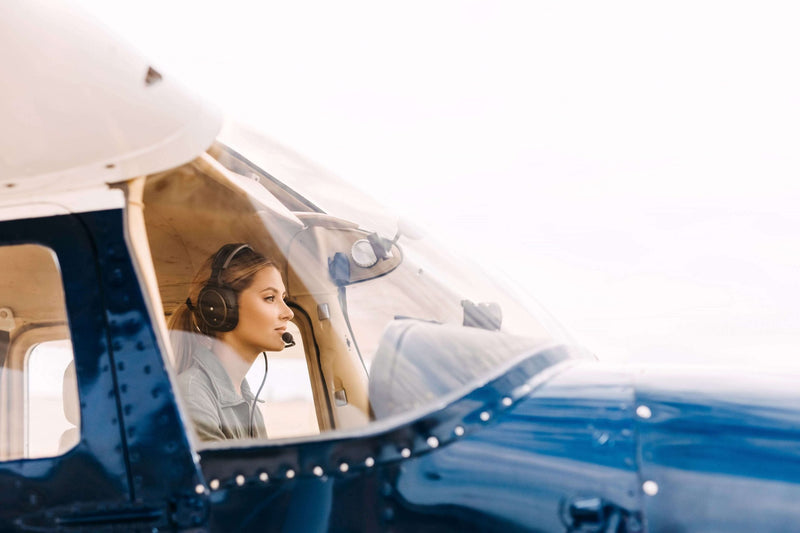
SAFETY FIRST
★★★★★
Very safety and detail oriented. Pre-flight briefing explained everything there was. To my knowledge, this flight school is exceptional in their ability.

The Seminole is the airplane the whole $5,100 multi-engine add-on is flown in. Counter-rotating propellers mean it has no critical engine, retractable gear and constant-speed propellers make it a complex airplane under 14 CFR 61.31(e), and it is honest enough at the edges to teach asymmetric flight without frightening anyone.
Because it is a conventional light twin that behaves predictably at the edge of controllability, and because its counter-rotating propellers remove one large variable from a lesson that is already crowded. It has been the standard multi-engine trainer in the United States for decades, which means nothing in your checkride profile will be unfamiliar to the examiner sitting beside you.
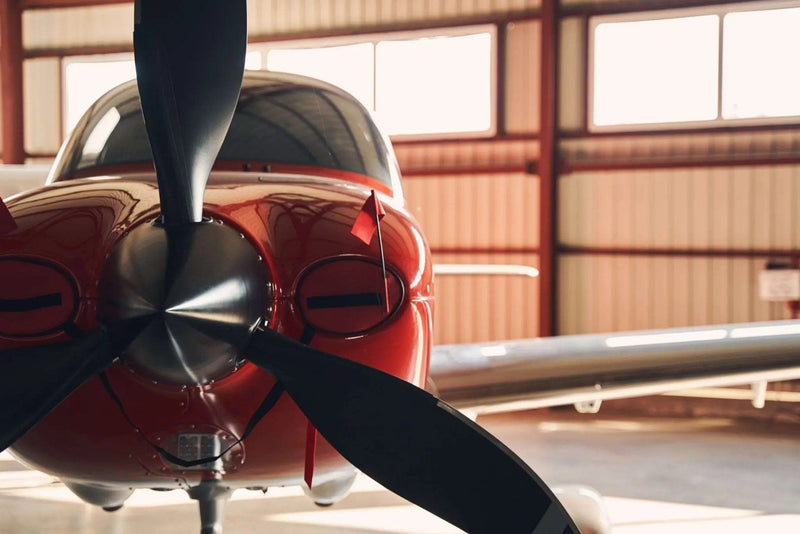
It is a four-seat, low-wing, all-metal twin with two Lycoming engines of 180 horsepower each, retractable landing gear and constant-speed propellers. There is nothing exotic about it. That is the point: every hour you spend in it is spent on asymmetric flight rather than on learning an unusual airplane.
The single most useful thing about it in training is that one propeller turns clockwise and one anticlockwise. On a conventional twin, P-factor pushes both thrust lines outboard to the right, leaving the right engine on the longer arm, which makes the left engine critical. Counter-rotation cancels that. The Seminole has no critical engine, and either failure is the same failure.
We will say the uncomfortable half of that out loud, because most pages about this airplane do not. You will not feel a critical engine here. You will understand one, because the oral examination does not care what you trained in, and you will meet a real one the first time you fly a conventional twin. If your plan involves a Baron or a Duchess afterwards, budget time for it.
The figures below are the ones we publish for our own aircraft. Every V-speed you actually use comes from the flight manual for the specific airframe on the day, which is why we do not print speeds on a web page.
| Item | Detail |
|---|---|
| Registration | N311EF |
| Configuration | Four seats, low wing, conventional twin |
| Engines | Two Lycoming, 180 horsepower each |
| Propellers | Counter-rotating, constant speed, full feathering |
| Landing gear | Retractable |
| Avionics | Garmin 430 |
| Cruise | 162 knots |
| Complex airplane | Yes — 14 CFR 61.31(e) requires a one-time logbook endorsement to act as pilot in command |
| Hourly rate | None published. The Seminole is not on our $179 single-engine rate; twin flying is priced inside the $5,100 add-on |
Maintenance is ours. Under 14 CFR 91.409(b) an aircraft used for instruction for hire needs a 100-hour inspection, and because we own the twin rather than broker it, that schedule is our problem rather than a reason a lesson gets canceled.
Heavier and steadier than anything most pilots arrive from, and slower to respond to a power change than a single. The first hour usually goes on resetting a sight picture and on getting used to managing two of everything: two throttles, two propeller levers, two mixtures, and a checklist flow that punishes improvisation.
It is not a demanding airplane in normal operations. Takeoffs, steep turns, slow flight and stalls are flown to the standard of the certificate you already hold, and most pilots are comfortable with the normal work inside two or three hours. The hours after that are the rating.
At the edge it is honest. The onset of a loss of directional control announces itself — rudder pressure running out, the nose starting to move — rather than arriving as a surprise. That is exactly what you want in a training airplane, and it is a large part of why the type is used for this job.
The genuine downside is comfort. The Seminole is the least pleasant airplane on our ramp to sit in for two hours, and multi-engine lessons run long because the brief and the debrief are where the learning happens. Bring water.

Multi-engine orals are systems-heavy. These are the areas that come up every time.
Each engine normally draws from its own side. Crossfeed exists so that a shut-down engine's fuel is not stranded, and the examiner will want the limitations and the procedure, not a general description.
Two alternators, one bus, and a set of failure cases where the answer is load-shedding rather than troubleshooting. Know what you lose and in what order.
Constant-speed operation, the relationship between manifold pressure and RPM, and what the levers actually command. This is where pilots coming straight from fixed-pitch singles have the most ground to make up.
Oil pressure holds the blades out of feather; springs and counterweights drive them into it. Which is why an engine losing oil pressure feathers itself, and why the unfeathering accumulator exists.
Why it removes the critical engine, what it changes about the VMC demonstration, and what it does not change about the theory you still have to know.
Retraction, extension, the emergency extension procedure, and the fact that extended gear aids directional stability and therefore lowers VMC.
One twin, and a single-engine fleet that most multi-engine students have already flown a hundred hours in.


The $5,100 add-on covers the Seminole. The single-engine trainers run at $179 an hour wet for enrolled students; the Cirrus SR22 Turbo sits on the $22,000 Premium program and, like the Seminole, carries no hourly figure.
Aircraft we own, inspected on our schedule, flown by our instructors every day.
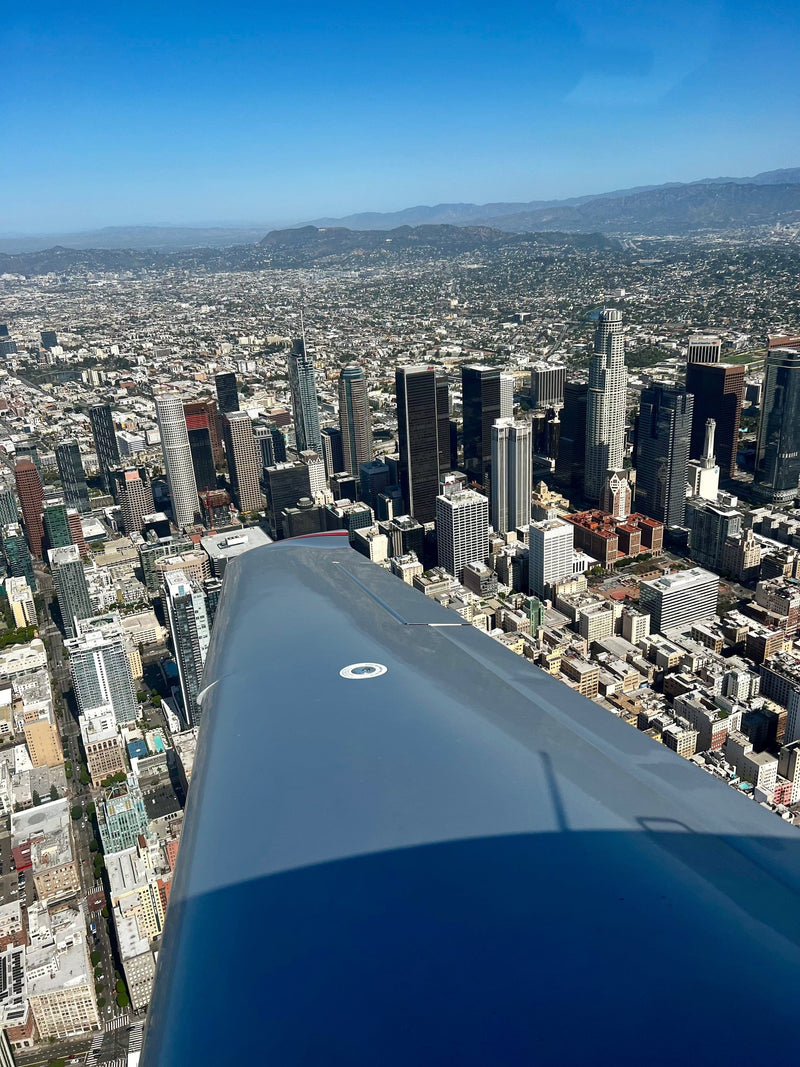
Van Nuys is a Class D field under the LAX Class B shelf, which means the radio work you learn here transfers anywhere in the country.
Multi-engine instruction carries a rule most pilots never read. 14 CFR 61.195(f) forbids an instructor from giving training toward a certificate or rating in a multiengine airplane unless they hold at least five hours of pilot-in-command time in that specific make and model. Not the class. The make and model.
That rule exists because deliberately failing an engine on a student is a maneuver with an accident history behind it. Doing it safely means briefing the recovery before every single one, respecting VSSE, and setting zero thrust rather than shutting an engine down where altitude is short.
Every instructor here holds a commercial or airline transport certificate plus a flight instructor certificate and a current medical, and is legally pilot in command on every flight. Eleven of them, which is the practical reason a two-week rating finishes in two weeks.

What people write about after a multi-engine course here is usually the whiteboard rather than the airplane.
The compliment that comes up most often in our reviews is not the airplane and it is not the ramp. It is that somebody sat down afterwards and drew the yaw on a whiteboard until it made sense.
Eleven instructors and a fleet we own and maintain. On a rating you are trying to finish inside two weeks, a school that cancels twice is the difference between done and half-done.
What you enroll at is what you finish at. On a $5,100 add-on that promise is most of the point, and reviewers keep writing about it because it is not universal.
There is no hourly rate for the twin. There is a rating price, and an hour you can buy to try it first.
The whole rating: Seminole time, dual instruction, ground and systems work, engine-out training and checkride preparation, at a price that is fixed when you enroll.
An hour in the Seminole before you commit $5,100 to it. Book it on the product page — an hour in the left seat settles the question faster than any amount of reading.
A real lesson in a single. You fly the airplane, the time is loggable dual instruction, and the full $229 is credited against any program if you enroll within 24 hours.
Full-motion, FAA-approved and never canceled for weather. Engine failures cost nothing here, which is why the first dozen of yours happen on the ground.
The $499 multi-engine discovery flight is an hour in the left seat of the Seminole with an instructor beside you. If you would rather ask questions first, the consultation costs nothing.
It means neither engine failing is worse than the other. On a conventional twin both propellers turn the same way, P-factor pushes each thrust line outboard to the right, and the right engine ends up on the longer arm — which makes the left engine critical. The Seminole turns one propeller each way, so the thrust lines are symmetric and the asymmetry cancels.
$5,100 for the complete multi-engine add-on, fixed at enrollment, with instruction included. The Seminole is not on our $179 hourly single-engine rate and we publish no hourly figure for it. A one-hour multi-engine discovery flight in the same airplane is $499.
Yes. It has retractable landing gear, flaps and controllable-pitch propellers, so 14 CFR 61.31(e) requires ground and flight training plus a one-time logbook endorsement from an authorized instructor before you act as pilot in command of one. Most multi-engine students receive that endorsement during the rating.
No. 14 CFR 61.31(a) requires type ratings for large aircraft, turbojet-powered airplanes and powered-lift, none of which describes a piston twin under 12,500 pounds. What you need is the airplane multiengine land class rating and, because it is complex, the 61.31(e) endorsement.
Ten to fifteen for most current pilots. There is no legal minimum — 14 CFR 61.63(c) sets a proficiency standard and no training time — so the honest answer is that it takes as long as it takes. The $5,100 does not change if you need more hours than the syllabus assumes.
Yes. The multi-engine discovery flight is $499 for sixty minutes in the Seminole with an instructor. You fly the airplane and the time is loggable dual instruction. It is the sensible way to find out whether a second engine is what you actually want before spending $5,100.
To remove the critical engine, which makes the airplane safer in the training role and makes engine-out handling symmetric. It also means the two engines are not interchangeable, which is a maintenance and systems point examiners like to raise in the oral.
The ones on your airplane's airspeed indicator and in its flight manual: the red radial line at VMC, the blue radial line at VYSE, and VSSE from the manual. We do not publish V-speeds for our aircraft on a web page because the number that matters is the one for the airframe you are strapped into that morning.
Aircraft are available to qualified pilots who have checked out with us — call (818) 290-8249 for availability. We do not publish a rate card and we do not advertise hourly aircraft rental, for the twin or for anything else.
Rarely, and we will say so. Twin hours are expensive hours and operators care more about the rating and the currency than about a large multi-engine total. Get the rating, keep it current, and build the rest of your time in something cheaper unless a specific job requirement says otherwise.
Northwest of Van Nuys over the Simi Hills and the Santa Susana Pass, where the altitude is available and almost nothing is built underneath. VMC demonstrations are flown above 3,000 feet AGL as the FAA Airplane Flying Handbook and the ACS require, and single-engine approaches come back into Van Nuys.
7900 Balboa Blvd, Suite 108A, Van Nuys, CA 91406, at Van Nuys Airport (KVNY). We are open 9am to 9pm, seven days a week, and the phone is (818) 290-8249.
For an owner flying 100 hours a year, PlanePhD estimated about $408 an hour, or $40,800 a year in cash, in March 2026, covering fuel, maintenance, insurance and storage. Fuel alone is about 20 to 22 gallons an hour. That is why we price the twin as a fixed $5,100 add-on rather than by the hour, and why it pays to build most of your hours in a single.
Piper quotes a 940 nautical mile maximum range for the current Seminole, at standard conditions with no wind, from 108 usable gallons. Real trips plan for winds and a reserve, so expect noticeably less; PlanePhD lists a typical 681 nautical miles for the PA-44-180. On a multi-engine course you fly local engine-out work instead, mostly northwest of Van Nuys.
No. 14 CFR 61.31(f) defines high-performance by an engine of more than 200 horsepower, and each Seminole engine makes 180. It is complex, with retractable gear, flaps and controllable-pitch propellers, so it needs the 61.31(e) endorsement. Most multi-engine students collect that endorsement during the rating if they do not already hold it.
A diesel version of the Seminole that Piper says will launch in 2027, powered by two 180 hp DeltaHawk DHK 180 engines with a cruise of over 178 knots true. Piper's 2026 brochure gives it the same 108 usable gallons and a 3,925 lb maximum takeoff weight, with figures preliminary until certification testing is complete. It is not yet in training fleets.
We do not advertise hourly twin rental. The Seminole is checked out to qualified pilots by arrangement, so call (818) 290-8249 to discuss it. Twin time is expensive, and most operators care more that you hold the multi-engine rating and stay current than about a large multi-engine total, so a single is usually the better place to build hours.
The three private pilot packages, what each one includes, the financing options and a realistic timeline built around how often you can actually fly. Sent to you in one email. Nobody will pressure you.
Loved On Google
Every review below is real and shown verbatim, in the reviewer’s own words — written by the people who learned to fly here, not by us.
SAFETY FIRST
Very safety and detail oriented. Pre-flight briefing explained everything there was. To my knowledge, this flight school is exceptional in their ability.
 DISCOVERY FLIGHT
I recently had the chance to take my first-ever discovery flight, and it was nothing short of amazing! From the moment I stepped into the cockpit, the...
 SUNSET CIRRUS
It was a great flight! I did a sunset flight and Alex let us fly an awesome. Website was easy to book, and the plane itself was really fun to fly...
 FLYING LESSON
We had a great flying lesson with Ralph and came away with a much better understanding of both the aircraft and the principles of flight. Ralph is a...
 KIDS LUXURY FLIGHT
I got 2 luxury discovery flights for my kids. I wanted them to have the experience of flying. Our instructor Alex was amazing he made sure they feel...
 HONEYMOON SURPRISE
Last minute booking to surprise my wife on our honeymoon. She had no experience with flying and was scared of flying, but Alex was very easygoing and knew...
 FULL-MOTION SIM
Amazing flight school in van nuys airport. I have been a student here for the past few months and i could not be happier. I started doing a lot of...
 DISCOVERY FOR TWO
I booked a Discovery Flight for Two for my girlfriend's birthday and it was the perfect gift for her. She couldn't have been more excited to get to...
 SIMULATORS
Very professional and great airplanes. I love the flight simulators. The pricing is very fair compared to any other flight school
 TEEN FIRST LESSON
We gifted our teenage son his first flying lesson. He was so excited! Alex greeted us and gave a reassuring brief that made us all feel comfortable and at...
 FIRST-TIME FLYER
Flying is my husband's hobby and I was incredibly anxious and apprehensive about the discovery flight. However, I felt completely safe and at ease once we...
SAFETY FIRST
Very safety and detail oriented. Pre-flight briefing explained everything there was. To my knowledge, this flight school is exceptional in their ability.
DISCOVERY FLIGHT
I recently had the chance to take my first-ever discovery flight, and it was nothing short of amazing! From the moment I stepped into the cockpit, the...
SUNSET CIRRUS
It was a great flight! I did a sunset flight and Alex let us fly an awesome. Website was easy to book, and the plane itself was really fun to fly...
FLYING LESSON
We had a great flying lesson with Ralph and came away with a much better understanding of both the aircraft and the principles of flight. Ralph is a...
KIDS LUXURY FLIGHT
I got 2 luxury discovery flights for my kids. I wanted them to have the experience of flying. Our instructor Alex was amazing he made sure they feel...
HONEYMOON SURPRISE
Last minute booking to surprise my wife on our honeymoon. She had no experience with flying and was scared of flying, but Alex was very easygoing and knew...
FULL-MOTION SIM
Amazing flight school in van nuys airport. I have been a student here for the past few months and i could not be happier. I started doing a lot of...
DISCOVERY FOR TWO
I booked a Discovery Flight for Two for my girlfriend's birthday and it was the perfect gift for her. She couldn't have been more excited to get to...
SIMULATORS
Very professional and great airplanes. I love the flight simulators. The pricing is very fair compared to any other flight school
TEEN FIRST LESSON
We gifted our teenage son his first flying lesson. He was so excited! Alex greeted us and gave a reassuring brief that made us all feel comfortable and at...
FIRST-TIME FLYER
Flying is my husband's hobby and I was incredibly anxious and apprehensive about the discovery flight. However, I felt completely safe and at ease once we...
Reviews shown verbatim, exactly as each reviewer published them.
Aviation News
Notes from the flight line at Van Nuys — weather, regulation changes, checkride questions and the cost of training, written up as they come.
Open 7 days · 9:00 AM – 9:00 PM
Los Angeles Flight School