SAFETY FIRST
★★★★★
Very safety and detail oriented. Pre-flight briefing explained everything there was. To my knowledge, this flight school is exceptional in their ability.

We train pilots from Torrance at Van Nuys Airport, about 35 miles and 40 to 50 minutes north on the 405. It is the longest drive of any area we serve, so this page tells you how to make it work and how to decide whether it is worth making at all.
Book It Or Gift It
Every discovery flight below can be booked for yourself in the next few minutes, or bought as a gift certificate that is emailed within minutes and never expires. Same flight, same price, either way.
 Most Given
 Two Seats
 The Nice One
 Twin Engine
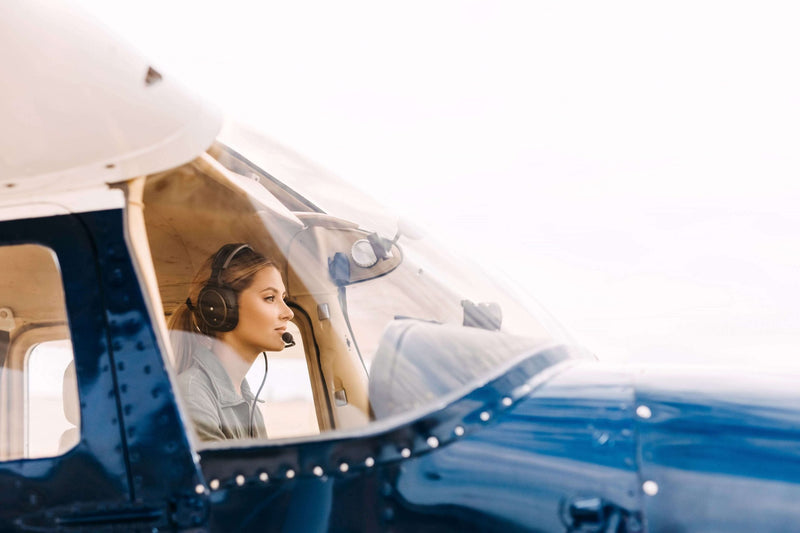
One person, one instructor, and no audience. Hands on the controls from the left seat, briefed before you go and debriefed after you land.
Hands-On Stick TimePre-Flight BriefingLoggable Flight Time
Flight Length
$229Book It Or Gift It
Same Price Either Way
The same flight with a passenger in the back seat, briefed and on the intercom. Couples book it; so do parents who would rather watch than hear about it.
One Passenger SeatPiper Warrior Or ArcherHeadsets For Both
Flight Length
$299Book It Or Gift It
Same Price Either Way
The nicest airplane we put a first-time flyer in. Glass cockpit, air conditioning, leather seats, and a parachute built into the airframe rather than strapped to the person.
Turbocharged Cirrus SR22Air ConditioningWhole-Airframe Parachute
Flight Length
$399Book It Or Gift It
Same Price Either Way
Two engines, and the airplane instrument-rated pilots move into when they start thinking about a career. Flown from the left seat with a multi-engine instructor.
Piper Seminole TwinMulti-Engine DepartureCareer-Track Instructor
Flight Length
$499Book It Or Gift It
Same Price Either Way
Gift It issues a real gift certificate, emailed within minutes, which never expires and credits in full toward training. Flights are limited to 180 lb per person, 370 lb combined. Questions: (818) 290-8249, 9 AM–9 PM, seven days.
SAFETY FIRST
Very safety and detail oriented. Pre-flight briefing explained everything there was. To my knowledge, this flight school is exceptional in their ability.
 DISCOVERY FLIGHT
I recently had the chance to take my first-ever discovery flight, and it was nothing short of amazing! From the moment I stepped into the cockpit, the...
 SUNSET CIRRUS
It was a great flight! I did a sunset flight and Alex let us fly an awesome. Website was easy to book, and the plane itself was really fun to fly...
 FLYING LESSON
We had a great flying lesson with Ralph and came away with a much better understanding of both the aircraft and the principles of flight. Ralph is a...
 KIDS LUXURY FLIGHT
I got 2 luxury discovery flights for my kids. I wanted them to have the experience of flying. Our instructor Alex was amazing he made sure they feel...
 HONEYMOON SURPRISE
Last minute booking to surprise my wife on our honeymoon. She had no experience with flying and was scared of flying, but Alex was very easygoing and knew...
 FULL-MOTION SIM
Amazing flight school in van nuys airport. I have been a student here for the past few months and i could not be happier. I started doing a lot of...
 DISCOVERY FOR TWO
I booked a Discovery Flight for Two for my girlfriend's birthday and it was the perfect gift for her. She couldn't have been more excited to get to...
 SIMULATORS
Very professional and great airplanes. I love the flight simulators. The pricing is very fair compared to any other flight school
 TEEN FIRST LESSON
We gifted our teenage son his first flying lesson. He was so excited! Alex greeted us and gave a reassuring brief that made us all feel comfortable and at...
 FIRST-TIME FLYER
Flying is my husband's hobby and I was incredibly anxious and apprehensive about the discovery flight. However, I felt completely safe and at ease once we...
SAFETY FIRST
Very safety and detail oriented. Pre-flight briefing explained everything there was. To my knowledge, this flight school is exceptional in their ability.
DISCOVERY FLIGHT
I recently had the chance to take my first-ever discovery flight, and it was nothing short of amazing! From the moment I stepped into the cockpit, the...
SUNSET CIRRUS
It was a great flight! I did a sunset flight and Alex let us fly an awesome. Website was easy to book, and the plane itself was really fun to fly...
FLYING LESSON
We had a great flying lesson with Ralph and came away with a much better understanding of both the aircraft and the principles of flight. Ralph is a...
KIDS LUXURY FLIGHT
I got 2 luxury discovery flights for my kids. I wanted them to have the experience of flying. Our instructor Alex was amazing he made sure they feel...
HONEYMOON SURPRISE
Last minute booking to surprise my wife on our honeymoon. She had no experience with flying and was scared of flying, but Alex was very easygoing and knew...
FULL-MOTION SIM
Amazing flight school in van nuys airport. I have been a student here for the past few months and i could not be happier. I started doing a lot of...
DISCOVERY FOR TWO
I booked a Discovery Flight for Two for my girlfriend's birthday and it was the perfect gift for her. She couldn't have been more excited to get to...
SIMULATORS
Very professional and great airplanes. I love the flight simulators. The pricing is very fair compared to any other flight school
TEEN FIRST LESSON
We gifted our teenage son his first flying lesson. He was so excited! Alex greeted us and gave a reassuring brief that made us all feel comfortable and at...
FIRST-TIME FLYER
Flying is my husband's hobby and I was incredibly anxious and apprehensive about the discovery flight. However, I felt completely safe and at ease once we...
Pick up the 405 north at Crenshaw or Hawthorne Blvd, run up through the Westside, over the Sepulveda Pass, and come off at Roscoe or Victory for 7900 Balboa Blvd. About 35 miles. Off-peak it is 40 to 50 minutes.
At 8am on a weekday it can be ninety. That is the honest number and we would rather you have it now than discover it on your third lesson. Of every area we serve, Torrance is the furthest, and the drive is the single biggest reason a South Bay student does not finish.
It is also completely manageable, but only if you schedule differently from someone who lives in Sherman Oaks. That is the next section and it is the most useful thing on this page.
Two things that help immediately. Book mid-morning or early afternoon rather than first thing, which keeps you out of the worst northbound traffic and puts you in the air during the hours when the weather is most reliable. And treat the 405 as a known quantity rather than a gamble: leave a buffer, because an instructor holding a slot for a student stuck at the Sepulveda Pass is a bad start to a lesson for both of you.
Parking is on site at 7900 Balboa Blvd, Suite 108A, and it is free. Turn in off Balboa. No meter, no structure, no walk.

If you live in Torrance, do not book two one-hour lessons a week. Book one three-to-four-hour block every week or ten days and cover two flights plus the ground work in a single trip.
The arithmetic favors you and it is not close. A single one-hour lesson costs you about ninety minutes in the car on top of three hours at the airport. Do that twice a week and you have spent three hours driving for two hours of flying. Do it once, in a block, and you spend ninety minutes driving for the same two hours in the air, with the ground instruction included instead of squeezed into a phone call.
It also flies better, which is the part people do not expect. Two flights in one day with a proper break between them is one of the most effective ways to learn to land, because the second session starts with the first still fresh rather than a week stale. Pattern work rewards this more than anything else in the syllabus. The students who fly a morning session, break for a ground lesson and lunch, then fly again in the afternoon, are usually the ones for whom landings click soonest.
Ground school hours are already inside the program price. Three hours on the Standard, ten on the Comprehensive. Pulling them into your block costs you nothing. Simulator hours are in there too, 2 on Standard and Premium and 5 on Comprehensive, and a Redbird session is close to a perfect middle piece for a Torrance block: no taxi, no hold short, no weather, and it runs whatever the marine layer is doing.
The one thing not to do is drive up, fly for an hour, and drive home. That is the pattern that makes people quit, and it is not the price or the difficulty that does it. Forty-five minutes each way for sixty minutes of flying wears thin somewhere around week six.
You walk the aircraft with your instructor and you both agree what this flight is for before the propeller turns. Twenty minutes, and it decides how much you get out of the next hour.
An hour and a quarter in the practice area or the pattern, then coffee and a debrief. The debrief is where the flying is actually learned and it is the first thing that gets cut when people are in a hurry.
An hour on the next lesson material, or a Redbird session running the procedures you are about to fly. Both are already paid for inside your program.
Same day, same instructor, same aircraft, with the morning still in your hands. This is the flight that moves you forward fastest.
You are on the 405 heading home before the evening build-up. One drive, two flights, ground work done properly.
Consistency beats frequency once the gap between lessons stays under about ten days. Two blocks a month is a workable rhythm from the South Bay. One a month is not.
Two different decisions get tangled together here and they deserve different answers.
If you want a discovery flight, come. One drive, $229 for 60 minutes, and you fly the aircraft yourself from the left seat with a certified instructor beside you. The hour is logged as dual instruction in a real logbook. Forty-five minutes on the 405 for something you will still be describing to people in ten years is not a hard trade, and most people asking this question are really asking about the discovery flight.
If you are starting a full private pilot certificate, sit with it first. That is 40 to 60 logged hours spread across somewhere between six months and two years, and every trip involves the 405. We would genuinely rather you think about it for a week and then commit than enroll on a wave of enthusiasm and stop in month four. A student who quits halfway has spent real money and holds no certificate. Nobody wins that one, and we are not interested in taking a deposit from someone we can see coming.
Three questions decide it. Can you protect a half-day block, roughly weekly, for the next year? Is your schedule flexible enough to move that block when the weather says no? And can you get here on a weekday morning, or only at weekends, which are the busiest slots at every school in the basin? Three yeses and the drive stops registering by about month two. If any of them is a no, better to know now.
There is a third path worth naming rather than hiding. The Sport Pilot certificate is $8,400, needs no FAA medical if you hold a valid US driver license, and takes fewer hours to reach. Some South Bay students start there, get flying with fewer trips, and add the private pilot certificate afterwards. It is a different route, not a lesser one.

Van Nuys is a Class D field sitting directly under the LAX Class B shelf, and one of the busiest general aviation airports in the world. You talk to a control tower from the first lesson. Not in month four, not after you move fields. Ground, tower, pattern entries, sequencing behind aircraft considerably faster than yours, all of it becomes ordinary while you are still learning to land.
That matters more from the South Bay than almost anywhere, because the airspace you will spend your flying life in is the busiest in the country. A pilot who learned to talk on the radio at a quiet field has to learn it again later, usually in a hurry, usually somewhere they would rather not be learning.
The trade-off is real and we will say it out loud: Van Nuys is busy. Some mornings you will hold short behind two jets and a helicopter, and that is time on the Hobbs you would not burn at a sleepy airport. We think fluency on the radio is worth the tax. If you disagree, that is a reasonable position to hold, but hold it knowingly.
The unglamorous reason schedules hold here is that we own our aircraft and we have eleven instructors. Schools running three airplanes and two instructors cancel, and a cancellation costs a Torrance student far more than it costs anyone else. That is the argument that should matter most to you.

Twelve months of NOAA ASOS observations to August 2026, ceiling 3,000 feet and visibility 5 statute miles, the minimum most schools apply to student solo and early dual work.
Van Nuys recorded 355 flyable days. Zamperini Field recorded 332, the lowest figure of any Los Angeles basin airport in the study. Santa Monica, also on the coast, came in at 343.
Torrance is low-lying and close to the water, which is the whole explanation. The marine layer comes ashore overnight, sits on the South Bay, and takes its time. Van Nuys sits inland behind the Santa Monica Mountains, in a basin that heats faster and clears earlier. Twenty-three days a year does not sound dramatic until you notice which days they are: mornings, mostly, and mostly in the months you were planning to fly.
Those twenty-three days are worth more to you than to anyone else reading a page like this, because you are the one driving furthest to use them. A scrubbed lesson costs a Van Nuys local twenty minutes. It costs you ninety and a morning.
The scheduling instruction that falls out of the data is the same one we gave you above. In June at Van Nuys only 40% of 7am observations met training minima, 93% did by 11am, and from 1pm it ran 97 to 100%. Book late morning. Your block should start when the sky has already made its decision.
| Airport | Flyable days, Aug 2025 to Aug 2026 |
|---|---|
| Van Nuys (KVNY) | 355 |
| Santa Monica (KSMO) | 343 |
| Zamperini Field, Torrance (KTOA) | 332 |
Method, definitions and the full tables are published in our flyable days flight training study.
We train pilots from Torrance, Redondo Beach, Palos Verdes, Manhattan Beach, Hermosa Beach, Lomita and Gardena at Van Nuys Airport, about 45 minutes north.
Torrance students almost always take the coastal route on cross-countries, down past Palos Verdes and the South Bay. It is the leg where the airspace work stops being theory: the Class B shelf overhead, the shoreline transition, and your own neighborhood off the left wing.
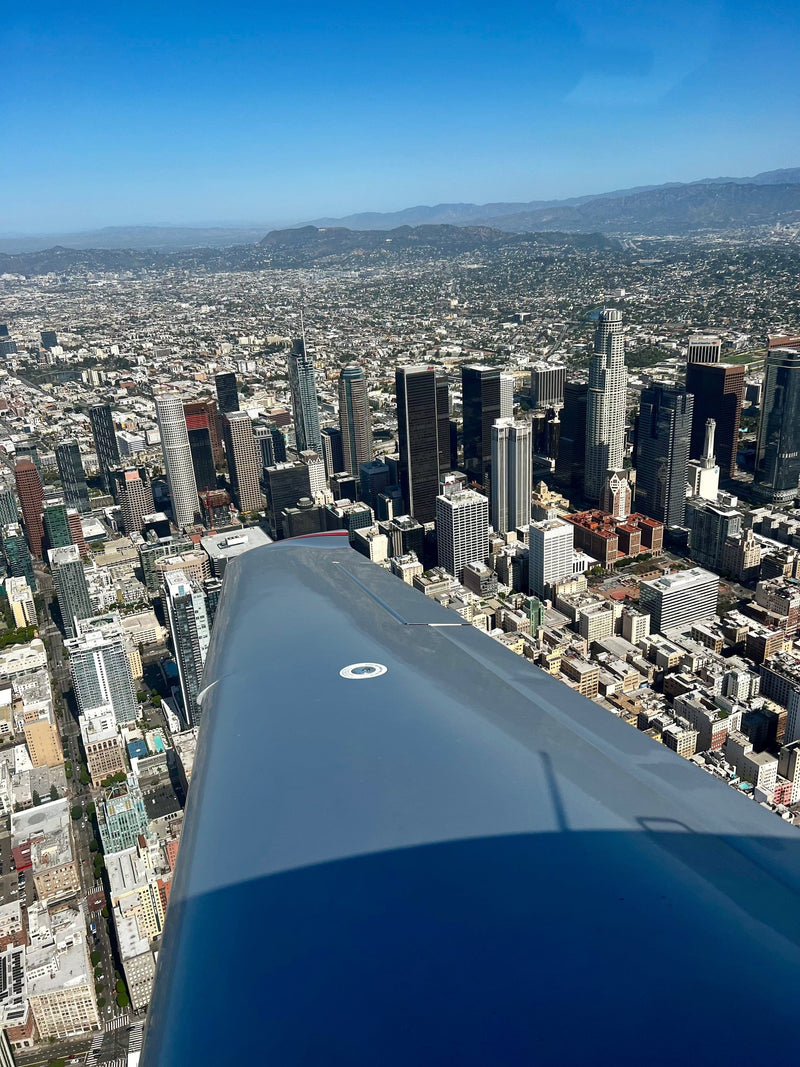
A flight from Van Nuys puts the Santa Monica Mountains, the Valley and the coastline into the same hour. You stop navigating by freeway and start navigating by ridgeline and shoreline, which is the moment the city starts making sense from above.
Camarillo, Santa Barbara and Palm Springs are all a comfortable leg from Van Nuys. The Camarillo lunch flight for two is $699 and it is the trip most students take their family on first.
One page, one price list. No quote form and no discovery call before you are allowed to see a number.
| Course | What it covers | Price |
|---|---|---|
| Discovery flight, 60 minutes | A real first lesson. You fly, the time is logged as dual instruction. | $229 |
| Discovery flight, 90 minutes | Longer route, more time on the controls. | $299 |
| Discovery flight, 120 minutes | Coast and downtown, the full loop. | $399 |
| Multi-engine discovery, Piper Seminole | Twin-engine introduction from the left seat. | $499 |
| Camarillo lunch flight for two | Fly out, eat, fly back. A day, not a lesson. | $699 |
| Redbird MCX simulator session | Full-motion, FAA-approved, never canceled for weather. | $189 |
| Teen aviation, ages 10 to 15 | Structured introduction for younger students. | $4,200 |
| Solo Certificate | Everything up to and including your first solo. | $5,500 |
| Sport Pilot | The lighter certificate, no FAA medical required with a valid driver license. | $8,400 |
| Private Pilot, Standard | 40 hours logged flight time. | $10,900 |
| Private Pilot, Comprehensive | 60 hours logged flight time. The one most people finish on. | $15,900 |
| Private Pilot, Premium | 40 hours logged, flown in the Cirrus SR22 Turbo. | $22,500 |
| Instrument Rating | The rating that turns a marine layer morning into a lesson. | $11,700 |
| Multi-Engine add-on | Piper Seminole, added to an existing certificate. | $5,100 |
| Zero to airline | Ab initio through to the airline transport pilot track. | $89,000 |
Enrolled students train on package pricing at $179 an hour wet in a single-engine aircraft. The number you enroll at is the number you finish at. Financing starts from $2,500 down with monthly plans.
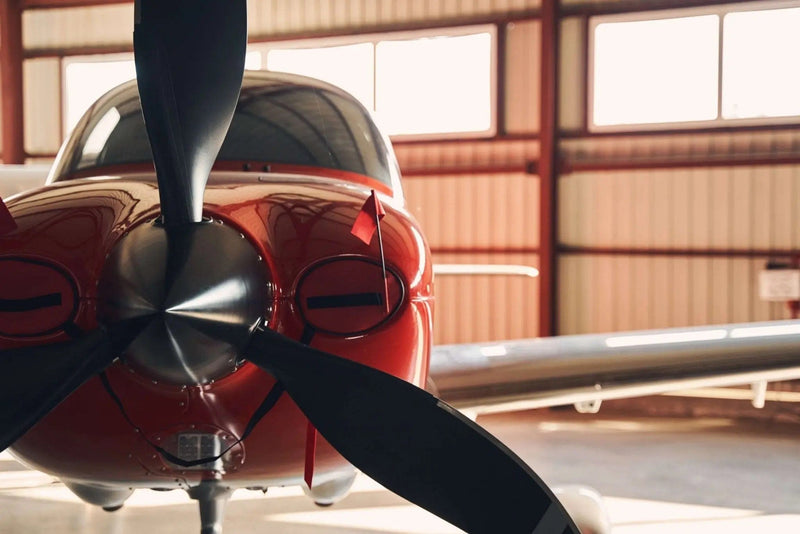
Not a broker rental and not a tired airframe with twelve thousand hours on it. Every aircraft on this ramp is ours, inspected on our schedule, and flown by our instructors every day.


Single-engine training on the Standard and Comprehensive programs is flown in the Cessna, Piper and Diamond aircraft. The Premium program is flown in the Cirrus SR22 Turbo with its full glass cockpit.
FAA-approved, fully enclosed, and it moves. Procedures, instrument scan, radio work and emergencies transfer straight to the aircraft, and it is never canceled for weather.
Simulator hours are built into every private pilot program: 2 hours on Standard and Premium, 5 hours on Comprehensive. For a Torrance student it is also the piece of a training block that a low overcast cannot take away, which is why it belongs in the middle of your day rather than at the end of your course.
Eleven instructors, and most of them are here because they want to teach rather than because they need 1,500 hours in a hurry. The difference shows up in the debrief, which is where flying is actually learned. Anyone can talk you through a steep turn. Far fewer can explain why yours went wrong in a way you still remember a week later.
Every instructor holds a commercial or ATP certificate, a CFI and a current medical, and on every flight the instructor is legally pilot in command. You are matched to one person so you are not re-explaining yourself every visit, which matters more when your visits are further apart. If the fit is wrong, say so and we change it.
The size of the team is the scheduling answer, and for a South Bay student it is the most important sentence on this page. When one instructor is sick or off flying a checkride, another one takes your block rather than your whole trip disappearing. That is what you are really buying when you drive past closer options.

On Google, the same three things come up over and over.
The compliment we get most often is not about the fleet or the price. It is about instructors who sit down afterwards and explain what actually happened in the air.
Eleven instructors and a fleet we own. When a lesson is canceled it is the weather rather than the staffing, and students who drive a long way notice that first.
You enroll at a number and you finish at that number. Reviewers mention this constantly, which tells you something about the rest of the industry.
All three include the aircraft, dual instruction, Redbird simulator time, ground school and materials. Financing from $2,500 down with monthly plans.
The FAA minimum path. Right for people who can protect a block every week and hold it.
Built around what people actually take rather than what the regulation allows. The right choice for most students driving in from the South Bay.
Flown entirely in the Cirrus SR22 Turbo. Glass cockpit from day one and a whole-airframe parachute.
A discovery flight is a real lesson. You fly the aircraft from the left seat with a certified instructor beside you, the time is logged as dual instruction in your logbook, and the full price is credited against any program if you enroll within 24 hours. From Torrance, book a late-morning slot and give yourself the whole morning. Nobody has ever regretted the first one.
The nearest one we run is at Van Nuys Airport, 7900 Balboa Blvd, Suite 108A, about 35 miles and 40 to 50 minutes north of Torrance on the 405. We train students from Torrance, Redondo Beach, Palos Verdes, Manhattan Beach, Hermosa Beach, Lomita and Gardena. A discovery flight is $229 for 60 minutes and it is a real lesson, logged as dual instruction.
Forty to fifty minutes off-peak, north on the 405 from Crenshaw or Hawthorne Blvd, over the Sepulveda Pass, exiting at Roscoe or Victory. In weekday peak traffic it can take ninety minutes. This is the longest drive of any area we serve, which is why we recommend mid-morning or early-afternoon slots.
For a discovery flight, yes without hesitation: one drive, $229, and you fly the aircraft yourself. For a full private pilot certificate, think about it properly first, because that is 40 to 60 logged hours over six months to two years and every trip is the 405. We would rather you weigh it and commit than enroll and stop in month four.
Book one three-to-four-hour block every seven to ten days rather than two one-hour lessons a week. A block covers two flights plus ground instruction in a single trip, so you spend 90 minutes driving for two hours of flying instead of three hours driving for the same two hours. Flying twice in one day is also one of the fastest ways to learn to land.
Yes, and by the widest margin in the basin. Our twelve-month study of NOAA ASOS data recorded 332 flyable days at Zamperini Field against 355 at Van Nuys, the lowest and one of the highest figures in Los Angeles. Torrance is low-lying and close to the water; Van Nuys sits inland behind the Santa Monica Mountains and clears earlier.
We operate from one field, Van Nuys Airport, so every South Bay student drives the 405 to reach us and we would rather say that plainly than pretend otherwise. What you get for the 45 minutes is a Class D tower under the LAX Class B shelf, 355 flyable days a year, eleven instructors and a fleet we own.
Three fixed prices: $10,900 for the Standard program with 40 hours logged, $15,900 for the Comprehensive with 60 hours logged, and $22,500 for the Premium flown in a Cirrus SR22 Turbo. Each includes aircraft, dual instruction, Redbird simulator time, ground school and materials. Financing starts from $2,500 down.
A real first lesson rather than a sightseeing ride. It is $229 for 60 minutes, $299 for 90 and $399 for 120, you fly the aircraft yourself with a certified instructor beside you, the time is logged as dual instruction, and the full amount is credited against any program if you enroll within 24 hours.
Forty hours is the FAA minimum under FAR 61.109. Most people in the United States finish somewhere between 60 and 75, which is why our Comprehensive program is built around 60 logged hours rather than the legal minimum. Students who let more than ten days pass between lessons drift toward the high end.
Some, and it is worth doing, but it will not replace the aircraft. Simulator hours are already inside every program, 2 on Standard and Premium and 5 on Comprehensive, and a standalone Redbird MCX session is $189. The better use of it is as the middle piece of a longer training block, running procedures between two flights on the same day.
It might. The Sport Pilot certificate is $8,400, requires no FAA medical if you hold a valid US driver license, and takes fewer hours to reach, so it means fewer trips up the 405 before you are flying. Several South Bay students start there and add the private pilot certificate afterwards.
Yes. The teen aviation course for ages 10 to 15 is $4,200. There is no minimum age to take lessons, solo in an airplane is allowed at 16 and a private pilot certificate can be issued at 17. Families driving from the South Bay usually book a weekend block rather than weekday evenings.
Typical training flights go over the Santa Monica Mountains and out to the coastline, and Torrance students often fly the coastal route on cross-countries, down past Palos Verdes and the South Bay. Camarillo, Santa Barbara and Palm Springs are all a comfortable leg from Van Nuys once you are flying cross-country.
Yes. The Instrument Rating is $11,700 and the Multi-Engine add-on is $5,100, flown in our Piper Seminole. For a South Bay pilot the instrument rating is the one that pays for itself in canceled mornings, because it turns a marine layer that scrubs a VFR lesson into a normal day of flying.
The three private pilot packages, what each one includes, the financing options and a realistic timeline built around how often you can actually fly. Sent to you in one email. Nobody will pressure you.
Loved On Google
Every review below is real and shown verbatim, in the reviewer’s own words — written by the people who learned to fly here, not by us.
SAFETY FIRST
Very safety and detail oriented. Pre-flight briefing explained everything there was. To my knowledge, this flight school is exceptional in their ability.
DISCOVERY FLIGHT
I recently had the chance to take my first-ever discovery flight, and it was nothing short of amazing! From the moment I stepped into the cockpit, the...
SUNSET CIRRUS
It was a great flight! I did a sunset flight and Alex let us fly an awesome. Website was easy to book, and the plane itself was really fun to fly...
FLYING LESSON
We had a great flying lesson with Ralph and came away with a much better understanding of both the aircraft and the principles of flight. Ralph is a...
KIDS LUXURY FLIGHT
I got 2 luxury discovery flights for my kids. I wanted them to have the experience of flying. Our instructor Alex was amazing he made sure they feel...
HONEYMOON SURPRISE
Last minute booking to surprise my wife on our honeymoon. She had no experience with flying and was scared of flying, but Alex was very easygoing and knew...
FULL-MOTION SIM
Amazing flight school in van nuys airport. I have been a student here for the past few months and i could not be happier. I started doing a lot of...
DISCOVERY FOR TWO
I booked a Discovery Flight for Two for my girlfriend's birthday and it was the perfect gift for her. She couldn't have been more excited to get to...
SIMULATORS
Very professional and great airplanes. I love the flight simulators. The pricing is very fair compared to any other flight school
TEEN FIRST LESSON
We gifted our teenage son his first flying lesson. He was so excited! Alex greeted us and gave a reassuring brief that made us all feel comfortable and at...
FIRST-TIME FLYER
Flying is my husband's hobby and I was incredibly anxious and apprehensive about the discovery flight. However, I felt completely safe and at ease once we...
SAFETY FIRST
Very safety and detail oriented. Pre-flight briefing explained everything there was. To my knowledge, this flight school is exceptional in their ability.
DISCOVERY FLIGHT
I recently had the chance to take my first-ever discovery flight, and it was nothing short of amazing! From the moment I stepped into the cockpit, the...
SUNSET CIRRUS
It was a great flight! I did a sunset flight and Alex let us fly an awesome. Website was easy to book, and the plane itself was really fun to fly...
FLYING LESSON
We had a great flying lesson with Ralph and came away with a much better understanding of both the aircraft and the principles of flight. Ralph is a...
KIDS LUXURY FLIGHT
I got 2 luxury discovery flights for my kids. I wanted them to have the experience of flying. Our instructor Alex was amazing he made sure they feel...
HONEYMOON SURPRISE
Last minute booking to surprise my wife on our honeymoon. She had no experience with flying and was scared of flying, but Alex was very easygoing and knew...
FULL-MOTION SIM
Amazing flight school in van nuys airport. I have been a student here for the past few months and i could not be happier. I started doing a lot of...
DISCOVERY FOR TWO
I booked a Discovery Flight for Two for my girlfriend's birthday and it was the perfect gift for her. She couldn't have been more excited to get to...
SIMULATORS
Very professional and great airplanes. I love the flight simulators. The pricing is very fair compared to any other flight school
TEEN FIRST LESSON
We gifted our teenage son his first flying lesson. He was so excited! Alex greeted us and gave a reassuring brief that made us all feel comfortable and at...
FIRST-TIME FLYER
Flying is my husband's hobby and I was incredibly anxious and apprehensive about the discovery flight. However, I felt completely safe and at ease once we...
Reviews shown verbatim, exactly as each reviewer published them.
Aviation News
Notes from the flight line at Van Nuys — weather, regulation changes, checkride questions and the cost of training, written up as they come.
Open 7 days · 9:00 AM – 9:00 PM
Los Angeles Flight School