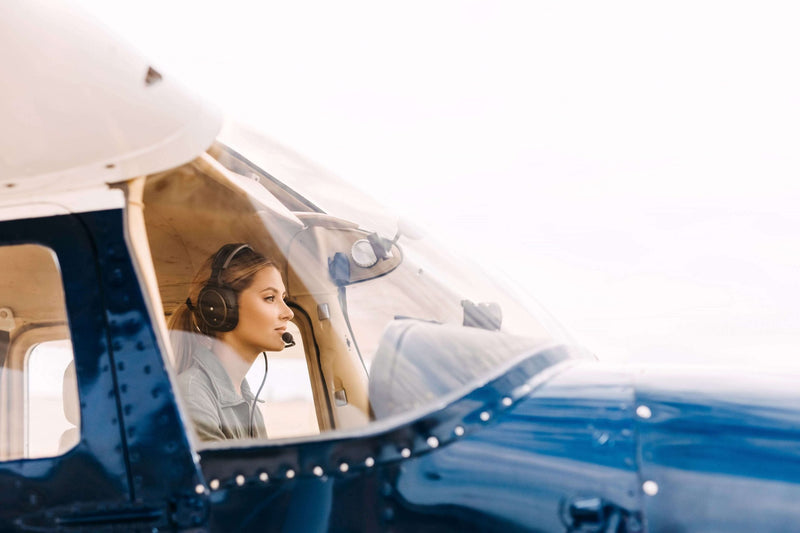
SAFETY FIRST
★★★★★
Very safety and detail oriented. Pre-flight briefing explained everything there was. To my knowledge, this flight school is exceptional in their ability.

The add-on is $5,100, it is flown in our Piper Seminole, and there is no FAA minimum hour requirement attached to it. 14 CFR 61.63(c) asks for proficiency and a practical test, nothing else. Most pilots reach checkride standard in ten to fifteen hours.
A multi-engine rating is a class rating added to a pilot certificate you already hold. It is not a certificate of its own, and that single fact explains almost everything else about it: because you are adding a class to an existing certificate, 14 CFR 61.63(c) governs the process, and 61.63(c) contains no hour requirement at all.
The full name of the thing you are adding is airplane multiengine land, usually written AMEL. Your certificate already says airplane single-engine land. Afterwards it says both. The privileges you exercise in a twin are the privileges of the certificate underneath — a private pilot with an AMEL rating may carry friends in a twin and may not be paid; a commercial pilot with an AMEL rating may be paid.
Three things happen under 61.63(c). An authorized instructor endorses you as competent in the knowledge areas and proficient in the areas of operation for the class you want. You pass a practical test at the level of the certificate you hold. And you take no additional FAA knowledge test, because 61.63(c)(4) excuses anyone who already holds an airplane rating at that certificate level. There is no multi-engine written.
Here is the part nobody selling this rating says out loud. For a pilot with no professional intention and no access to a twin, this rating buys very little. It is a superb piece of training and a poor piece of shopping. If you are heading toward commercial flying, or you are about to own or fly a light twin, read on. If neither is true, spend the $5,100 on an instrument rating instead and come back later.
Six tabs instead of thirteen sections of scrolling. Every explanation is still here — engine-out performance, VMC and blue line, the critical engine, the hours, the checkride and the Seminole you fly — one tab at a time.
The honest answer depends on which of three plans you are on, and the wrong order costs real money.
| Your plan | Where the rating goes | Why |
|---|---|---|
| Airlines or professional flying | After the commercial certificate, as an add-on under 61.63(c) | The low-cost order. No hour minimums apply, and you build the 250 hours in a single at a fraction of twin cost. |
| Commercial checkride flown in the twin | Before the commercial certificate is issued, under 61.129(b) | Legal and sometimes right, but 61.129(b) forces multi-engine time into your training hours. It is the expensive route. |
| You own or will fly a light twin | Any time after the private certificate | 61.63(c) applies at the private level too. Insurance, not the FAA, will set your real minimums. |
| Instructing as a career | After commercial AMEL, then the MEI | The multi-engine instructor rating needs 15 hours pilot in command in a multiengine airplane under 61.183(j). |
Adding a class rating to a certificate you already hold is nearly always cheaper than earning a certificate in the airplane. That is the whole arbitrage, and most pilots find it out too late.
This is the reason the rating exists, and it is the reason the checkride is almost entirely engine-out work.
The FAA Airplane Flying Handbook (FAA-H-8083-3C, Chapter 13) puts it in one sentence: “The most obvious problem is the loss of 50 percent of power, which reduces climb performance 80 to 90 percent.” That is not a typo and it is not marketing. It is arithmetic.
Climb rate does not come from the power an engine makes. It comes from the power left over after level flight has been paid for. In cruise, most of what the engines produce is spent holding the airplane up and pushing it through the air; the surplus is what buys you feet per minute. Take away half of what is available and you have not halved the climb, you have taken almost all of the surplus. What was a healthy rate of climb becomes a number small enough that you round it in your head.
Then it gets worse, twice. The failed engine is not neutral — a propeller left turning in the airstream is a disc of drag, and the handbook is blunt about the size of it. And keeping the airplane pointed straight now costs you rudder, and rudder deflection is drag too. So the surplus power you had left is being spent on the consequences of the failure before any of it reaches the climb.
None of this makes a twin dangerous. It makes an unbriefed, unpractised twin dangerous. A pilot who has flown the profile forty times knows exactly what the airplane will and will not do on one engine on a warm afternoon, and plans the departure around it. That planning is the rating.
Enough that the first thing you do about a failed engine is stop the propeller turning.
The Airplane Flying Handbook is unambiguous: a windmilling propeller at small blade angles produces drag comparable to that of the entire airframe, while the parasite drag of a single feathered propeller is a small part of the airplane's total drag. A propeller left spinning is not a dead engine. It is an air brake bolted to one wing.
Feathering fixes it. The blades rotate to roughly ninety degrees to the plane of rotation so that they sit edge-on into the relative wind, the disc stops turning, and the drag collapses to something close to the wing and nacelle it is attached to. On the Seminole, as on most light twins, oil pressure holds the blades out of feather and springs plus counterweights drive them into it, which is why an engine that loses oil pressure feathers itself and why there is an accumulator to help unfeather it in training.
And this is where the drill comes from. Feathering is irreversible in any practical sense in flight, and feathering the wrong propeller in a twin leaves you with no engines at all. So the sequence is fixed and it is verbal: identify — dead foot, dead engine, because the foot that is not working is on the side that is not producing thrust. Verify — close the throttle you believe is dead and confirm nothing changes. Feather — and only now do you touch the propeller control, and you touch it while looking at it.
Instructors make students say it out loud for months. It sounds theatrical on the ground. It is what reliably survives the first real failure, when the airplane is yawing, the noise has changed and the temptation to grab something is enormous.
Because it is written into the airplane's certification basis, not into your logbook.
14 CFR 1.2 defines it in six words: VMC means minimum control speed with the critical engine inoperative. 14 CFR 23.2135(c) makes it concrete: “VMC is the calibrated airspeed at which, following the sudden critical loss of thrust, it is possible to maintain control of the airplane.” It is a number the manufacturer had to demonstrate to get the type certificate. It is not a handling technique and it is not an opinion.
What makes it interesting is the conditions it is demonstrated under. The Airplane Flying Handbook lists them: maximum takeoff power, propellers in the takeoff position, the most unfavourable weight and center of gravity, landing gear retracted, takeoff flap setting, the airplane trimmed for takeoff, out of ground effect, and no more than five degrees of bank toward the operating engine. Every one of those is chosen to be unhelpful. The red radial line on your airspeed indicator is therefore the worst case, not the case.
Which leads to the thing that surprises most pilots. The real VMC on any given flight moves, and it usually moves down. Climb into thinner air and a normally aspirated engine makes less power, so the good engine produces less yaw, so the speed at which you can still hold the airplane straight falls. That sounds like good news. It is not. Push VMC low enough and the airplane reaches its stalling speed first, and an asymmetric stall in a twin is a far worse event than a loss of directional control. This is precisely why the Airplane Flying Handbook says the VMC demonstration is flown no lower than 3,000 feet above ground, and why the Airman Certification Standards require a safe maneuvering altitude above 3,000 feet AGL.
Four other things move the number. An aft center of gravity shortens the arm the rudder works on and raises VMC. Banking a few degrees into the operating engine lets a component of lift help the rudder and lowers it. Feathering the dead propeller removes drag behind the failed engine and lowers it. Extending the landing gear adds keel area below the center of gravity and lowers it, which is the counter-intuitive one, and it is the one examiners like to ask about.
Last, the recovery, because it is backwards from everything a single-engine pilot has been taught. A loss of control at VMC is a roll driven by asymmetric thrust, not a stall. You do not add power. You reduce power on the operating engine and lower the nose to regain speed. Adding power in a VMC roll increases the yaw that is killing you. Every hour of the rating exists so that this response arrives without thought.
The full engine-out aerodynamics page works through the yaw, the roll and the drag with the numbers attached.
Blue line is VYSE — the best rate of climb speed with one engine inoperative — and it is painted as a blue radial line on the airspeed indicator of every light twin. It is worth knowing that VYSE does not appear in 14 CFR 1.2. Unlike VMC, it is an airplane flight manual speed and an instrument marking, defined for pilots in the FAA Airplane Flying Handbook, Chapter 13.
The reason it dominates single-engine flying is that on one engine there is barely any surplus power to spend, and blue line is where the little you have buys the most height. Fly ten knots fast and the drag has gone up; fly ten knots slow and the induced drag has gone up more. In a single, being off speed costs you a bit of climb. In a twin on one engine it can cost you the climb entirely.
Two relatives matter and neither is in 14 CFR 1.2 either. VXSE is the best angle of climb on one engine, which is what you want with terrain ahead. VSSE is the safe, intentional one-engine-inoperative speed — the minimum speed at which an instructor will deliberately fail an engine on you. It exists so that training does not become the hazard.
Above the single-engine absolute ceiling, blue line stops being a climb speed at all and becomes the speed for the slowest rate of descent. That is a real operational condition on a hot day out of Van Nuys at gross weight, and it is one of the calculations you will do on the ground before you do it in the air.

The critical engine is the one whose failure most adversely affects the performance and handling of the airplane. On a conventional light twin, where both propellers turn clockwise as seen from the cockpit, it is the left engine — and the reason is P-factor.
At a high angle of attack the descending blade of a propeller meets the air at a greater angle than the ascending blade, so it makes more thrust. On each engine, the descending blade is on the right-hand side of its own disc. That pushes each engine's effective thrust line outboard to the right. The right engine's thrust line therefore sits further from the fuselage centerline than the left engine's does, on a longer arm.
So lose the left engine and the thrust that remains is the one with the longer arm: more yaw, more rudder to hold it, worse climb. Lose the right and the surviving left engine works on a shorter arm and the airplane is easier to control. Three other effects — accelerated slipstream over the wing, spiralling slipstream onto the fin, and torque — push in the same direction.
Our Piper Seminole has counter-rotating propellers, so it has no critical engine. One turns clockwise and one anticlockwise, the two thrust lines are symmetric, and neither failure is worse than the other. That is genuinely useful in training, because it removes one variable from an already busy lesson. It is also a limitation, and we say so: you will not feel a critical engine here, you will only understand one. You still have to know the theory cold for the oral, and if you go on to fly a conventional twin, budget time to meet the asymmetry properly.

None, if you are adding the class rating to a certificate you already hold. The hour requirements people quote come from a different regulation that applies to a different situation.
| What you are doing | Governing rule | Hour minimum |
|---|---|---|
| Adding AMEL to a private pilot certificate | 14 CFR 61.63(c) | None. Proficiency and a practical test. |
| Adding AMEL to a commercial pilot certificate | 14 CFR 61.63(c) | None. Proficiency and a commercial-level practical test. |
| Adding AMEL to an ATP certificate | 14 CFR 61.63(c) | None specified for the class addition. |
| Earning the commercial certificate itself in a twin | 14 CFR 61.129(b) | 250 hours total, with the multi-engine breakdown below. |
| Adding a multi-engine instructor rating | 14 CFR 61.191 and 61.183(j) | 15 hours pilot in command in a multiengine airplane. |
If someone quotes you a multi-engine hour minimum for an add-on, they are quoting 61.129(b) at you and 61.129(b) is not your regulation. The requirements page works through both in full.
There is no separate multi-engine ACS. The multiengine tasks live inside the Private Pilot – Airplane ACS (FAA-S-ACS-6C) and the Commercial Pilot – Airplane ACS (FAA-S-ACS-7B), and you are tested at the level of the certificate you already hold.
An abort. The standard is that you recognize it and stop, not that you fly it. Getting airborne below VMC on one engine is the accident this task exists to prevent.
Simulated, in the air, at a briefed altitude. Control first, then performance, then the checklist. The examiner is watching the order more than the speed.
Turns, climbs, descents and configuration changes on one engine, holding blue line while the workload climbs.
Above 3,000 feet AGL. You recognize the onset, recover with coordinated inputs, and the ACS holds you to no more than 20 degrees of bank in the recovery.
Flown to a landing. Single-engine go-arounds are, in most light twins, not a maneuver — which is the point the examiner wants you to understand before you say it.
Systems, performance, V-speeds and aerodynamics. Expect VMC and the critical engine to take up more of the oral than everything else combined.
Everything, and mostly in the direction of cost. 14 CFR 61.129(b) is the commercial pilot certificate with an airplane multiengine class rating, and it puts real multi-engine time into the requirements.
The headline is 250 hours of flight time as a pilot. Inside that, 61.129(b)(1) wants 100 hours in powered aircraft of which 50 must be in airplanes, and 61.129(b)(2) wants 100 hours of pilot-in-command time including 50 in airplanes and 50 of cross-country of which at least 10 are in airplanes.
Then the training. 61.129(b)(3) requires 20 hours of training on the areas of operation with an authorized instructor, and that is where the twin appears: ten hours of instrument training of which five must be in a multiengine airplane, and ten hours of training in a multiengine complex or turbine-powered airplane. Add a two-hour daytime cross-country over 100 nautical miles and a two-hour night one, both in a multiengine airplane, and three hours of test preparation within the preceding two calendar months.
Finally 61.129(b)(4) asks for ten hours of solo flight in a multiengine airplane, or ten hours performing the duties of pilot in command in one with an authorized instructor aboard — including a cross-country of at least 300 nautical miles with landings at three points, and five hours of night flying with ten takeoffs and ten landings at an airport with an operating control tower.
Count it up and it is well over thirty hours of twin time before the checkride. That is why we tell almost everybody to earn the commercial certificate in a single and then spend $5,100 adding the class rating. The commercial multi-engine add-on page lays both routes side by side.
If you take your multi-engine practical test in an airplane whose engines are mounted on the fuselage centerline — one pulling and one pushing, like a Cessna Skymaster — your certificate is issued “LIMITED TO CENTER THRUST”. You may then act as pilot in command only of centerline-thrust twins.
The regulation behind it is 14 CFR 61.45(b)(2), which says an applicant may use an aircraft with operating characteristics that preclude performing all of the tasks required for the practical test, but that the certificate will then be issued with an appropriate limitation. A centerline-thrust twin cannot produce asymmetric thrust, so it cannot demonstrate VMC or engine-out yaw. Those tasks go untested, so the privileges go restricted.
It is removable. Appendix 1 of the Commercial Pilot – Airplane ACS contains a task table headed Removal of the “Limited to Center Thrust” Limitation, and the same appendix carries one for the Airplane Multiengine VFR Only limitation that lands on pilots who add the class rating without demonstrating instrument tasks in a twin.
The simplest way to avoid both is to train and test in a conventional twin and to fly the instrument tasks while you are there. That is what happens here by default. The centerline thrust page explains both limitations and how each one comes off.

Every airplane on this ramp is ours. We inspect them on our schedule and our instructors fly them daily, which is why 14 CFR 91.409(b) and its 100-hour cycle is our problem rather than a broker's.


The multi-engine add-on is flown entirely in the Piper Seminole. The Seminole carries no hourly figure — twin flying here is priced inside the $5,100 add-on, instruction included. The single-engine trainers behind it run at $179 an hour wet for enrolled students.
The Redbird MCX is a full-motion, FAA-approved simulator, and it does not care how many times you feather the wrong propeller.
Simulator work is where the identify-verify-feather sequence becomes automatic without burning Seminole time. A Redbird session is $189 on its own; multi-engine students use it inside the $5,100 add-on.
Every instructor here holds a commercial or airline transport certificate plus a flight instructor certificate and a current medical, and on every flight the instructor is legally pilot in command. On multi-engine training there is a second requirement most people never read: 14 CFR 61.195(f) forbids an instructor from giving training toward a certificate or rating in a multiengine airplane unless they hold at least five hours of pilot-in-command time in that specific make and model.
That rule exists because failing an engine on a student is a maneuver with a real accident history. Doing it safely means knowing the airplane's behavior cold, briefing the recovery before every single one, and setting zero thrust rather than shutting an engine down at low altitude.
We run eleven instructors, which is the practical reason a two-week rating finishes in two weeks. You are matched to one and you can change if the fit is wrong. On a rating this short, three canceled slots is not an inconvenience, it is a month.

The multi-engine checkride page walks the whole test, oral and flight, in the order an examiner runs it.
Multi-engine students write about the debriefs more than the flying, which is roughly the right ratio for this rating.
The compliment that comes up most often in our reviews is not the airplane and it is not the ramp. It is that somebody sat down afterwards and drew the yaw on a whiteboard until it made sense.
Eleven instructors and a fleet we own and maintain. On a rating you are trying to finish inside two weeks, a school that cancels twice is the difference between done and half-done.
What you enroll at is what you finish at. On a $5,100 add-on that promise is most of the point, and reviewers keep writing about it because it is not universal.
One number for the rating, fixed at enrollment. Financing from $2,500 down through Stratus Financial or our own payment plans.
The whole rating: Seminole time, dual instruction, ground and systems work, engine-out training and checkride preparation, at a price that is fixed when you enroll.
An hour in the Seminole before you commit $5,100 to it. Book it on the product page — an hour in the left seat settles the question faster than any amount of reading.
A real lesson in a single. You fly the airplane, the time is loggable dual instruction, and the full $229 is credited against any program if you enroll within 24 hours.
Full-motion, FAA-approved and never canceled for weather. Engine failures cost nothing here, which is why the first dozen of yours happen on the ground.
If you are choosing between this and the twin, take the instrument rating first. It changes what you can do with an airplane far more than a second engine does.
Private, instrument, commercial and the multi-engine add-on inside one program, with the sequence already arranged in the cheap order.
Put our number beside any other quote you are holding and check that both are describing the same thing.
Inside the $5,100: Piper Seminole flight time to checkride standard, dual instruction on every one of those hours, one-to-one ground and systems instruction, all the engine-out and VMC work, Redbird MCX simulator time used inside the syllabus, the mock oral and the mock checkride, and the endorsements required by 14 CFR 61.63(c)(1). The number is fixed when you enroll. It does not move because you took fifteen hours instead of ten.
Outside the $5,100: the designated pilot examiner, who is booked and paid directly by you; your medical; and your own headset and charts. We do not mark up the examiner and we do not want to.
We are not going to name another school or quote another school's price. What we will do is tell you the three questions that decide whether two multi-engine quotes are comparable at all. First: is it a package or an estimate? An hourly estimate with an assumed hour count is not a price, it is a forecast, and forecasts of multi-engine training run long. Second: is the instructor inside the number, or beside it? Aircraft-only pricing looks lower and finishes higher. Third: what happens on the eleventh hour? Ask the school to write down what you pay if you need five hours more than their syllabus says. Ours is nothing.
Then do the arithmetic yourself. Anyone publishing a bigger number than $5,100 for the same rating in the same class of airplane is asking you to pay the difference for something, and it is entirely fair to ask what.
The $499 multi-engine discovery flight puts you in the left seat of the twin for an hour with an instructor beside you. If you would rather talk first, the consultation is free and nobody will try to enroll you on it.
It is a class rating — airplane multiengine land, or AMEL — added to a pilot certificate you already hold. It is not a separate certificate, which is why 14 CFR 61.63(c) governs it and why no hour minimum applies. The add-on is $5,100 here and most pilots reach checkride standard in ten to fifteen hours.
Zero, as a legal minimum. 14 CFR 61.63(c) asks for an instructor endorsement of competence and proficiency and a practical test, and sets no training time. In practice ten to fifteen hours is the honest range for a current pilot, and the hour figures people quote usually come from 14 CFR 61.129(b), which applies only when the commercial certificate itself is being earned in a twin.
No. 14 CFR 61.63(c)(4) excuses an additional knowledge test for anyone who already holds an airplane rating at that pilot certificate level. There is an oral examination on the day of the practical test, and it is substantial, but there is no separate multi-engine written.
$5,100 here, fixed at enrollment, covering Seminole time, instruction, ground and systems work, simulator time and checkride preparation. The designated pilot examiner is booked and paid separately by you. Financing starts from $2,500 down.
14 CFR 1.2 defines VMC as the minimum control speed with the critical engine inoperative, and 14 CFR 23.2135(c) describes it as the calibrated airspeed at which, following the sudden critical loss of thrust, it is possible to maintain control of the airplane. It is marked as a red radial line on the airspeed indicator, and the recovery from a VMC roll is to reduce power on the operating engine and lower the nose.
Blue line is VYSE, the best rate of climb speed with one engine inoperative, painted as a blue radial line on the airspeed indicator. It does not appear in 14 CFR 1.2 — it is an airplane flight manual speed defined for pilots in the FAA Airplane Flying Handbook, Chapter 13. On one engine the climb penalty for being ten knots off blue line is far larger than the equivalent error in a single.
Because climb comes from surplus power, not total power. The FAA Airplane Flying Handbook states that the loss of 50 percent of power reduces climb performance 80 to 90 percent. On top of that, a windmilling propeller produces drag comparable to the whole airframe until it is feathered, and the rudder deflection needed to fly straight costs more still.
The critical engine is the one whose failure most adversely affects performance and handling — on a conventional twin, the left engine, because P-factor moves each engine's thrust line outboard and leaves the right engine on a longer arm. Our Piper Seminole has counter-rotating propellers, so its thrust lines are symmetric and it has no critical engine. You still have to know the theory for the oral.
No, and the FAA does not require it. But if you hold an instrument rating and add the multi-engine class without demonstrating instrument tasks in a twin, the certificate is issued with an Airplane Multiengine VFR Only limitation. Appendix 1 of the Commercial Pilot – Airplane ACS carries the task table for removing it. Doing the instrument work during the rating avoids the second trip.
A Piper Seminole, a conventional twin with counter-rotating propellers, retractable gear and constant-speed propellers. Because it has retractable gear, flaps and controllable-pitch propellers it is a complex airplane, so 14 CFR 61.31(e) requires a one-time logbook endorsement before you act as pilot in command of one. The Seminole is not on our $179 hourly rate and carries no hourly figure; twin flying is priced inside the $5,100 add-on.
Northwest of Van Nuys Airport over the Simi Hills and the Santa Susana Pass, where there is altitude available and almost nothing built underneath. The VMC demonstration is flown above 3,000 feet AGL as the FAA Airplane Flying Handbook and the Airman Certification Standards require, and single-engine approaches are flown back into Van Nuys.
Usually not, and we will say so on the phone. The rating pays for itself if you are heading toward commercial flying or you are about to own or fly a light twin. If neither applies, $11,700 on an instrument rating changes what you can do with an airplane far more than a second engine does.
The three private pilot packages, what each one includes, the financing options and a realistic timeline built around how often you can actually fly. Sent to you in one email. Nobody will pressure you.
Loved On Google
Every review below is real and shown verbatim, in the reviewer’s own words — written by the people who learned to fly here, not by us.
SAFETY FIRST
Very safety and detail oriented. Pre-flight briefing explained everything there was. To my knowledge, this flight school is exceptional in their ability.
 DISCOVERY FLIGHT
I recently had the chance to take my first-ever discovery flight, and it was nothing short of amazing! From the moment I stepped into the cockpit, the...
 SUNSET CIRRUS
It was a great flight! I did a sunset flight and Alex let us fly an awesome. Website was easy to book, and the plane itself was really fun to fly...
 FLYING LESSON
We had a great flying lesson with Ralph and came away with a much better understanding of both the aircraft and the principles of flight. Ralph is a...
 KIDS LUXURY FLIGHT
I got 2 luxury discovery flights for my kids. I wanted them to have the experience of flying. Our instructor Alex was amazing he made sure they feel...
 HONEYMOON SURPRISE
Last minute booking to surprise my wife on our honeymoon. She had no experience with flying and was scared of flying, but Alex was very easygoing and knew...
 FULL-MOTION SIM
Amazing flight school in van nuys airport. I have been a student here for the past few months and i could not be happier. I started doing a lot of...
 DISCOVERY FOR TWO
I booked a Discovery Flight for Two for my girlfriend's birthday and it was the perfect gift for her. She couldn't have been more excited to get to...
 SIMULATORS
Very professional and great airplanes. I love the flight simulators. The pricing is very fair compared to any other flight school
 TEEN FIRST LESSON
We gifted our teenage son his first flying lesson. He was so excited! Alex greeted us and gave a reassuring brief that made us all feel comfortable and at...
 FIRST-TIME FLYER
Flying is my husband's hobby and I was incredibly anxious and apprehensive about the discovery flight. However, I felt completely safe and at ease once we...
SAFETY FIRST
Very safety and detail oriented. Pre-flight briefing explained everything there was. To my knowledge, this flight school is exceptional in their ability.
DISCOVERY FLIGHT
I recently had the chance to take my first-ever discovery flight, and it was nothing short of amazing! From the moment I stepped into the cockpit, the...
SUNSET CIRRUS
It was a great flight! I did a sunset flight and Alex let us fly an awesome. Website was easy to book, and the plane itself was really fun to fly...
FLYING LESSON
We had a great flying lesson with Ralph and came away with a much better understanding of both the aircraft and the principles of flight. Ralph is a...
KIDS LUXURY FLIGHT
I got 2 luxury discovery flights for my kids. I wanted them to have the experience of flying. Our instructor Alex was amazing he made sure they feel...
HONEYMOON SURPRISE
Last minute booking to surprise my wife on our honeymoon. She had no experience with flying and was scared of flying, but Alex was very easygoing and knew...
FULL-MOTION SIM
Amazing flight school in van nuys airport. I have been a student here for the past few months and i could not be happier. I started doing a lot of...
DISCOVERY FOR TWO
I booked a Discovery Flight for Two for my girlfriend's birthday and it was the perfect gift for her. She couldn't have been more excited to get to...
SIMULATORS
Very professional and great airplanes. I love the flight simulators. The pricing is very fair compared to any other flight school
TEEN FIRST LESSON
We gifted our teenage son his first flying lesson. He was so excited! Alex greeted us and gave a reassuring brief that made us all feel comfortable and at...
FIRST-TIME FLYER
Flying is my husband's hobby and I was incredibly anxious and apprehensive about the discovery flight. However, I felt completely safe and at ease once we...
Reviews shown verbatim, exactly as each reviewer published them.
Aviation News
Notes from the flight line at Van Nuys — weather, regulation changes, checkride questions and the cost of training, written up as they come.
Open 7 days · 9:00 AM – 9:00 PM
Los Angeles Flight School