SAFETY FIRST
★★★★★
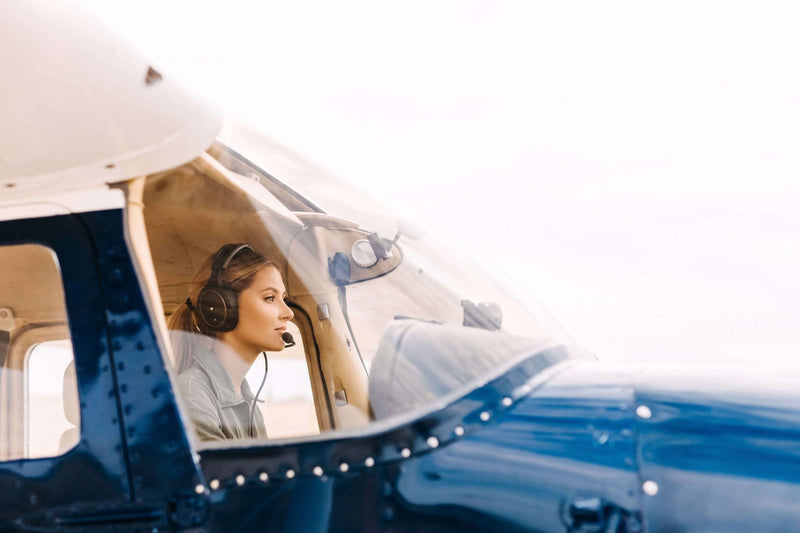
Very safety and detail oriented. Pre-flight briefing explained everything there was. To my knowledge, this flight school is exceptional in their ability.

There is more scholarship money for flight training in the United States than most people realize — AOPA alone gives away more than a million dollars a year, and EAA’s Ray Aviation Scholarship funds over two million. Most of it goes to the people who applied. This page lists the programs worth your time, what they pay, when they close, and what a winning application looks like from a school that helps its students apply for them.
Aviation scholarships are unlike university scholarships in one important way: the applicant pools are small. A well-prepared application competes against dozens, not thousands.
The pattern is familiar to anyone who teaches flying. A student who thought scholarships were for someone else applies to three programs in October, and in the spring one of them pays for their private pilot certificate. Meanwhile a student with better grades and more hours never applied because they assumed the odds were hopeless. The odds are not hopeless. They are unusually good, because most people who could apply never do.
The money is real. AOPA runs two application windows a year and awards well over a hundred scholarships in total, including at least ninety at $12,000 for high-school students. EAA’s Ray Aviation Scholarship funds hundreds of young pilots through local chapters at up to $12,000 each. Women in Aviation International, the Ninety-Nines, the National Gay Pilots Association, the Organization of Black Aerospace Professionals and the Latino Pilots Association all run annual programs. None of these require you to be at a university or in a degree program, and they can be used at an independent flight school like ours.
What they do require is that you meet a handful of specific conditions — membership, age, sometimes a passed knowledge test — and that you write an application a volunteer committee can say yes to in ten minutes. Both are learnable.

Amounts and dates are as published by each organization for the current cycle and change from year to year. Confirm on their site before you plan around a date.
| Program | What It Pays | Who Is Eligible | When To Apply |
|---|---|---|---|
| AOPA Flight Training Scholarships | $250 to $14,000 depending on the donor fund; at least 90 awards of $12,000 for high-school students, up to 20 at $12,000 for teachers | Current AOPA members resident in the US (membership is free for high-school students); the high-school awards need ages 16–18, a 2.7 GPA and a passed private pilot knowledge test | Fall window October 1 to December 30; spring window April 1 to June 30 |
| EAA Ray Aviation Scholarship | Up to $12,000 toward a sport or private pilot certificate, $2.25 million awarded a year | Young people nominated by their local EAA chapter, typically 16 to 19, with Young Eagles involvement helping | Chapter nominations and applications run February through August 31 |
| Women in Aviation International | Dozens of awards a year, commonly $1,000 to $10,000 and more for type ratings | WAI members; women pursuing flight, maintenance, dispatch and management careers | Annual, typically closing in the autumn ahead of the March conference |
| The Ninety-Nines Amelia Earhart Memorial Scholarship | Flight training awards commonly $5,000 to $10,000 | Members of The Ninety-Nines who already hold a private certificate and are pursuing an advanced rating | Annual, typically closing in December |
| NGPA Scholarships | Commonly $1,000 to $5,000 | LGBTQ+ pilots and allies pursuing aviation careers | Annual, typically closing in the spring |
| OBAP Scholarships | Commonly $1,000 to $5,000 | Students pursuing aviation careers, with emphasis on underrepresented groups | Annual, typically closing in early summer |
| Latino Pilots Association | Smaller awards, commonly $500 to $2,500 | Latino and Hispanic students pursuing pilot certificates | Varies by year |
Two things are missing from this table on purpose. Airline cadet programs and university aviation scholarships tie the money to their own pipeline, and are a different decision from paying for a private certificate. VA education benefits can fund flight training only within approved programs, and usually only once you already hold a private certificate; our guide to paying for training sets out exactly what to confirm before relying on them.
Scholarship committees are volunteers reading a stack of applications on a weeknight. Everything below is about making yours the easy yes.
Nearly every program requires membership, and several weight applications from people who have been members for a while. AOPA membership is free for high-school students. Joining the local EAA chapter — and flying with their Young Eagles program — is the single most important thing a teenager can do for a Ray scholarship, because the chapter nominates you.
The AOPA high-school awards require a passed private pilot knowledge test at the time of application, and every other committee reads a passed written as proof you are serious. Our written exam guide covers how to do it in a few weeks of evenings, and it costs a fraction of one flying hour.
“I want to be a pilot” is what everyone writes. “I have 4.2 hours, I have flown the pattern at Van Nuys, and here is what I found hard” is what wins. One loggable hour and a few lessons turn an aspiration into a record.
Committees fund plans, not dreams. Our prices are fixed and published, which makes this easy: “The Standard Private Pilot Program at Los Angeles Flight School is $10,600, of which I have saved $3,000; this scholarship would cover the remaining $7,900 and I expect to take the checkride within nine months.” That is the sentence a committee wants to read.
Your flight instructor is the best possible referee, because they can speak to how you take instruction. A teacher or employer is the second. Ask a month before the deadline, give them the program’s criteria, and make it easy for them to say something specific.
The programs do not penalise you for holding another award, and most allow reapplication. A student who applies to five programs across both AOPA windows in a year has a very different outcome from one who applies to one. Set the dates in your calendar now.
Fixed prices are the reason a scholarship goes further at this school than at one that bills by the hour and hopes.
A $12,000 AOPA or Ray award is more than the entire $10,600 Standard Private Pilot Program — 40 hours logged, the Redbird simulator time, ground school and books, at a price that does not move once you enroll. The remaining $1,100 covers your medical, your written exam fee and most of a headset. A $5,000 award is nearly the whole $5,500 Solo Certificate Program, or a serious start on the private with financing from $2,500 down covering the rest.
We accept scholarship funds paid directly to the school, and we provide the enrollment letters and cost breakdowns the committees ask for. Ask at the consultation and we will put the documents together while you are here.
One caveat we tell every applicant: do not wait to start flying until the money arrives. Committees fund students who are already moving, the discovery flight and the written cost very little, and a student who is ten hours in when the award lands finishes the certificate rather than starting it.

AOPA closes on December 30 and June 30 at 11:59pm Eastern. Ray nominations close on August 31. There is no late entry and the next chance is six months away.
Applying the week you joined reads exactly as it is. Join in the spring for a fall application.
An application with zero logged hours is an application from someone who might not like flying. One discovery flight fixes that for $229.
“Flight training costs a lot” loses to a line-item plan with a school named, a price quoted and a timeline.
A letter that could describe anyone helps no one. Give your referees the criteria and a reminder of something specific you did.
Plenty of winners were rejected at least once first. The programs run every year and the second application is always better than the first.
On Google, the same three things come up again and again. The third one is why a scholarship goes further here.
The most repeated compliment in our reviews is not the aircraft or the price — it is the debrief, and the reference letter an instructor who knows you can write.
Eleven instructors and a fleet we own means a scholarship student on a deadline flies when they need to, not when a slot opens.
The number you enroll at is the number you finish at, which is exactly what a scholarship committee wants to read in your budget.
One number, fixed at enrollment. Aircraft, instructor, ground school, simulator time and books are all inside it — the line item your application needs.
Trained through to first solo — the natural fit for a $5,000 award.
40 hours logged flight time — the FAR 61.109 minimum, flown properly.
The certificate the Ray scholarship most often funds, in the Cessna 162.
Also available: Comprehensive Private Pilot $14,900 · Premium Private Pilot (Cirrus SR22 Turbo) $21,300 · Instrument Rating $11,700 · zero-to-airline $82,000. Financing from $2,500 down, with monthly plans available. Enrolled students train on package pricing at $179 an hour, wet, single-engine.
The cheapest, strongest thing you can add to any scholarship application is a logged hour. The second is a conversation with an instructor who will write your reference.
Bring the program criteria. We will go through the budget, the timeline and the paperwork the committee wants from the school.
Lesson one, logged as dual instruction — the first line in the logbook your application will cite. Credited in full against any program if you enroll within 24 hours.
Full-motion and FAA-approved. Loggable, and the cheapest way to add procedures practice to your record before the essay is due.
Book sixty minutes in the aircraft, log it, and put it in the application. The $229 comes off your program when you enroll, whoever ends up paying for it. Call (818) 290-8249, 9am to 9pm, seven days.
What applicants and their parents ask us, answered plainly.
Yes, and more than most people expect. AOPA runs flight training scholarships twice a year with awards from $250 to $14,000, including at least ninety $12,000 awards for high-school students. EAA's Ray Aviation Scholarship pays up to $12,000 toward a sport or private certificate through local chapters and awards $2.25 million a year. Women in Aviation International, The Ninety-Nines, NGPA, OBAP and the Latino Pilots Association all run annual programs. None require a university enrollment.
Join the organization early, since nearly all of them require membership; pass the private pilot knowledge test, which AOPA's high-school awards require and every committee values; log at least a discovery flight so you have real flying on your record; write a specific budget naming the school, the program price and a timeline; get two detailed reference letters, ideally one from a flight instructor; and apply to every program you qualify for, in every cycle.
Typically between $1,000 and $14,000. The two largest general programs, AOPA and EAA's Ray Aviation Scholarship, center on $12,000, which is more than the $10,600 Standard Private Pilot Program at Los Angeles Flight School. Smaller awards of $1,000 to $5,000 from organizations such as NGPA, OBAP and the Latino Pilots Association cover the Solo Certificate Program or a substantial share of a private certificate.
AOPA's fall window runs October 1 to December 30 and its spring window April 1 to June 30, closing at 11:59pm Eastern. EAA Ray Aviation Scholarship nominations run February through August 31 through local chapters. Women in Aviation International typically closes in the autumn, The Ninety-Nines in December, NGPA in the spring and OBAP in early summer. Dates move from year to year, so confirm on each organization's site.
For the general programs, yes. AOPA, EAA Ray, WAI, The Ninety-Nines and the association scholarships pay for training at the school of your choice, including independent Part 61 schools; the funds are usually paid directly to the school against an enrollment letter and cost breakdown. Airline cadet and university scholarships are the exception, because they are tied to that institution's own program.
Almost always. AOPA scholarships require current AOPA membership, which is free for high-school students. The Ray scholarship comes through EAA chapters, so join your local chapter and fly Young Eagles well before the nomination window. WAI, The Ninety-Nines, NGPA and OBAP scholarships are for members. Join in the spring for a fall application rather than the week before the deadline.
Not formally for most programs, but practically yes. An application with zero logged hours reads as an aspiration; one with a discovery flight and a few lessons reads as a plan. The AOPA high-school awards also require a passed private pilot knowledge test at the time of application, which is easier to pass once you have flown a little.
A specific, costed plan. Name the school, quote the program price, say how much you have saved, how much the award would cover and when you expect the checkride. Describe what you have already done — the discovery flight, the written, the EAA chapter — and what was hard about it. Committees fund momentum, and a fixed published price like our $10,600 private pilot program makes the budget line simple and credible.
Sometimes, within narrow rules. Flight training benefits generally require an approved program and, for most benefit chapters, that you already hold a private pilot certificate. Coverage levels vary by chapter. Confirm your eligibility with the VA and confirm program approval with the school before relying on it; our guide to paying for flight training sets out exactly what to check.
Apply again. Every program above runs every year, most run more than once, and none penalise reapplication. A second application with more hours logged, the written passed and a sharper budget is a different application. Meanwhile, start flying anyway: the discovery flight and the written cost very little, and committees fund students who are already moving.
The three private pilot packages, what each one includes, the financing options and a realistic timeline built around how often you can actually fly. Sent to you in one email. Nobody will pressure you.
Loved On Google
Every review below is real and shown verbatim, in the reviewer’s own words — written by the people who learned to fly here, not by us.
SAFETY FIRST
Very safety and detail oriented. Pre-flight briefing explained everything there was. To my knowledge, this flight school is exceptional in their ability.
 DISCOVERY FLIGHT
I recently had the chance to take my first-ever discovery flight, and it was nothing short of amazing! From the moment I stepped into the cockpit, the...
 SUNSET CIRRUS
It was a great flight! I did a sunset flight and Alex let us fly an awesome. Website was easy to book, and the plane itself was really fun to fly...
 FLYING LESSON
We had a great flying lesson with Ralph and came away with a much better understanding of both the aircraft and the principles of flight. Ralph is a...
 KIDS LUXURY FLIGHT
I got 2 luxury discovery flights for my kids. I wanted them to have the experience of flying. Our instructor Alex was amazing he made sure they feel...
 HONEYMOON SURPRISE
Last minute booking to surprise my wife on our honeymoon. She had no experience with flying and was scared of flying, but Alex was very easygoing and knew...
 FULL-MOTION SIM
Amazing flight school in van nuys airport. I have been a student here for the past few months and i could not be happier. I started doing a lot of...
 DISCOVERY FOR TWO
I booked a Discovery Flight for Two for my girlfriend's birthday and it was the perfect gift for her. She couldn't have been more excited to get to...
 SIMULATORS
Very professional and great airplanes. I love the flight simulators. The pricing is very fair compared to any other flight school
 TEEN FIRST LESSON
We gifted our teenage son his first flying lesson. He was so excited! Alex greeted us and gave a reassuring brief that made us all feel comfortable and at...
 FIRST-TIME FLYER
Flying is my husband's hobby and I was incredibly anxious and apprehensive about the discovery flight. However, I felt completely safe and at ease once we...
SAFETY FIRST
Very safety and detail oriented. Pre-flight briefing explained everything there was. To my knowledge, this flight school is exceptional in their ability.
DISCOVERY FLIGHT
I recently had the chance to take my first-ever discovery flight, and it was nothing short of amazing! From the moment I stepped into the cockpit, the...
SUNSET CIRRUS
It was a great flight! I did a sunset flight and Alex let us fly an awesome. Website was easy to book, and the plane itself was really fun to fly...
FLYING LESSON
We had a great flying lesson with Ralph and came away with a much better understanding of both the aircraft and the principles of flight. Ralph is a...
KIDS LUXURY FLIGHT
I got 2 luxury discovery flights for my kids. I wanted them to have the experience of flying. Our instructor Alex was amazing he made sure they feel...
HONEYMOON SURPRISE
Last minute booking to surprise my wife on our honeymoon. She had no experience with flying and was scared of flying, but Alex was very easygoing and knew...
FULL-MOTION SIM
Amazing flight school in van nuys airport. I have been a student here for the past few months and i could not be happier. I started doing a lot of...
DISCOVERY FOR TWO
I booked a Discovery Flight for Two for my girlfriend's birthday and it was the perfect gift for her. She couldn't have been more excited to get to...
SIMULATORS
Very professional and great airplanes. I love the flight simulators. The pricing is very fair compared to any other flight school
TEEN FIRST LESSON
We gifted our teenage son his first flying lesson. He was so excited! Alex greeted us and gave a reassuring brief that made us all feel comfortable and at...
FIRST-TIME FLYER
Flying is my husband's hobby and I was incredibly anxious and apprehensive about the discovery flight. However, I felt completely safe and at ease once we...
Reviews shown verbatim, exactly as each reviewer published them.
Aviation News
Notes from the flight line at Van Nuys — weather, regulation changes, checkride questions and the cost of training, written up as they come.
Open 7 days · 9:00 AM – 9:00 PM
Los Angeles Flight School