The ATP Certificate and the 1,500-Hour Rule, Without the Mythology
Fifteen hundred hours is the headline. What actually stops people is the shape of those hours — 500 cross-country, 100 night, 75 instrument, 250 pilot-in-command. A restricted ATP can bring the total down to 1,000, 1,100 or 1,250 hours if you have the right degree, and most civilian pilots close the gap by instructing.
Colgan 3407, an act of Congress, and 1 August 2013
The 1,500-hour rule is not an FAA whim. It was written into law by Congress after a specific accident, and it changed airline hiring permanently.
Before 2013 a first officer at a US scheduled airline needed a commercial pilot certificate and roughly 250 hours. After the crash of Colgan Air Flight 3407 near Buffalo in February 2009, Congress passed the Airline Safety and FAA Extension Act of 2010, and the resulting rule took effect on 1 August 2013. Since then every pilot in a Part 121 airline cockpit, captain or first officer, has needed an airline transport pilot certificate or a restricted ATP.
That is why the number matters. It is not a training requirement — nobody spends 1,500 hours learning to fly. It is a legal gate between finishing your commercial certificate at around 250 hours and being employable at an airline, and closing that 1,250-hour gap is a project that takes most people between one and two years.
The interesting part is that the 1,500 is the least difficult of the requirements to satisfy. The 500 hours of cross-country is what genuinely catches people out, because the standard way to build hours — instructing in the traffic pattern — produces almost none of it. Plan for the shape of the hours, not just the total.

What an unrestricted ATP actually requires
For an airplane multiengine land ATP certificate. These are overlapping categories rather than a sum, and the total is 1,500 hours of total time as a pilot.
The cross-country definition that saves people months. Here is a genuinely useful piece of regulatory detail. The definition of cross-country flight time in FAR 61.1 is different depending on what you are using it for. For a private or commercial certificate it generally requires a landing more than 50 nautical miles from the departure point. For meeting the requirements of an ATP certificate, that 50-nautical-mile threshold does not apply — what is required is a landing at a point other than the departure point using navigation.
The practical effect is that a great deal of instructional flying counts toward the ATP cross-country requirement even when it would not count toward a commercial one. Instructors who did not know this have arrived at 1,500 hours convinced they were 300 cross-country hours short. Check the wording yourself in FAR 61.1 and log accordingly from day one.

The flight time, and the eligibility requirements
FAR 61.159(a) sets out the hours. Every one of these lives inside the 1,500 rather than on top of it, which is why a pilot can reach 1,500 total and still be several hundred hours short of eligible. FAR 61.153 covers everything that is not flight time.
| Requirement | Detail |
|---|---|
| The flight time — FAR 61.159(a) | |
| 1,500 hours | total time as a pilot |
| 500 hours | of cross-country flight time |
| 100 hours | of night flight time |
| 75 hours | of instrument time, actual or simulated, with a limit on how much may come from a simulator |
| 250 hours | of pilot-in-command time, including 100 hours cross-country and 25 hours night |
| 50 hours | in the class of airplane for the rating |
| The eligibility requirements — FAR 61.153 | |
| Minimum age 23 | The age is the one people forget: a pilot who reaches 1,500 hours at 22 waits |
| English | Read, speak, write and understand English |
| Certificates held | Hold a commercial pilot certificate with an instrument rating, or an equivalent |
| Medical | First-class medical certificate to exercise ATP privileges |
| ATP CTP | Complete the ATP Certification Training Program under FAR 61.156 before taking the knowledge test |
| Exams | Pass a 125-question knowledge test and a practical test |
The restricted ATP: 750, 1,000, 1,100 or 1,250 hours
A restricted ATP lets you serve as a first officer at a Part 121 airline before reaching 1,500 hours. It converts to an unrestricted ATP when you meet the full requirements and turn 23.
| Route | Total time | Cross-country | Minimum age | Notes |
|---|---|---|---|---|
| 750 hours — military The largest reduction, for pilots who completed a military pilot training programme and hold the relevant qualifications. | 750 hours | 200 hours | 21 | Privileges: SIC at a Part 121 airline |
| 1,000 hours — bachelor's, 60 credits A bachelor's degree with an aviation major from an institution holding an FAA letter of authorization, with 60 semester credit hours of aviation coursework. | 1,000 hours | 200 hours | 21 | Certificates required: commercial and instrument via the affiliated programme |
| 1,100 hours — bachelor's, 30 credits The middle tier, for a bachelor's degree with an aviation major and 30 semester credit hours of qualifying aviation coursework. | 1,100 hours | 200 hours | 21 | Note: confirm your programme holds a current FAA letter of authorization |
| 1,250 hours — associate degree An associate degree with an aviation major and 30 semester credit hours of aviation coursework from an authorised institution. | 1,250 hours | 200 hours | 21 | Privileges: SIC only, never PIC, at a Part 121 airline |
A restricted ATP holder may serve only as second in command in Part 121 operations. The restriction lifts once you meet the full FAR 61.159 requirements and reach age 23. Eligibility depends on your institution holding a current FAA letter of authorization — check that before you enrol in a degree on the strength of the hour reduction.


How a flight instructor job gets you from 250 hours to 1,500
You finish a commercial certificate somewhere around 250 hours. An airline wants 1,500, or 1,000 to 1,250 with the right degree. That gap is the single largest obstacle between a new commercial pilot and an airline seat, and for the overwhelming majority of civilian pilots it is closed by teaching.
The reason is arithmetic. Dual instruction given counts as pilot-in-command time under FAR 61.51(e)(3), and an instructor at a busy school flies far more than they could ever afford to rent. A full-time CFI in Southern California, where the weather cooperates roughly 300 days a year, can log a substantial number of hours a month, and the usual estimate is that the gap takes twelve to twenty-four months. It varies enormously with the school, the season and how many students you carry, and anyone quoting you a precise figure is guessing.
The other reason to instruct is less commercial and more honest: you do not fully understand a manoeuvre until you have had to explain it to somebody who cannot do it yet. Instructors are better pilots than they were at 250 hours, and it is not because of the logbook. If the airline path is the plan, get the CFI certificate, and get it early rather than treating it as a fallback.

Zero to an airline seat, in order
Roughly 18 to 24 months to a commercial certificate with an instrument rating at around 250 hours, then another 12 to 24 months building to 1,500 hours, usually as a flight instructor.
Private pilot certificate
40 hours minimum under FAR 61.109, realistically 55 to 75. Our standard program is $10,900.
Instrument rating
$11,700, and it requires 50 hours of cross-country PIC and 40 hours of instrument time under FAR 61.65. It also feeds the 75 hours of instrument time an ATP needs.
Commercial certificate at 250 hours
250 hours total under FAR 61.129. This is the certificate that lets you be paid to fly, and the point at which the 1,250-hour gap opens up.
Flight instructor certificate
Dual instruction given counts as pilot-in-command time under FAR 61.51(e)(3), so you build hours while being paid rather than paying. Get it early rather than treating it as a fallback.
1,500 hours, or 1,000 to 1,250 with the degree
500 cross-country, 100 night, 75 instrument and 250 pilot-in-command under FAR 61.159. Twelve to twenty-four months of instructing for most people.
ATP CTP, the written and the checkride
Complete the ATP Certification Training Program under FAR 61.156 before the 125-question knowledge test, hold a first-class medical, and be 23 for the unrestricted certificate.
1,500 hours begins with the first one
Every airline pilot flying today started with an instructor in the right seat and no idea what they were doing. If you are at zero, that is exactly where to start. If you are already in the middle of it, bring the logbook and we will do the arithmetic with you.
Free Consultation
Map your logbook against FAR 61.159 and 61.160 with an instructor and find out what you are actually short of.
Book a consultationDiscovery Flight For One
Hour one of 1,500, logged as dual instruction. Credited in full against any program if you enrol within 24 hours.
Book nowMulti-Engine Seminole Flight
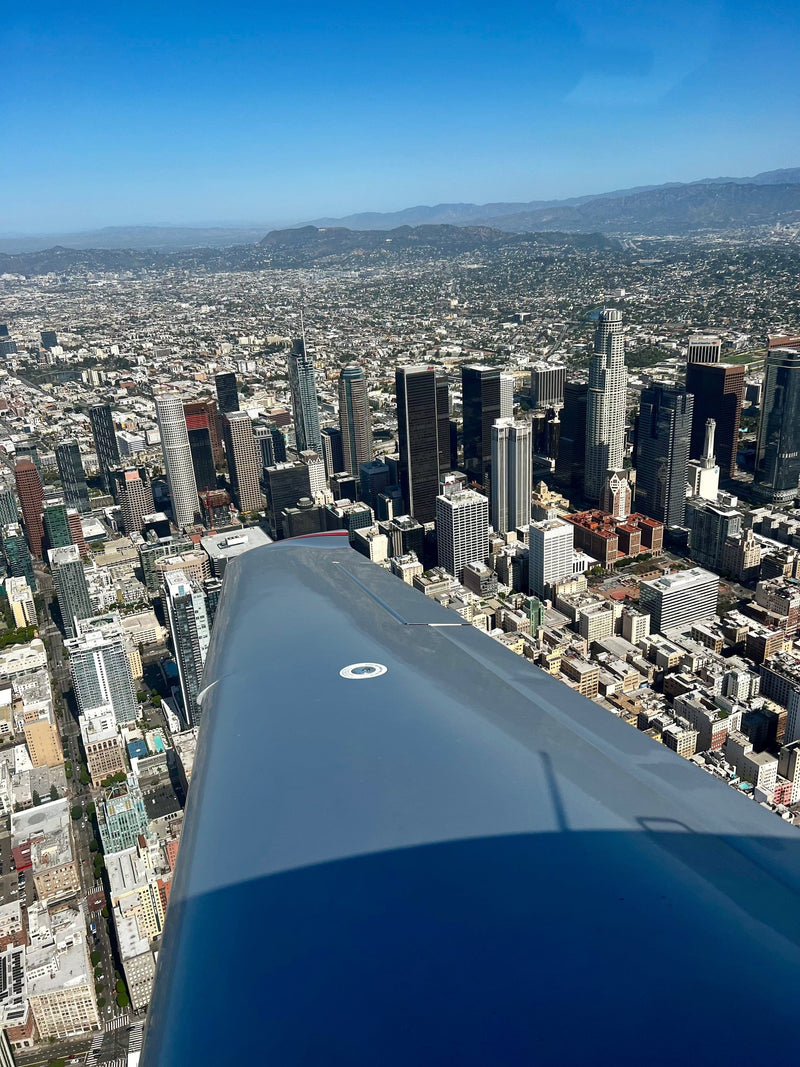
Sixty minutes in the twin over Los Angeles. The most realistic preview there is of what an airline career actually feels like.
Book the twinOur zero-to-airline program is $89,000 and runs from no certificate through commercial and instructor ratings. Financing is available through Stratus Financial alongside in-house payment plans. The 1,500 hours themselves are earned after that programme, not inside it.
Bring the logbook, or start one
If you are already flying, the free consultation is an hour spent mapping what you have against FAR 61.159 and telling you honestly what is missing. If you have not started, book sixty minutes in the aircraft — it is hour one of 1,500. Call (818) 290-8249, 9am to 9pm, seven days.
ATP and 1,500-hour rule questions
Direct answers with the regulation and the number attached.
The requirement that every pilot flying for a US scheduled airline under Part 121, captain or first officer, holds an airline transport pilot certificate or a restricted ATP. It came from the Airline Safety and FAA Extension Act of 2010, passed after the Colgan Air 3407 accident, and took effect on 1 August 2013. Before that a first officer needed only a commercial certificate and around 250 hours.
Under FAR 61.159 an unrestricted airline transport pilot certificate requires 1,500 hours total flight time, including 500 hours cross-country, 100 hours night, 75 hours instrument and 250 hours of pilot-in-command time. You must also be at least 23, hold a commercial certificate with an instrument rating, hold a first-class medical to exercise the privileges, complete the ATP Certification Training Program under FAR 61.156, and pass a 125-question knowledge test and a practical test.
A certificate under FAR 61.160 that allows a pilot to serve as second in command at a Part 121 airline before reaching 1,500 hours. The thresholds are 750 hours for qualifying military pilots, 1,000 hours with a bachelor's degree with an aviation major and 60 semester credit hours of aviation coursework, 1,100 hours with a bachelor's and 30 credit hours, and 1,250 hours with a qualifying associate degree. Minimum age is 21.
Most civilian pilots instruct. Dual instruction given counts as pilot-in-command time under FAR 61.51(e)(3), so a full-time flight instructor builds hours while being paid rather than paying. The gap typically takes twelve to twenty-four months depending on the school and the season. Banner towing, aerial survey, pipeline patrol, skydive operations and traffic watch are the common alternatives.
Two and a half to three years from zero for most people. Roughly 18 to 24 months to a commercial certificate with an instrument rating at around 250 hours, then another 12 to 24 months building to 1,500 hours, usually as a flight instructor. Full-time students with a qualifying aviation degree and a restricted ATP at 1,000 hours can compress that, but the calendar is driven by hour accumulation rather than by training.
Twenty-three for an unrestricted airline transport pilot certificate, and 21 for a restricted ATP under FAR 61.160. A pilot who reaches 1,500 hours at 22 waits for the birthday. At the other end, pilots flying under Part 121 face a mandatory retirement age of 65.
Yes, to exercise airline transport pilot privileges. A first-class medical is valid for 12 calendar months if you were under 40 at the examination and 6 calendar months if you were 40 or over, under FAR 61.23. It requires 20/20 distant vision in each eye with or without correction and an electrocardiogram at the first application after age 35 and annually after 40.
The 500 hours of cross-country catches more pilots out. Instructing produces enormous amounts of local flying and comparatively little cross-country, so instructors regularly reach 1,500 total while short on the sub-requirements. One useful detail: the cross-country definition in FAR 61.1 used for ATP eligibility does not carry the 50-nautical-mile threshold that applies to private and commercial certificates, so more instructional flying counts than pilots often assume.