SAFETY FIRST
★★★★★
Very safety and detail oriented. Pre-flight briefing explained everything there was. To my knowledge, this flight school is exceptional in their ability.

A certified flight instructor is a commercial pilot who has passed two FAA knowledge tests and the practical test most pilots consider the hardest in general aviation. It is how the majority of airline pilots flying today got from 250 hours to 1,500. Below: the prerequisites in order, the honest failure rate, what the job pays in hours rather than promises, and why Van Nuys is the field to do it at.
Book It Or Gift It
Every discovery flight below can be booked for yourself in the next few minutes, or bought as a gift certificate that is emailed within minutes and never expires. Same flight, same price, either way.
 Most Given
 Two Seats
 The Nice One
 Twin Engine
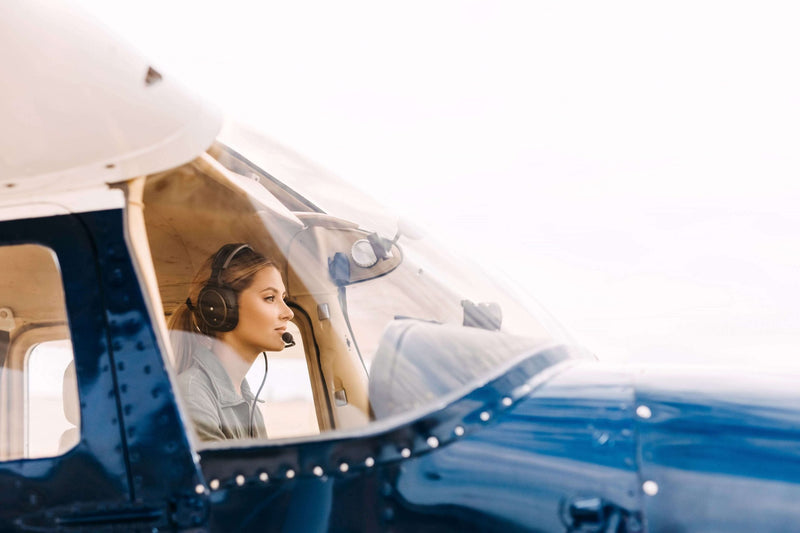
One person, one instructor, and no audience. Hands on the controls from the left seat, briefed before you go and debriefed after you land.
Hands-On Stick TimePre-Flight BriefingLoggable Flight Time
Flight Length
$229Book It Or Gift It
Same Price Either Way
The same flight with a passenger in the back seat, briefed and on the intercom. Couples book it; so do parents who would rather watch than hear about it.
One Passenger SeatPiper Warrior Or ArcherHeadsets For Both
Flight Length
$299Book It Or Gift It
Same Price Either Way
The nicest airplane we put a first-time flyer in. Glass cockpit, air conditioning, leather seats, and a parachute built into the airframe rather than strapped to the person.
Turbocharged Cirrus SR22Air ConditioningWhole-Airframe Parachute
Flight Length
$399Book It Or Gift It
Same Price Either Way
Two engines, and the airplane instrument-rated pilots move into when they start thinking about a career. Flown from the left seat with a multi-engine instructor.
Piper Seminole TwinMulti-Engine DepartureCareer-Track Instructor
Flight Length
$499Book It Or Gift It
Same Price Either Way
Gift It issues a real gift certificate, emailed within minutes, which never expires and credits in full toward training. Flights are limited to 180 lb per person, 370 lb combined. Questions: (818) 290-8249, 9 AM–9 PM, seven days.
SAFETY FIRST
Very safety and detail oriented. Pre-flight briefing explained everything there was. To my knowledge, this flight school is exceptional in their ability.
 DISCOVERY FLIGHT
I recently had the chance to take my first-ever discovery flight, and it was nothing short of amazing! From the moment I stepped into the cockpit, the...
 SUNSET CIRRUS
It was a great flight! I did a sunset flight and Alex let us fly an awesome. Website was easy to book, and the plane itself was really fun to fly...
 FLYING LESSON
We had a great flying lesson with Ralph and came away with a much better understanding of both the aircraft and the principles of flight. Ralph is a...
 KIDS LUXURY FLIGHT
I got 2 luxury discovery flights for my kids. I wanted them to have the experience of flying. Our instructor Alex was amazing he made sure they feel...
 HONEYMOON SURPRISE
Last minute booking to surprise my wife on our honeymoon. She had no experience with flying and was scared of flying, but Alex was very easygoing and knew...
 FULL-MOTION SIM
Amazing flight school in van nuys airport. I have been a student here for the past few months and i could not be happier. I started doing a lot of...
 DISCOVERY FOR TWO
I booked a Discovery Flight for Two for my girlfriend's birthday and it was the perfect gift for her. She couldn't have been more excited to get to...
 SIMULATORS
Very professional and great airplanes. I love the flight simulators. The pricing is very fair compared to any other flight school
 TEEN FIRST LESSON
We gifted our teenage son his first flying lesson. He was so excited! Alex greeted us and gave a reassuring brief that made us all feel comfortable and at...
 FIRST-TIME FLYER
Flying is my husband's hobby and I was incredibly anxious and apprehensive about the discovery flight. However, I felt completely safe and at ease once we...
SAFETY FIRST
Very safety and detail oriented. Pre-flight briefing explained everything there was. To my knowledge, this flight school is exceptional in their ability.
DISCOVERY FLIGHT
I recently had the chance to take my first-ever discovery flight, and it was nothing short of amazing! From the moment I stepped into the cockpit, the...
SUNSET CIRRUS
It was a great flight! I did a sunset flight and Alex let us fly an awesome. Website was easy to book, and the plane itself was really fun to fly...
FLYING LESSON
We had a great flying lesson with Ralph and came away with a much better understanding of both the aircraft and the principles of flight. Ralph is a...
KIDS LUXURY FLIGHT
I got 2 luxury discovery flights for my kids. I wanted them to have the experience of flying. Our instructor Alex was amazing he made sure they feel...
HONEYMOON SURPRISE
Last minute booking to surprise my wife on our honeymoon. She had no experience with flying and was scared of flying, but Alex was very easygoing and knew...
FULL-MOTION SIM
Amazing flight school in van nuys airport. I have been a student here for the past few months and i could not be happier. I started doing a lot of...
DISCOVERY FOR TWO
I booked a Discovery Flight for Two for my girlfriend's birthday and it was the perfect gift for her. She couldn't have been more excited to get to...
SIMULATORS
Very professional and great airplanes. I love the flight simulators. The pricing is very fair compared to any other flight school
TEEN FIRST LESSON
We gifted our teenage son his first flying lesson. He was so excited! Alex greeted us and gave a reassuring brief that made us all feel comfortable and at...
FIRST-TIME FLYER
Flying is my husband's hobby and I was incredibly anxious and apprehensive about the discovery flight. However, I felt completely safe and at ease once we...
You are on the wrong page, and that is our fault for how the search results read. If you want an instructor to teach you to fly, start with the private pilot license price and the steps to get a pilot's license. Eleven instructors work here, you are matched to one, and you can change if the fit is wrong. The quickest way to meet one is a 60-minute discovery flight: you fly the aircraft, it logs as dual instruction, and the $229 comes off your program in full if you enroll within 24 hours.
Everything below this line is written for pilots who want to hold the certificate themselves.
A certified flight instructor is a pilot the FAA has authorized to give and endorse flight training. To be eligible under 14 CFR 61.183 you must be at least 18, be able to read, speak, write and understand English, and already hold a commercial pilot certificate (or an ATP) with an instrument rating in the category you want to instruct in. There is no way around that pairing. The instrument rating is not optional garnish on the commercial certificate; it is a hard prerequisite for the instructor certificate that comes after it.
Then two knowledge tests. The Fundamentals of Instructing covers learning theory, the elements of effective teaching, human behavior, and how to build and critique a lesson. The Flight Instructor Airplane test covers the aeronautical knowledge you already have, asked from the other side of the desk. Both are computer-based, both are done before the practical test, and most candidates take them within a fortnight of each other because the study overlaps.
You will also need a spin training endorsement under 61.183(i), logged with a flight instructor, before you can be sent for the ride. Then the practical test. That is where this page gets less cheerful and more useful.

We are going to say the thing most flight schools leave off the page. The initial flight instructor practical test has the lowest first-attempt pass rate of any of the certificates and ratings you will hold on the way to an airline. Private, instrument and commercial candidates who prepare properly usually pass first time. Initial CFI candidates who prepare properly still sometimes do not.
There are two reasons. The first is scope. The oral portion routinely runs longer than an entire private pilot checkride, because the examiner is not sampling your knowledge, they are auditing your ability to teach every task in the Airman Certification Standards for the certificates you will be endorsing. You do not get to be strong in three areas and thin in two. The second reason is the mode of examination: you are not answering questions, you are teaching a lesson to an examiner who is playing a student, and the moment you start reciting instead of explaining, it shows.
The other thing nobody tells you: an initial CFI practical test is frequently conducted by an FAA inspector at your local Flight Standards District Office rather than by a designated pilot examiner. Designated examiners are permitted to conduct them and many do, but the FSDO route is common enough that you should plan for it. It is not harder in any formal sense. It is different, it is often booked further out, and candidates who assumed a DPE and got an inspector are the ones who walk in rattled.
Our answer to this is unglamorous: mock checkrides, a real lesson plan for every ACS task, and being told no when you are not ready. A candidate we send early and who fails has lost weeks. Every subsequent instructor certificate you add — CFII, MEI — is an additional rating rather than an initial one, and those are the normal length.

The base CFI gets you hired. The other two decide how much you fly, what you log, and whether you are the instructor a school protects when bookings get thin.
| Certificate | What it authorizes | What it does for your logbook | Add it when |
|---|---|---|---|
| CFI (airplane single-engine) | Primary and commercial training in single-engine airplanes, plus the endorsements a student needs to solo and to test. | Single-engine dual given. High volume, mostly in the traffic pattern and the local practice area. | First |
| CFII (instrument instructor) | Instrument training and instrument proficiency checks, in the aircraft and in an approved simulator. | Instrument time given, longer lessons, work that survives a marine-layer morning. | Immediately after |
| MEI (multi-engine instructor) | Multi-engine training, including the multi-engine add-on and commercial multi work. | Paid multi-engine time — the single scarcest and most expensive line in a low-time logbook. | As soon as you can |
Here is the earning logic, stated plainly. A CFI who holds only the base certificate can teach private pilot students and commercial single-engine students. That is a real job and it fills a calendar in Los Angeles. But it caps you: when the primary students go quiet in December, or the one student who booked four days a week gets a promotion and disappears, you have nothing to move to.
A CFII can pick up the instrument students, who tend to be older, better funded, more consistent, and perfectly happy to do a lesson in the Redbird when the field is 400 overcast. An MEI can pick up multi-engine students in the Piper Seminole, and every hour of that is multi-engine time you are being paid for rather than buying at twin rates. Instructors who hold all three are the ones logging 900 hours a year rather than 500. Add the multi-engine rating at Van Nuys for $5,100 as an add-on to your existing certificate, then the MEI on top.
Know the limits as well as the privileges. 14 CFR 61.195 caps you at eight hours of flight instruction in any 24 consecutive hours, and restricts you to instructing in aircraft for which you hold the appropriate category, class and instructor ratings. There is also a specific requirement of five hours of pilot-in-command time in the make and model before you give training in a multi-engine airplane. These are the rules that make a working instructor's diary look the way it does.
This is usually written as a platitude. It is not one, and here is the concrete version. In your first month of instructing, a 19-year-old who has never been in a small airplane will ask you why the aircraft floats down the runway when you are fast, and you will discover that you know the answer with your hands and not with your mouth. Then someone will ask why the marine layer burns off by eleven and not by nine. Then someone will ask you to draw the Class B shelf over Van Nuys on a napkin and explain why the 3,000-foot ceiling on the transition matters.
Each of those is a question you passed a written exam on. Very few of them are questions you have ever had to answer out loud, in order, to someone with no vocabulary to meet you halfway. Doing it forty times a week is what converts test knowledge into knowledge you own.
The airlines test exactly this later, and not gently. A technical interview will ask you to explain a stall, a hold entry, or a system failure the way you would to somebody else in the flight deck. Pilots who built their 1,500 hours towing banners or ferrying airplanes arrive at that interview having flown a great deal and explained nothing. Pilots who instructed have been rehearsing it daily for two years without noticing.
The second thing instructing builds is the judgment muscle, and it is harder to describe. You spend a year watching somebody else make mistakes at 300 feet and deciding — repeatedly, in under a second — whether to say nothing, say one word, or take the controls. That is the same decision a captain makes on a first officer's approach.

The arithmetic, without the recruitment-poster gloss. Read the first months as an investment, because that is what they are.
| The number | Figure | Where it comes from |
|---|---|---|
| Total time when you finish your commercial certificate | 250 hours | 14 CFR 61.129 aeronautical experience for a commercial single-engine certificate |
| Total time required for an unrestricted ATP | 1,500 hours | 14 CFR 61.159 |
| The gap you are closing by instructing | 1,250 hours | Arithmetic |
| Flight hours a busy Los Angeles CFI logs in a year | 700–900 | Full-time instructing at a field with 355 flyable days |
| Time to close the gap at that rate | about 2 years | 1,250 hours at roughly 800 a year |
| Other ATP experience you must accumulate on the way | 500 / 100 / 75 | 14 CFR 61.159: cross-country, night and instrument hours |
Now the part that gets left out. A new CFI does not walk into 800 hours a year. You walk into an empty schedule and you build it. Month one might be twenty hours. Month two, thirty. You are paid per flight hour and per ground hour, not per day, which means a student who cancels at 7am because the field is 500 overcast pays you nothing, and you were still there at 6:30. That is the lean stretch, it is real, and it usually lasts three to five months while students are assigned to you and word gets around that you debrief properly.
Instructors who reach the top of that hour count are not better pilots than the ones at the bottom. They are better at filling a calendar: they keep students moving so nobody stalls out at 25 hours, they hold instrument and multi students as well as primary ones, and they pick up the students another instructor has let drift. That is a management skill, not a flying skill, and it is worth learning deliberately.
Two more honest notes. Instructing at one field means a great deal of traffic-pattern time and very little long cross-country, so your 500-hour cross-country requirement under 61.159 does not accumulate on its own — plan a long trip most months and log it properly from day one. And your own instrument flying quietly decays while you teach steep turns in clear California air, which is a second argument for holding the CFII and using it. Reaching 1,500 total hours and finding you are 30 hours short on night time is a common, expensive discovery.
Pay: instructor pay in Los Angeles is quoted per flight hour rather than as a salary, and it varies by school, by rating and by how much ground instruction you bill. We have written the numbers up honestly on the CFI pay and career path page rather than repeat them here. Nobody gets rich instructing. Everybody who does it properly gets to 1,500 hours.
Four steps, and you cannot reorder them. We teach all of them on one ramp at Van Nuys, which matters more than it sounds — changing schools mid-route costs you weeks of re-checking and paperwork.
| Step | Certificate or rating | The regulation | Our price |
|---|---|---|---|
| 1 | Private pilot certificate | 14 CFR 61.109 — 40 hours minimum; the national average is 60 to 75 | $10,900 standard |
| 2 | Instrument rating | 14 CFR 61.65 — and a hard prerequisite for the CFI under 61.183 | $11,700 |
| 3 | Commercial pilot certificate | 14 CFR 61.129 — 250 hours total time | Quoted at consultation |
| 4 | Flight instructor certificate (CFI) | 14 CFR 61.183 — two knowledge tests, spin endorsement, practical test | Quoted at consultation |
| + | Multi-engine add-on, then MEI | 14 CFR 61.63 — added to a certificate you already hold, no minimum hours specified | $5,100 |
We do not publish a fixed price for the CFI course, because what it costs depends almost entirely on how current you are and how much right-seat work you need. Bring your logbook to a free consultation and you will leave with a real number and a date, not an estimate. Knowledge test fees and the examiner are paid directly to third parties, not to us.
Candidates underestimate this every time. The flying is the shorter half of the course.
Fundamentals of Instructing: the learning process, human behavior and effective communication, the teaching process, assessment and critique, instructor responsibilities and professionalism, and risk management. It is not aviation trivia. Several hundred practice questions and a fortnight of consistent study is the normal shape.
You will build a written lesson plan for every task you can be asked to teach: objective, elements, schedule, equipment, instructor actions, student actions, completion standards. The examiner will ask for one at random. Candidates who have a folder of them walk in calm.
FAA-H-8083-9 is the source text for the FOI test and for a large part of the oral. Read it properly rather than skimming a question bank — the examiner will ask you to apply a concept from it to a student you are describing, and that is not something a bank of answers prepares you for.
You will not improvise lessons. Instructing here means teaching from a syllabus, in sequence, with the ground lesson, the flight lesson and the completion standards defined before you walk to the aircraft. Learning to run one properly during your CFI course is what makes your first month employable.
Every maneuver you already know, flown from the other seat, while narrating continuously. The sight picture is wrong, your hands are swapped, and the talking is the hard part. It feels like learning to write with the other hand, and it takes most candidates a solid block of dual to stop sounding mechanical.
14 CFR 61.183(i) requires a logbook endorsement from a flight instructor certifying you have received training in stall awareness, spin entry, spins and spin recovery, and are competent and proficient in them. It is a genuine confidence-builder and a legal requirement, not a formality.
Van Nuys is one of the busiest general aviation airports in the world. For an instructor that is not a boast, it is a curriculum: your students learn radio discipline because they have to, they learn to hold short and hit a gap, and they learn sequencing behind traffic that is faster than they are. Instructors who trained somewhere quiet and moved here spend their first fortnight catching up on radio work. It runs the other way too — the pilots who come out of KVNY are the ones who are comfortable anywhere.
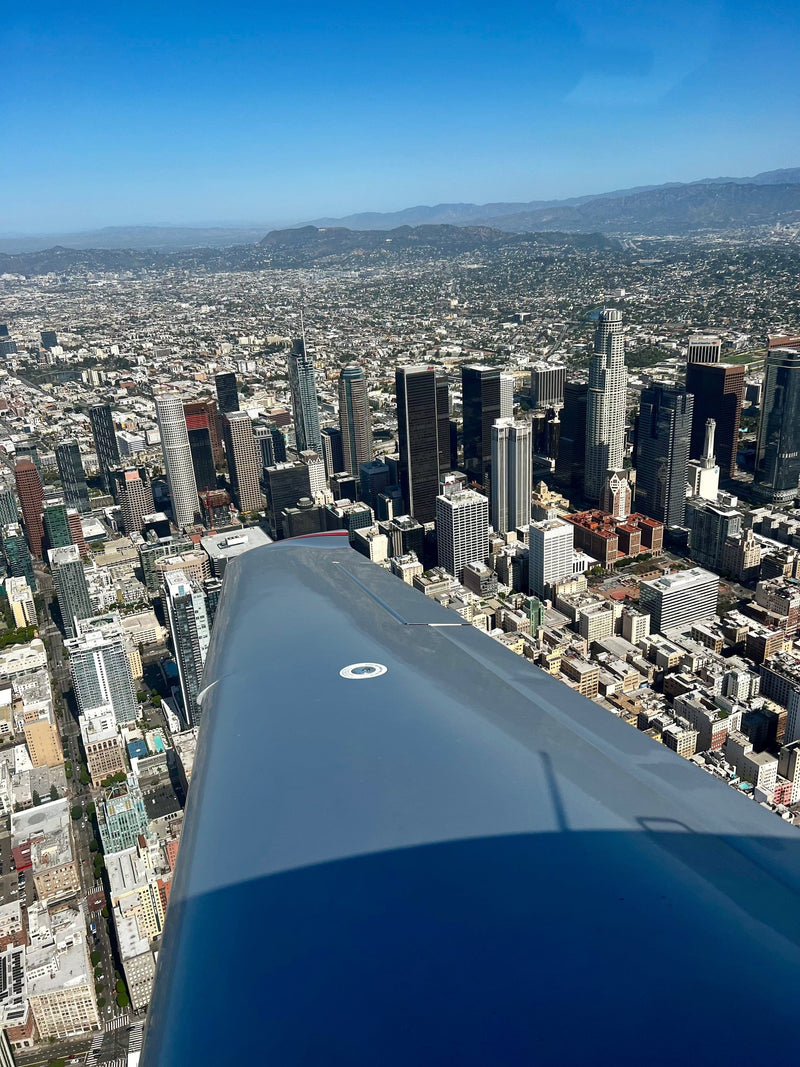
The airspace teaches itself. Van Nuys is a Class D field sitting underneath the LAX Class B shelf, with the Burbank Class C next door and a coastline full of special-use procedures within twenty minutes. You will teach airspace to primary students using the airspace outside the window rather than a diagram in a book, which is a considerably easier job.
Then the weather, which is the part that actually determines your logbook. We ran the numbers on a decade of Van Nuys observations and published them: 355 flyable days a year. That is our own research, not a brochure line. An instructor in Chicago or Seattle loses whole weeks of income to weather every winter. Here you lose mornings to the marine layer and get them back by eleven.
The last piece is the fleet. We own our aircraft and maintain them on our own schedule, so a booked lesson is a lesson that flies. An instructor working off a broker's aircraft or a leaseback that keeps disappearing into maintenance does not control their own income, and no amount of student demand fixes it.

Eleven instructors work here. A number of them trained here first. When we have an opening we look at our own graduates before we look anywhere else, for the obvious reason: we already know how they brief, how they debrief, and whether they cancel.
What we will not do is promise you a job. No honest school can. Openings depend on student demand, on who is leaving for an airline that quarter, and on how you actually teach — which nobody, including you, knows until you have taught. Any school that guarantees employment at enrollment is selling you something.
What we would say is: have the conversation early. Come and talk before you start your commercial, not after you pass your CFI ride. If you know from the beginning that instructing here is the plan, we can point your training at it — sequence the CFII sensibly, get you into the Seminole for the MEI, and tell you honestly what our hiring picture looks like for the months you will be finishing. That is a fifteen-minute conversation and it is free.
The other half of that is culture. Instructors here treat the job as a career rather than a waiting room, and it shows in the reviews: the thing our students compliment most often is not the aircraft or the price, it is the debrief. If you want to be an instructor who is remembered rather than one who is endured, that matters.

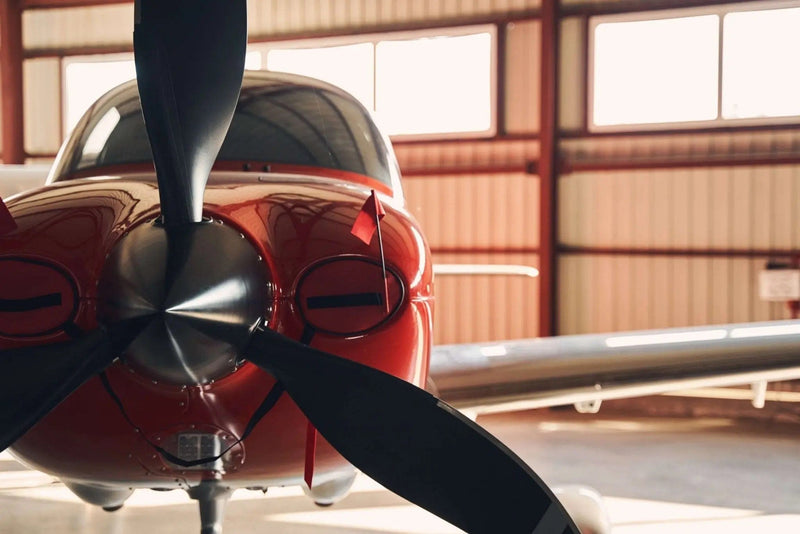
An instructor's income is a function of aircraft availability. These are ours — owned, hangared and maintained at Van Nuys, inspected on our schedule rather than a broker's.


Single-engine training on the Standard and Comprehensive programs is flown in the Cessna, Piper and Diamond aircraft. The Premium program is flown in the Cirrus SR22 Turbo with its full glass cockpit.
FAA-approved, fully enclosed, and it moves. For a CFII it is the difference between a canceled morning and a paid one, because instrument instruction given in it still counts and still bills.
Simulator hours are built into every private pilot program — 2 hours on Standard and Premium, 5 hours on Comprehensive.
Your CFI course will be taught by someone who has been through the initial ride and has watched candidates pass and fail it. Every instructor here holds a commercial certificate or an ATP plus a CFI and a current medical, and is legally pilot in command on every flight.
There are eleven of them, which is the reason a CFI candidate here can fly four times a week instead of waiting on one person's calendar. You are matched to an instructor and you can change if the fit is wrong — that is better for the instructor as well as for you.
The people teaching the instructor course are the same people who would be your colleagues afterwards. That is a slightly odd arrangement and it works in your favor: they are assessing you the whole way through, and they will tell you where you stand.

Worth reading as a prospective instructor rather than a prospective student — it tells you what the standard here is.
The most repeated compliment in our reviews is not the aircraft or the price. It is the debrief.
Eleven instructors and a fleet we own means lessons happen when we say they will — which is also how an instructor here logs hours.
The number a student enrolls at is the number they finish at. Reviewers mention this constantly.
We publish a price for everything we can price honestly. The flight instructor course depends on your currency and your right-seat time, so it gets a real number in a conversation rather than a fake one on a web page.
A hard prerequisite for the CFI under 14 CFR 61.183, and the rating that leads straight to the CFII afterwards.
Bring your logbook. Forty-five minutes with a working instructor, an honest read on your hour count and currency, a dated plan to the CFI ride, and a real price for the course.
Added to the certificate you already hold under 14 CFR 61.63. This is the route to the MEI and to paid multi-engine time.
Enrolled students train on package pricing at $179 an hour, wet, in single-engine aircraft. Financing is available from $2,500 down through Stratus Financial and our own in-house plans. Knowledge test fees and the examiner are paid directly to third parties.
The single most useful thing you can do on the way to a flight instructor certificate is sit down with someone who has run the ride and have them read your logbook honestly. How many hours you really need. Whether your instrument currency will hold. Whether the CFII should come before or after. Call (818) 290-8249, open 9am to 9pm, seven days, or book the consultation below.
The questions pilots actually type before they commit to a CFI course.
You must hold a commercial pilot certificate with an instrument rating, be at least 18, pass two FAA knowledge tests (Fundamentals of Instructing and Flight Instructor Airplane), hold a spin training endorsement, and pass the flight instructor practical test. Those requirements are set out in 14 CFR 61.183. At LA Flight School the full route from zero experience runs private pilot, then the $11,700 instrument rating, then the commercial certificate, then the CFI.
For a pilot who already holds a commercial certificate with an instrument rating, the CFI course typically takes one to three months of consistent work, and most of that time goes on the ground rather than in the aircraft. From zero experience the whole route to a flight instructor certificate is usually 18 to 24 months. Booking pressure at the FSDO for an initial practical test can add several weeks, so start the paperwork early.
We do not publish a fixed price for the flight instructor course, because the cost depends almost entirely on your currency and how much right-seat instruction you need. Enrolled students train on our package rate of $179 an hour, wet, in single-engine aircraft, and we give you a firm number at a free consultation once we have seen your logbook. The prerequisites we do publish are the $11,700 instrument rating and the $5,100 multi-engine add-on.
Yes, and it has the lowest first-attempt pass rate of any practical test on the route to an airline. The oral portion routinely runs longer than an entire private pilot checkride, because the examiner is auditing your ability to teach every task in the Airman Certification Standards rather than sampling your knowledge. Initial flight instructor practical tests are also frequently conducted by an FAA inspector at the local Flight Standards District Office rather than by a designated pilot examiner.
The CFI authorizes you to give flight training in single-engine airplanes, the CFII adds instrument instruction and instrument proficiency checks, and the MEI adds multi-engine instruction. A CFI alone can teach private and commercial single-engine students; the CFII and MEI are what make you consistently employable and let you log instrument and multi-engine time while being paid. 14 CFR 61.195 limits you to instructing in aircraft for which you hold the appropriate category, class and instructor ratings.
A busy full-time flight instructor in Los Angeles logs roughly 700 to 900 flight hours a year. That reflects a field with 355 flyable days a year and steady student demand; instructors in colder climates lose whole weeks to weather. 14 CFR 61.195 caps any instructor at eight hours of flight instruction in any 24 consecutive hours, which is the practical ceiling on a single day.
Flight instructor pay in Los Angeles is quoted per flight hour and per ground instruction hour rather than as a salary, so your income tracks how many of the 700 to 900 available hours you actually fill. The first three to five months are lean while your schedule builds, and instructors holding the CFII and MEI earn more per hour and fly more of them. We have written the numbers up in detail on our CFI pay and career path page.
No. 14 CFR 61.183 requires that you be at least 18, that you can read, speak, write and understand English, that you hold a commercial pilot certificate with an instrument rating, and that you pass two knowledge tests and a practical test. No college degree is required for the certificate or for instructor employment. Some major airlines still prefer a degree later in your career, but it has nothing to do with becoming a CFI.
Yes. 250 hours is the aeronautical experience required for a commercial single-engine certificate under 14 CFR 61.129, and the flight instructor certificate has no separate total-time minimum of its own beyond the commercial certificate and instrument rating required by 61.183. Most new CFIs start teaching somewhere between 250 and 300 hours, and instructing is how they close the 1,250-hour gap to the 1,500 hours an ATP requires.
The Fundamentals of Instructing is one of the two FAA knowledge tests required before a flight instructor practical test. It covers the learning process, human behavior and effective communication, the teaching process, assessment and critique, instructor responsibilities and professionalism, and risk management. Its source text is the FAA's Aviation Instructor's Handbook, FAA-H-8083-9, and most candidates prepare for it in about two weeks alongside the Flight Instructor Airplane test.
Many do, and we do. LA Flight School staffs eleven instructors and looks at its own graduates first when an opening comes up, because we already know how they brief, how they debrief and whether they cancel. No honest school guarantees employment at enrollment, since openings depend on student demand and on who is leaving for an airline that quarter. The useful move is to raise it early, before you start your commercial rather than after your CFI ride.
About two years of full-time instructing. You finish your commercial certificate at 250 hours, an ATP requires 1,500 hours of total time under 14 CFR 61.159, and a busy Los Angeles CFI logs 700 to 900 hours a year, which closes the 1,250-hour gap in roughly 19 to 21 months. Watch the sub-requirements as well as the total: 61.159 also requires 500 hours of cross-country, 100 hours of night and 75 hours of instrument time, and traffic-pattern instructing does not build cross-country time on its own.
The three private pilot packages, what each one includes, the financing options and a realistic timeline built around how often you can actually fly. Sent to you in one email. Nobody will pressure you.
Loved On Google
Every review below is real and shown verbatim, in the reviewer’s own words — written by the people who learned to fly here, not by us.
SAFETY FIRST
Very safety and detail oriented. Pre-flight briefing explained everything there was. To my knowledge, this flight school is exceptional in their ability.
DISCOVERY FLIGHT
I recently had the chance to take my first-ever discovery flight, and it was nothing short of amazing! From the moment I stepped into the cockpit, the...
SUNSET CIRRUS
It was a great flight! I did a sunset flight and Alex let us fly an awesome. Website was easy to book, and the plane itself was really fun to fly...
FLYING LESSON
We had a great flying lesson with Ralph and came away with a much better understanding of both the aircraft and the principles of flight. Ralph is a...
KIDS LUXURY FLIGHT
I got 2 luxury discovery flights for my kids. I wanted them to have the experience of flying. Our instructor Alex was amazing he made sure they feel...
HONEYMOON SURPRISE
Last minute booking to surprise my wife on our honeymoon. She had no experience with flying and was scared of flying, but Alex was very easygoing and knew...
FULL-MOTION SIM
Amazing flight school in van nuys airport. I have been a student here for the past few months and i could not be happier. I started doing a lot of...
DISCOVERY FOR TWO
I booked a Discovery Flight for Two for my girlfriend's birthday and it was the perfect gift for her. She couldn't have been more excited to get to...
SIMULATORS
Very professional and great airplanes. I love the flight simulators. The pricing is very fair compared to any other flight school
TEEN FIRST LESSON
We gifted our teenage son his first flying lesson. He was so excited! Alex greeted us and gave a reassuring brief that made us all feel comfortable and at...
FIRST-TIME FLYER
Flying is my husband's hobby and I was incredibly anxious and apprehensive about the discovery flight. However, I felt completely safe and at ease once we...
SAFETY FIRST
Very safety and detail oriented. Pre-flight briefing explained everything there was. To my knowledge, this flight school is exceptional in their ability.
DISCOVERY FLIGHT
I recently had the chance to take my first-ever discovery flight, and it was nothing short of amazing! From the moment I stepped into the cockpit, the...
SUNSET CIRRUS
It was a great flight! I did a sunset flight and Alex let us fly an awesome. Website was easy to book, and the plane itself was really fun to fly...
FLYING LESSON
We had a great flying lesson with Ralph and came away with a much better understanding of both the aircraft and the principles of flight. Ralph is a...
KIDS LUXURY FLIGHT
I got 2 luxury discovery flights for my kids. I wanted them to have the experience of flying. Our instructor Alex was amazing he made sure they feel...
HONEYMOON SURPRISE
Last minute booking to surprise my wife on our honeymoon. She had no experience with flying and was scared of flying, but Alex was very easygoing and knew...
FULL-MOTION SIM
Amazing flight school in van nuys airport. I have been a student here for the past few months and i could not be happier. I started doing a lot of...
DISCOVERY FOR TWO
I booked a Discovery Flight for Two for my girlfriend's birthday and it was the perfect gift for her. She couldn't have been more excited to get to...
SIMULATORS
Very professional and great airplanes. I love the flight simulators. The pricing is very fair compared to any other flight school
TEEN FIRST LESSON
We gifted our teenage son his first flying lesson. He was so excited! Alex greeted us and gave a reassuring brief that made us all feel comfortable and at...
FIRST-TIME FLYER
Flying is my husband's hobby and I was incredibly anxious and apprehensive about the discovery flight. However, I felt completely safe and at ease once we...
Reviews shown verbatim, exactly as each reviewer published them.
Aviation News
Notes from the flight line at Van Nuys — weather, regulation changes, checkride questions and the cost of training, written up as they come.
Open 7 days · 9:00 AM – 9:00 PM
Los Angeles Flight School