Simi Valley sits in its own valley between the Simi Hills and the Santa Susana Mountains. Pleasant to live in, impossible to put a runway in. The nearest field running a full training operation is Van Nuys, 22 miles east, and it is a Class D airport sitting directly under the LAX Class B shelf.
That combination is the reason to be pleased about it. From your first lesson you are on the radio with a control tower, reading back clearances, sequencing behind other traffic and holding short while a business jet runs up. Pilots trained at quiet fields learn that later and usually with more anxiety attached. You get it in week one because there is no version of Van Nuys where you do not.
The trade-off is worth stating. Van Nuys is busy, and there will be mornings when you hold short for five or six minutes while part of your lesson goes to taxiing. In return you get radio confidence that works at any towered airport in the country, and a field that does not run out of instructors, aircraft or maintenance when you need a slot.
Camarillo is the alternative most Simi Valley students weigh up, and it is a good airport. It recorded 346 flyable days in the twelve months to August 2026 against 355 at Van Nuys, the gap coming from its position closer to the coast and the morning marine layer that comes with it. Over two years of training, nine days is a couple of lost weekends.
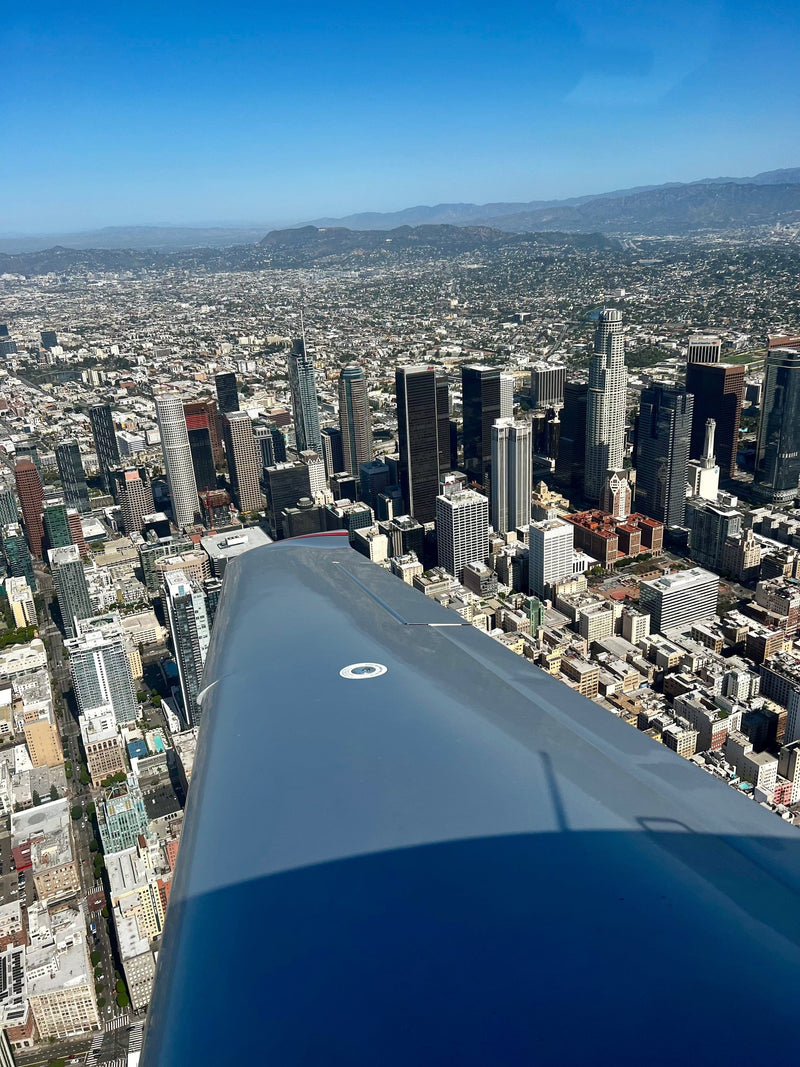
There is a smaller benefit that Simi Valley students only notice later. You transit east over the west valley twice a lesson day — the Santa Susana Pass, Chatsworth, the northwest corner of the San Fernando Valley — and that same ground shows up under the wing on your early practice-area flights. Pilotage is mostly pattern recognition. You already have the pattern from the driver’s seat.
Eleven instructors and a fleet we own rather than broker is what keeps the schedule honest. That matters when a canceled lesson costs you 44 miles of driving.


 Most Given