SAFETY FIRST
★★★★★
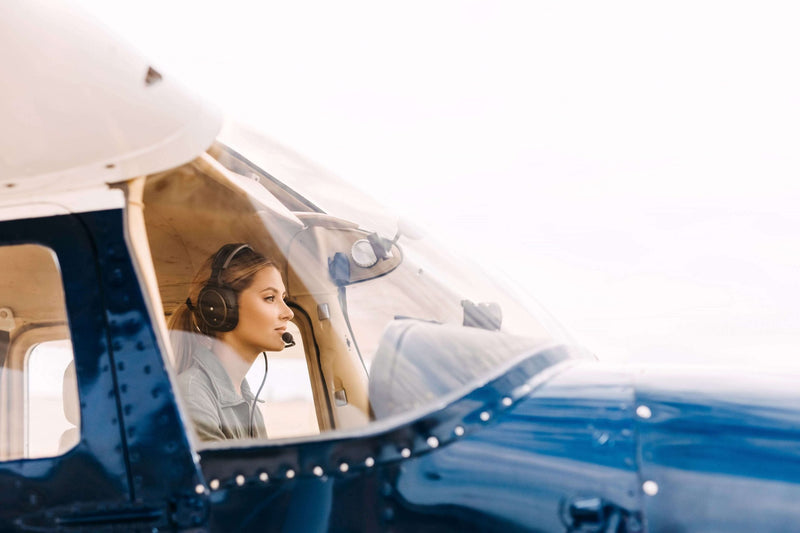
Very safety and detail oriented. Pre-flight briefing explained everything there was. To my knowledge, this flight school is exceptional in their ability.

There are six pilot certificates in the United States plus a separate one for instructors, and the FAA does not call any of them a license — it issues certificates. On top of the certificate sit ratings, which go on the plastic, and endorsements, which go in your logbook. Here is the whole structure in one page.
Getting these three words straight explains most of the confusion around what a pilot can and cannot fly.
A certificate is the level of pilot you are. Student, sport, recreational, private, commercial, airline transport. It sets what you may be paid for, who you may carry and under what conditions you may fly. You hold exactly one pilot certificate at a time, and each new one supersedes the last.
A rating is what you are certificated to fly, or how. Category and class ratings — airplane single-engine land, airplane multi-engine land, rotorcraft helicopter — appear printed on the certificate itself. So does the instrument rating, and so does a type rating for a specific large or turbojet aircraft. Ratings are earned by training and a practical test, exactly like a certificate.
An endorsement is a signature in your logbook from an authorized instructor saying you have been trained in something specific. Complex aircraft, high-performance aircraft, tailwheel, high-altitude, and every solo flight you make as a student. Endorsements never appear on the certificate and they do not expire in most cases, but a checkride examiner will absolutely ask to see them.

In order of privilege. Each one is a superset of the last, and each is issued under a different subpart of 14 CFR Part 61.
The permission slip that lets you fly an aircraft alone while training. It is not a license to do anything with anyone else on board — a student pilot may never carry a passenger. Issued free through IACRA and, since 2016, it does not expire.
The lowest-paperwork way to become a pilot in command. A valid US driver's license stands in for an FAA medical certificate, which is why it exists and why it matters to people whose medical situation is complicated. The FAA's 2025 MOSAIC rulemaking significantly expanded the set of aircraft a sport pilot may fly.
A middle tier the FAA created in 1989 that history has largely bypassed. It needs a third-class medical, which removes the main reason anyone would choose it over sport pilot, while carrying restrictions a private certificate does not have. Very few are issued.
The certificate most people mean when they say pilot's license, and by a wide margin the most commonly held. Carry passengers, fly at night, fly across the country, add an instrument rating and fly in cloud. You cannot be paid, but under FAR 61.113(c) you may share the pro rata cost of fuel, oil, airport expenses and rental with your passengers.
The certificate that allows you to be compensated for flying. Flight instruction, aerial survey, banner towing, pipeline patrol, skydive operations, charter and sightseeing all sit here. Without an instrument rating it carries a limitation under FAR 61.133(b)(1) that makes it close to unusable commercially, so the two are done together in practice.
The highest certificate the FAA issues, and the one required to captain an aircraft in scheduled airline service. Since 2013 it has also been required for first officers at Part 121 airlines, which is what people mean by the 1,500-hour rule.
A separate certificate rather than a rung on the same ladder, issued under Subpart H of Part 61. It is how most civilian pilots build the hours between a commercial certificate and an airline job, and it is the fastest way to genuinely understand the material you were taught.
Category is airplane, rotorcraft, glider, lighter-than-air, powered-lift, weight-shift-control or powered parachute. Class narrows it: single-engine land, single-engine sea, multi-engine land, multi-engine sea. Your first certificate comes with one category and class, and adding another is a training course and a checkride. Our multi-engine add-on is $5,100 in a Piper Seminole.
Added to a private or commercial certificate, it allows flight in instrument meteorological conditions under IFR. FAR 61.65 requires 50 hours of cross-country pilot-in-command time and 40 hours of instrument time. It is the rating that turns a light aircraft from a fair-weather toy into transport, and ours is $11,700.
Required under FAR 61.31(a) for any aircraft with a maximum takeoff weight over 12,500 pounds, and for any turbojet-powered aircraft. Airline pilots hold a type rating for each aircraft they fly. It is not something a private pilot encounters unless they move into large or jet equipment.
Logbook signatures for specific equipment and privileges: complex aircraft with retractable gear and a constant-speed propeller under FAR 61.31(e), high-performance above 200 horsepower under 61.31(f), tailwheel under 61.31(i), pressurised and high-altitude aircraft under 61.31(g), and the solo endorsements every student carries. They live in the logbook, not on the certificate.
For most people the answer is the private pilot certificate, and it is not close. It carries passengers, it flies at night, it goes anywhere in the country, and it accepts an instrument rating. It costs $10,900 with us against $8,400 for sport pilot, and that $2,500 buys a certificate you will not outgrow in a year.
Sport pilot is the right answer in two specific situations. First, if the FAA medical is a genuine problem — a driver's license is all sport pilot requires, and that is a real door for people who would otherwise be grounded. Second, if you know with confidence that you want local daytime flying with one friend on board and nothing more. If you are choosing sport pilot to save money and you already suspect you will want more later, you are buying the same certificate twice.
If you are aiming at a career, the sequence is private, then instrument, then commercial, then flight instructor, then hours toward an ATP. There is no shortcut through it and anyone telling you otherwise is selling something. What there is, is a large difference between doing it in the right order at a sensible price and doing it in the wrong order in an expensive airplane.

Sport and private in the simple singles, complex and commercial work in the Arrow, the class rating in the Seminole, and the Premium program in the Cirrus. Every one of them is owned and maintained by us.


Single-engine training on the Standard and Comprehensive programs is flown in the Cessna, Piper and Diamond aircraft. The Premium program is flown in the Cirrus SR22 Turbo with its full glass cockpit.
Book It Or Gift It
Every discovery flight below can be booked for yourself in the next few minutes, or bought as a gift certificate that is emailed within minutes and never expires. Same flight, same price, either way.
 Most Given
 Two Seats
 The Nice One
 Twin Engine
One person, one instructor, and no audience. Hands on the controls from the left seat, briefed before you go and debriefed after you land.
Hands-On Stick TimePre-Flight BriefingLoggable Flight Time
Flight Length
$229Book It Or Gift It
Same Price Either Way
The same flight with a passenger in the back seat, briefed and on the intercom. Couples book it; so do parents who would rather watch than hear about it.
One Passenger SeatPiper Warrior Or ArcherHeadsets For Both
Flight Length
$299Book It Or Gift It
Same Price Either Way
The nicest airplane we put a first-time flyer in. Glass cockpit, air conditioning, leather seats, and a parachute built into the airframe rather than strapped to the person.
Turbocharged Cirrus SR22Air ConditioningWhole-Airframe Parachute
Flight Length
$499Book It Or Gift It
Same Price Either Way
Two engines, and the airplane instrument-rated pilots move into when they start thinking about a career. Flown from the left seat with a multi-engine instructor.
Piper Seminole TwinMulti-Engine DepartureCareer-Track Instructor
Flight Length
$499Book It Or Gift It
Same Price Either Way
Gift It issues a real gift certificate, emailed within minutes, which never expires and credits in full toward training. Flights are limited to 180 lb per person, 370 lb combined. Questions: (818) 290-8249, 9 AM–9 PM, seven days.
Courses & Pricing
Course prices are packages, not hourly rates - the aircraft, your instructor, ground school and simulator time are all in the figure. Van Nuys Airport, KVNY. Financing Available Through Stratus & In-House Plans.

Start Here
The First Hour At The Controls. Credited Toward Your Training If You Enroll Within 24 Hours Of Landing.
All Prices In USD. 7900 Balboa Blvd, Suite 108A, Van Nuys, CA 91406 · Open 9 AM–9 PM, Seven Days. Free In-Person Tour Of The School
Loved On Google
Every review below is real and shown verbatim, in the reviewer’s own words — written by the people who learned to fly here, not by us.
SAFETY FIRST
Very safety and detail oriented. Pre-flight briefing explained everything there was. To my knowledge, this flight school is exceptional in their ability.
 DISCOVERY FLIGHT
I recently had the chance to take my first-ever discovery flight, and it was nothing short of amazing! From the moment I stepped into the cockpit, the...
 SUNSET CIRRUS
It was a great flight! I did a sunset flight and Alex let us fly an awesome. Website was easy to book, and the plane itself was really fun to fly...
 FLYING LESSON
We had a great flying lesson with Ralph and came away with a much better understanding of both the aircraft and the principles of flight. Ralph is a...
 KIDS LUXURY FLIGHT
I got 2 luxury discovery flights for my kids. I wanted them to have the experience of flying. Our instructor Alex was amazing he made sure they feel...
 HONEYMOON SURPRISE
Last minute booking to surprise my wife on our honeymoon. She had no experience with flying and was scared of flying, but Alex was very easygoing and knew...
 FULL-MOTION SIM
Amazing flight school in van nuys airport. I have been a student here for the past few months and i could not be happier. I started doing a lot of...
 DISCOVERY FOR TWO
I booked a Discovery Flight for Two for my girlfriend's birthday and it was the perfect gift for her. She couldn't have been more excited to get to...
 SIMULATORS
Very professional and great airplanes. I love the flight simulators. The pricing is very fair compared to any other flight school
 TEEN FIRST LESSON
We gifted our teenage son his first flying lesson. He was so excited! Alex greeted us and gave a reassuring brief that made us all feel comfortable and at...
 FIRST-TIME FLYER
Flying is my husband's hobby and I was incredibly anxious and apprehensive about the discovery flight. However, I felt completely safe and at ease once we...
SAFETY FIRST
Very safety and detail oriented. Pre-flight briefing explained everything there was. To my knowledge, this flight school is exceptional in their ability.
DISCOVERY FLIGHT
I recently had the chance to take my first-ever discovery flight, and it was nothing short of amazing! From the moment I stepped into the cockpit, the...
SUNSET CIRRUS
It was a great flight! I did a sunset flight and Alex let us fly an awesome. Website was easy to book, and the plane itself was really fun to fly...
FLYING LESSON
We had a great flying lesson with Ralph and came away with a much better understanding of both the aircraft and the principles of flight. Ralph is a...
KIDS LUXURY FLIGHT
I got 2 luxury discovery flights for my kids. I wanted them to have the experience of flying. Our instructor Alex was amazing he made sure they feel...
HONEYMOON SURPRISE
Last minute booking to surprise my wife on our honeymoon. She had no experience with flying and was scared of flying, but Alex was very easygoing and knew...
FULL-MOTION SIM
Amazing flight school in van nuys airport. I have been a student here for the past few months and i could not be happier. I started doing a lot of...
DISCOVERY FOR TWO
I booked a Discovery Flight for Two for my girlfriend's birthday and it was the perfect gift for her. She couldn't have been more excited to get to...
SIMULATORS
Very professional and great airplanes. I love the flight simulators. The pricing is very fair compared to any other flight school
TEEN FIRST LESSON
We gifted our teenage son his first flying lesson. He was so excited! Alex greeted us and gave a reassuring brief that made us all feel comfortable and at...
FIRST-TIME FLYER
Flying is my husband's hobby and I was incredibly anxious and apprehensive about the discovery flight. However, I felt completely safe and at ease once we...
Reviews shown verbatim, exactly as each reviewer published them.
FAA-approved, fully enclosed, and it moves. Procedures, instrument scan, radio work and emergencies all transfer straight to the aircraft — and it is never canceled for weather. It is also where a lot of the work for a rating gets done.
Simulator hours are built into every private pilot program — 2 hours on Standard and Premium, 5 hours on Comprehensive. A standalone Redbird session is $189.
Every endorsement in your logbook and every recommendation for a practical test comes from an authorized instructor. Ours all hold a commercial or airline transport certificate plus a CFI, and a current medical, and the instructor is legally pilot in command on every flight you make with them.
There are eleven of them. That is the difference between a lesson twice a week and a lesson whenever one person's calendar clears, and it is the single biggest reason students here move from certificate to certificate without stalling.
They fly here as a career rather than treating the school as a waiting room between airline applications. You are matched to one instructor so the teaching is continuous, and if the fit is wrong you change — no awkwardness, no argument.

Whichever certificate you end up holding, the private pilot certificate is the one nearly everybody passes through. Three programs, three fixed prices, nothing added later.
Forty hours logged in the Cessna, Piper and Diamond singles. The FAA minimum route, done properly.
Sixty hours logged and ten hours of ground school. The one most students choose, and the one that matches what the national average actually takes.
The same certificate flown in the Cirrus SR22 Turbo, with a full glass cockpit from the first lesson.
Every program is one fixed price with the aircraft, the instructor, ground school, simulator time and your books and materials inside it. Enrolled students fly at the $179 an hour package rate, wet, single-engine. Financing is available from $2,500 down with monthly plans. Other programs: Sport Pilot $8,400 · Instrument Rating $11,700 · Multi-Engine add-on $5,100 · Solo Certificate $5,500 · Teens ages 10–15 $4,200 · zero-to-airline $89,000.
Sport, private or professional, everyone begins with an instructor in the right seat and a set of controls in front of them. A discovery flight is that lesson, logged as dual instruction, and credited in full against any program if you enroll within 24 hours.
Full-motion and FAA-approved. Never canceled for weather, and the cheapest hour in aviation.
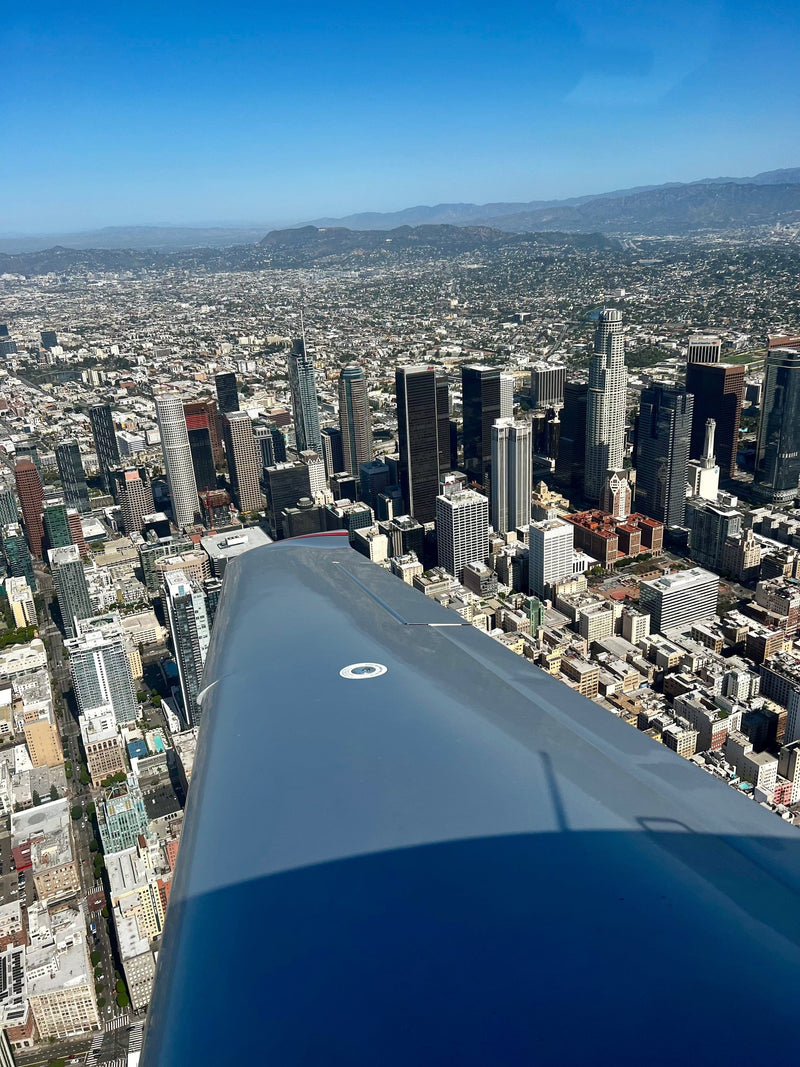
You fly it over Los Angeles. Loggable dual instruction toward any certificate. 90 min $299, 120 min $399.
Fly the twin. Worth doing if the airline path is what you are actually interested in.
Book The TwinProgram prices at Van Nuys: sport pilot $8,400, private pilot $10,900, instrument rating $11,700, multi-engine add-on $5,100, solo certificate $5,500, teen aviation course for ages 10 to 15 $4,200, and zero-to-airline $89,000.
An hour in the aircraft tells you more about which certificate suits you than any comparison table will. You fly, we log it as dual instruction, and it counts toward whichever course you choose. Call (818) 290-8249, 9am to 9pm, seven days.
Definitional answers, each self-contained and each with the regulation attached.
The FAA issues six pilot certificates: student, sport, recreational, private, commercial and airline transport, plus a separate flight instructor certificate. Each is defined in 14 CFR Part 61 and sets what you may fly, who you may carry and whether you may be paid. The FAA calls them certificates rather than licenses, though the terms are used interchangeably in everyday speech.
A certificate is the level of pilot you are — private, commercial, airline transport. A rating is what you are certificated to fly or how, such as airplane single-engine land, airplane multi-engine land or the instrument rating, and it is printed on the certificate. Endorsements are a third thing: logbook signatures from an instructor covering specific equipment like tailwheel, complex or high-performance aircraft.
The private pilot certificate for most people. It requires 40 hours minimum under FAR 61.109, allows you to carry passengers, fly at night and fly nationwide, and accepts an instrument rating on top. Sport pilot at 20 hours is the better answer if an FAA medical certificate is a genuine obstacle, since a valid US driver's license stands in for one, or if you only ever want local daytime flying.
An airman certificate. The FAA issues pilot certificates rather than licenses, under 14 CFR Part 61, and the plastic card is formally an Airman Certificate. In casual use pilot license, flight license and aviation license all mean the same document. The equivalent term abroad is usually a license — a PPL, CPL or ATPL under ICAO conventions.
Not an official FAA term. People searching for it almost always mean the private pilot certificate, which is the certificate that allows you to fly for your own personal purposes and carry passengers without being paid. Under FAR 61.113(c) a private pilot may share the pro rata cost of fuel, oil, airport expenses and rental with passengers, but may not be compensated for flying.
20 hours for a sport pilot certificate under FAR 61.313, 30 hours for a recreational certificate under FAR 61.99, 40 hours for a private pilot certificate under FAR 61.109, 250 hours for a commercial certificate under FAR 61.129, and 1,500 hours for an unrestricted airline transport certificate under FAR 61.159. In practice most private pilots log more than 40; AOPA puts the national average at 50 to 70 hours.
No. Sport pilots may use a valid US driver's license in place of an FAA medical. Student, recreational and private pilots need at least a third-class medical, though established private pilots can later switch to BasicMed. Commercial pilots need a second-class medical and airline transport pilots need a first-class medical to exercise those privileges, under FAR 61.23.
The airline transport pilot certificate. It requires 1,500 hours of total flight time under FAR 61.159, including 500 hours cross-country, 100 hours night and 75 hours instrument, a minimum age of 23, and a first-class medical certificate. A restricted ATP is available from age 21 at 1,000 to 1,250 hours for graduates of qualifying aviation degree programs, or 750 hours for eligible military pilots.
The three private pilot packages, what each one includes, the financing options and a realistic timeline built around how often you can actually fly. Sent to you in one email. Nobody will pressure you.
Aviation News
Notes from the flight line at Van Nuys — weather, regulation changes, checkride questions and the cost of training, written up as they come.
Open 7 days · 9:00 AM – 9:00 PM
Los Angeles Flight School