SAFETY FIRST
★★★★★
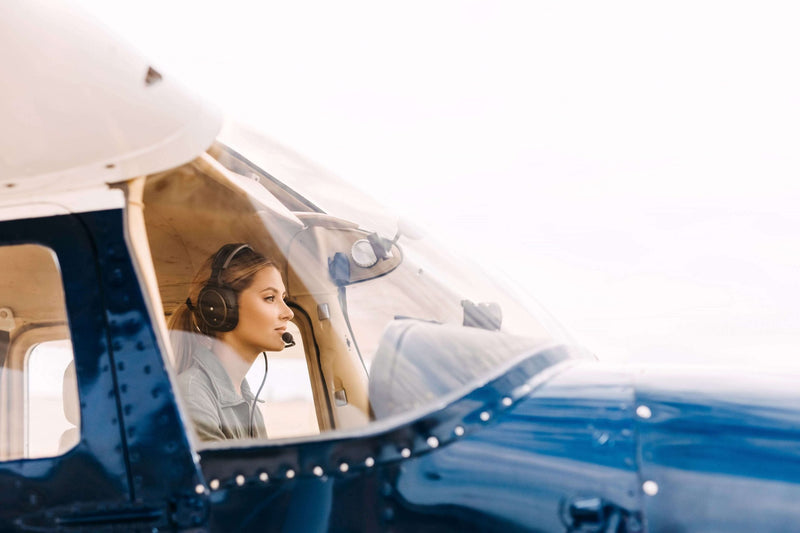
Very safety and detail oriented. Pre-flight briefing explained everything there was. To my knowledge, this flight school is exceptional in their ability.

A private pilot license — PPL to everyone who holds one — is the FAA certificate that lets you fly an airplane yourself, carry passengers, go anywhere in the United States, day or night, and never be paid for it. 14 CFR 61.109 sets the minimum at 40 hours. Private pilot training at Van Nuys starts at $10,900, published rather than quoted.
A private pilot license is the FAA pilot certificate that permits acting as pilot in command of an aircraft, carrying passengers, and flying anywhere in the United States for your own purposes. It is the certificate almost everybody means when they say pilot license, and PPL is its universal abbreviation. 14 CFR 61.109 requires at least 40 hours of flight time, including 20 hours of flight training from an authorized instructor and 10 hours of solo. 14 CFR 61.103 sets the minimum age at 17 and requires that you read, speak, write and understand English. 14 CFR 61.23 requires at least a third-class medical certificate before you fly solo.
One piece of terminology first, because it causes real confusion when people go looking for the rules. The FAA does not use the word license anywhere in 14 CFR Part 61. The document is a private pilot certificate. The rest of the English-speaking world says license, the abbreviation PPL is understood everywhere, and no examiner has ever failed anybody for the wrong noun. When you search the regulations, search for certificate.
What sits on the plastic matters more than what it is called. A pilot certificate carries a level — private, commercial, airline transport — and one or more category and class ratings that say what you may fly. The commonest by a long way is airplane single-engine land. Adding airplane multi-engine land later is a rating on the same certificate rather than a new certificate, which is why our multi-engine add-on is $5,100 rather than the price of starting over.
The certificate itself never expires. What lapses is currency: a flight review every 24 calendar months under 14 CFR 61.56, and three takeoffs and landings in the preceding 90 days before carrying passengers under 14 CFR 61.57. A pilot who has not flown for three years still holds the license. They simply cannot legally use it until they have flown with an instructor again.
The whole of private pilot privilege is built on a single restriction. Everything else in the section is an exception carved out of it.
14 CFR 61.113(a) says it plainly: no person who holds a private pilot certificate may act as pilot in command of an aircraft that is carrying passengers or property for compensation or hire, and no such person may, for compensation or hire, act as pilot in command of an aircraft. A PPL is permission to fly for your own purposes. It is not permission to be paid to fly. Being paid is what the commercial certificate at 250 hours under 14 CFR 61.129 is for.
You can carry as many passengers as the aircraft seats. You can fly at night. You can fly anywhere in the country, land at almost any public airport, and file nothing at all in visual conditions. You can rent an airplane in another state and take it for a week. Nothing about a private pilot license restricts you to a local area, to daylight, or to one aircraft. The limits people imagine are almost always currency limits or rating limits, not privilege limits.
Under 14 CFR 61.113(c) a private pilot may not pay less than the pro rata share of the operating expenses of a flight with passengers, provided the expenses involve only fuel, oil, airport expenditures or rental fees. Read it twice: the pilot must pay at least their equal share, and only those four categories may be shared at all. Three friends on board means the pilot pays at least a quarter. The full arithmetic, and the four situations that catch people out, are set out on our PPL pilot privileges page.
61.113(b) permits flight in connection with a business or employment where the flight is only incidental to it and nothing is carried for compensation. 61.113(d) permits charitable and community event flights conducted under 14 CFR 91.146. 61.113(e) covers search and location operations, 61.113(f) an aircraft salesman with at least 200 hours, and 61.113(g) glider towing under 61.69. 61.113(i) is the BasicMed paragraph, which lets a private pilot fly without a medical certificate in an aircraft authorized to carry not more than 7 occupants at not more than 12,500 pounds, with no more than 6 passengers, at or below 18,000 feet MSL and not more than 250 knots.
For an airplane single-engine land rating. Two regulations do most of the work: 14 CFR 61.103 is about you, 14 CFR 61.109 is about your logbook.
| Requirement | Regulation | The standard |
|---|---|---|
| Minimum age to hold the certificate | 14 CFR 61.103(a) | 17 |
| Minimum age to fly an airplane solo | 14 CFR 61.83 | 16 |
| Language | 14 CFR 61.103(c) | Read, speak, write and understand English |
| Student pilot certificate | 14 CFR 61.103(j) | US student, sport or recreational pilot certificate held |
| Medical certificate before solo | 14 CFR 61.23(a)(3) | At least third class |
| Pre-solo knowledge test and endorsement | 14 CFR 61.87 | Instructor-written test, then a make-and-model endorsement kept current every 90 days |
| Total flight time | 14 CFR 61.109(a) | 40 hours minimum |
| Dual flight training | 14 CFR 61.109(a) | 20 hours from an authorized instructor |
| Cross-country training | 14 CFR 61.109(a)(1) | 3 hours in a single-engine airplane |
| Night training | 14 CFR 61.109(a)(2) | 3 hours, including one cross-country over 100 nm and 10 takeoffs and 10 landings to a full stop |
| Instrument training | 14 CFR 61.109(a)(3) | 3 hours by reference to instruments |
| Practical test preparation | 14 CFR 61.109(a)(4) | 3 hours within the 2 calendar months before the test |
| Solo flight time | 14 CFR 61.109(a)(5) | 10 hours, of which 5 hours solo cross-country |
| The long solo cross-country | 14 CFR 61.109(a)(5)(ii) | 150 nm total, full-stop landings at three points, one leg over 50 nm straight-line |
| Towered-airport solo landings | 14 CFR 61.109(a)(5)(iii) | 3 takeoffs and 3 landings to a full stop at a towered airport |
| Knowledge areas taught | 14 CFR 61.105 | The full ground-school syllabus, endorsed before the written test |
| Areas of operation trained | 14 CFR 61.107(b)(1) | Twelve, from preflight preparation to postflight procedures |
| Knowledge test | 14 CFR 61.103(e), 61.35 | Passed within 24 calendar months of the practical test, with an endorsement to sit it |
| Practical test prerequisites | 14 CFR 61.39(a)(6) | Instructor endorsement given within the 2 calendar months preceding the month of application |
| Practical test standard | 14 CFR 61.43 | Every task performed within the Airman Certification Standards, with sound judgment |
Forty hours is a legal floor, not a forecast. AOPA puts what students actually need at between 50 and 70 hours, and where you land in that band is decided almost entirely by how often you fly rather than by aptitude. That is why our Comprehensive program logs 60 hours rather than 40. The full breakdown is on the private pilot license requirements page, and the cross-country flights specifically on the cross-country requirements page.
Six stages. Nobody does them strictly in sequence, but this is the shape of it.
A $229 discovery flight with you at the controls and a CFI as pilot in command under 14 CFR 91.3(a). The hour is logged as dual instruction under 14 CFR 61.51 and counts toward the 40. Do this before you spend anything larger.
A third-class medical certificate from an FAA-designated aviation medical examiner. Not needed for dual instruction; needed before solo under 14 CFR 61.23. Deal with it in the first fortnight so that a deferral does not ambush you later.
Around 15 to 25 hours for most people. Airwork, stalls, emergencies and enough landings that the instructor stops talking. 14 CFR 61.87 requires a written pre-solo knowledge test, proficiency in every listed maneuver, and a make-and-model endorsement.
The FAA private pilot knowledge test, sat at an approved testing center with your instructor’s endorsement under 14 CFR 61.35. Ground school covers the 14 CFR 61.105 knowledge areas: 3 hours on the Standard program, 10 on the Comprehensive.
The 61.109 requirements proper — the 150-nautical-mile solo cross-country, the 100-nautical-mile night dual, the instrument time. This is the stage where flying stops being circuits and starts being travel.
An oral examination and a flight test with a designated pilot examiner against the twelve areas of operation in 14 CFR 61.107. Your instructor endorses you when you are ready, and a good one will not send you early to clear the schedule.
Three certificates doing three different jobs. Plenty of people asking about a PPL should be asking whether a sport pilot certificate does what they actually want.
| Private Pilot (PPL) | Sport Pilot | Commercial Pilot | |
|---|---|---|---|
| Minimum age to hold it | 17 — 14 CFR 61.103 | 17 — 14 CFR 61.305 | 18 — 14 CFR 61.123 |
| Minimum flight hours | 40 — 14 CFR 61.109 | 20 — 14 CFR 61.313 | 250 — 14 CFR 61.129 |
| Medical | Third class, or BasicMed under 14 CFR 61.113(i) | US driver license accepted — 14 CFR 61.23(c)(1), conditions in 61.303(b) | Second class |
| Passengers | As many as the aircraft seats | One — 14 CFR 61.315(c)(4) | As many as the aircraft seats |
| Night flying | Yes, and 3 hours of it are required in training | Yes, with the 14 CFR 61.329 training and endorsement, plus a part 67 medical or BasicMed — a driver license alone is not enough for night | Yes |
| Airspace | Class B, C and D with no extra endorsement | Class B, C and D and towered airports need the 14 CFR 61.325 endorsement | Class B, C and D with no extra endorsement |
| Aircraft you may fly | Anything in the category and class on your certificate | Aircraft meeting 14 CFR 61.316 — VS1 of 59 knots CAS or less at maximum certificated takeoff weight, four seats or fewer, unpressurised, fixed gear and a fixed, ground-adjustable or automated controllable-pitch propeller, with retractable gear and a manual controllable-pitch propeller available under 14 CFR 61.331. There is no longer any weight limit. | Anything in the category and class on your certificate |
| Weather and altitude limits | Visual conditions until you add an instrument rating | 3 statute miles visibility with visual surface reference; 10,000 ft MSL or 2,000 ft AGL, whichever is higher — 14 CFR 61.315(c) | Visual conditions until you add an instrument rating |
| Paid to fly | No — 14 CFR 61.113(a) | No | Yes, within 14 CFR 61.133 |
| Our price | $10,900 / $15,900 / $22,500 | $8,400 | Part of the $89,000 zero-to-airline program |
The sport pilot column changed substantially when the FAA’s MOSAIC final rule took effect on 22 October 2025. The old 1,320-pound light-sport weight limit was deleted outright and eligibility now turns on the aircraft’s published stall speed under 14 CFR 61.316, and night flying became possible under 14 CFR 61.329. The FAA has published no list of newly-eligible aircraft, so eligibility has to be checked against a specific airframe’s published VS1 in its flight manual or type certificate data sheet. Read the detail on the sport pilot license page before assuming the private certificate is the obvious answer.
Three things it does not do, said plainly, because finding them out at hour thirty is expensive.
An airline job needs a commercial certificate, an instrument rating, a multi-engine rating and, for an unrestricted airline transport pilot certificate, 1,500 hours under 14 CFR 61.159. The private license is the first of those and the distance from it to a flight deck is measured in years rather than months. We do not place anybody in a job, and we publish no pass rates, graduate counts or placement figures.
A private pilot without an instrument rating is restricted to visual meteorological conditions. In Los Angeles that means the marine layer makes the decision for you on some mornings. The instrument rating under 14 CFR 61.65 requires 50 hours of cross-country pilot-in-command time and 40 hours of actual or simulated instrument time, costs $11,700 here, and is what most people who use the license regularly buy next.
Currency under 14 CFR 61.57 and a flight review every 24 calendar months under 61.56 are the maintenance schedule. Flying six times a year is legal and is not the same thing as being good at it. The pilots who get the most out of a private pilot license treat the checkride as the start of the learning rather than the end of it, which is the subject of our PPL flying page.
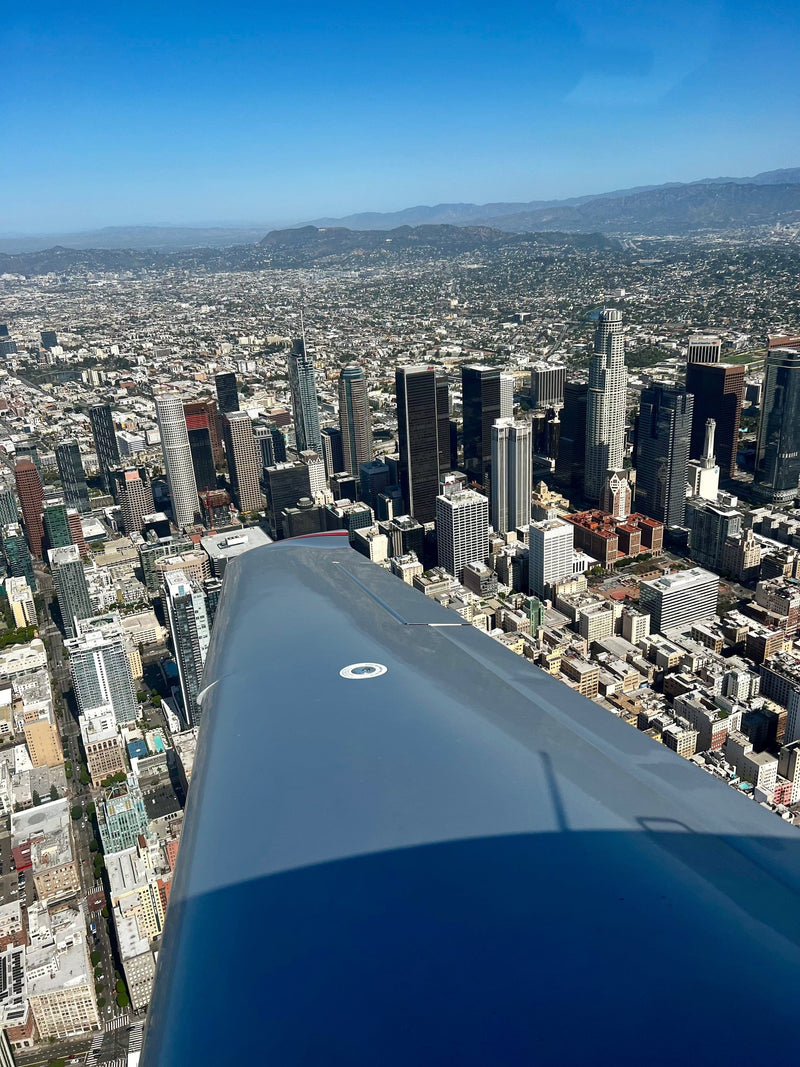
Van Nuys is a Class D airport sitting directly beneath the Los Angeles Class B shelf. That means the radio work is real from the first lesson rather than introduced as a special exercise late in training, and it transfers to any airspace in the country. Students who learn somewhere quiet often find their first arrival into a busy terminal area genuinely alarming. Ours have been doing it since the third lesson.
The aircraft are ours. Cessna, Piper and Diamond single-engine trainers on the Standard and Comprehensive private pilot programs, a Cirrus SR22 Turbo with a glass cockpit and a whole-airframe parachute on the Premium, a Piper Arrow for complex and high-performance time, and a Piper Seminole for the multi-engine add-on. 14 CFR 91.409(b) requires a 100-hour inspection on any aircraft used to give flight instruction for hire, in addition to its annual inspection, and we schedule those around the training rather than the other way round.
Weather is the quiet variable in every flight training estimate, and it is the one we measured rather than guessed. Twelve months of NOAA hourly observations at Van Nuys, against a 3,000-foot ceiling and 5 statute miles of visibility, produced 355 usable days a year. In June only 40 per cent of 7am observations met those minima, rising to 93 per cent by 11am, which is a scheduling instruction rather than a caveat.

All 85 are on Google. We do not aggregate a rating from anywhere else and we do not publish a figure we cannot point at.
The line that repeats through our Google reviews is about the twenty minutes at the table before the engine starts. People remember being told what was going to happen before it happened.
Eleven instructors and a fleet we own. Reviewers mention scheduling more often than they mention the aircraft, which tells you what most people find hard about learning to fly.
You enroll at $10,900 and you finish at $10,900. Nobody writes a five-star review about a surprise invoice, and the absence of one comes up constantly.
Fixed prices. Aircraft, instructor, ground school, simulator time and books are part of the price rather than a variable added afterwards.
Forty logged hours, meeting the 14 CFR 61.109 minimum. Right for someone flying two or three times a week with time to study between lessons.
Sixty logged hours and ten hours of ground school, which is closer to the 50 to 70 hours a private pilot license actually takes most people.
The same syllabus flown in the Cirrus SR22 Turbo with a glass cockpit and a whole-airframe parachute. Buy it if you intend to fly something like it afterwards.
Twenty hours minimum under 14 CFR 61.313, one passenger under 61.315(c)(4), flown on a valid US driver license in place of a medical certificate subject to 14 CFR 61.23(c)(1). Less certificate, considerably less money.
Added to an existing private pilot certificate. 14 CFR 61.65 requires 50 hours of cross-country pilot-in-command time and 40 hours of actual or simulated instrument time. The rating that makes a PPL usable all year in Los Angeles.
An hour in the left seat before any of the above. Logged as dual instruction under 14 CFR 61.51 and credited in full against any program if you enroll within 24 hours.
Multi-Engine add-on $5,100. Solo Certificate $5,500. Teens aged 10 to 15 $4,200. Zero to airline $89,000, with an unrestricted airline transport pilot certificate still requiring 1,500 hours under 14 CFR 61.159. Financing from $2,500 down through Stratus Financial or our in-house plans. Enrolled students fly single-engine aircraft at $179 an hour, wet — that is the only hourly figure we publish. Aircraft are available to qualified pilots who have checked out with us; call for availability.
A private pilot license is a serious commitment of time and money, and no page settles the question of whether you want one. Sixty minutes with your hands on the controls does. A $229 discovery flight from Van Nuys is a real lesson: you fly the aircraft, a CFI is legally pilot in command under 14 CFR 91.3(a), the hour is logged as dual instruction and counts toward the 40 hours in 14 CFR 61.109, and the full price comes off any private pilot program if you enroll within 24 hours. Call (818) 290-8249, or book a free consultation and bring your questions.
Private pilot license. It is the everyday abbreviation used by pilots worldwide for what the FAA formally calls a private pilot certificate, issued under 14 CFR Part 61. The British and American spellings of license are both in common use and neither is wrong.
40 hours minimum under 14 CFR 61.109: at least 20 hours of flight training from an authorized instructor and 10 hours of solo. Within those sit 3 hours of cross-country training, 3 hours of night training including a flight over 100 nautical miles and 10 full-stop landings, 3 hours of instrument training, 3 hours of test preparation, and a 150-nautical-mile solo cross-country with full-stop landings at three points.
$10,900 at Van Nuys for the Standard program with 40 logged hours, $15,900 for the Comprehensive with 60, and $22,500 for the Premium flown in a Cirrus SR22 Turbo. Aircraft, instructor, ground school, simulator time and books are inside each figure, and financing starts at $2,500 down.
Three to six months flying two or three times a week. 14 CFR 61.109 sets the 40-hour minimum and AOPA puts what students actually need at 50 to 70 hours. Cadence decides it more than talent: one lesson a fortnight means paying to relearn the previous one.
17 to hold the certificate under 14 CFR 61.103(a) and 16 to fly an airplane solo under 14 CFR 61.83. Training can begin at any age and there is no upper age limit anywhere in the regulations.
At least a third-class medical certificate under 14 CFR 61.23(a)(3), and only before you fly solo — not before your first lessons with an instructor. A third-class medical is valid to the end of the 60th month after the examination if you were under 40 on the day, and the 24th month if you were 40 or over.
Yes, as many as the aircraft seats, anywhere in the United States, day or night, in aircraft you are rated and current in. 14 CFR 61.113 prohibits acting as pilot in command for compensation or hire, and 61.113(c) requires you to pay at least your pro rata share of fuel, oil, airport expenditures and rental fees when passengers share the cost.
No. That is the central limitation in 14 CFR 61.113(a). Being paid to fly requires a commercial pilot certificate, which needs 250 hours under 14 CFR 61.129 and a second-class medical. The exceptions in 61.113(b) through (h) are narrow and none of them is a general-purpose route to payment.
The knowledge areas listed in 14 CFR 61.105 — regulations, airspace, weather, navigation, aerodynamics, aircraft systems, performance and aeromedical factors. Under 14 CFR 61.35 you need an instructor endorsement or other authorized evidence of ground training before you may sit it, and under 61.39 it must be passed within the 24 calendar months preceding the practical test.
An oral examination of two to three hours and a flight of one and a half to two, with an FAA designated pilot examiner, against the twelve areas of operation in 14 CFR 61.107(b)(1). 14 CFR 61.43(e) states that failing any area of operation fails the test, and 61.49 sets out the additional training and endorsement needed before a retest.
No. The certificate does not expire. 14 CFR 61.56 requires a flight review with an authorized instructor every 24 calendar months to keep acting as pilot in command, and 14 CFR 61.57 sets the takeoff and landing recency required to carry passengers.
Usually the instrument rating under 14 CFR 61.65, which requires 50 hours of cross-country pilot-in-command time and 40 hours of actual or simulated instrument time and costs $11,700 at Van Nuys. After that a multi-engine class rating at $5,100, and a commercial certificate at 250 hours under 14 CFR 61.129 for anyone intending to be paid to fly.
Every regulation and rulemaking cited on this page, at its primary source. Links open in a new tab.
eCFR — 14 CFR 61.113, Private Pilot Privileges And Limitations
eCFR — 14 CFR 61.23, Medical Certificates: Requirement And Duration
eCFR — 14 CFR 61.303, Operating Limits And The Driver License Conditions
eCFR — 14 CFR 61.315, Sport Pilot Privileges And Limits
eCFR — 14 CFR 61.316, Aircraft Performance Limits And Design Requirements
eCFR — 14 CFR Part 61 Subpart J, Sport Pilot Rules
eCFR — 14 CFR Part 67, Medical Standards And Certification
Federal Register — MOSAIC Final Rule, 90 FR 35034, 24 July 2025
The three private pilot packages, what each one includes, the financing options and a realistic timeline built around how often you can actually fly. Sent to you in one email. Nobody will pressure you.
Loved On Google
Every review below is real and shown verbatim, in the reviewer’s own words — written by the people who learned to fly here, not by us.
SAFETY FIRST
Very safety and detail oriented. Pre-flight briefing explained everything there was. To my knowledge, this flight school is exceptional in their ability.
 DISCOVERY FLIGHT
I recently had the chance to take my first-ever discovery flight, and it was nothing short of amazing! From the moment I stepped into the cockpit, the...
 SUNSET CIRRUS
It was a great flight! I did a sunset flight and Alex let us fly an awesome. Website was easy to book, and the plane itself was really fun to fly...
 FLYING LESSON
We had a great flying lesson with Ralph and came away with a much better understanding of both the aircraft and the principles of flight. Ralph is a...
 KIDS LUXURY FLIGHT
I got 2 luxury discovery flights for my kids. I wanted them to have the experience of flying. Our instructor Alex was amazing he made sure they feel...
 HONEYMOON SURPRISE
Last minute booking to surprise my wife on our honeymoon. She had no experience with flying and was scared of flying, but Alex was very easygoing and knew...
 FULL-MOTION SIM
Amazing flight school in van nuys airport. I have been a student here for the past few months and i could not be happier. I started doing a lot of...
 DISCOVERY FOR TWO
I booked a Discovery Flight for Two for my girlfriend's birthday and it was the perfect gift for her. She couldn't have been more excited to get to...
 SIMULATORS
Very professional and great airplanes. I love the flight simulators. The pricing is very fair compared to any other flight school
 TEEN FIRST LESSON
We gifted our teenage son his first flying lesson. He was so excited! Alex greeted us and gave a reassuring brief that made us all feel comfortable and at...
 FIRST-TIME FLYER
Flying is my husband's hobby and I was incredibly anxious and apprehensive about the discovery flight. However, I felt completely safe and at ease once we...
SAFETY FIRST
Very safety and detail oriented. Pre-flight briefing explained everything there was. To my knowledge, this flight school is exceptional in their ability.
DISCOVERY FLIGHT
I recently had the chance to take my first-ever discovery flight, and it was nothing short of amazing! From the moment I stepped into the cockpit, the...
SUNSET CIRRUS
It was a great flight! I did a sunset flight and Alex let us fly an awesome. Website was easy to book, and the plane itself was really fun to fly...
FLYING LESSON
We had a great flying lesson with Ralph and came away with a much better understanding of both the aircraft and the principles of flight. Ralph is a...
KIDS LUXURY FLIGHT
I got 2 luxury discovery flights for my kids. I wanted them to have the experience of flying. Our instructor Alex was amazing he made sure they feel...
HONEYMOON SURPRISE
Last minute booking to surprise my wife on our honeymoon. She had no experience with flying and was scared of flying, but Alex was very easygoing and knew...
FULL-MOTION SIM
Amazing flight school in van nuys airport. I have been a student here for the past few months and i could not be happier. I started doing a lot of...
DISCOVERY FOR TWO
I booked a Discovery Flight for Two for my girlfriend's birthday and it was the perfect gift for her. She couldn't have been more excited to get to...
SIMULATORS
Very professional and great airplanes. I love the flight simulators. The pricing is very fair compared to any other flight school
TEEN FIRST LESSON
We gifted our teenage son his first flying lesson. He was so excited! Alex greeted us and gave a reassuring brief that made us all feel comfortable and at...
FIRST-TIME FLYER
Flying is my husband's hobby and I was incredibly anxious and apprehensive about the discovery flight. However, I felt completely safe and at ease once we...
Reviews shown verbatim, exactly as each reviewer published them.
Aviation News
Notes from the flight line at Van Nuys — weather, regulation changes, checkride questions and the cost of training, written up as they come.
Open 7 days · 9:00 AM – 9:00 PM
Los Angeles Flight School