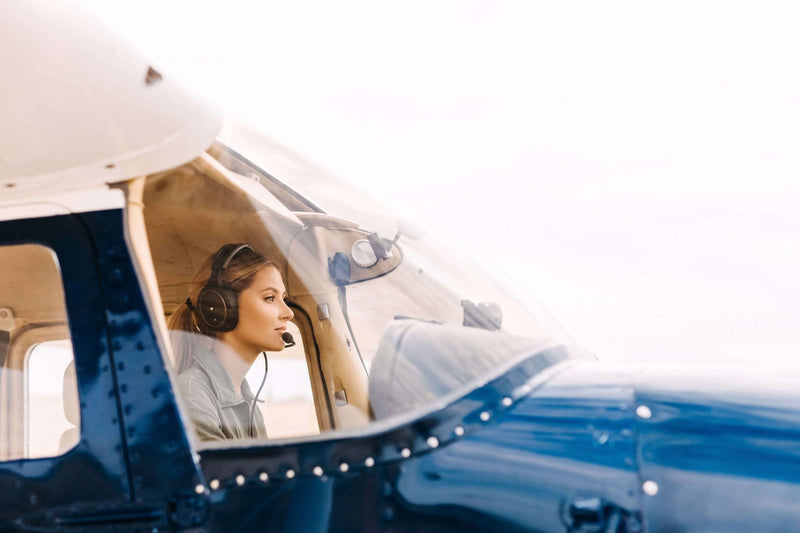
SAFETY FIRST
★★★★★
Very safety and detail oriented. Pre-flight briefing explained everything there was. To my knowledge, this flight school is exceptional in their ability.

The MPL is an airline pilot license that skips most of the flying most pilots learn to do. It exists in Europe, the Middle East, Asia and Australia; it does not exist in the United States, and the FAA will not convert one. Here is how the MPL works, who it suits, what it costs, and what the American route to the same right seat looks like — from a Van Nuys school that trains the American way.
The traditional route trains you to be a pilot and then teaches you to fly an airliner. The MPL trains you to be an airliner co-pilot from the first week.
The Multi-crew Pilot License was adopted by ICAO in 2006 as a competency-based alternative to the private-commercial-ATP ladder. Instead of building hours in small aircraft and then converting to jets, an MPL cadet trains from the start toward a defined set of competencies for the co-pilot seat of a specific multi-crew aircraft, with an airline sponsoring the course and hiring the graduate at the end.
The course runs in four phases — core flying skills, basic, intermediate and advanced — and moves quickly out of light aircraft into simulators. A typical program is around 240 hours in total, of which the majority is in flight simulation training devices and full-flight simulators, with crew resource management, threat and error management and upset recovery woven through it. The cadet finishes with a type rating on the sponsoring airline’s aircraft and, often, fewer than a hundred hours of real flying.
That is the point of the design, and also its limitation. An MPL holder may act only as co-pilot in multi-crew operations, initially with the sponsoring airline and on the type trained. The license does not by itself allow single-pilot flying, and moving to another airline or aircraft type, or unfreezing it to a full ATPL, means more training and more hours. It is a narrow, deep qualification rather than a broad one.

| Region | MPL Status | How Airline Pilots Are Typically Trained |
|---|---|---|
| Europe (EASA) And The United Kingdom | Available; used by airline cadet programs | Both the MPL and the traditional modular or integrated ATPL route; a “frozen ATPL” with around 200 hours is the common first-officer entry point |
| Middle East | Available; used by several flag-carrier cadet schemes | Airline-sponsored MPL and integrated ATPL cadetships |
| Asia-Pacific | Available in a number of states | Airline cadet programs, both MPL and traditional |
| Australia And New Zealand | Available | Mix of MPL cadetships and the traditional CPL and ATPL route |
| Canada | Available under Transport Canada rules, little used | Traditional commercial and ATPL route |
| United States (FAA) | Not adopted. The FAA issues no MPL and does not convert a foreign MPL to a US certificate | Private, instrument, commercial, then 1,500 hours (or a restricted-ATP reduction) to the ATP certificate that every airline first officer must hold |
The absence in the United States is not an oversight. After the 2009 Colgan Air accident, Congress required every airline first officer to hold an ATP certificate, and the FAA set the experience floor at 1,500 hours, with reductions to 1,000 or 1,250 for graduates of approved university programs and 750 for military pilots. A license designed to put a 200-hour cadet in an airliner is the opposite of that policy, and there is no serious prospect of it changing. Our page on the ATP certificate and the 1,500-hour rule covers the detail.
| Multi-Crew Pilot License | The US Path (FAA) | |
|---|---|---|
| Who Pays | Usually the cadet, at an airline-approved school; some airlines subsidise or bond the cost | The student, at any Part 61 or Part 141 school; the $82,000 Airline Pilot Program at Van Nuys covers every certificate and rating |
| Total Training Hours | Around 240, most in simulators; real flying often under 100 hours | Roughly 250 hours to the commercial and flight instructor certificates, then 1,500 total for the ATP, nearly all in real aircraft |
| Time To A Jet | 18 to 24 months from zero to the right seat, if the sponsoring airline is hiring | Typically 2 to 4 years: 12 to 18 months of training, then 12 to 24 months instructing or flying to 1,500 hours |
| What You Can Fly Afterwards | The sponsoring airline’s type, as co-pilot, in multi-crew operations only | Anything you are rated for: single-pilot, VFR, IFR, light twins, and the airline jet once type-rated |
| Portability | Low; changing airline or aircraft type needs further training, and the license is not recognized in the United States | High; FAA certificates are recognized or convertible in most of the world and the hours are yours regardless of employer |
| Risk If The Airline Stops Hiring | Significant; a cadet without a sponsoring airline has a license with few other uses | Lower; a commercial pilot with an instructor certificate can earn, instruct and build hours while waiting |
| Pay At The First Airline Job | Varies by carrier and country | Roughly $85,000 to $110,000 in the first year at a US regional in 2026; see how much pilots make |
Both systems produce safe airline crews. They make different trades, and the trade the MPL makes is one you should understand before you sign a cadet contract.
The strongest argument for the MPL is that it trains what an airline co-pilot actually does — procedures, crew coordination, automation management, the jet — instead of spending a thousand hours doing something else first. Airlines that run MPL cadetships generally report that their graduates perform well in the right seat, and the simulator-heavy syllabus is a genuine advance in how threat and error management is taught.
The argument against is what the syllabus leaves out. An MPL cadet may reach an airliner having flown a real aircraft alone for a handful of hours, never having made a weather decision without a crew, never having flown an approach to a short runway in a crosswind with nobody else on board. The American system, for all its inefficiency, produces a first officer who has done all of that hundreds of times and who holds a license that lets them fly anything, for anyone, anywhere the FAA is recognized.
There is also the practical question of what happens if things go wrong. An MPL cadet whose sponsoring airline pauses hiring — which airlines do, every downturn — holds a license with few other uses. A commercial pilot with a flight instructor certificate keeps working, keeps logging, and is first in the queue when hiring resumes. For a student who wants to fly in the United States, or who wants a career that survives an airline’s bad year, the traditional route is not the slow option. It is the robust one.

This is the path every civilian airline pilot in the United States walks, and the one the Airline Pilot Program at Van Nuys is built around.
The foundation: 40 hours minimum under FAR 61.109, 60 to 75 on the national average, learning to fly a real airplane alone before anything else. $10,600 as a standalone program.
Flying by instruments under air traffic control, the skill every airline flight is built on. 40 hours of instrument time, a 250-mile IFR cross-country, and the rating an airline will not hire without. $11,700 standalone.
250 hours total time, complex and multi-engine aircraft, and the certificate that lets you be paid to fly. The Piper Seminole is where the multi-engine rating happens here. $15,900 and $5,100 standalone.
The first flying job for most airline pilots, and the way the hours get built. A full-time instructor at a busy Southern California school reaches 1,500 hours in 12 to 24 months, paid.
With the hours and the ATP Certification Training Program complete, you sit the ATP written and practical. Regional airlines hire at this point, into the right seat of a 50- to 76-seat jet.
A regional first officer earns $85,000 to $110,000 in year one in 2026, upgrades to captain in two to four years, and moves to a major with the seniority number that decides the next thirty years.
An MPL cannot be converted to an FAA certificate. If you hold one and want to fly in the United States, you start the American ladder from the private certificate, although the knowledge and instrument skills you have will make it faster. If you hold a foreign private or commercial license instead, the FAA can issue a US certificate on the basis of it under 14 CFR 61.75, and the path shortens considerably.
If you are choosing between an MPL cadetship at home and training in the United States, the honest questions are where you want to fly, how you want to pay, and how much risk you are willing to carry on one airline’s hiring plans. Training in Los Angeles means 355 flyable days a year, fixed published prices, and an FAA certificate that is the most widely recognized in the world. It also means the TSA Flight Training Security Program approval and, for a full-time course, an M-1 student visa, both of which our international student guide walks through.

On Google, the same three things come up again and again. The second one is why the American route goes quickly here.
The most repeated compliment in our reviews is not the aircraft or the price — it is the debrief, and instructors who have flown the career they are describing.
Eleven instructors and a fleet we own means a full-time student flies five or six days a week, which is what gets you through 250 hours in 12 to 18 months.
The number you enroll at is the number you finish at, which matters more on an $82,000 program than anywhere else.
One number, fixed at enrollment. Aircraft, instructor, ground school, simulator time and books are all inside it. Financing from $2,500 down, with monthly plans available.
Private, instrument, commercial, multi-engine and flight instructor certificates, from your first lesson to the day you are hireable.
Where the American route begins: 40 hours logged, flown properly, in the Cessna, Piper and Diamond fleet.
The rating every airline requires and the skill the MPL is built around, taught in the Piper Warrior and the Redbird MCX.
Also available: Comprehensive Private Pilot $14,900 · Premium Private Pilot (Cirrus SR22 Turbo) $21,300 · Commercial Pilot $15,900 · Multi-Engine add-on $5,100 · Sport Pilot $8,400. Enrolled students train on package pricing at $179 an hour, wet, single-engine.
Sixty minutes in a real airplane, with your hands on the controls, is the best way to find out whether any of this is for you.
Sit down with an instructor who has flown the career, go through the timeline and the visa and TSA steps if you are coming from abroad, and get an honest answer.
Lesson one, logged as dual instruction — the first of the 1,500 hours. Credited in full against any program if you enroll within 24 hours.
Full-motion and FAA-approved. The closest thing on the American route to the MPL’s simulator hours, and loggable toward your ratings.
Book a discovery flight, fly the aircraft yourself, and let the $229 come off your program when you enroll. Or call (818) 290-8249, 9am to 9pm, seven days, and ask for an instructor who has flown for an airline.
Straight answers on what the MPL is, where it is valid, and how the FAA route compares.
The MPL is an ICAO license, introduced in 2006, that qualifies a pilot to act only as co-pilot of a specific multi-crew airplane type under airline operations. It is competency based rather than hour based, so a graduate may reach the right seat of a jet with roughly 240 hours, much of it in simulators, and the license is tied to the airline that sponsored the course.
No. The FAA has not adopted the MPL, so no American flight school can issue one. The American route to an airline is the private, instrument and commercial certificates followed by an ATP, which since 2013 requires 1,500 hours of flight time or a restricted ATP at 750, 1,000 or 1,250 hours depending on your background.
Not on its own. The FAA does not recognize the MPL as a license it can convert, so an MPL holder who wants to fly in America generally has to earn FAA certificates from the private pilot certificate upward, with credit for logged flight time where the regulations allow it. An ICAO private pilot license, by contrast, can be converted under 14 CFR 61.75.
The FAA had already gone the other way. After the Colgan Air 3407 accident in 2009, Congress passed a law that raised the minimum experience for airline first officers from 250 hours to an ATP with 1,500 hours. A license designed to put pilots in a jet at 240 hours runs directly against that rule, and there has been no serious move to change it.
It is issued mainly in Europe under EASA and the UK CAA, in the Gulf by carriers such as Emirates, Qatar Airways and Etihad, across Asia-Pacific including China and Japan, and in Australia and New Zealand. Canada has an MPL in its regulations but very few graduates. The United States has none.
To a jet seat, usually yes: a sponsored MPL course can run 18 to 24 months from zero to the right seat. To being a fully qualified, portable pilot, no. The FAA route takes about the same time to reach a commercial certificate and then roughly a year of instructing or other flying to reach 1,500 hours, and you finish with certificates that work at any airline in the country.
It is tied to one airline and one aircraft type, so if the sponsor withdraws, furloughs or fails, a graduate can be left with a license that is hard to use anywhere else. MPL holders have far less hand-flying and solo time than a conventional graduate, and converting to a full ATPL later still requires building real flight hours. Most MPL courses are also only open to cadets the airline has selected.
At a steady pace, roughly 12 to 18 months from your first lesson to a commercial certificate with instrument and multi-engine ratings, then about a year building hours, most often as a flight instructor. Two to four years from zero to an airline class date is realistic for a student who trains consistently; our airline pilot program is built around that timeline.
Yes. You will need a visa that permits flight training, normally an M-1, and TSA Flight Training Security Program approval before each certificate course begins. We walk international students through both, and Van Nuys weather lets you keep flying year round, which matters when you are on a visa timeline. Our international student guide covers the full process.
Our Airline Pilot Program is listed at $82,000 and takes you from zero time through private, instrument, commercial, multi-engine and flight instructor certificates. Individual certificates are also priced separately, starting with the private pilot program at $10,600. Every price is on our full price list, and a free consultation is the fastest way to map a plan to your budget.
Most of it. Only the first phase, core flying skills, is built around single-pilot flying in a light airplane. The basic, intermediate and advanced phases move into flight simulation training devices of increasing fidelity, ending with type-rating training in a full flight simulator. The UK CAA still requires at least 12 takeoffs and landings under instructor supervision in the real type-rating airplane.
A minimum of 240 hours of training, counting time as pilot flying and as pilot monitoring, under the ICAO-based rules used by authorities such as the UK CAA and Singapore's CAAS. Theory is taught to airline transport pilot level; the UK CAA cites 750 hours of theoretical instruction plus type-rating ground training. Time in a real airplane is a small share of the 240 hours.
No. The UK CAA states that the MPL does not include private pilot privileges, so the holder cannot fly a light airplane recreationally on it, and its instrument privileges apply only to multi-pilot operations. Private, commercial or single-pilot instrument privileges can be added with further training. In the US, the private pilot certificate takes at least 40 hours under 14 CFR 61.109 and is the first step.
In the UK, an MPL applicant needs a valid Class 1 medical and must be at least 18, according to the UK CAA. Class 1 is the airline-standard medical in ICAO systems. The closest FAA equivalent is the first class medical under 14 CFR Part 67, Subpart A, which a US airline captain must hold. Getting the airline-standard medical before you pay for any airline route is sensible in either system.
There is none. The closest US equivalent is the airline transport pilot (ATP) certificate, which requires 1,500 hours of total time under 14 CFR 61.159, or a restricted ATP at 750, 1,000 or 1,250 hours under 14 CFR 61.160 for military pilots and approved aviation degree graduates. LA Flight School's zero-to-airline program covers the commercial, instrument, multi-engine and flight instructor steps for $82,000.
The three private pilot packages, what each one includes, the financing options and a realistic timeline built around how often you can actually fly. Sent to you in one email. Nobody will pressure you.
Loved On Google
Every review below is real and shown verbatim, in the reviewer’s own words — written by the people who learned to fly here, not by us.
SAFETY FIRST
Very safety and detail oriented. Pre-flight briefing explained everything there was. To my knowledge, this flight school is exceptional in their ability.
 DISCOVERY FLIGHT
I recently had the chance to take my first-ever discovery flight, and it was nothing short of amazing! From the moment I stepped into the cockpit, the...
 SUNSET CIRRUS
It was a great flight! I did a sunset flight and Alex let us fly an awesome. Website was easy to book, and the plane itself was really fun to fly...
 FLYING LESSON
We had a great flying lesson with Ralph and came away with a much better understanding of both the aircraft and the principles of flight. Ralph is a...
 KIDS LUXURY FLIGHT
I got 2 luxury discovery flights for my kids. I wanted them to have the experience of flying. Our instructor Alex was amazing he made sure they feel...
 HONEYMOON SURPRISE
Last minute booking to surprise my wife on our honeymoon. She had no experience with flying and was scared of flying, but Alex was very easygoing and knew...
 FULL-MOTION SIM
Amazing flight school in van nuys airport. I have been a student here for the past few months and i could not be happier. I started doing a lot of...
 DISCOVERY FOR TWO
I booked a Discovery Flight for Two for my girlfriend's birthday and it was the perfect gift for her. She couldn't have been more excited to get to...
 SIMULATORS
Very professional and great airplanes. I love the flight simulators. The pricing is very fair compared to any other flight school
 TEEN FIRST LESSON
We gifted our teenage son his first flying lesson. He was so excited! Alex greeted us and gave a reassuring brief that made us all feel comfortable and at...
 FIRST-TIME FLYER
Flying is my husband's hobby and I was incredibly anxious and apprehensive about the discovery flight. However, I felt completely safe and at ease once we...
SAFETY FIRST
Very safety and detail oriented. Pre-flight briefing explained everything there was. To my knowledge, this flight school is exceptional in their ability.
DISCOVERY FLIGHT
I recently had the chance to take my first-ever discovery flight, and it was nothing short of amazing! From the moment I stepped into the cockpit, the...
SUNSET CIRRUS
It was a great flight! I did a sunset flight and Alex let us fly an awesome. Website was easy to book, and the plane itself was really fun to fly...
FLYING LESSON
We had a great flying lesson with Ralph and came away with a much better understanding of both the aircraft and the principles of flight. Ralph is a...
KIDS LUXURY FLIGHT
I got 2 luxury discovery flights for my kids. I wanted them to have the experience of flying. Our instructor Alex was amazing he made sure they feel...
HONEYMOON SURPRISE
Last minute booking to surprise my wife on our honeymoon. She had no experience with flying and was scared of flying, but Alex was very easygoing and knew...
FULL-MOTION SIM
Amazing flight school in van nuys airport. I have been a student here for the past few months and i could not be happier. I started doing a lot of...
DISCOVERY FOR TWO
I booked a Discovery Flight for Two for my girlfriend's birthday and it was the perfect gift for her. She couldn't have been more excited to get to...
SIMULATORS
Very professional and great airplanes. I love the flight simulators. The pricing is very fair compared to any other flight school
TEEN FIRST LESSON
We gifted our teenage son his first flying lesson. He was so excited! Alex greeted us and gave a reassuring brief that made us all feel comfortable and at...
FIRST-TIME FLYER
Flying is my husband's hobby and I was incredibly anxious and apprehensive about the discovery flight. However, I felt completely safe and at ease once we...
Reviews shown verbatim, exactly as each reviewer published them.
Aviation News
Notes from the flight line at Van Nuys — weather, regulation changes, checkride questions and the cost of training, written up as they come.
Open 7 days · 9:00 AM – 9:00 PM
Los Angeles Flight School