SAFETY FIRST
★★★★★
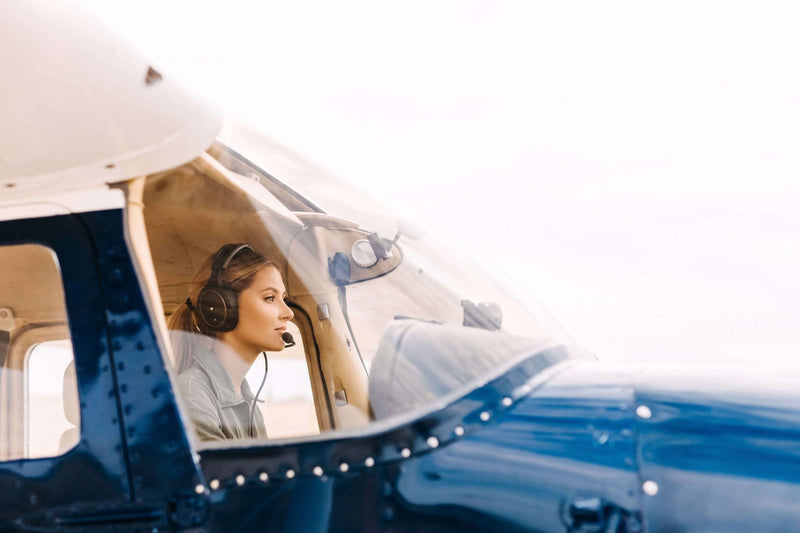
Very safety and detail oriented. Pre-flight briefing explained everything there was. To my knowledge, this flight school is exceptional in their ability.

The Piper Archer and the Piper Warrior are the same airplane with different engines: the same tapered Cherokee wing, the same four seats, the same cabin, the same landing gear. One has 160 horsepower and one has 180. That single difference decides who buys which, what each costs to fly, and why a school that trains private and instrument students chooses the Warrior. Here is the honest comparison, with the numbers.
Piper has built the PA-28 Cherokee since 1961. The Warrior and the Archer are the two four-seat, fixed-gear versions that survived, and they are far more alike than their names suggest.
The Cherokee started with a short, straight “Hershey bar” wing. In the mid-1970s Piper fitted a new semi-tapered wing with a longer span and gentler stall, and the first aircraft to get it was the 160-horsepower Warrior. The 180-horsepower Archer II received the same wing a couple of years later, and from that point on the two aircraft have shared everything that matters aerodynamically: the wing, the tail, the fuselage, the cabin, the fixed tricycle gear, the 48 usable gallons of fuel in the same two tanks.
What differs is the engine and what hangs off it. The Warrior has a four-cylinder Lycoming O-320 producing 160 horsepower; the Archer has the O-360, the same basic engine with a longer stroke, producing 180. Piper certified the Archer to a higher maximum takeoff weight to make use of the extra power, and gave it a slightly higher service ceiling and a slightly faster cruise. Everything else — the sight picture over the nose, the flare, the way it settles into ground effect, the control forces, the checklist — is close enough that a pilot who has flown one can be checked out in the other in an hour.
Both have gone through generations. The Warrior II and III and the Archer II and III are the classic analogue-panel aircraft most training fleets fly. The current Archer LX and the trainer-spec Archer TX come from the factory with a Garmin G1000 NXi glass panel, and since 2019 Piper has also sold the Pilot 100i, a lower-cost trainer built on the Archer airframe with a 180 hp Lycoming IO-360 and a Garmin G3X Touch display.

Typical figures for a Warrior III and an Archer III. Individual aircraft vary with model year, equipment and paint, so the pilot’s operating handbook for the tail number you fly is the final word.
| Piper Warrior (PA-28-161) | Piper Archer (PA-28-181) | |
|---|---|---|
| Engine | Lycoming O-320, 160 hp | Lycoming O-360, 180 hp |
| Maximum Takeoff Weight | About 2,440 lb (Warrior III; earlier Warrior II 2,325 lb) | About 2,550 lb |
| Typical Useful Load | Around 800 to 850 lb | Around 850 to 950 lb |
| Usable Fuel | 48 US gallons | 48 US gallons |
| Cruise At 75 Percent | Roughly 115 to 128 knots depending on model and altitude | Roughly 125 to 130 knots |
| Rate Of Climb, Sea Level | About 640 to 710 fpm | About 670 to 740 fpm |
| Fuel Burn In Cruise | About 8 gallons an hour | About 10 gallons an hour |
| Service Ceiling | About 11,000 ft | About 13,000 ft |
| Stall Speed, Flaps Down | About 45 knots | About 45 knots |
| Seats | 4 | 4 |
| Landing Gear | Fixed tricycle | Fixed tricycle |
| High-Performance Or Complex? | Neither | Neither; 180 hp is below the 200 hp high-performance line |
This is the Archer’s real advantage. On a summer afternoon in the Valley, with density altitude above 4,000 feet and four people aboard, the extra power is the difference between a comfortable climb and a patient one. With two aboard and half tanks, both climb fine.
The Archer carries about a hundred pounds more. That is one more adult, or full fuel with three people instead of two and a half. For an owner who flies the family, it matters. For a training flight with a student and an instructor, neither aircraft is anywhere near its limit.
A few knots. On the Santa Barbara run that is about three minutes. Anyone choosing between these two for cruise speed is asking the wrong question; the step up in speed is the Arrow or the Cirrus, not the Archer.
The bigger engine burns about two gallons more an hour, and the airframe costs more to buy and insure, so an Archer rents for more than a Warrior almost everywhere. Over the 40 to 70 hours of a private certificate that is a real number, and it buys nothing a private pilot student needs.
Identical, for practical purposes. Same wing, same stall behavior, same forgiving flare, same stable platform on an instrument approach. A student trained in a Warrior steps into an Archer and notices the climb, and nothing else.
None. Neither aircraft is high-performance (over 200 hp) or complex (retractable gear, flaps and a controllable propeller), so moving between them needs a checkout with an instructor and an insurance signature, not an FAA endorsement.
We fly two Piper Warriors at Van Nuys, identically equipped, both with genuine IFR panels, and we use them for the private certificate and then the instrument rating in the same aircraft. That is a deliberate choice, and the Archer comparison is the reason.
A student earning a private certificate flies with one instructor and half tanks. The Archer’s extra useful load and climb are never used; its extra fuel burn is paid for on every lesson. The Warrior gives the student everything that actually shapes their flying — the four-seat cabin, the low wing, the real instrument panel, the stable approach — at the single-engine package rate of $179 an hour wet for enrolled students, the same rate as the Cessna 162. Two more seats and an IFR panel at a light-sport price is a hard combination to argue with.
For the instrument rating the case is stronger still. An IFR trainer wants to be stable, predictable and inexpensive, because the rating takes forty hours of instrument time and the aircraft is a platform for procedures rather than the point of the lesson. The Warrior is exactly that. And when a student later flies an Archer, a Pilot 100i, or the Archer TX at an airline academy, the transition is an hour in the pattern, not a new type.

If you are buying rather than renting and you regularly fly three or four people with bags, the Archer’s useful load is worth every dollar of the difference. It is one of the most popular family airplanes ever built for that reason.
Pilots who base at a high-elevation field, or who fly into the mountains in summer, will use the 180 horsepower on most flights. In the Valley at sea level the Warrior has enough; at Big Bear in August the Archer is the more comfortable machine.
The Archer TX and the Pilot 100i are what several large academies fly, with Garmin glass from day one. If you are heading to one of those programs later, an hour in a G1000 trainer is a sensible investment; our glass cockpit versus steam gauges guide covers the trade-off.
On Google, the same three things come up again and again. The second one is why two Warriors are enough.
The most repeated compliment in our reviews is not the aircraft or the price — it is the debrief, and instructors who explain the airplane rather than just fly it.
Eleven instructors and a fleet we own means the Warrior you trained in last week is the one on the schedule this week, with the same panel and the same sight picture.
The number you enroll at is the number you finish at. The Warrior flies on the same package rate as the smallest aircraft on the line.
One number, fixed at enrollment. Aircraft, instructor, ground school, simulator time and books are all inside it. Financing from $2,500 down, with monthly plans available.
The private certificate in the Cessna, Piper and Diamond fleet, with the Warrior as the four-seat option from the first lesson.
The rating the Warrior was chosen for, taught in its IFR panel and the Redbird MCX.
The Warrior is the two-passenger discovery aircraft: you fly, a friend rides in the back, and the hour is logged.
Also available: Comprehensive Private Pilot $14,900 · Premium Private Pilot (Cirrus SR22 Turbo) $21,300 · Commercial Pilot $15,900 · Multi-Engine add-on $5,100 · Sport Pilot $8,400. Enrolled students train on package pricing at $179 an hour, wet, single-engine.
Sixty minutes in a real airplane, with your hands on the controls, is the best way to find out whether any of this is for you.
Sit down with an instructor, walk the ramp, see both Warriors, and get an honest answer on which aircraft and which program fit you.
Lesson one, logged as dual instruction. Credited in full against any program if you enroll within 24 hours.
Full-motion and FAA-approved. Fly an approach in the simulator before you fly it in the Warrior.
Book a discovery flight, fly the aircraft yourself, and let the $229 come off your program when you enroll. Or call (818) 290-8249, 9am to 9pm, seven days, and ask which aircraft an instructor would put you in.
Straight answers on the two PA-28s, what separates them, and which one to learn in.
The engine. The Warrior (PA-28-161) has a 160 hp Lycoming O-320 and the Archer (PA-28-181) has a 180 hp O-360. The Archer is certified to a higher maximum takeoff weight, about 2,550 lb against roughly 2,440 for a Warrior III, and climbs and cruises slightly faster. The wing, cabin, fuel capacity, landing gear and handling are the same.
No. The FAA defines high-performance as an engine of more than 200 horsepower, and the Archer has 180. It is not a complex aircraft either, because it has fixed gear and a fixed-pitch propeller. Neither the Archer nor the Warrior needs an FAA endorsement; a checkout with an instructor is all that is required to move between them.
Roughly 125 to 130 knots true airspeed at 75 percent power, depending on the model year, altitude and how it is loaded. A Warrior at the same setting is typically a few knots slower. On a trip from Van Nuys to Santa Barbara the difference is about three minutes.
Cost, mostly. The Warrior burns about two gallons an hour less, costs less to buy and insure, and gives a private pilot student everything that matters in training: four seats, a low wing, a stable platform and, on our aircraft, a real IFR panel. The Archer's extra load and climb are not used on a lesson with one instructor and half tanks.
Yes, easily. The two share the same wing, cabin and handling, so a Warrior-trained pilot notices the Archer's stronger climb and little else. Most rental operators and flying clubs require a short checkout flight for insurance purposes, and no FAA paperwork is involved.
A lower-cost trainer version of the Archer airframe that Piper introduced in 2019, fitted with a 180 hp Lycoming IO-360 engine and a Garmin G3X Touch glass panel instead of the Archer LX's G1000 NXi. It is aimed at flight academies buying in volume, and it flies like an Archer.
Typically around 850 to 950 pounds depending on the year and equipment, against roughly 800 to 850 for a Warrior. With 48 gallons of fuel aboard, that is the difference between three adults and bags and three adults with a fuel stop, which is why owners who carry passengers tend to choose the Archer.
No. We fly two Piper Warriors, N3034Q and N6312C, identically equipped and both IFR capable, alongside the Cessna 162, Diamond DA20, Piper Arrow, Piper Seminole and Cirrus SR22 Turbo. The Warrior covers the private certificate and the instrument rating; the step up in performance on our line is the complex Arrow, not the Archer.
Enrolled students fly the Warrior on the single-engine package rate of $179 an hour wet, the same rate as the Cessna 162. The Standard Private Pilot Program is $10,600 and the Instrument Rating is $11,700, both flown in the Warrior. The discovery flight for two, which uses the Warrior, is $299.
For training, the Warrior, because an instrument rating is forty hours of procedures and the aircraft is the platform rather than the point. The two fly approaches identically; the Warrior simply costs less per hour. Our Warriors carry full IFR panels and students fly the rating in the same aircraft they earned the private certificate in.
Cherokee is the name of the whole PA-28 family, flown since 1961 with a short constant-chord wing. The Warrior and Archer are later Cherokees with a longer semi-tapered wing: the 150 hp Cherokee Warrior from 1973, the 180 hp Archer II from 1975 and the 160 hp Warrior II from 1976 approval, per FAA type certificate data sheet 2A13. Same cabin, different engines.
Piper quotes 522 nautical miles for the current Archer at standard conditions with no wind, from 48 usable gallons. With real winds and a sensible reserve, plan on noticeably less. From Van Nuys that reaches Las Vegas, Phoenix or San Jose nonstop, which is the same mission the Warrior flies a few knots slower.
About 10 to 10.5 gallons an hour in typical cruise, roughly two gallons an hour more than a Warrior. Over the 40 to 70 hours of a private pilot certificate that difference adds up to 80 to 140 gallons of fuel, which is one of the reasons schools that train private and instrument students tend to fly the Warrior.
PlanePhD estimated the typical value of a 1976 Archer II at about $109,500 in March 2026. Later Archer IIIs and glass-panel Archers cost considerably more, and Piper quotes new Archer LX and TX aircraft on request. Engine time, avionics and damage history move used prices more than the model year does.
Not from us. We do not operate an Archer. If you want PA-28 flying at Van Nuys, our Piper Warriors cover private pilot and instrument training at $179 an hour wet for enrolled students, and moving to an Archer later takes a short checkout. Call (818) 290-8249.
The three private pilot packages, what each one includes, the financing options and a realistic timeline built around how often you can actually fly. Sent to you in one email. Nobody will pressure you.
Loved On Google
Every review below is real and shown verbatim, in the reviewer’s own words — written by the people who learned to fly here, not by us.
SAFETY FIRST
Very safety and detail oriented. Pre-flight briefing explained everything there was. To my knowledge, this flight school is exceptional in their ability.
 DISCOVERY FLIGHT
I recently had the chance to take my first-ever discovery flight, and it was nothing short of amazing! From the moment I stepped into the cockpit, the...
 SUNSET CIRRUS
It was a great flight! I did a sunset flight and Alex let us fly an awesome. Website was easy to book, and the plane itself was really fun to fly...
 FLYING LESSON
We had a great flying lesson with Ralph and came away with a much better understanding of both the aircraft and the principles of flight. Ralph is a...
 KIDS LUXURY FLIGHT
I got 2 luxury discovery flights for my kids. I wanted them to have the experience of flying. Our instructor Alex was amazing he made sure they feel...
 HONEYMOON SURPRISE
Last minute booking to surprise my wife on our honeymoon. She had no experience with flying and was scared of flying, but Alex was very easygoing and knew...
 FULL-MOTION SIM
Amazing flight school in van nuys airport. I have been a student here for the past few months and i could not be happier. I started doing a lot of...
 DISCOVERY FOR TWO
I booked a Discovery Flight for Two for my girlfriend's birthday and it was the perfect gift for her. She couldn't have been more excited to get to...
 SIMULATORS
Very professional and great airplanes. I love the flight simulators. The pricing is very fair compared to any other flight school
 TEEN FIRST LESSON
We gifted our teenage son his first flying lesson. He was so excited! Alex greeted us and gave a reassuring brief that made us all feel comfortable and at...
 FIRST-TIME FLYER
Flying is my husband's hobby and I was incredibly anxious and apprehensive about the discovery flight. However, I felt completely safe and at ease once we...
SAFETY FIRST
Very safety and detail oriented. Pre-flight briefing explained everything there was. To my knowledge, this flight school is exceptional in their ability.
DISCOVERY FLIGHT
I recently had the chance to take my first-ever discovery flight, and it was nothing short of amazing! From the moment I stepped into the cockpit, the...
SUNSET CIRRUS
It was a great flight! I did a sunset flight and Alex let us fly an awesome. Website was easy to book, and the plane itself was really fun to fly...
FLYING LESSON
We had a great flying lesson with Ralph and came away with a much better understanding of both the aircraft and the principles of flight. Ralph is a...
KIDS LUXURY FLIGHT
I got 2 luxury discovery flights for my kids. I wanted them to have the experience of flying. Our instructor Alex was amazing he made sure they feel...
HONEYMOON SURPRISE
Last minute booking to surprise my wife on our honeymoon. She had no experience with flying and was scared of flying, but Alex was very easygoing and knew...
FULL-MOTION SIM
Amazing flight school in van nuys airport. I have been a student here for the past few months and i could not be happier. I started doing a lot of...
DISCOVERY FOR TWO
I booked a Discovery Flight for Two for my girlfriend's birthday and it was the perfect gift for her. She couldn't have been more excited to get to...
SIMULATORS
Very professional and great airplanes. I love the flight simulators. The pricing is very fair compared to any other flight school
TEEN FIRST LESSON
We gifted our teenage son his first flying lesson. He was so excited! Alex greeted us and gave a reassuring brief that made us all feel comfortable and at...
FIRST-TIME FLYER
Flying is my husband's hobby and I was incredibly anxious and apprehensive about the discovery flight. However, I felt completely safe and at ease once we...
Reviews shown verbatim, exactly as each reviewer published them.
Aviation News
Notes from the flight line at Van Nuys — weather, regulation changes, checkride questions and the cost of training, written up as they come.
Open 7 days · 9:00 AM – 9:00 PM
Los Angeles Flight School