SAFETY FIRST
★★★★★
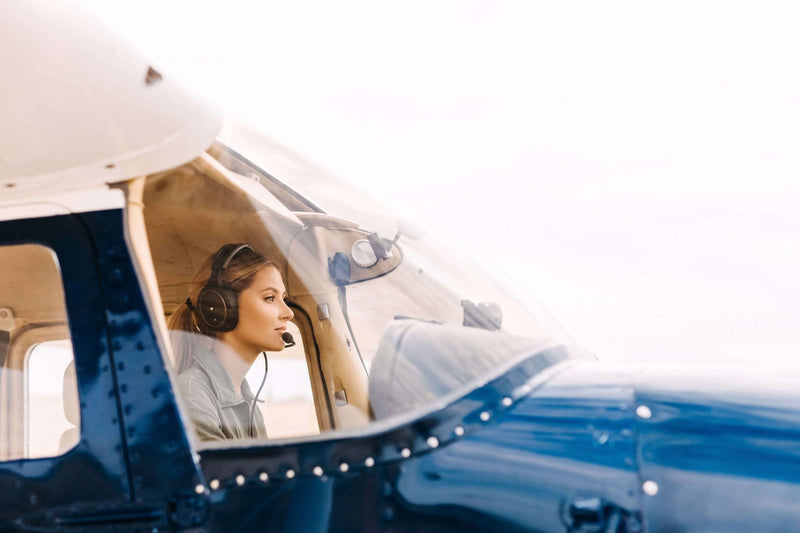
Very safety and detail oriented. Pre-flight briefing explained everything there was. To my knowledge, this flight school is exceptional in their ability.

The E6B is the circular slide rule every student pilot is handed in the first month and most are still carrying at the airline interview. It solves the six problems flight planning is made of — time, speed, distance, fuel, true airspeed and wind — with no battery and no signal. Here is how the two sides work, a worked wind problem you can follow with the instrument in your hand, the FAA rules on which versions you may bring to the knowledge test, and an honest answer to whether a tablet has made it obsolete.
An E6B flight computer is a hand-held circular slide rule pilots use to solve time, speed, distance, fuel burn, true airspeed and wind problems with no battery. The front side does the arithmetic; the back side solves the wind triangle for heading and ground speed. Mechanical and memory-cleared electronic E6Bs are allowed on FAA knowledge tests.
Source: FAA Order 8080.6H, Conduct of Airman Knowledge Tests (test aids), checked October 2026
Almost everything else in the cockpit has been replaced twice since the E6B was designed. It has not, because the arithmetic of flight planning has not changed either.
The E6B is a hand-held flight computer with no electronics in it. The front is a circular slide rule: an outer scale of numbers that rotates against an inner scale of the same numbers, with a fixed index at 60 that turns any speed into a per-minute rate. Line the two scales up correctly and every proportion you need for a flight — how far in how long, how much fuel at what burn rate, what the airspeed indicator would read if the air were standard — reads straight off the dial.
The back is the wind side. A transparent rotating disc printed with a compass rose sits over a sliding card ruled with speed arcs and drift lines. You mark the wind as a pencil dot, turn the disc to your course, slide the card until the dot sits on your true airspeed, and the instrument draws the wind triangle for you: the heading to fly and the speed you will actually make over the ground. That triangle is the one piece of navigation no GPS lets you skip understanding, because it is the difference between where the nose points and where the aircraft goes.
Philip Dalton, a naval aviator, designed the original in the 1930s; the Army Air Corps adopted it under the stock number E-6B in 1940 and the name stuck. Aluminum versions from that era still work perfectly, which tells you most of what you need to know about the design.

Everything on the front of the E6B is the same move: set a ratio on the outer and inner scales, then read the answer opposite the number you know. The index at 60 on the inner scale is the key to the first three.
Set the 60 index under your ground speed on the outer scale. Now every distance on the outer scale sits over its flight time in minutes on the inner scale. At 86 knots, 43 nautical miles reads 30 minutes; 120 miles reads 84.
Same setup with gallons per hour instead of knots. Put the 60 index under 6.5 gallons an hour and 30 minutes on the inner scale sits under 3.25 gallons on the outer. Reverse it to find how long your tanks last at a given burn.
Flew 12 miles in 8 minutes? Put 12 on the outer scale over 8 on the inner and read the ground speed opposite the 60 index: 90 knots. This is the number that tells you whether the forecast wind was honest.
In the small window, set the outside air temperature over your pressure altitude. Calibrated airspeed on the inner scale now reads true airspeed on the outer, and density altitude appears in its own window. This is where a 100-knot indicated cruise turns into 112 true on a hot Van Nuys afternoon.
Arrows on the scales convert nautical to statute miles and kilometers, gallons to liters and pounds of fuel, and Fahrenheit to Celsius on the temperature scale. Line up the arrows and read across.
Because the front is just a slide rule, it will multiply and divide anything: weight and balance moments, a crosswind component, a percentage of fuel remaining. The FAA knowledge test is written assuming you can.
Pick up your E6B and follow this one through. Course 270° true, true airspeed 100 knots, winds aloft 320° at 20 knots. Everything is in true; you apply variation to the answer, not before.
| Step | What You Do | What You See |
|---|---|---|
| 1. Set The Wind Direction | Rotate the compass rose until 320°, the direction the wind is from, sits under the true index at the top | The rose is now oriented to the wind |
| 2. Mark The Wind Speed | Slide the card so any convenient speed arc sits under the center grommet, then pencil a dot 20 knots straight up from the grommet along the center line | A wind dot above center |
| 3. Set The Course | Rotate the rose until 270°, your true course, is under the true index | The wind dot swings to the upper right of center |
| 4. Set The True Airspeed | Slide the card until the wind dot sits on the 100-knot speed arc | The grommet is now on a speed arc of its own |
| 5. Read The Ground Speed | Read the arc under the grommet | About 86 knots — a 14-knot headwind component |
| 6. Read The Wind Correction Angle | Count the drift lines between the center line and the wind dot | About 9°, and the dot is to the right, so the correction is right |
| 7. Find The Heading | Add a right correction, subtract a left one: 270° + 9° | True heading 279°; apply variation and deviation for the compass heading |
If you got 86 knots and 279°, you have just solved the wind triangle the way every pilot did for seventy years, and you understand something the moving map will never explain: why the aircraft is pointed nine degrees away from where it is going. Do it a dozen times on the ground and it takes under a minute; do it in the airplane at a checkpoint and you will know within thirty seconds whether the forecast wind has changed.
The private pilot knowledge test has several questions that need an E6B, and the rules on what you may bring cause more confusion than the questions do.
The FAA allows a mechanical E6B, a plotter, and an electronic flight computer such as the Sporty’s E6B or the ASA CX-3 at the testing center. The condition on the electronic version is memory: it must not be able to store anything permanently, and you will be asked to clear or reset it in front of the test administrator before you sit down. Anything with permanent storage, including a general-purpose calculator with stored formulas, is not allowed.
Phones and tablets are not allowed at the desk under any circumstances, which means the E6B app you have been using in ground school will not be there on test day. That is the single strongest argument for learning the physical instrument even if you plan to fly with an app: the knowledge test, and later the instrument and commercial tests, are taken with what you can hold in your hand.
On the practical test the examiner cares that your navigation log is right and that you can explain how you got the numbers. A mechanical E6B, an electronic one, or a tablet app is acceptable for the plan, but expect to be asked to work a diversion in the airplane without the tablet.

| Mechanical E6B | Electronic E6B | Phone Or Tablet App | |
|---|---|---|---|
| Typical Cost | $10 to $50, cardboard to aluminum | $70 to $110 | Free to $20 |
| FAA Knowledge Test | Allowed | Allowed once memory is cleared in front of the administrator | Not allowed |
| Teaches The Wind Triangle | Yes, because you draw it | No, you type the inputs and read the answer | No |
| Speed Under Pressure | Slower until practiced, then about a minute per problem | Fastest for arithmetic | Fast, but the tablet is usually doing something else |
| Failure Modes | None worth naming | Batteries | Battery, heat, glare, and the FAA testing room door |
| Our Recommendation | Buy one in month one and learn it properly | Add one for the knowledge test if you want the speed | Use it in the airplane once you can do without it |
For the flying, no. A tablet with a moving map and live winds plans a cross-country faster and more accurately than any pilot with a slide rule, and every one of our aircraft flies with one on board. Pretending otherwise would be dishonest.
For becoming a pilot, yes, for three reasons. The FAA knowledge tests are written and administered assuming you have one, and the app will not be in the room. The wind triangle is the foundation of dead reckoning, and dead reckoning is what you fall back on when the tablet overheats on the glareshield in August, which at Van Nuys it will. And a student who has worked fifty wind problems by hand looks at the ground speed on the GPS and knows instantly whether it makes sense, which a student who has only ever read the number off a screen does not.
So we teach it in ground school, we require it on the navigation log for the first cross-countries, and then we hand you the tablet. The order matters.

On Google, the same three things come up again and again. The first one is where the E6B gets taught.
The most repeated compliment in our reviews is not the aircraft or the price — it is the ground briefing and the debrief, the part where the wind problem finally makes sense.
Eleven instructors and a fleet we own means a student flies when they planned to, which is the only way a cross-country plan ever gets flown against the wind it was built for.
The number you enroll at is the number you finish at. Books and training materials, the E6B included, are inside every program price.
One number, fixed at enrollment. Aircraft, instructor, ground school, simulator time and books are all inside it. Financing from $2,500 down, with monthly plans available.
Where the E6B comes out of the box: 40 hours logged, three cross-countries planned by hand, in the Cessna, Piper and Diamond fleet.
Where the true airspeed and fuel arithmetic gets serious, taught in the Piper Warrior and the Redbird MCX.
Private, instrument, commercial, multi-engine and flight instructor certificates, from your first lesson to the day you are hireable.
Also available: Comprehensive Private Pilot $14,900 · Premium Private Pilot (Cirrus SR22 Turbo) $21,300 · Commercial Pilot $15,900 · Multi-Engine add-on $5,100 · Sport Pilot $8,400. Enrolled students train on package pricing at $179 an hour, wet, single-engine.
Sixty minutes in a real airplane, with your hands on the controls, is the best way to find out whether any of this is for you.
Sit down with an instructor, see the hangar and the fleet, go through the timeline and the cost, and get an honest answer to whether flying fits your life.
Lesson one, logged as dual instruction. Credited in full against any program if you enroll within 24 hours.
Full-motion and FAA-approved. Fly the cross-country you planned on the E6B and see whether the wind did what the forecast said.
Book a discovery flight, fly the aircraft yourself, and let the $229 come off your program when you enroll. Or call (818) 290-8249, 9am to 9pm, seven days, and ask any instructor to walk you through a wind problem.
Straight answers on using the E6B, what the FAA allows on test day, and which one to buy.
A hand-held, non-electronic flight computer with a circular slide rule on one side and a wind-triangle solver on the other. Pilots use it to work out time, speed, distance, fuel burn, true airspeed, density altitude and the heading and ground speed a forecast wind will produce. It was designed in the 1930s and is still standard equipment in flight training.
Set the wind direction under the true index and pencil a dot up from the center by the wind speed. Rotate the rose to your true course, then slide the card until the dot sits on your true airspeed arc. The arc under the center grommet is your ground speed and the drift lines between the center and the dot give the wind correction angle, which you add to the course for a right correction or subtract for a left one.
Yes. Electronic flight computers such as the Sporty's E6B and the ASA CX-3 are allowed, provided they have no permanent memory and you clear or reset them in front of the test administrator. Mechanical E6Bs and plotters are allowed as well. Phones, tablets and apps are not permitted at the testing desk.
No. Any device that can store data or connect to a network, which includes every phone and tablet, is excluded from the testing room. If you have only ever solved wind problems on an app, practice on a mechanical or electronic E6B before test day.
Day to day, most cross-country planning is done on a tablet with live winds, and every aircraft in our fleet flies with one. The E6B remains the tool for the knowledge tests, the backup when the tablet fails or overheats, and the way student pilots learn the wind triangle that makes the tablet's numbers make sense.
Start with a mechanical one, which costs between about $10 and $50 and forces you to draw the wind triangle rather than type it. An electronic E6B at around $70 to $110 is a worthwhile addition for the speed on the knowledge test. Books and training materials, including the flight computer, are inside every program price at Los Angeles Flight School.
It is a circular slide rule. With the 60 index set under a speed or a fuel flow, the outer scale reads distance or gallons against minutes on the inner scale, which solves time-speed-distance and fuel problems in one setting. A separate window converts calibrated airspeed to true airspeed and shows density altitude once you set temperature against pressure altitude, and arrows on the scales handle unit conversions.
The back of the instrument: a rotating transparent compass rose over a sliding card ruled with concentric speed arcs and radiating drift lines. It solves the wind triangle graphically, giving you the heading to fly and the ground speed you will make for a known course, true airspeed and wind.
The dead-reckoning computer was designed by Philip Dalton, a US Navy officer, in the 1930s. When the Army Air Corps adopted it in 1940 it was catalogued as the E-6B, and the stock number became the name every pilot has used since.
Yes. It is covered in ground school during the private pilot program, and students plan their first cross-countries on it by hand before moving to the tablet. Every one of our eleven instructors uses one, and the free consultation is a good place to see the instrument and ask how it fits into the training.
The three private pilot packages, what each one includes, the financing options and a realistic timeline built around how often you can actually fly. Sent to you in one email. Nobody will pressure you.
Loved On Google
Every review below is real and shown verbatim, in the reviewer’s own words — written by the people who learned to fly here, not by us.
SAFETY FIRST
Very safety and detail oriented. Pre-flight briefing explained everything there was. To my knowledge, this flight school is exceptional in their ability.
 DISCOVERY FLIGHT
I recently had the chance to take my first-ever discovery flight, and it was nothing short of amazing! From the moment I stepped into the cockpit, the...
 SUNSET CIRRUS
It was a great flight! I did a sunset flight and Alex let us fly an awesome. Website was easy to book, and the plane itself was really fun to fly...
 FLYING LESSON
We had a great flying lesson with Ralph and came away with a much better understanding of both the aircraft and the principles of flight. Ralph is a...
 KIDS LUXURY FLIGHT
I got 2 luxury discovery flights for my kids. I wanted them to have the experience of flying. Our instructor Alex was amazing he made sure they feel...
 HONEYMOON SURPRISE
Last minute booking to surprise my wife on our honeymoon. She had no experience with flying and was scared of flying, but Alex was very easygoing and knew...
 FULL-MOTION SIM
Amazing flight school in van nuys airport. I have been a student here for the past few months and i could not be happier. I started doing a lot of...
 DISCOVERY FOR TWO
I booked a Discovery Flight for Two for my girlfriend's birthday and it was the perfect gift for her. She couldn't have been more excited to get to...
 SIMULATORS
Very professional and great airplanes. I love the flight simulators. The pricing is very fair compared to any other flight school
 TEEN FIRST LESSON
We gifted our teenage son his first flying lesson. He was so excited! Alex greeted us and gave a reassuring brief that made us all feel comfortable and at...
 FIRST-TIME FLYER
Flying is my husband's hobby and I was incredibly anxious and apprehensive about the discovery flight. However, I felt completely safe and at ease once we...
SAFETY FIRST
Very safety and detail oriented. Pre-flight briefing explained everything there was. To my knowledge, this flight school is exceptional in their ability.
DISCOVERY FLIGHT
I recently had the chance to take my first-ever discovery flight, and it was nothing short of amazing! From the moment I stepped into the cockpit, the...
SUNSET CIRRUS
It was a great flight! I did a sunset flight and Alex let us fly an awesome. Website was easy to book, and the plane itself was really fun to fly...
FLYING LESSON
We had a great flying lesson with Ralph and came away with a much better understanding of both the aircraft and the principles of flight. Ralph is a...
KIDS LUXURY FLIGHT
I got 2 luxury discovery flights for my kids. I wanted them to have the experience of flying. Our instructor Alex was amazing he made sure they feel...
HONEYMOON SURPRISE
Last minute booking to surprise my wife on our honeymoon. She had no experience with flying and was scared of flying, but Alex was very easygoing and knew...
FULL-MOTION SIM
Amazing flight school in van nuys airport. I have been a student here for the past few months and i could not be happier. I started doing a lot of...
DISCOVERY FOR TWO
I booked a Discovery Flight for Two for my girlfriend's birthday and it was the perfect gift for her. She couldn't have been more excited to get to...
SIMULATORS
Very professional and great airplanes. I love the flight simulators. The pricing is very fair compared to any other flight school
TEEN FIRST LESSON
We gifted our teenage son his first flying lesson. He was so excited! Alex greeted us and gave a reassuring brief that made us all feel comfortable and at...
FIRST-TIME FLYER
Flying is my husband's hobby and I was incredibly anxious and apprehensive about the discovery flight. However, I felt completely safe and at ease once we...
Reviews shown verbatim, exactly as each reviewer published them.
Aviation News
Notes from the flight line at Van Nuys — weather, regulation changes, checkride questions and the cost of training, written up as they come.
Open 7 days · 9:00 AM – 9:00 PM
Los Angeles Flight School