SAFETY FIRST
★★★★★
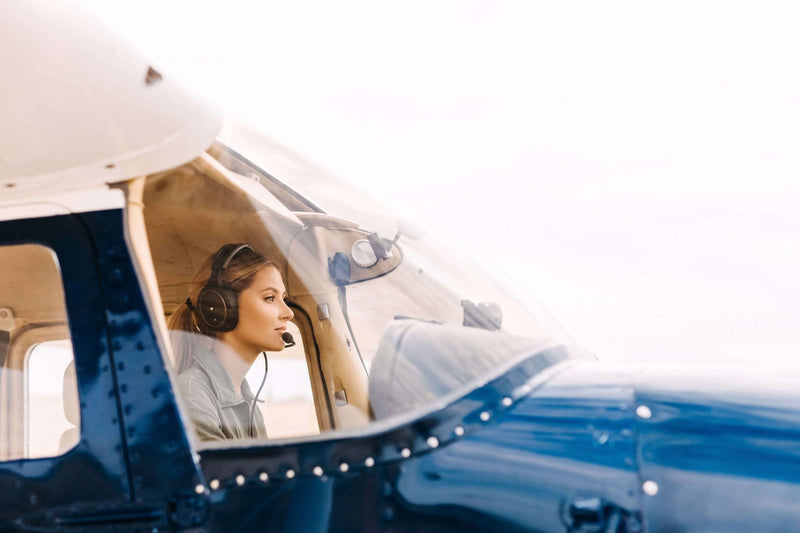
Very safety and detail oriented. Pre-flight briefing explained everything there was. To my knowledge, this flight school is exceptional in their ability.

Search for “chief flying instructor” and half the results are about a British job title and the other half are about an American certificate that shares the initials. They are not the same thing. Here is what a chief flying instructor actually does, how the FAA defines the role under Part 141, why a Part 61 school has one anyway, and what to ask about the person who holds the job before you hand a school any money.
In Britain and most of the Commonwealth, the CFI is the chief flying instructor — one person, the head of training at a school. In the United States, a CFI is a certificated flight instructor — every instructor who teaches.
If you learned about aviation from British forums or films, “the CFI” is a person: the senior instructor who runs the flying school, approves students for solo, signs off the syllabus and answers to the regulator for training standards. Under the UK CAA and EASA the role is formal, usually paired with a Head of Training, and every approved training organization has one.
In the United States the same three letters are a certificate, not a job. A CFI is any pilot who holds a flight instructor certificate under 14 CFR Part 61 Subpart H. A school with eleven instructors has eleven CFIs. The letters say nothing about seniority; a brand-new instructor with 260 hours and a twenty-year veteran are both, correctly, CFIs.
The American equivalent of the British chief flying instructor is the chief instructor, a role the FAA defines in detail for Part 141 schools and which Part 61 schools like ours fill by choice rather than by regulation. Understanding the difference matters when you compare schools, because a website that says “our CFI” is telling you nothing about who is in charge.

Whatever the country calls it, the role is the same: one experienced instructor is accountable for how everyone else teaches.
Decides what is taught, in what order, to what standard, and keeps it current with the Airman Certification Standards and the regulations. When the FAA changes a rule, the chief instructor is the person who changes the lesson plans.
Ten instructors will drift ten ways unless somebody flies with each of them, checks how they teach a maneuver, and brings them back to one method. Standardisation is the unglamorous heart of the job and the reason a student can switch instructors without starting over.
First solo, solo cross-country and checkride recommendation are the moments a student is exposed to real risk. A good chief instructor reviews those decisions, and at many schools flies a stage check with the student before the instructor is allowed to sign.
A freshly certificated CFI has passed a hard test and taught nobody. The chief instructor pairs them with experienced staff, reviews their first students’ progress closely, and is the person a new instructor asks when a student is not progressing.
Training records, endorsements, currency, the 61.109 hour totals that the examiner will check — the chief instructor is responsible for the system that keeps them right, and is the person the FAA talks to when they are not.
Whether instructors cancel for weather they should cancel for, whether students are pushed to solo before they are ready, whether an aircraft flies with a snag: those are decided by what the chief instructor tolerates. Students feel it within a week.
An FAA-certificated Part 141 pilot school must designate a chief instructor for each approved course, and 14 CFR 141.35 sets the bar. In broad terms, for a private pilot course the chief instructor must hold a commercial or ATP certificate with a flight instructor certificate for the category and class, have at least 1,000 hours as pilot in command, and have either two years and 500 hours of primary flight instruction experience or 1,000 hours of instruction given. The requirements step up for instrument and commercial courses, and the chief instructor must pass an FAA check before the school can use them in the role.
The chief instructor is then personally responsible under 141.85 for certifying training records, keeping the course current, making sure every instructor is qualified, and for the stage checks and end-of-course tests that the FAA relies on when it lets a Part 141 school graduate students at reduced hours.
Part 61 schools have no such requirement. The FAA regulates the individual instructors, not the school, and does not require anyone to be in charge. That is not a criticism of Part 61 — the certificate you earn is identical, the national average of 60 to 75 hours to a private certificate is the same either way, and our page on Part 61 versus Part 141 goes through where the difference genuinely matters. But it does mean that at a Part 61 school, whether there is a chief instructor at all, and how seriously the job is taken, is entirely up to the owner.

We are a Part 61 school with a Part 141 attitude to who is in charge.
Our owner is also our chief pilot: two decades in the left seat, more than twenty years teaching, and still the person most students meet on their very first flight. That is deliberate. A chief instructor who only signs paperwork does not know what the instructors are actually doing in the airplane, and the only way to know is to fly.
Every one of our eleven instructors holds a commercial or ATP certificate, a flight instructor certificate and a current medical, and is pilot in command on every flight with a student. They are career instructors rather than pilots counting hours until an airline class date, which is why the same person can take you from your first lesson to your checkride, and why the standardisation the chief instructor enforces holds from one instructor to the next.
What that looks like from the student side: your first solo, your first solo cross-country and your checkride recommendation are reviewed, not rubber-stamped; if your instructor is unavailable, the one who steps in teaches the same way; and if your progress stalls, there is somebody senior whose job it is to work out why.

Every school will tell you its instructors are excellent. These questions find out whether anyone is checking.
A name, not a department. If the answer is “all our instructors are FAA certified”, you have been told there is nobody.
A chief instructor who flies stage checks knows the students and the instructors. One who does not is an administrator.
Look for a standardisation flight, a period of supervision, and a lesson-plan review. “They have a CFI certificate” is the minimum, not a process.
The instructor endorses; somebody senior should be looking. Ask whether there is a pre-solo or pre-checkride stage check and who flies it.
At schools where instructors are hour-builders, this happens constantly. Ask how long the current instructors have been there, and what the handover looks like when one goes.
The best answer to all of the above is a conversation. A school that will put you in front of its chief instructor before you have paid anything is telling you something about how it runs.
On Google, the same three things come up again and again, and the first one is what a chief instructor is for.
The most repeated compliment in our reviews is not the aircraft or the price — it is the debrief, which is the part of a lesson standardisation protects.
Eleven instructors and a fleet we own means a stage check happens the week you are ready for it, not the month after.
The number you enroll at is the number you finish at. Reviewers mention this constantly.
One number, fixed at enrollment. Aircraft, instructor, ground school, simulator time and books are all inside it.
40 hours logged flight time — the FAR 61.109 minimum, flown properly.
60 hours logged, with 10 hours of ground school — the version that leaves most room for checkride preparation.
For commercial pilots who want to teach: the certificate, the checkride preparation, and the job that builds the 1,500 hours.
Also available: Premium Private Pilot (Cirrus SR22 Turbo) $21,300 · Instrument Rating $11,700 · Commercial Pilot $15,900 · Multi-Engine add-on $5,100 · zero-to-airline $82,000. Financing from $2,500 down, with monthly plans available. Enrolled students train on package pricing at $179 an hour, wet, single-engine.
The consultation is with an instructor, at the airport, for free. Bring the six questions above.
Sit down with an instructor, see the hangar and the aircraft, and ask exactly how the training is run.
Lesson one, logged as dual instruction toward your 40 hours. Credited in full against any program if you enroll within 24 hours.
Full-motion and FAA-approved. An hour with an instructor and no weather to cancel it.
Book sixty minutes in the aircraft, find out whether you love it, and let the $229 come off your program when you enroll. Call (818) 290-8249, 9am to 9pm, seven days.
The title, the job and the regulation, answered plainly.
The senior instructor responsible for training standards at a flight school: the syllabus, the standardisation of the other instructors, the supervision of new ones, the sign-off of the big decisions such as first solo and checkride recommendation, and the training records. In Britain and most of the Commonwealth the title is chief flying instructor and it is a formal regulatory role; in the United States the equivalent is the chief instructor, which the FAA defines under 14 CFR Part 141.
In the UK, CFI stands for chief flying instructor, one senior person who runs a school's training. In the US, CFI stands for certificated flight instructor, the certificate every flight instructor holds under 14 CFR Part 61. A school with eleven instructors has eleven CFIs, and the letters say nothing about seniority. The American equivalent of the British chief flying instructor is the chief instructor.
Under 14 CFR 141.35, a Part 141 school's chief instructor for a private pilot course must hold a commercial or ATP certificate with a flight instructor certificate for the category and class, have at least 1,000 hours as pilot in command, and have either two years and 500 hours of primary flight instruction experience or 1,000 hours of instruction given. The requirements are higher for instrument and commercial courses, and the chief instructor must pass an FAA check before serving in the role.
No. The FAA regulates the individual instructors at a Part 61 school, not the school itself, so there is no requirement for anyone to be in charge of training standards. Good Part 61 schools appoint a chief instructor anyway. Los Angeles Flight School is a Part 61 school whose owner is also its chief pilot, with more than twenty years teaching, and who still flies with students.
Flies stage checks with students before solo, solo cross-country and the checkride recommendation; flies standardisation flights with instructors; reviews training records and endorsements; supervises newly certificated instructors; keeps the syllabus current with the Airman Certification Standards; and makes the weather, maintenance and readiness calls that set the school's safety culture.
Ask for a name, ask how often that person flies with students, ask how new instructors are brought on and supervised, ask who reviews first solo and checkride recommendations, ask what happens if your instructor leaves, and ask to meet them before you pay. A school that answers all six specifically and puts you in front of the person is one where somebody is checking.
Our owner and chief pilot, who has more than twenty years teaching, two decades in the left seat, and who is the person most students meet on their very first flight. All eleven instructors hold a commercial or ATP certificate plus the CFI, and are career instructors rather than pilots building hours toward an airline date, which is what makes standardisation from one instructor to the next hold.
Not quite, though at a small school one person often holds both. A chief pilot is responsible for flight operations — aircraft, dispatch, operational safety — while a chief instructor is responsible for training standards and instructors. At Los Angeles Flight School the owner holds the chief pilot role and leads training, which is common at owner-operated schools and means the person accountable for the aircraft is also accountable for how you are taught in them.
Yes, and it is the natural senior role for a career instructor. The path is the flight instructor certificate, then years of instruction — the FAA's Part 141 benchmark is roughly 1,000 hours as pilot in command plus either two years and 500 hours of primary instruction or 1,000 hours of instruction given — then the instrument instructor and multi-engine instructor ratings that let you standardise every course a school teaches. Our CFI pay and career path page covers what the job pays along the way.
Because the certificate is the same everywhere and the difference between schools is almost entirely how consistently they teach. A chief instructor who flies with students and instructors is the mechanism that keeps ten instructors teaching one way, catches a student who is being pushed to solo too early, and notices an instructor who has drifted. Without that person the quality of your training depends entirely on the luck of which instructor you were assigned.
Under 14 CFR 141.35(c), the chief instructor for a Part 141 instrument course needs at least 1,000 hours as pilot in command, 100 hours in actual or simulated instrument conditions, and instrument instructing experience as a CFII or military instructor of either 2 years and 250 flight hours or 400 flight hours. They also need a commercial or ATP certificate with an instrument rating and a current flight instructor certificate.
More time again. 14 CFR 141.35(d) sets at least 2,000 hours as pilot in command for any course other than recreational, private or instrument training, plus flight training experience of either 3 years and 1,000 flight hours or 1,500 flight hours as a certificated or military flight instructor. Commercial pilot and flight instructor courses at a Part 141 school fall under this paragraph.
Yes, at a Part 141 school. 14 CFR 141.35(a) requires a knowledge test on teaching methods, the Aeronautical Information Manual, parts 61, 91 and 141 and the course's completion standards, plus a proficiency test on instructional skill and the course's flight procedures and maneuvers. The chief instructor must also meet the pilot-in-command recent flight experience rules in 14 CFR 61.57.
A deputy a Part 141 school may designate under 14 CFR 141.33(c), qualified under 14 CFR 141.36. For a private course the bar is 500 hours as pilot in command and either 1 year and 250 flight hours or 500 flight hours of instructing, half the chief instructor's requirement. Under 14 CFR 141.85(b), the chief or an assistant chief must be available whenever approved training is under way.
At a Part 141 school, at least every 12 calendar months. 14 CFR 141.85(a)(2) makes the chief instructor responsible for every instructor passing an initial proficiency check before teaching the approved course, and a recurrent check every 12 calendar months after that. The checks can be delegated to an assistant chief or a check instructor. Part 61 schools have no such rule, so ask how they standardize instructors.
The three private pilot packages, what each one includes, the financing options and a realistic timeline built around how often you can actually fly. Sent to you in one email. Nobody will pressure you.
Loved On Google
Every review below is real and shown verbatim, in the reviewer’s own words — written by the people who learned to fly here, not by us.
SAFETY FIRST
Very safety and detail oriented. Pre-flight briefing explained everything there was. To my knowledge, this flight school is exceptional in their ability.
 DISCOVERY FLIGHT
I recently had the chance to take my first-ever discovery flight, and it was nothing short of amazing! From the moment I stepped into the cockpit, the...
 SUNSET CIRRUS
It was a great flight! I did a sunset flight and Alex let us fly an awesome. Website was easy to book, and the plane itself was really fun to fly...
 FLYING LESSON
We had a great flying lesson with Ralph and came away with a much better understanding of both the aircraft and the principles of flight. Ralph is a...
 KIDS LUXURY FLIGHT
I got 2 luxury discovery flights for my kids. I wanted them to have the experience of flying. Our instructor Alex was amazing he made sure they feel...
 HONEYMOON SURPRISE
Last minute booking to surprise my wife on our honeymoon. She had no experience with flying and was scared of flying, but Alex was very easygoing and knew...
 FULL-MOTION SIM
Amazing flight school in van nuys airport. I have been a student here for the past few months and i could not be happier. I started doing a lot of...
 DISCOVERY FOR TWO
I booked a Discovery Flight for Two for my girlfriend's birthday and it was the perfect gift for her. She couldn't have been more excited to get to...
 SIMULATORS
Very professional and great airplanes. I love the flight simulators. The pricing is very fair compared to any other flight school
 TEEN FIRST LESSON
We gifted our teenage son his first flying lesson. He was so excited! Alex greeted us and gave a reassuring brief that made us all feel comfortable and at...
 FIRST-TIME FLYER
Flying is my husband's hobby and I was incredibly anxious and apprehensive about the discovery flight. However, I felt completely safe and at ease once we...
SAFETY FIRST
Very safety and detail oriented. Pre-flight briefing explained everything there was. To my knowledge, this flight school is exceptional in their ability.
DISCOVERY FLIGHT
I recently had the chance to take my first-ever discovery flight, and it was nothing short of amazing! From the moment I stepped into the cockpit, the...
SUNSET CIRRUS
It was a great flight! I did a sunset flight and Alex let us fly an awesome. Website was easy to book, and the plane itself was really fun to fly...
FLYING LESSON
We had a great flying lesson with Ralph and came away with a much better understanding of both the aircraft and the principles of flight. Ralph is a...
KIDS LUXURY FLIGHT
I got 2 luxury discovery flights for my kids. I wanted them to have the experience of flying. Our instructor Alex was amazing he made sure they feel...
HONEYMOON SURPRISE
Last minute booking to surprise my wife on our honeymoon. She had no experience with flying and was scared of flying, but Alex was very easygoing and knew...
FULL-MOTION SIM
Amazing flight school in van nuys airport. I have been a student here for the past few months and i could not be happier. I started doing a lot of...
DISCOVERY FOR TWO
I booked a Discovery Flight for Two for my girlfriend's birthday and it was the perfect gift for her. She couldn't have been more excited to get to...
SIMULATORS
Very professional and great airplanes. I love the flight simulators. The pricing is very fair compared to any other flight school
TEEN FIRST LESSON
We gifted our teenage son his first flying lesson. He was so excited! Alex greeted us and gave a reassuring brief that made us all feel comfortable and at...
FIRST-TIME FLYER
Flying is my husband's hobby and I was incredibly anxious and apprehensive about the discovery flight. However, I felt completely safe and at ease once we...
Reviews shown verbatim, exactly as each reviewer published them.
Aviation News
Notes from the flight line at Van Nuys — weather, regulation changes, checkride questions and the cost of training, written up as they come.
Open 7 days · 9:00 AM – 9:00 PM
Los Angeles Flight School