SAFETY FIRST
★★★★★
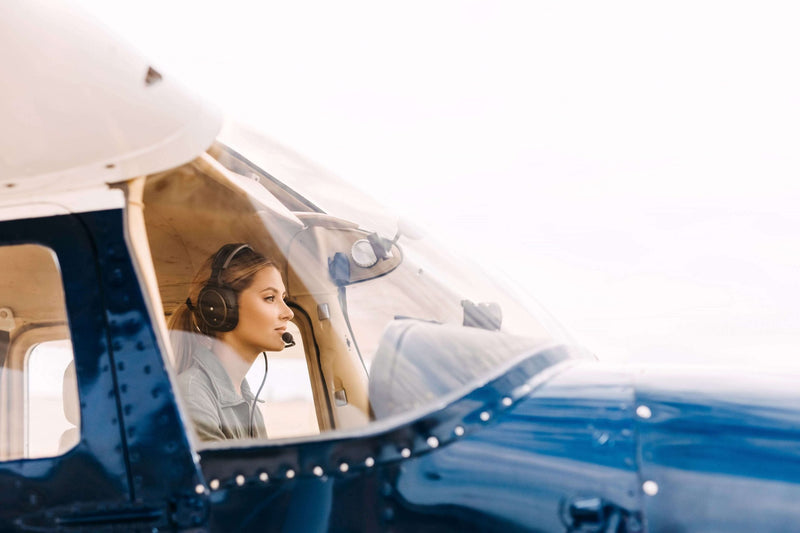
Very safety and detail oriented. Pre-flight briefing explained everything there was. To my knowledge, this flight school is exceptional in their ability.

There is no separate multi-engine ACS. The multiengine tasks sit inside the Private Pilot – Airplane ACS (FAA-S-ACS-6C) and the Commercial Pilot – Airplane ACS (FAA-S-ACS-7B), and you are tested at the level of the certificate you already hold. Almost all of it is engine-out work.
An oral examination followed by a flight, both conducted by a designated pilot examiner, and both to the standard of the certificate you already hold. The oral is weighted toward systems, single-engine performance and the aerodynamics of asymmetric flight; the flight is mostly engine failures.
There is no written test to sit first. 14 CFR 61.63(c)(4) excuses an additional knowledge test for anyone who already holds an airplane rating at that certificate level, which is why the oral carries more weight on this checkride than on almost any other.
The examiner is not employed by us. You book and pay a designated pilot examiner directly, which is why the examiner fee sits outside the $5,100. We do not mark it up and we would rather you knew who you were paying.
Before the flight the examiner will want the aircraft's paperwork in order, your logbook endorsements under 14 CFR 61.63(c)(1), a current medical, and the airplane's performance data worked out for the actual conditions. Turning up without single-engine performance numbers for the day is the most common reason a checkride starts badly.
Multi-engine orals are systems-heavy and aerodynamics-heavy. Expect VMC alone to take longer than everything about weather and airspace put together.
| Area | What is actually asked |
|---|---|
| VMC | The 14 CFR 1.2 definition, the 14 CFR 23.2135(c) description, the certification conditions from the FAA Airplane Flying Handbook, every variable that moves the number, and why the recovery is to reduce power. |
| The critical engine | What makes an engine critical, P-factor and the other contributing effects, and why counter-rotating propellers remove it. Training in a Seminole does not excuse you from the theory. |
| Single-engine performance | Accelerate-stop and accelerate-go distances, single-engine service ceiling at 50 fpm, single-engine absolute ceiling, and what blue line does above it. |
| Systems | Fuel and crossfeed, electrical and load shedding, propeller governors, the feathering mechanism, the unfeathering accumulator, and landing gear including emergency extension. |
| Aircraft documents and airworthiness | Inspections, including the 100-hour cycle 14 CFR 91.409(b) requires on aircraft used for instruction for hire, and the required equipment lists. |
| Limitations | Weight and balance for the actual flight, and the certificate limitations that can attach to a multi-engine rating. |
The single best preparation is to work a real Van Nuys departure on a warm afternoon at gross weight and be able to say out loud what the airplane would and would not do if an engine quit at 200 feet.
These are the tasks that exist only for multiengine applicants. Everything else on the test — takeoffs, landings, steep turns, slow flight, stalls, navigation — is flown to the same standard as your existing certificate.
An abort, not a flight. The task exists because getting airborne on one engine below VMC is a well-documented accident sequence. The examiner is testing your decision, not your handling.
Control, then performance, then the checklist, in that order and out loud. Pitch to blue line, identify, verify, feather, and only then start reading anything.
Flown to a landing. Part of what is being tested is your understanding that a single-engine go-around in a light twin is not a maneuver you can count on.
Turns, climbs, descents and configuration changes on one engine while holding blue line. Workload management is the actual subject.
Established above 3,000 feet AGL. You recognize the onset, recover with prompt coordinated inputs, and the ACS holds the recovery to no more than 20 degrees of bank, with heading and altitude tolerances applied.
For instrument-rated applicants, the single-engine instrument approach is the task that keeps the Airplane Multiengine VFR Only limitation off your certificate.
Not at low altitude, and not in the way most people imagine. Every engine failure task in the ACS is labeled (simulated), and in practice a failure is simulated by setting zero thrust on one engine — a power setting that approximates the drag of a feathered propeller without actually feathering it.
That is a deliberate safety choice. Shutting an engine down for real means the airplane genuinely has one engine, at an altitude and in a configuration chosen for training rather than for a real emergency. Zero thrust gives the same handling picture with the option of instantly having two engines again.
Actual feathering and restarting does happen, at altitude, in a briefed exercise, which is what the unfeathering accumulator is for. It is worth doing at least once so the sequence is not theoretical. It is not worth doing on final approach, and no competent examiner will ask.
Instructors are bound by VSSE — the safe, intentional one-engine-inoperative speed from the airplane's flight manual — which is the minimum speed at which an engine may deliberately be failed on you. If your first experience of a failure is below that speed, something has gone wrong with the lesson rather than with the airplane.

The last three hours of the rating are not new material. They are the test, rehearsed.
An instructor who did not teach you asks the questions. Anything you can only half-explain gets rebuilt at the whiteboard rather than glossed over.
Accelerate-stop, accelerate-go, single-engine service ceiling and weight and balance for the actual airplane, actual weight, and the actual temperature outside.
The whole practical test in the order an examiner runs it. The first one shows what is loose. The second one is the rehearsal.
Above 3,000 feet AGL, recovery briefed before every one. The standard is not that you survive it, it is that you recognize the onset early and recover without drama.
Redbird MCX sessions for the checklist flows and the identify-verify-feather sequence, because repetition in the simulator is repetition that does not cost Seminole time.
Endorsements under 14 CFR 61.63(c)(1), logbook, medical, aircraft documents and the IACRA application. More checkrides are delayed by paperwork than by flying.
The Redbird MCX is full-motion and FAA-approved, and it will fail an engine on you as many times as you like.
Standalone Redbird sessions are $189. Multi-engine students use the simulator inside the $5,100 add-on, which is where most of the checklist repetition happens.
The debriefs are what people write about, and a checkride is mostly a debrief you have already had.
The compliment that comes up most often in our reviews is not the airplane and it is not the ramp. It is that somebody sat down afterwards and drew the yaw on a whiteboard until it made sense.
Eleven instructors and a fleet we own and maintain. On a rating you are trying to finish inside two weeks, a school that cancels twice is the difference between done and half-done.
What you enroll at is what you finish at. On a $5,100 add-on that promise is most of the point, and reviewers keep writing about it because it is not universal.
The $5,100 covers the training and the preparation. The designated pilot examiner is booked and paid by you directly, and we do not add anything to it.
The whole rating: Seminole time, dual instruction, ground and systems work, engine-out training and checkride preparation, at a price that is fixed when you enroll.
An hour in the Seminole before you commit $5,100 to it. Book it on the product page — an hour in the left seat settles the question faster than any amount of reading.
A real lesson in a single. You fly the airplane, the time is loggable dual instruction, and the full $229 is credited against any program if you enroll within 24 hours.
Full-motion, FAA-approved and never canceled for weather. Engine failures cost nothing here, which is why the first dozen of yours happen on the ground.
If you trained somewhere else and want a second opinion before the checkride, the consultation is free and an instructor will tell you honestly whether you are ready.
No. 14 CFR 61.63(c)(4) excuses an additional FAA knowledge test for anyone who already holds an airplane rating at that pilot certificate level. The oral examination on the day is correspondingly longer and more detailed than pilots expect.
The Airman Certification Standards for the certificate you already hold: FAA-S-ACS-6C for a private pilot and FAA-S-ACS-7B for a commercial pilot. There is no separate multi-engine ACS; the multiengine tasks are sections inside those documents.
You establish a safe maneuvering altitude above 3,000 feet AGL, recognize VMC, and recover promptly with coordinated control inputs without exceeding 20 degrees of bank, holding the ACS heading and altitude tolerances. Recovery means reducing power on the operating engine and lowering the nose, not adding power.
Engine failures on the practical test are simulated, which the ACS task titles say explicitly. In practice the examiner sets zero thrust, a power setting approximating the drag of a feathered propeller. Actual feathering and air restarts are done in training at altitude with the recovery briefed, not on approach.
Typically a morning: an oral of one to two hours followed by a flight of about an hour and a half. The oral is the longer half on this rating because there is no written test in front of it.
Photo identification, your pilot certificate, a current medical, your logbook with the 14 CFR 61.63(c)(1) endorsements, the completed IACRA application, the aircraft documents and airworthiness records, and worked performance and weight-and-balance figures for the actual conditions on the day.
Vague answers on VMC and single-engine performance in the oral, and slow or unclear identification of the failed engine in the air. Both are preparation problems rather than talent problems, which is why the last hours of the rating are spent on rehearsal.
You do, directly to the designated pilot examiner. The examiner is not our employee and their fee sits outside the $5,100 course price. We do not mark it up.
We add hours and move the date. The $5,100 is fixed at enrollment and covers the rating rather than a set number of hours, so there is no financial reason for us to send anybody to an examiner early.
You can, and the certificate is then issued Limited to Center Thrust under 14 CFR 61.45(b)(2), because that airplane cannot demonstrate the asymmetric tasks. We train and test in a conventional twin so the limitation never appears. Appendix 1 of FAA-S-ACS-7B has the removal task table if you already hold one.
Only if you demonstrate the instrument tasks in a multiengine airplane. Otherwise the certificate is issued with the Airplane Multiengine VFR Only limitation, and Appendix 1 of FAA-S-ACS-7B carries the table for removing it. We fly the instrument tasks during the rating so this does not happen.
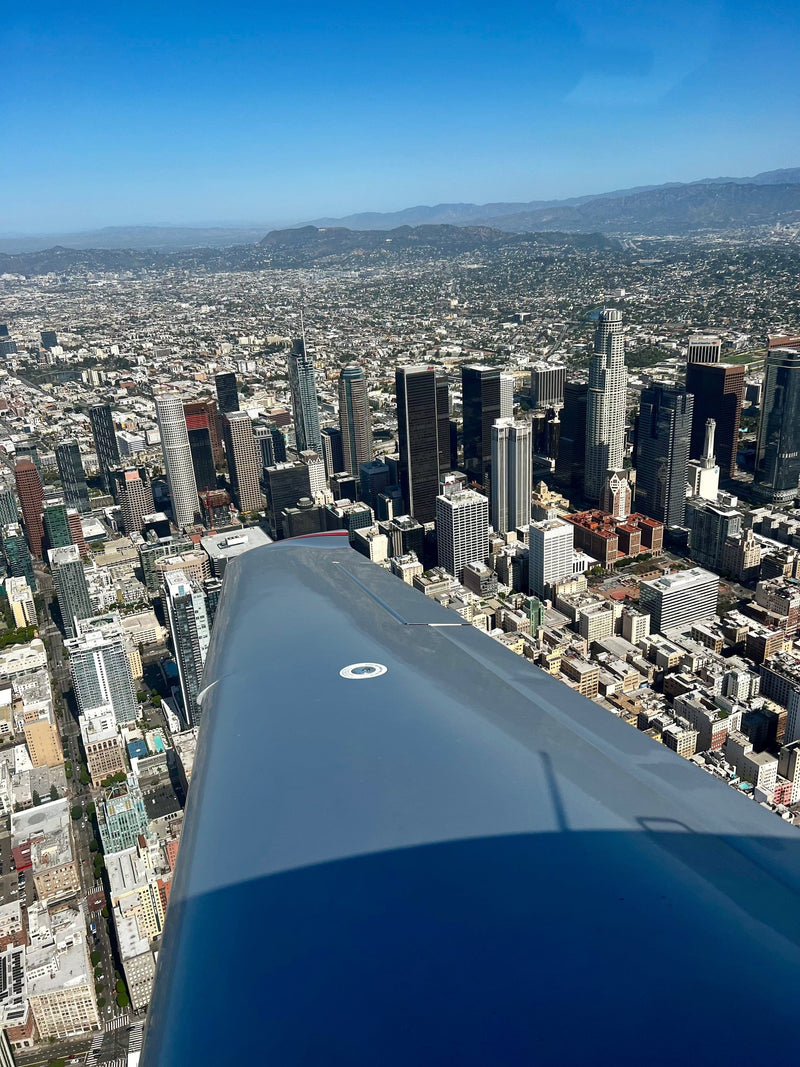
At Van Nuys Airport (KVNY), with the air work flown northwest of the field over the Simi Hills where the altitude is available. We are at 7900 Balboa Blvd, Suite 108A, Van Nuys, CA 91406, open 9am to 9pm, seven days. Call (818) 290-8249.
The three private pilot packages, what each one includes, the financing options and a realistic timeline built around how often you can actually fly. Sent to you in one email. Nobody will pressure you.
Loved On Google
Every review below is real and shown verbatim, in the reviewer’s own words — written by the people who learned to fly here, not by us.
SAFETY FIRST
Very safety and detail oriented. Pre-flight briefing explained everything there was. To my knowledge, this flight school is exceptional in their ability.
 DISCOVERY FLIGHT
I recently had the chance to take my first-ever discovery flight, and it was nothing short of amazing! From the moment I stepped into the cockpit, the...
 SUNSET CIRRUS
It was a great flight! I did a sunset flight and Alex let us fly an awesome. Website was easy to book, and the plane itself was really fun to fly...
 FLYING LESSON
We had a great flying lesson with Ralph and came away with a much better understanding of both the aircraft and the principles of flight. Ralph is a...
 KIDS LUXURY FLIGHT
I got 2 luxury discovery flights for my kids. I wanted them to have the experience of flying. Our instructor Alex was amazing he made sure they feel...
 HONEYMOON SURPRISE
Last minute booking to surprise my wife on our honeymoon. She had no experience with flying and was scared of flying, but Alex was very easygoing and knew...
 FULL-MOTION SIM
Amazing flight school in van nuys airport. I have been a student here for the past few months and i could not be happier. I started doing a lot of...
 DISCOVERY FOR TWO
I booked a Discovery Flight for Two for my girlfriend's birthday and it was the perfect gift for her. She couldn't have been more excited to get to...
 SIMULATORS
Very professional and great airplanes. I love the flight simulators. The pricing is very fair compared to any other flight school
 TEEN FIRST LESSON
We gifted our teenage son his first flying lesson. He was so excited! Alex greeted us and gave a reassuring brief that made us all feel comfortable and at...
 FIRST-TIME FLYER
Flying is my husband's hobby and I was incredibly anxious and apprehensive about the discovery flight. However, I felt completely safe and at ease once we...
SAFETY FIRST
Very safety and detail oriented. Pre-flight briefing explained everything there was. To my knowledge, this flight school is exceptional in their ability.
DISCOVERY FLIGHT
I recently had the chance to take my first-ever discovery flight, and it was nothing short of amazing! From the moment I stepped into the cockpit, the...
SUNSET CIRRUS
It was a great flight! I did a sunset flight and Alex let us fly an awesome. Website was easy to book, and the plane itself was really fun to fly...
FLYING LESSON
We had a great flying lesson with Ralph and came away with a much better understanding of both the aircraft and the principles of flight. Ralph is a...
KIDS LUXURY FLIGHT
I got 2 luxury discovery flights for my kids. I wanted them to have the experience of flying. Our instructor Alex was amazing he made sure they feel...
HONEYMOON SURPRISE
Last minute booking to surprise my wife on our honeymoon. She had no experience with flying and was scared of flying, but Alex was very easygoing and knew...
FULL-MOTION SIM
Amazing flight school in van nuys airport. I have been a student here for the past few months and i could not be happier. I started doing a lot of...
DISCOVERY FOR TWO
I booked a Discovery Flight for Two for my girlfriend's birthday and it was the perfect gift for her. She couldn't have been more excited to get to...
SIMULATORS
Very professional and great airplanes. I love the flight simulators. The pricing is very fair compared to any other flight school
TEEN FIRST LESSON
We gifted our teenage son his first flying lesson. He was so excited! Alex greeted us and gave a reassuring brief that made us all feel comfortable and at...
FIRST-TIME FLYER
Flying is my husband's hobby and I was incredibly anxious and apprehensive about the discovery flight. However, I felt completely safe and at ease once we...
Reviews shown verbatim, exactly as each reviewer published them.
Aviation News
Notes from the flight line at Van Nuys — weather, regulation changes, checkride questions and the cost of training, written up as they come.
Open 7 days · 9:00 AM – 9:00 PM
Los Angeles Flight School