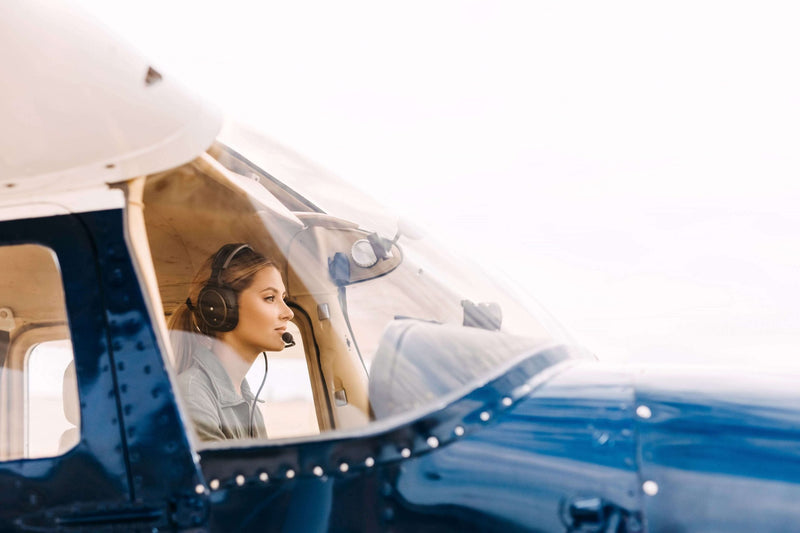
SAFETY FIRST
★★★★★
Very safety and detail oriented. Pre-flight briefing explained everything there was. To my knowledge, this flight school is exceptional in their ability.

Adding a multi-engine class rating to a commercial certificate you already hold costs $5,100 here and carries no FAA hour minimum, because 14 CFR 61.63(c) governs it. Earning the commercial certificate itself in a twin is a different regulation entirely, and it is the expensive one.
It is a multi-engine class rating added to a commercial pilot certificate you already hold, and it is governed by 14 CFR 61.63(c). You need an instructor endorsement of competence and proficiency, and you need to pass a practical test at commercial level. You do not need a minimum number of hours and you do not take another FAA knowledge test.
The certificate afterwards reads commercial pilot — airplane single-engine land and multiengine land. Your commercial privileges extend to twins. Nothing else about the certificate changes.
The reason this route matters so much is arithmetic. There are two legal ways to end up as a commercial pilot who can fly twins, and they cost dramatically different amounts. Almost everybody should take the add-on route, and a surprising number of people find that out after they have already paid for the other one.
Both are legal. One puts thirty-odd hours of twin time inside your training requirements and the other does not.
| Commercial single-engine, then add multi | Commercial certificate earned in a multiengine airplane | |
|---|---|---|
| Governing rule for the multi | 14 CFR 61.63(c) | 14 CFR 61.129(b) |
| Multi-engine hours required | None specified | At least 5 hours instrument in a multi, 10 hours training in a multiengine complex or turbine-powered airplane, two 2-hour cross-countries in a multi, and 10 hours solo or PIC duties in a multi |
| Extra knowledge test | None — 61.63(c)(4) | None beyond the commercial knowledge test |
| Practical test | Commercial-level, multiengine tasks | Commercial-level, multiengine tasks |
| Where the 250 hours are flown | Mostly in singles | Substantially more of it in a twin |
| Typical extra twin time | 10–15 hours | Well over 30 hours |
| Our price for the multi part | $5,100 | Priced inside the wider program |
If somebody quotes you a multi-engine hour requirement for an add-on, they are quoting 61.129(b) at a situation 61.129(b) does not describe. The regulation that applies to adding a class rating to a certificate you already hold is 61.63(c), and it sets no training time at all.
250 hours of flight time as a pilot, with a specific multi-engine breakdown inside it. This is the regulation for a commercial pilot certificate with an airplane multiengine class rating, and it applies when the certificate itself is being earned in a twin.
61.129(b)(1) wants 100 hours in powered aircraft, of which 50 must be in airplanes. 61.129(b)(2) wants 100 hours of pilot-in-command time, including 50 in airplanes and 50 of cross-country flight of which at least 10 are in airplanes.
61.129(b)(3) is where the twin bites: 20 hours of training on the areas of operation from an authorized instructor, including ten hours of instrument training of which five must be in a multiengine airplane, and ten hours of training in a multiengine complex or turbine-powered airplane. Then a two-hour daytime cross-country over 100 nautical miles in a multiengine airplane, a two-hour night one, and three hours of test preparation within the preceding two calendar months.
61.129(b)(4) asks for ten hours of solo flight in a multiengine airplane, or ten hours performing the duties of pilot in command in one with an authorized instructor on board. Inside that sits a cross-country of at least 300 nautical miles with landings at three points, and five hours of night flying with ten takeoffs and ten landings at an airport with an operating control tower.
Add the numbers up and you are looking at more than thirty hours in a twin before you ever see an examiner. There is no hourly figure published for our Seminole, but you do not need one to see why we route almost everybody through the single-engine commercial certificate and the $5,100 add-on instead.
The order is not arbitrary. Get it wrong and you pay for expensive hours to satisfy requirements that cheap hours would have satisfied.
40 hours is the legal minimum under 14 CFR 61.109 and AOPA puts the national average at 50 to 70. Flown in a single, at $179 an hour wet for enrolled students.
$11,700 here. Take it before the commercial certificate, because 61.129(a) and (b) both want instrument training and because the instrument ticket changes what you can do with an airplane more than a second engine does.
In a single. This is the step where people burn money by flying the wrong airplane, and where the cost difference between a trainer and a twin compounds across two hundred hours.
Under 14 CFR 61.129(a). All the same 250 hours, none of the multiengine sub-requirements.
Under 14 CFR 61.63(c). Ten to fifteen hours in the Seminole, a commercial-level practical test, no knowledge test, no hour minimum.
The multi-engine instructor rating needs 15 hours of pilot-in-command time in a multiengine airplane under 14 CFR 61.183(j), which the rating itself does not give you. Plan for it.
Airplane Multiengine VFR Only. If you hold an instrument rating and add the multi-engine class rating without demonstrating the instrument tasks in a multiengine airplane, the certificate is issued with a limitation restricting your instrument privileges. Appendix 1 of the Commercial Pilot – Airplane ACS (FAA-S-ACS-7B) contains the task table headed Removal of the “Airplane Multiengine VFR Only” Limitation. It is entirely avoidable by flying the instrument tasks during the rating, which is what we do by default.
Limited to Center Thrust. Take the test in a twin with both engines on the fuselage centerline and the certificate says so. The rule behind it is 14 CFR 61.45(b)(2): an applicant may use an aircraft whose operating characteristics preclude some of the required tasks, but the certificate is then issued with an appropriate limitation. A centerline-thrust twin cannot produce asymmetric thrust, so it cannot demonstrate VMC. The same ACS appendix carries the removal table.
Neither limitation is a disaster and both come off with a further practical test. Both are also completely avoidable by training and testing in a conventional twin and flying the instrument work while you are in it. The centerline thrust page goes through both in detail.
The third thing to check is not a limitation at all. If you intend to instruct, note that 14 CFR 61.195(f) requires a flight instructor to hold five hours of pilot-in-command time in the specific make and model of multiengine airplane before giving training in it. That applies to your future employer, and it shapes which school will hire you.

The Redbird MCX is a full-motion, FAA-approved simulator, and it is where partial panel and single-engine approaches stop being frightening.
A standalone Redbird session is $189. Commercial students adding a multi-engine rating use it inside the $5,100 add-on.
Career-track students write about scheduling more than anything else, because a rating that slips a month slips everything behind it.
The compliment that comes up most often in our reviews is not the airplane and it is not the ramp. It is that somebody sat down afterwards and drew the yaw on a whiteboard until it made sense.
Eleven instructors and a fleet we own and maintain. On a rating you are trying to finish inside two weeks, a school that cancels twice is the difference between done and half-done.
What you enroll at is what you finish at. On a $5,100 add-on that promise is most of the point, and reviewers keep writing about it because it is not universal.
The add-on is $5,100. If the multi-engine rating is one step in a longer plan, the zero-to-airline program already has the sequence arranged in the low-cost order.
The whole rating: Seminole time, dual instruction, ground and systems work, engine-out training and checkride preparation, at a price that is fixed when you enroll.
An hour in the Seminole before you commit $5,100 to it. Book it on the product page — an hour in the left seat settles the question faster than any amount of reading.
A real lesson in a single. You fly the airplane, the time is loggable dual instruction, and the full $229 is credited against any program if you enroll within 24 hours.
Full-motion, FAA-approved and never canceled for weather. Engine failures cost nothing here, which is why the first dozen of yours happen on the ground.
Private, instrument, commercial and the multi-engine add-on inside one program, sequenced so the expensive airplane appears as late as possible.
Take this before the commercial certificate. 14 CFR 61.129 wants instrument training either way, and doing it first makes the rest of the sequence cheaper.
Itemised, so that anyone holding a second quote can check the two are describing the same thing.
Included: Seminole time to commercial-level checkride standard, dual instruction on every hour, one-to-one ground and systems teaching, all engine-out and VMC work, the instrument tasks in the twin so the VFR Only limitation never lands on your certificate, Redbird MCX time inside the syllabus, the mock oral and mock checkride, and the 61.63(c)(1) endorsements.
Not included: the designated pilot examiner, booked and paid by you directly; your medical; your headset and charts.
We will not name another school and we will not publish anyone else's number. What we will say is that a commercial multi-engine add-on is a short, well-defined piece of training, and that the spread between what schools charge for it is much wider than the spread in what they actually deliver. Three questions close the gap. Package or estimate? Instructor inside the number or beside it? What do you pay for the eleventh hour? Get all three in writing from anybody you are considering, put the answers beside ours, and the arithmetic does itself.
The consultation is free, it takes about half an hour, and the useful output is a sequence written down: what to fly, in what order, and where the twin belongs in it.
A multi-engine class rating added to a commercial pilot certificate you already hold, under 14 CFR 61.63(c). It requires an instructor endorsement of competence and proficiency and a commercial-level practical test, and it sets no minimum hours. It is $5,100 here and most pilots finish in ten to fifteen hours.
None, if you are adding the class rating to a commercial certificate you already hold — 14 CFR 61.63(c) specifies no training time. If instead the commercial certificate itself is being earned in a twin, 14 CFR 61.129(b) applies: 250 hours total, including five hours of instrument training in a multiengine airplane and ten hours of training in a multiengine complex or turbine-powered airplane.
Almost always, and by a wide margin. 61.129(b) forces more than thirty hours of twin time into the training requirements. Earning the commercial certificate in a single under 61.129(a) and then adding the class rating for $5,100 under 61.63(c) puts most of your 250 hours in an airplane that costs a fraction as much to fly.
No. 14 CFR 61.63(c)(4) excuses an additional knowledge test for anyone who already holds an airplane rating at that pilot certificate level. There is a full oral examination on checkride day, weighted heavily toward VMC, the critical engine and single-engine performance.
A limitation placed on the certificate when a pilot who holds an instrument rating adds a multi-engine class rating without demonstrating instrument tasks in a multiengine airplane. Appendix 1 of the Commercial Pilot – Airplane ACS (FAA-S-ACS-7B) contains the task table for removing it. Flying the instrument tasks during the rating avoids it entirely.
Operators look for the rating and for currency in it, and multi-engine time appears on most hiring profiles. We do not publish hiring minimums, make placement claims or promise anybody a job. What we can say is that an unrestricted airline transport pilot certificate requires 1,500 hours under 14 CFR 61.159, and that the multi-engine rating is a small, cheap part of getting there.
After, unless you have a specific reason not to. Adding the class rating to a certificate you already hold avoids 61.129(b) entirely. The exception is a pilot who already has substantial twin access, for whom the sums can work the other way.
Ten to fifteen hours of flying for most current commercial pilots, which compresses into about two weeks if you can fly consecutive mornings. There is no legal minimum, so the honest limit is proficiency and the examiner's diary.
Our Piper Seminole: a conventional twin with counter-rotating propellers, retractable gear and constant-speed propellers. Because it produces genuine asymmetric thrust, no center-thrust limitation attaches to the certificate. Because it is complex, 14 CFR 61.31(e) requires a one-time endorsement to act as pilot in command of it.
For most people, the certified flight instructor certificate and then the multi-engine instructor rating. The MEI needs 15 hours of pilot-in-command time in a multiengine airplane under 14 CFR 61.183(j), which the add-on itself will not give you, so plan where those hours come from before you need them.
The zero-to-airline program is $89,000 and includes private, instrument, commercial and the multi-engine add-on with the sequence already arranged. Taken separately: private from $10,900, instrument $11,700, multi-engine add-on $5,100. Financing starts from $2,500 down.
Not on its own. Instructing in a twin needs a flight instructor certificate with a multiengine airplane rating, and 14 CFR 61.195(f) additionally requires five hours of pilot-in-command time in the specific make and model before you give training in it.
The three private pilot packages, what each one includes, the financing options and a realistic timeline built around how often you can actually fly. Sent to you in one email. Nobody will pressure you.
Loved On Google
Every review below is real and shown verbatim, in the reviewer’s own words — written by the people who learned to fly here, not by us.
SAFETY FIRST
Very safety and detail oriented. Pre-flight briefing explained everything there was. To my knowledge, this flight school is exceptional in their ability.
 DISCOVERY FLIGHT
I recently had the chance to take my first-ever discovery flight, and it was nothing short of amazing! From the moment I stepped into the cockpit, the...
 SUNSET CIRRUS
It was a great flight! I did a sunset flight and Alex let us fly an awesome. Website was easy to book, and the plane itself was really fun to fly...
 FLYING LESSON
We had a great flying lesson with Ralph and came away with a much better understanding of both the aircraft and the principles of flight. Ralph is a...
 KIDS LUXURY FLIGHT
I got 2 luxury discovery flights for my kids. I wanted them to have the experience of flying. Our instructor Alex was amazing he made sure they feel...
 HONEYMOON SURPRISE
Last minute booking to surprise my wife on our honeymoon. She had no experience with flying and was scared of flying, but Alex was very easygoing and knew...
 FULL-MOTION SIM
Amazing flight school in van nuys airport. I have been a student here for the past few months and i could not be happier. I started doing a lot of...
 DISCOVERY FOR TWO
I booked a Discovery Flight for Two for my girlfriend's birthday and it was the perfect gift for her. She couldn't have been more excited to get to...
 SIMULATORS
Very professional and great airplanes. I love the flight simulators. The pricing is very fair compared to any other flight school
 TEEN FIRST LESSON
We gifted our teenage son his first flying lesson. He was so excited! Alex greeted us and gave a reassuring brief that made us all feel comfortable and at...
 FIRST-TIME FLYER
Flying is my husband's hobby and I was incredibly anxious and apprehensive about the discovery flight. However, I felt completely safe and at ease once we...
SAFETY FIRST
Very safety and detail oriented. Pre-flight briefing explained everything there was. To my knowledge, this flight school is exceptional in their ability.
DISCOVERY FLIGHT
I recently had the chance to take my first-ever discovery flight, and it was nothing short of amazing! From the moment I stepped into the cockpit, the...
SUNSET CIRRUS
It was a great flight! I did a sunset flight and Alex let us fly an awesome. Website was easy to book, and the plane itself was really fun to fly...
FLYING LESSON
We had a great flying lesson with Ralph and came away with a much better understanding of both the aircraft and the principles of flight. Ralph is a...
KIDS LUXURY FLIGHT
I got 2 luxury discovery flights for my kids. I wanted them to have the experience of flying. Our instructor Alex was amazing he made sure they feel...
HONEYMOON SURPRISE
Last minute booking to surprise my wife on our honeymoon. She had no experience with flying and was scared of flying, but Alex was very easygoing and knew...
FULL-MOTION SIM
Amazing flight school in van nuys airport. I have been a student here for the past few months and i could not be happier. I started doing a lot of...
DISCOVERY FOR TWO
I booked a Discovery Flight for Two for my girlfriend's birthday and it was the perfect gift for her. She couldn't have been more excited to get to...
SIMULATORS
Very professional and great airplanes. I love the flight simulators. The pricing is very fair compared to any other flight school
TEEN FIRST LESSON
We gifted our teenage son his first flying lesson. He was so excited! Alex greeted us and gave a reassuring brief that made us all feel comfortable and at...
FIRST-TIME FLYER
Flying is my husband's hobby and I was incredibly anxious and apprehensive about the discovery flight. However, I felt completely safe and at ease once we...
Reviews shown verbatim, exactly as each reviewer published them.
Aviation News
Notes from the flight line at Van Nuys — weather, regulation changes, checkride questions and the cost of training, written up as they come.
Open 7 days · 9:00 AM – 9:00 PM
Los Angeles Flight School