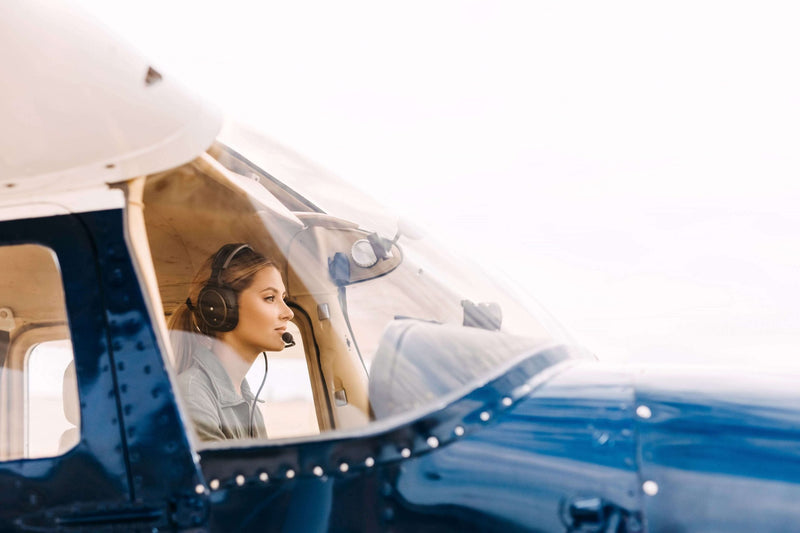
SAFETY FIRST
★★★★★
Very safety and detail oriented. Pre-flight briefing explained everything there was. To my knowledge, this flight school is exceptional in their ability.

We exist to turn people who have never touched a control yoke into pilots who make good decisions alone in an airplane, safely and without wasting their money.
A flight school can be judged on one question: does its graduate make sound decisions when there is nobody in the right-hand seat to ask. Everything we do points at that. Passing a checkride is the visible outcome, but it is a by-product rather than the aim. Our students are being trained to notice a deteriorating situation early, to say no to a flight that does not add up, and to fly the airplane accurately enough that the decision-making has room to happen.
That belief shapes some unglamorous choices. It is why lessons are one instructor and one student rather than a class. It is why we would rather cancel a flight for wind than push a nervous student through it. It is why our instructors carry fifteen or more years of experience instead of building hours on their way to an airline job. And it is why nobody here earns a commission on what you sign up for, so the advice you get is not shaped by the invoice.
The second half of the mission is honesty about money. Flight training has a reputation for quotes that grow, and the reputation is deserved. Our packages are published: $5,500 for a solo certificate, $8,400 for Sport Pilot, $10,900 for the standard Private Pilot course, $11,700 for an instrument rating. What a package includes and what it does not is explained before you pay, in a conversation, not in small print at the bottom of a page.
The third part is access. Van Nuys is one of the busiest general aviation airports in the country, and training here would be pointless if only one kind of person could afford to do it. So there is a teen package at $4,200, a simulator hour at $189 for people testing the water, financing through Stratus Financial, in-house payment plans, and evening and weekend slots for people who work. The airfield should not be a private club.

Courses & Pricing
Course prices are packages, not hourly rates - the aircraft, your instructor, ground school and simulator time are all in the figure. Van Nuys Airport, KVNY. Financing Available Through Stratus & In-House Plans.

Start Here
The First Hour At The Controls. Credited Toward Your Training If You Enroll Within 24 Hours Of Landing.
All Prices In USD. 7900 Balboa Blvd, Suite 108A, Van Nuys, CA 91406 · Open 9 AM–9 PM, Seven Days. Free In-Person Tour Of The School
Book It Or Gift It
Every discovery flight below can be booked for yourself in the next few minutes, or bought as a gift certificate that is emailed within minutes and never expires. Same flight, same price, either way.
 Most Given
 Two Seats
 The Nice One
 Twin Engine
One person, one instructor, and no audience. Hands on the controls from the left seat, briefed before you go and debriefed after you land.
Hands-On Stick TimePre-Flight BriefingLoggable Flight Time
Flight Length
$229Book It Or Gift It
Same Price Either Way
The same flight with a passenger in the back seat, briefed and on the intercom. Couples book it; so do parents who would rather watch than hear about it.
One Passenger SeatPiper Warrior Or ArcherHeadsets For Both
Flight Length
$299Book It Or Gift It
Same Price Either Way
The nicest airplane we put a first-time flyer in. Glass cockpit, air conditioning, leather seats, and a parachute built into the airframe rather than strapped to the person.
Turbocharged Cirrus SR22Air ConditioningWhole-Airframe Parachute
Flight Length
$399Book It Or Gift It
Same Price Either Way
Two engines, and the airplane instrument-rated pilots move into when they start thinking about a career. Flown from the left seat with a multi-engine instructor.
Piper Seminole TwinMulti-Engine DepartureCareer-Track Instructor
Flight Length
$499Book It Or Gift It
Same Price Either Way
Gift It issues a real gift certificate, emailed within minutes, which never expires and credits in full toward training. Flights are limited to 180 lb per person, 370 lb combined. Questions: (818) 290-8249, 9 AM–9 PM, seven days.
A lesson runs longer than the time in the air. There is a pre-flight briefing where the instructor lays out what the flight is for and what good looks like, then the walk-around, then the flight itself, then a debrief where the same maneuvers get pulled apart honestly. Skipping the bookends is how schools get through more students per day, and it is also how students end up with a certificate and no confidence. We do not skip them.
Progress is tracked against the syllabus rather than the calendar, and a stage is signed off when it is genuinely solid. Some students take twelve hours to be safe in the circuit and some take twenty-five, and neither number says much about how good a pilot they will be in five years. What we will not do is sign something off to keep a schedule moving. If you plateau, we change the approach rather than repeating the same lesson.
Getting started takes one phone call. Ring (818) 290-8249 between 9 AM and 9 PM and ask for a free consultation, or come to 7900 Balboa Blvd, Suite 108A and knock. We are on the west boundary of Van Nuys Airport: north on Balboa from the 101 in Encino, or south on Balboa from the 118 above Granada Hills, turning in at the 7900 block. Parking is free in our own lot outside the door, with no gate and no ticket machine. We will talk through what you want, look at any logbook you already have, and put a realistic timeline and cost in front of you. Nothing is paid on that visit, and there is no follow-up campaign if you decide to think about it.

Aircraft are inspected on our own calendar rather than at the last legal moment, and flights are canceled when conditions call for it even if that costs us the slot. Students are taught risk management as a subject, not as an afterthought, because the accident chain in general aviation almost always starts with a decision made on the ground.
There is a difference between teaching someone to operate the controls and teaching them to understand what the aircraft is doing. We spend real time on aerodynamics, systems and weather, because a pilot who knows why a wing stops flying will handle a surprise better than one who has only memorized a recovery procedure.
Every lesson is one instructor and one student, with a training plan written for that person. Someone flying twice a week toward an airline career and someone flying twice a month for pleasure should not receive the same schedule. Small numbers also mean your instructor remembers what you struggled with last Tuesday without checking a file.
Glass panels, autopilots and a full-motion simulator are only worth having if students are taught to use them and to fly without them. We teach both. A pilot who can shoot an approach on the Cirrus and also hold a heading with a failed screen has learned something a single-technology school cannot easily teach.
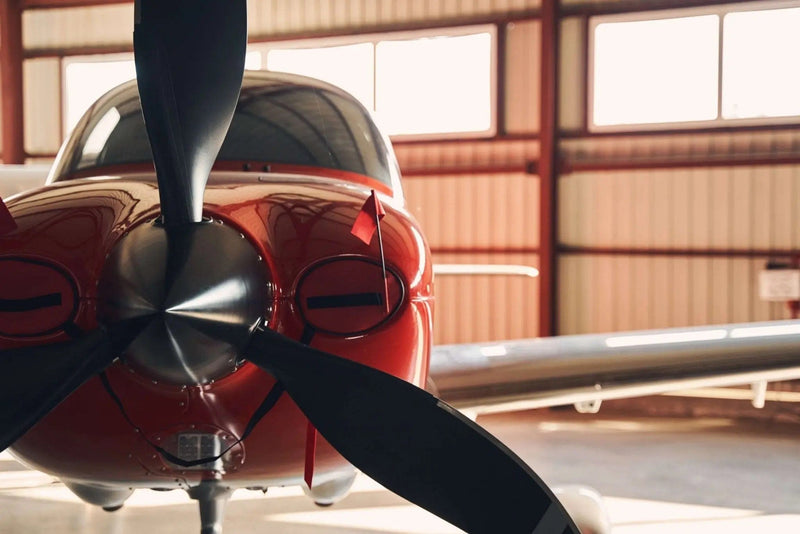
The seven aircraft on our line exist to serve the mission rather than a marketing photograph. Light, forgiving types like the Cessna 162 Skycatcher and the Diamond DA20 make early lessons cheaper and less intimidating. The Piper Warrior carries the weight and fuel that real cross-country navigation needs. The Piper Arrow II covers complex work with its retractable gear and constant-speed propeller. The Cirrus SR22 Turbo brings a modern glass panel and a whole-airframe parachute, and the Piper Seminole is the twin every multi-engine rating here is flown in.
The Redbird MCX full-motion simulator is the piece of equipment that most changes how we teach. Engine failures on takeoff, instrument approaches in weather nobody would launch into, and the same procedure practiced ten times in a single session are all things the simulator does better, safer and cheaper than an aircraft. Used honestly it takes expensive fumbling out of the airplane. Used as a gimmick it does nothing. We use it early and deliberately, and we log it within the limits the FAA allows.

If you want the mission in four lines rather than four paragraphs, here it is.
The decision to cancel belongs to the instructor and the student, and it is never overruled by the diary. Learning to make that call yourself is part of the syllabus, not an obstacle to it.
Checklists matter, but a pilot who only has checklists is stuck the moment the situation goes off the page. We teach the reasoning underneath the procedure so it survives contact with reality.
Prices are published and explained before money changes hands, including the parts a package does not cover. If a cheaper route suits you better, we will say so even though it earns us less.
Passing the test is the start of the useful part. Graduates keep flying with us, rent the fleet and come back for ratings, and the instructors are still there to ask when something odd happens.
We train under Part 61, which allows the syllabus to be adapted to the individual student rather than following a fixed, FAA-approved course order. In practice that means faster progress for people with irregular schedules and no penalty for spending an extra lesson on something you find hard. The certificate you finish with is identical either way.
Flying twice a week, most students finish in four to six months. Flying once a fortnight it can stretch past a year, because each lesson spends time recovering ground from the last one. The FAA minimum is 40 hours, but the national average sits above that and we would rather quote you the realistic figure.
That is a perfectly good outcome and it is exactly what a $189 simulator hour or a $229 discovery flight is for. Neither commits you to anything. We would much rather someone spend a couple of hundred dollars finding out than enroll in a package and quit unhappily three lessons in.
No, and nobody here is paid a commission that would reward it. The comprehensive and premium private courses include more flight and instructor time, which suits students who expect to need it. If your schedule and background suggest the standard $10,900 course is enough, that is what we will recommend.
Experienced career instructors with fifteen years or more behind them, rather than newly qualified pilots building hours toward an airline job. That matters for continuity: your instructor is unlikely to leave halfway through your training, which is one of the most common reasons people stall out at other schools.
Yes, at any time and without any awkwardness. Teaching is a relationship and not every pairing works. Tell the desk you would like to try someone else and it is arranged for your next lesson, with your training record passed across so nothing is repeated. It happens regularly and nobody takes it personally.
We train pilots from a wide range of backgrounds, and non-US citizens must complete TSA security threat assessment requirements before beginning flight training toward a certificate. We will explain the process and what documentation you need. It adds time at the start, so it is worth beginning the paperwork well before your first lesson.
Most graduates keep flying with us. The fleet is available to rent once you have completed a checkout, and instructors stay available for flight reviews, currency work and additional ratings. Plenty of private pilots come back a year later for the instrument rating at $11,700.
A mission statement is easy to write and harder to demonstrate, so come and watch a briefing and meet the instructors before you decide. Call (818) 290-8249 or visit 7900 Balboa Blvd, Suite 108A, open 9 AM to 9 PM daily.
The three private pilot packages, what each one includes, the financing options and a realistic timeline built around how often you can actually fly. Sent to you in one email. Nobody will pressure you.
Loved On Google
Every review below is real and shown verbatim, in the reviewer’s own words — written by the people who learned to fly here, not by us.
SAFETY FIRST
Very safety and detail oriented. Pre-flight briefing explained everything there was. To my knowledge, this flight school is exceptional in their ability.
 DISCOVERY FLIGHT
I recently had the chance to take my first-ever discovery flight, and it was nothing short of amazing! From the moment I stepped into the cockpit, the...
 SUNSET CIRRUS
It was a great flight! I did a sunset flight and Alex let us fly an awesome. Website was easy to book, and the plane itself was really fun to fly...
 FLYING LESSON
We had a great flying lesson with Ralph and came away with a much better understanding of both the aircraft and the principles of flight. Ralph is a...
 KIDS LUXURY FLIGHT
I got 2 luxury discovery flights for my kids. I wanted them to have the experience of flying. Our instructor Alex was amazing he made sure they feel...
 HONEYMOON SURPRISE
Last minute booking to surprise my wife on our honeymoon. She had no experience with flying and was scared of flying, but Alex was very easygoing and knew...
 FULL-MOTION SIM
Amazing flight school in van nuys airport. I have been a student here for the past few months and i could not be happier. I started doing a lot of...
 DISCOVERY FOR TWO
I booked a Discovery Flight for Two for my girlfriend's birthday and it was the perfect gift for her. She couldn't have been more excited to get to...
 SIMULATORS
Very professional and great airplanes. I love the flight simulators. The pricing is very fair compared to any other flight school
 TEEN FIRST LESSON
We gifted our teenage son his first flying lesson. He was so excited! Alex greeted us and gave a reassuring brief that made us all feel comfortable and at...
 FIRST-TIME FLYER
Flying is my husband's hobby and I was incredibly anxious and apprehensive about the discovery flight. However, I felt completely safe and at ease once we...
SAFETY FIRST
Very safety and detail oriented. Pre-flight briefing explained everything there was. To my knowledge, this flight school is exceptional in their ability.
DISCOVERY FLIGHT
I recently had the chance to take my first-ever discovery flight, and it was nothing short of amazing! From the moment I stepped into the cockpit, the...
SUNSET CIRRUS
It was a great flight! I did a sunset flight and Alex let us fly an awesome. Website was easy to book, and the plane itself was really fun to fly...
FLYING LESSON
We had a great flying lesson with Ralph and came away with a much better understanding of both the aircraft and the principles of flight. Ralph is a...
KIDS LUXURY FLIGHT
I got 2 luxury discovery flights for my kids. I wanted them to have the experience of flying. Our instructor Alex was amazing he made sure they feel...
HONEYMOON SURPRISE
Last minute booking to surprise my wife on our honeymoon. She had no experience with flying and was scared of flying, but Alex was very easygoing and knew...
FULL-MOTION SIM
Amazing flight school in van nuys airport. I have been a student here for the past few months and i could not be happier. I started doing a lot of...
DISCOVERY FOR TWO
I booked a Discovery Flight for Two for my girlfriend's birthday and it was the perfect gift for her. She couldn't have been more excited to get to...
SIMULATORS
Very professional and great airplanes. I love the flight simulators. The pricing is very fair compared to any other flight school
TEEN FIRST LESSON
We gifted our teenage son his first flying lesson. He was so excited! Alex greeted us and gave a reassuring brief that made us all feel comfortable and at...
FIRST-TIME FLYER
Flying is my husband's hobby and I was incredibly anxious and apprehensive about the discovery flight. However, I felt completely safe and at ease once we...
Reviews shown verbatim, exactly as each reviewer published them.
Aviation News
Notes from the flight line at Van Nuys — weather, regulation changes, checkride questions and the cost of training, written up as they come.
Open 7 days · 9:00 AM – 9:00 PM
Los Angeles Flight School