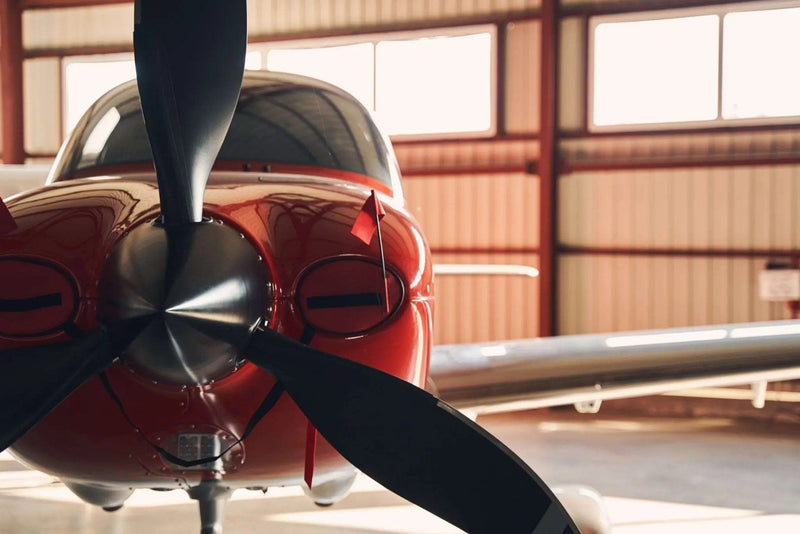
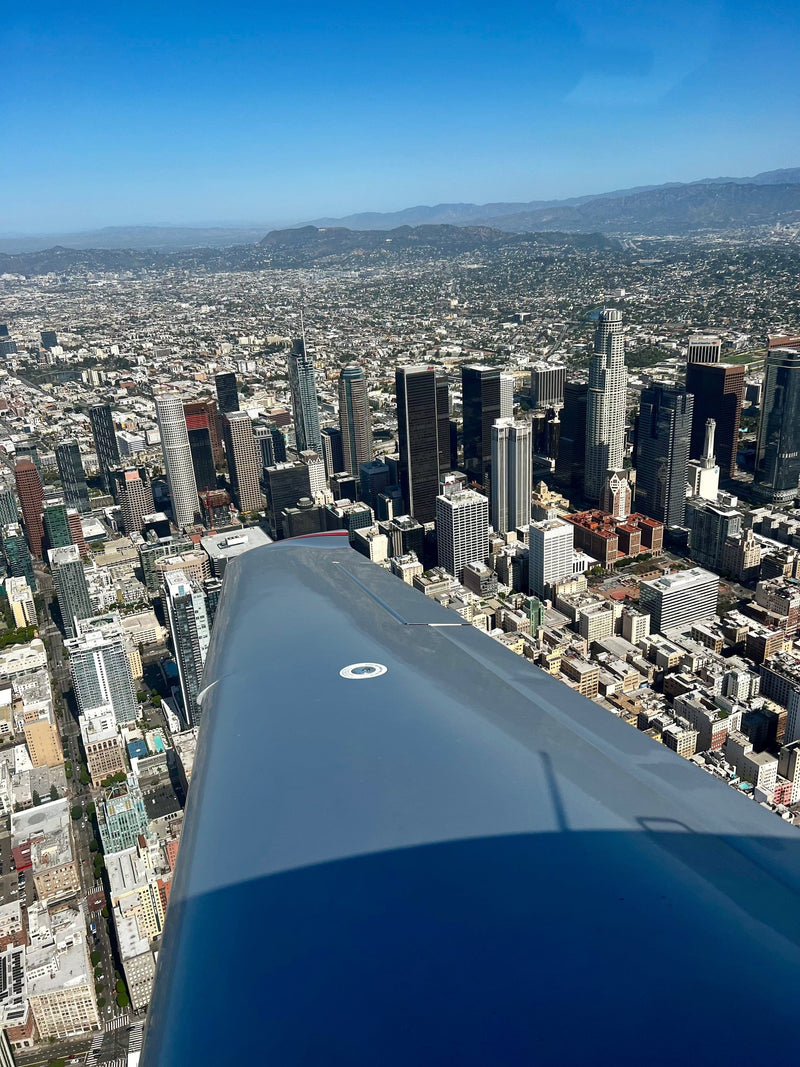
SAFETY FIRST
★★★★★
Very safety and detail oriented. Pre-flight briefing explained everything there was. To my knowledge, this flight school is exceptional in their ability.

A second class medical certificate is what you need to exercise commercial pilot privileges. The standards sit in 14 CFR part 67 subpart C, and it is valid for 12 calendar months for commercial flying — after which it keeps working as a third class.
A second class medical certificate is required under 14 CFR 61.23(a)(2) when you exercise the privileges of a commercial pilot certificate, and when you act as second in command in airline transport operations other than those requiring a first class. The medical standards are in 14 CFR part 67 subpart C, sections 67.201 through 67.215.
The physical standard is genuinely close to first class in the one place people care about — distant visual acuity of 20/20 or better in each eye separately, with or without corrective lenses, under 14 CFR 67.203 — and noticeably lighter in another: there is no routine electrocardiogram. 14 CFR 67.111 puts the ECG requirement on first class only, at the first application after the 35th birthday and annually after the 40th.
Duration is where second class differs most from what people expect. Under 14 CFR 61.23(d) it is valid for 12 calendar months for commercial privileges at any age. It does not then become worthless. It carries on serving as a third class for the rest of the third-class period — 60 calendar months from the exam if you were under 40, 24 calendar months if you were 40 or over.
So a 32-year-old who sits a second class in March 2026 can fly commercially until 31 March 2027 and privately until 31 March 2031 on the same piece of paper. The clock always runs to the end of the month.

Every figure below comes from 14 CFR part 67 and 14 CFR 61.23(d).
| First class | Second class | Third class | |
|---|---|---|---|
| Who needs it | ATP privileges | Commercial privileges | Private, recreational and student privileges |
| Standards | 14 CFR part 67 subpart B | 14 CFR part 67 subpart C | 14 CFR part 67 subpart D |
| Distant vision | 20/20 each eye, 67.103 | 20/20 each eye, 67.203 | 20/40 each eye, 67.303 |
| Near vision | 20/40 at 16 in | 20/40 at 16 in | 20/40 at 16 in |
| Routine ECG | Yes, 67.111 | No | No |
| Validity for its own class | 12 months under 40, 6 months at 40+ | 12 calendar months, any age | n/a |
| Then serves as third class for | 60 months under 40, 24 months at 40+ | 60 months under 40, 24 months at 40+ | 60 months under 40, 24 months at 40+ |
The subject headings are identical to first and third class. Only the numbers under a few of them move.
Distant visual acuity of 20/20 or better in each eye separately, with or without corrective lenses; near vision of 20/40 at 16 inches; and the ability to perceive those colors necessary for the safe performance of airman duties.
You demonstrate hearing by one of the accepted methods, the simplest being an average conversational voice in a quiet room using both ears at six feet. Disease of the middle or internal ear and vestibular disturbance are assessed rather than assumed disqualifying.
No established medical history or clinical diagnosis of a personality disorder severe enough to have repeatedly manifested itself by overt acts, a psychosis, a bipolar disorder, or a substance dependence within the previous two years.
No epilepsy, no disturbance of consciousness without satisfactory medical explanation, and no transient loss of control of nervous system function without satisfactory medical explanation.
No myocardial infarction, angina pectoris, coronary heart disease that has required treatment, cardiac valve replacement, permanent pacemaker implantation or heart replacement. No routine electrocardiogram at this class.
No diabetes requiring insulin or another hypoglycaemic medication, and no other condition the Federal Air Surgeon finds makes the applicant unable to safely perform the duties. 14 CFR 67.215 covers discretionary issuance.
Many conditions that read as disqualifying in part 67 are routinely certificated through a special issuance or an Authorization for Special Issuance of a Medical Certificate. That is the single most useful true thing on this page and most competing pages leave it out.
It is also slow. A special issuance can take months, may require specialist reports and testing at your own expense, and the FAA can decline. Start it early, go in with the paperwork already gathered, and expect to wait. Nobody should tell you it is a formality.
A deferral is not a refusal. It means the examiner has sent the file to the FAA for a decision rather than making one at the desk, and it is far more common than an outright denial. Training on dual instruction continues while it is resolved.
Never leave anything off FAA MedXPress or off the examiner’s form. Falsifying a medical application is a federal offense, and 14 CFR 61.53 separately prohibits flying with a known medical deficiency. If you are worried about something specific, take it to an Aviation Medical Examiner before you apply, or to AOPA’s medical services. We are a flight school and we cannot assess you.

The mechanics are identical to any class. Only the examination differs.
The application is done online before the appointment and generates a confirmation number you take with you. Answer the history section carefully; inconsistencies between what you declare and what your records show cause far more trouble than the conditions themselves.
Any designated AME can issue a second class. Ask when you book whether they want anything sent in advance, and bring photo identification, your confirmation number, the glasses or contacts you actually wear, and prescribing details for any regular medication.
Vision and hearing, blood pressure and pulse, a general physical, a urine sample and a conversation about your history. No routine electrocardiogram at second class. Most appointments run well under an hour.
In the great majority of cases the examiner issues the certificate at the end of the appointment. If something needs FAA review they will explain what will be asked for, which is normally a letter from a treating physician and a set of results.
If you are flying for your own purposes, you do not need this certificate. A third class medical certificate covers private, recreational and student pilot privileges, and BasicMed covers most of the same flying without an FAA certificate at all.
You need a second class the day you start exercising commercial pilot privileges — charter, aerial survey, banner towing, sightseeing, and flight instruction where you are acting as pilot in command for compensation. Our page on the commercial pilot certificate covers the 250 hours under 14 CFR 61.129(a).
If your plan ends at an airline, sit a first class medical certificate instead, and sit it early. It costs a little more and it settles the question before you spend $89,000 on a career path. A first class also steps down to second-class and then third-class privileges as its clocks run out, so nothing is wasted.
And if the medical is the reason you have not started at all: a discovery flight requires no medical of any kind. Neither does ground school, and neither does the written exam.

A commercial certificate is 250 hours under 14 CFR 61.129(a). The simulator is where the instrument and procedural half of that stops being expensive.
A single Redbird MCX session is $189. Simulator time is built into every private pilot program.
Every instructor here holds a commercial or airline transport pilot certificate, a flight instructor certificate under 14 CFR 61.183 and a current medical, and most of them have been through the second-class and first-class process themselves.
That is worth more than it sounds when you are the one filling in MedXPress at midnight. Ask on the free consultation and somebody who has done it will walk you through what to prepare.
What none of us can do is tell you whether you will be issued. Only an AME or the FAA can make that determination, and any school that says otherwise is guessing with your money.

On Google, the same three things come up again and again.
The most repeated compliment in our Google reviews is not the aircraft and it is not the price. It is the debrief.
Eleven instructors and a fleet we own means the lesson happens on the day we said it would.
The number you enroll at is the number you finish at. Reviewers mention it constantly.
Published numbers, financing from $2,500 down.
The rating that comes before a commercial certificate for almost everybody, under 14 CFR 61.65.
Zero time to airline-ready. Sit a first class medical before you enroll on this, not after.
No medical of any kind required. You fly the aircraft, and the time is loggable under 14 CFR 61.51.
Thirty minutes, free, at Van Nuys or on the phone. Tell us what you want to fly and whether you want to be paid for it, and we will tell you which certificate to book.
It is the FAA medical certificate required under 14 CFR 61.23(a)(2) to exercise commercial pilot privileges, and to act as second in command in airline transport operations other than those requiring a first class. The medical standards are in 14 CFR part 67 subpart C.
Twelve calendar months for commercial privileges, at any age, under 14 CFR 61.23(d). After that it continues to serve as a third class for the rest of the third-class period — 60 calendar months from the exam if you were under 40, 24 calendar months if you were 40 or over. The clock runs to the end of the month.
Distant visual acuity of 20/20 or better in each eye separately, with or without corrective lenses, under 14 CFR 67.203; near vision of 20/40 at 16 inches; and the ability to perceive those colors necessary for the safe performance of airman duties. Glasses and contact lenses are fine and carry a limitation stating you must have them available in flight.
Only on vision. The distant standard is 20/20 rather than the 20/40 in 14 CFR 67.303, and the rest of the subject headings — hearing, mental, neurologic, cardiovascular, general — are the same lists as third class. There is no routine electrocardiogram at second class.
No, not routinely. 14 CFR 67.111 puts the electrocardiogram requirement on the first class only: at the first application after the 35th birthday, and annually after the 40th. An AME can still ask for one on the basis of your history.
Anyone exercising commercial pilot privileges — charter, aerial survey, banner towing, sightseeing flights, and flight instruction where the instructor is acting as pilot in command for compensation. If you are flying for your own purposes, a third class or BasicMed is enough.
No. BasicMed under 14 CFR 61.113(i) covers student, recreational and private pilot privileges only, and 14 CFR 61.113(a) still prohibits acting as pilot in command for compensation or hire. Commercial flying needs an actual medical certificate.
If your plan ends at an airline, get the first class and get it early — it settles the question before you commit to a career path. A first class steps down to second-class and then third-class privileges as its clocks expire under 14 CFR 61.23(d), so nothing is wasted by starting at the top.
A deferral means the examiner has sent your file to the FAA rather than refusing you, and it is far more common than a denial. The FAA usually asks for records from your treating physician. Special issuance authorizations exist for a long list of conditions, though they are slow and the FAA can decline. Keep training on dual instruction while it is resolved.
No. A discovery flight requires none at all, and neither does ground school or the written exam. 14 CFR 61.23(a)(3) requires a third-class medical before you exercise student pilot privileges, which in practice means before your first solo — commonly 15 to 25 hours in.
The three private pilot packages, what each one includes, the financing options and a realistic timeline built around how often you can actually fly. Sent to you in one email. Nobody will pressure you.
Loved On Google
Every review below is real and shown verbatim, in the reviewer’s own words — written by the people who learned to fly here, not by us.
SAFETY FIRST
Very safety and detail oriented. Pre-flight briefing explained everything there was. To my knowledge, this flight school is exceptional in their ability.
 DISCOVERY FLIGHT
I recently had the chance to take my first-ever discovery flight, and it was nothing short of amazing! From the moment I stepped into the cockpit, the...
 SUNSET CIRRUS
It was a great flight! I did a sunset flight and Alex let us fly an awesome. Website was easy to book, and the plane itself was really fun to fly...
 FLYING LESSON
We had a great flying lesson with Ralph and came away with a much better understanding of both the aircraft and the principles of flight. Ralph is a...
 KIDS LUXURY FLIGHT
I got 2 luxury discovery flights for my kids. I wanted them to have the experience of flying. Our instructor Alex was amazing he made sure they feel...
 HONEYMOON SURPRISE
Last minute booking to surprise my wife on our honeymoon. She had no experience with flying and was scared of flying, but Alex was very easygoing and knew...
 FULL-MOTION SIM
Amazing flight school in van nuys airport. I have been a student here for the past few months and i could not be happier. I started doing a lot of...
 DISCOVERY FOR TWO
I booked a Discovery Flight for Two for my girlfriend's birthday and it was the perfect gift for her. She couldn't have been more excited to get to...
 SIMULATORS
Very professional and great airplanes. I love the flight simulators. The pricing is very fair compared to any other flight school
 TEEN FIRST LESSON
We gifted our teenage son his first flying lesson. He was so excited! Alex greeted us and gave a reassuring brief that made us all feel comfortable and at...
 FIRST-TIME FLYER
Flying is my husband's hobby and I was incredibly anxious and apprehensive about the discovery flight. However, I felt completely safe and at ease once we...
SAFETY FIRST
Very safety and detail oriented. Pre-flight briefing explained everything there was. To my knowledge, this flight school is exceptional in their ability.
DISCOVERY FLIGHT
I recently had the chance to take my first-ever discovery flight, and it was nothing short of amazing! From the moment I stepped into the cockpit, the...
SUNSET CIRRUS
It was a great flight! I did a sunset flight and Alex let us fly an awesome. Website was easy to book, and the plane itself was really fun to fly...
FLYING LESSON
We had a great flying lesson with Ralph and came away with a much better understanding of both the aircraft and the principles of flight. Ralph is a...
KIDS LUXURY FLIGHT
I got 2 luxury discovery flights for my kids. I wanted them to have the experience of flying. Our instructor Alex was amazing he made sure they feel...
HONEYMOON SURPRISE
Last minute booking to surprise my wife on our honeymoon. She had no experience with flying and was scared of flying, but Alex was very easygoing and knew...
FULL-MOTION SIM
Amazing flight school in van nuys airport. I have been a student here for the past few months and i could not be happier. I started doing a lot of...
DISCOVERY FOR TWO
I booked a Discovery Flight for Two for my girlfriend's birthday and it was the perfect gift for her. She couldn't have been more excited to get to...
SIMULATORS
Very professional and great airplanes. I love the flight simulators. The pricing is very fair compared to any other flight school
TEEN FIRST LESSON
We gifted our teenage son his first flying lesson. He was so excited! Alex greeted us and gave a reassuring brief that made us all feel comfortable and at...
FIRST-TIME FLYER
Flying is my husband's hobby and I was incredibly anxious and apprehensive about the discovery flight. However, I felt completely safe and at ease once we...
Reviews shown verbatim, exactly as each reviewer published them.
Aviation News
Notes from the flight line at Van Nuys — weather, regulation changes, checkride questions and the cost of training, written up as they come.
Open 7 days · 9:00 AM – 9:00 PM
Los Angeles Flight School