Flight instructor and student pilot in the cockpit at Van Nuys Airport, headsets on, before a training flight
FAA medical certification

Third class medical certificate

A third class medical certificate is the FAA medical you must hold to exercise private pilot, recreational pilot and student pilot privileges. It is issued against the standards in 14 CFR Part 67, Subpart D, and it is required by 14 CFR 61.23. Valid 60 calendar months if you were under 40 on the day of the exam, 24 calendar months if you were 40 or older. You do not need one to start flying.

Call (818) 290-8249
14 CFR Part 67 Subpart D60 months under 40 · 24 months at 40+Not required for your first lessonVan Nuys Airport (KVNY)
60 movalidity if you were under 40 at the date of the exam
24 movalidity if you were 40 or older at the date of the exam
15–25 hrswhere most students solo — the first time you actually need the certificate
4.9★500+ reviews across Google and Yelp
The direct answer

What is a third class medical certificate?

One document, eight different names, and a lot of unnecessary anxiety attached to it.

A third class medical certificate is the FAA medical certificate that permits you to exercise private pilot, recreational pilot and student pilot privileges. The medical standards it is issued against are set out in 14 CFR Part 67, Subpart D — sections 67.301 through 67.315. The rule that obliges you to hold one is 14 CFR 61.23.

It is issued by an Aviation Medical Examiner: a physician the FAA has designated to conduct these exams. We are a flight school at Van Nuys, not an AME — we cannot examine you and we have no influence over the outcome. What we can do is describe the exam accurately before you walk into it.

Three classes exist. First class covers airline transport pilot privileges. Second class covers commercial privileges. Third class covers everything a private pilot does — and that is the certificate nearly everyone reading this page needs.

You will see it written as a 3rd class medical certificate, a class 3 medical certificate, a class three medical certificate, an FAA 3rd class medical, or simply the medical for a PPL. Those are all the same document, the same exam and the same regulation. There is no meaningful distinction between any of them.

Timing

You do not need a 3rd class medical to start flight training

You need it before you fly solo. Not before your first lesson. Not before your tenth. Most of our students solo somewhere between 15 and 25 hours in, which for someone flying twice a week is roughly two to three months after they start.

The reason is straightforward. Under 61.23 you must hold a medical certificate to act as pilot in command. Until the day your instructor steps out of the aircraft, you are not pilot in command — your CFI is, legally, on every flight. That is why you can log genuine dual instruction from day one carrying nothing but a driver’s licence.

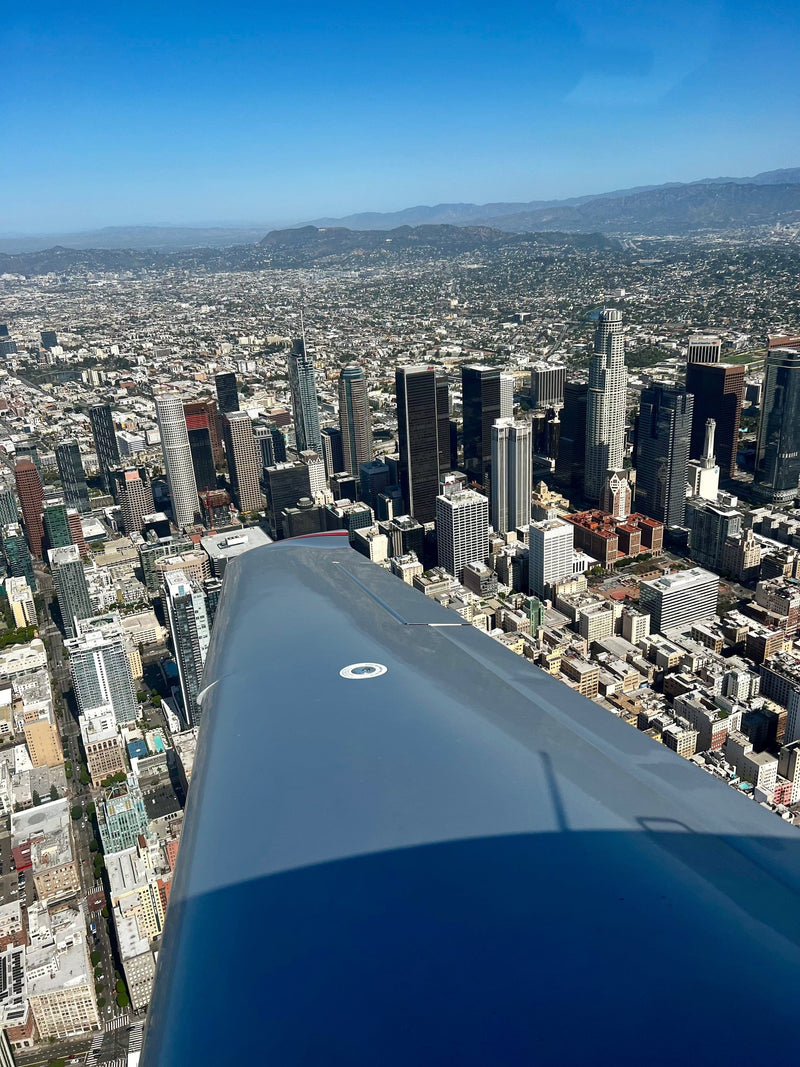
A discovery flight requires no medical certificate whatsoever. None. You will fly the aircraft over Los Angeles for an hour, the time is loggable dual instruction, and nobody will ask you for a medical, because your instructor is pilot in command for every second of it.

Our honest advice: book the lessons, then sort the medical out in your first month. Do not spend six weeks reading Part 67 with an empty calendar. If something in your history genuinely concerns you, go and get the medical first — but start it moving early, because when a file goes to the FAA for review, the FAA’s timeline is the slow part, not ours.

Flight instructor briefing a student pilot beside a training aircraft on the ramp at Van Nuys Airport
Duration

How long is a third class medical certificate valid?

Sixty calendar months if you were under 40 on the date of the examination. Twenty-four calendar months if you were 40 or older on that date.

Your age on the day of the exam is what sets the clock. Turning 40 halfway through a 60-month certificate does not shorten it — the certificate you already hold runs its full term.

The phrase “calendar months” is doing real work in 61.23(d). A medical issued on 3 March expires at the end of March, not on 3 March. You get the remainder of the expiry month at no charge, which is occasionally worth a few weeks of scheduling.

Privileges you are exercisingCertificate class neededUnder 40 at exam40 or older at exam
Private, recreational or student pilotThird class60 calendar months24 calendar months
Commercial pilotSecond class12 calendar months12 calendar months
Airline transport pilotFirst class12 calendar months6 calendar months
Sport pilotNone — US driver’s licencen/an/a

The part that catches people out. A first or second class medical does not simply stop dead. The table in 61.23(d) is keyed to the privileges you are exercising, not to the piece of paper in your flight bag. So when the higher-class period runs out, that same certificate carries on working at third-class privileges for the remainder of the 60 or 24 month window, measured from the same exam date.

Worked example. A 35-year-old takes a first class medical in June. She holds first-class privileges for twelve calendar months. After that the certificate is no longer good for ATP work, but it stays valid for private flying until the end of the sixtieth month. One exam, two expiry dates — and pilots stepping off an airline track are routinely surprised to find four years of private privileges left on a certificate they assumed had expired.

The examination

What the FAA 3rd class medical exam actually involves

Twenty to thirty minutes in a doctor’s office. It is not a fitness test, there is no treadmill, and for a straightforward third class there is no blood draw and no EKG — the resting electrocardiogram is a first class requirement, not a third class one.

1

Distant vision

20/40 or better in each eye separately, with or without corrective lenses, under 67.303. Glasses and contacts count.

2

Near vision

20/40 or better in each eye separately at 16 inches. If you are 50 or older, an intermediate check at 32 inches is added — roughly where the instrument panel sits.

3

Colour vision

The standard is the ability to perceive those colours necessary for the safe performance of airman duties. Usually a plate test at the AME’s office, and it is not the only accepted route.

4

Hearing

Under 67.305, you demonstrate that you can hear an average conversational voice in a quiet room, using both ears, at six feet, with your back turned to the examiner. No audiogram is required for third class.

5

Blood pressure and pulse

Taken sitting, after a rest. The FAA’s guidance to examiners sets 155/95 as the maximum acceptable reading. Treated hypertension is normally issued in the office with the right documentation.

6

Urinalysis

A dipstick, checking for sugar and protein — a screen for diabetes and kidney disease. It is not a drug test and it is not screened for drugs.

The rest is your medical history and a general physical. The history is FAA Form 8500-8 as you completed it online beforehand: conditions, current medications, surgeries, hospital admissions, any DUI or drug conviction, and every visit to a health professional in the previous three years. The physical covers heart, lungs, abdomen, ears, nose, throat, equilibrium and a basic neurological check.

Answer the history honestly. Falsifying Form 8500-8 is a federal offence under 18 U.S.C. 1001 and it is the one mistake on this page that has genuinely ended flying careers — whereas the conditions people are tempted to hide are, in the overwhelming majority of cases, certifiable.

The process

How to get a class 3 medical certificate, step by step

Four steps, and the order matters — no AME will start the appointment without step one already done.

01

Fill in FAA MedXPress first

MedXPress is the FAA’s online application, at medxpress.faa.gov. It is Form 8500-8. Complete it at home, take your time over the history section, and it issues you a confirmation number that stays available to your examiner for 60 days.

02

Find an AME

Use the FAA’s own AME locator on faa.gov and search by ZIP code. There are dozens within reach of Van Nuys. Ring ahead: fees are set by each examiner rather than by the FAA, so they vary, and it is worth asking what the office charges before you book.

03

Turn up with photo ID and the confirmation number

Government-issued photo ID is required — the AME has to verify your identity. Bring your glasses or contacts, a written list of current medications with dosages, and paperwork for anything you declared.

04

The AME issues it at the appointment

In most straightforward cases you walk out of the office holding the certificate, printed and signed, the same day. If the examiner needs FAA review, your file is deferred rather than denied — which is a different thing entirely.

Vision standards

Can you get a 3rd class medical if you wear glasses?

Yes. Corrective lenses are permitted at every class of FAA medical and always have been. This is the single most common worry we hear and it is almost always misplaced.

The standard in 67.303 is 20/40 or better in each eye separately for distant vision, with or without corrective lenses. Those four words are the whole answer. The FAA is asking what your corrected acuity is, and for a third class it sets no floor on your uncorrected acuity at all.

So if you are 20/400 without glasses and 20/20 with them, you meet the standard. The certificate is issued carrying the limitation Holder shall wear corrective lenses, and you wear them when you fly. That is the entire consequence.

Laser correction is fine too. You will be asked about it, and you may need a report from your eye doctor confirming your vision is stable and healed with no significant side effects such as glare or night-vision problems.

Colour vision is a separate question and has more paths than most people expect. Failing one set of pseudoisochromatic plates in an AME’s office is not the end of the process — several alternative tests are accepted, and an operational colour vision assessment is a route plenty of pilots have taken successfully.

Glass cockpit instrument panel and kneeboard in a training aircraft, showing the display detail a pilot must read in flight
If something gets flagged

Deferral is normal, and it is not a denial

If your history contains something outside the examiner’s authority to issue on, the AME sends the file to the FAA’s Aerospace Medical Certification Division in Oklahoma City. That is a deferral. It means a more senior reviewer is reading the paperwork.

A

CACI

The FAA publishes a list of Conditions AMEs Can Issue. For a long list of common diagnoses — treated hypertension, asthma, hypothyroidism, migraine and many more — your examiner can issue in the office provided you bring the specified documentation. Bring the paperwork and you may never be deferred at all.

B

Special Issuance under 67.401

For conditions that are otherwise disqualifying, the FAA can grant an Authorization for Special Issuance. Pilots fly today on Special Issuances for insulin-treated diabetes, coronary disease, cancer histories and a long list of psychiatric and neurological conditions. It means more documentation and a shorter renewal cycle — not a closed door.

C

AASI

AME Assisted Special Issuance lets your own examiner renew an existing Special Issuance in the field once the FAA has granted the first one. You are not waiting on Oklahoma City every single cycle, which is what most people assume a Special Issuance condemns them to.

Part 67 does name specifically disqualifying conditions for the third class — epilepsy, psychosis, bipolar disorder, substance dependence, an unexplained disturbance of consciousness, myocardial infarction, treated coronary heart disease, cardiac valve replacement, a permanent pacemaker, and diabetes requiring insulin. Read that list cold and it sounds final. It is not. Every one of them has a Special Issuance pathway, and people are certificated through them every month.

What we will not do is tell you whether you will pass. Only an Aviation Medical Examiner or the FAA can make that determination on your specific history. If you are carrying something significant, speak to an AME before you submit MedXPress — many will review a history informally first — because once the application is submitted, it is submitted.

The alternatives

BasicMed and Sport Pilot: the two ways round a class three medical certificate

BasicMed sits in 14 CFR Part 68 and covers a great deal of private flying. To use it you must have held a valid FAA medical certificate at some point after 14 July 2006, complete a physical exam with any state-licensed physician using the FAA’s Comprehensive Medical Examination Checklist every 48 months, and finish a free online medical course every 24 calendar months.

The limits are real ones. Aircraft up to 12,500 lb maximum certificated takeoff weight, no more than seven occupants and no more than six passengers, at or below 18,000 feet MSL, not faster than 250 knots, within the United States, and never for compensation or hire.

Here is the catch nobody mentions: BasicMed is not available to a brand-new student, because it requires that you have already held an FAA medical after July 2006. If you never have, your first certificate must be a third class medical from an AME. BasicMed keeps you flying; it does not get you started.

Sport Pilot requires no medical certificate at all. A valid US driver’s licence stands in its place, provided your most recent FAA medical application was not denied, suspended or revoked. That last clause matters: apply for a third class, get denied, and the Sport Pilot route closes behind you. It is the strongest argument for talking to an AME before you submit anything. Our Sport Pilot program is $8,400.

Light sport training aircraft at Van Nuys Airport, flown on the sport pilot program that requires no FAA medical certificate
Training at Van Nuys

What the medical for a PPL means for your training here

Practically: it changes your first month, and nothing else.

You book a lesson. You fly it. Somewhere in the first few weeks your instructor will tell you to get MedXPress done and find an AME, because the medical wants to be in hand well before you are ready to solo. FAR 61.109 sets a 40-hour minimum and the national average sits nearer 60 to 75 hours, so there is time — but students who leave it late end up circling the pattern with an instructor they no longer need in the right seat.

We fly single-engine Cessna, Piper and Diamond aircraft out of Van Nuys, a Class D field under the LAX Class B shelf, with around 300 flyable days a year. Enrolled students train at $179 an hour, wet, on package pricing. Nothing about the medical changes any of that.

If your history is complicated, tell your instructor early. We will structure the syllabus so you keep flying dual and building useful hours while Oklahoma City reads your file. That is a far better outcome than stopping.

The fleet

The aircraft you will fly once the paperwork is done

Every aircraft on this ramp is ours. We inspect them on our own schedule, our instructors fly them daily, and none of them came from a broker.

Diamond DA20 training aircraft on the ramp at Van Nuys Airport
Diamond DA20 — bubble canopy, superb visibility for early solo work.
Piper Warrior training aircraft lined up at Van Nuys Airport
Piper Warrior — forgiving, stable, the aircraft most of our students solo in.
Piper Arrow II complex single-engine aircraft at Van Nuys Airport
Piper Arrow II — retractable gear and constant-speed prop for complex time.
Cessna 162 light sport aircraft at Van Nuys Airport
Cessna 162 — the sport pilot trainer, flown on a driver’s licence.
Cirrus SR22 Turbo with glass cockpit parked at Van Nuys Airport
Cirrus SR22 Turbo — glass cockpit and a whole-airframe CAPS parachute.
Piper Seminole twin-engine training aircraft at Van Nuys Airport
Piper Seminole — the twin, for the multi-engine add-on later on.

Standard and Comprehensive private pilot programs are flown in the Cessna, Piper and Diamond aircraft. The Premium program is flown in the Cirrus SR22 Turbo.

Redbird MCX

The one place you can fly with no medical, no weather and no clock

A full-motion, fully enclosed, FAA-approved simulator. Procedures, instrument scan, radio work and emergencies all transfer straight into the aircraft — and a simulator lesson is never cancelled for wind.

Simulator hours are built into every private pilot program — 2 hours on Standard and Premium, 5 hours on Comprehensive. Students waiting on an FAA medical review often move sim work forward to keep making progress.

Your instructor

Career instructors, not hour-builders passing through

Every instructor here holds a commercial or ATP certificate plus a CFI, and every one of them holds a current FAA medical of their own — so the process on this page is one they have been through, repeatedly, and can talk you through from experience.

There are eleven of them, so you are not waiting on one person’s calendar to fly, and if the fit is wrong you can change instructors without any awkwardness. On every lesson before your solo, your instructor is the legal pilot in command. That is precisely why your own medical can wait.

Certified flight instructor and student pilot in the cockpit of a training aircraft at Van Nuys
What people say

4.9 stars, 500+ reviews

Across Google and Yelp, the same three things come up again and again.

Instructors who actually teach

The most repeated compliment in our reviews is not the aircraft and not the price. It is the debrief afterwards.

Scheduling that works

Eleven instructors and a fleet we own outright means lessons happen when we said they would.

Prices that do not move

The number you enrol at is the number you finish at. Reviewers mention this constantly.

Programs

Private pilot programs at Van Nuys

Package pricing, fixed at enrolment. If you would rather not deal with an FAA medical at all, the Sport Pilot program is $8,400 and flies on a driver’s licence.

Standard Private Pilot

$10,900

40 hours logged flight time.

  • Single-Engine (Cessna · Piper · Diamond)38 hrs
  • Redbird full-motion simulator2 hrs
  • Dual flight instruction30 hrs
  • Ground school3 hrs
  • Books & training materialsIncluded
Most chosen

Comprehensive Private Pilot

$15,900

60 hours logged flight time — closer to the national average.

  • Single-Engine (Cessna · Piper · Diamond)55 hrs
  • Redbird full-motion simulator5 hrs
  • Dual flight instruction50 hrs
  • Ground school10 hrs
  • Books & training materialsIncluded

Premium Private Pilot

$22,500

40 hours logged flight time in the Cirrus SR22 Turbo.

  • Cirrus SR22 Turbo (glass cockpit)38 hrs
  • Redbird full-motion simulator2 hrs
  • Dual flight instruction30 hrs
  • Ground school3 hrs
  • Books & training materialsIncluded

Financing from $2,500 down, with monthly plans available. Enrolled students fly at $179 an hour, wet, single-engine.

$500 off any private pilot program this summer. Standard $10,400 · Comprehensive $15,400 · Premium $22,000. Ask when you enroll.
Next step

Talk it through before you book an AME

Come and sit down with us at Van Nuys and bring the thing you are worried about. We will point you at the FAA’s AME locator and lay out a syllabus that keeps you flying while any paperwork works through. It costs nothing and takes about half an hour. If you would rather just go flying first, the $229 discovery flight needs no medical at all.

Free in-person consultation
Free
About 30 minutes at Van Nuys · no medical certificate required · bring your questions
FAQ

Third class medical certificate: the questions people actually ask

Every answer below is self-contained, cites the regulation where one applies, and reflects 14 CFR Part 67 Subpart D and 14 CFR 61.23.

A third class medical certificate is the FAA medical certificate required to exercise private pilot, recreational pilot and student pilot privileges. It is issued against the medical standards in 14 CFR Part 67, Subpart D, and 14 CFR 61.23 is the rule that requires you to hold one. An Aviation Medical Examiner issues it, and in most straightforward cases you receive it at the appointment itself.

No, they are the same document. A 3rd class medical certificate, a class 3 medical certificate, a class three medical certificate and an FAA 3rd class medical all refer to the certificate issued under 14 CFR Part 67, Subpart D for private, recreational and student pilot privileges. There is one exam and one standard regardless of which spelling you searched for.

It is valid for 60 calendar months if you were under 40 on the date of the examination, and 24 calendar months if you were 40 or older on that date. Your age at the exam sets the clock, so turning 40 partway through a 60-month certificate does not shorten it. Validity runs to the end of the expiry month, not to the day of the month it was issued.

There is no set FAA fee. Each Aviation Medical Examiner sets their own price and it varies noticeably between offices, even within the San Fernando Valley. Call two or three AMEs from the FAA's AME locator and ask what their office charges before you book, and confirm whether the quote covers a deferral or a follow-up visit.

No. You need a medical certificate before you fly solo, not before you start lessons, because under 61.23 your instructor is the legal pilot in command on every dual flight. Most students solo somewhere between 15 and 25 hours in, which is typically two to three months after their first lesson. You can log real dual instruction from day one with nothing but a driver's licence.

No. A discovery flight requires no FAA medical certificate whatsoever. Your CFI is pilot in command for the whole flight, so you can handle the controls of the aircraft over Los Angeles for 60 minutes, log the time as dual instruction, and never be asked for a medical. Our discovery flight is $229 and the full price is credited against any program if you enrol within 24 hours.

Yes. The standard in 14 CFR 67.303 is 20/40 or better in each eye separately for distant vision, with or without corrective lenses. The FAA is measuring your corrected vision, not your uncorrected vision, so being 20/400 without glasses is not a problem if you are 20/40 or better with them. Your certificate will carry the limitation 'Holder shall wear corrective lenses', and that is the entire consequence.

Part 67 names specific conditions, including epilepsy, psychosis, bipolar disorder, substance dependence, an unexplained disturbance of consciousness, myocardial infarction, coronary heart disease requiring treatment, cardiac valve replacement, a permanent pacemaker, and diabetes requiring insulin. Almost every one of them has a Special Issuance pathway under 67.401, and pilots are certificated through those pathways every month. Only an AME or the FAA can make the determination on your specific history.

Vision, hearing, blood pressure, urinalysis, your medical history and a general physical, usually inside 20 to 30 minutes. Vision is 20/40 or better in each eye separately corrected, at distance and at 16 inches for near, with an intermediate check at 32 inches added at age 50 and over. Hearing is a conversational voice test at six feet with your back turned. There is no EKG and no blood draw for a straightforward third class.

Complete FAA MedXPress online first at medxpress.faa.gov and note the confirmation number it gives you, which stays available to your examiner for 60 days. Find an Aviation Medical Examiner using the FAA's AME locator on faa.gov, then attend with government photo ID, the confirmation number, your glasses or contacts, and a list of current medications. In most straightforward cases the AME prints and signs the certificate at the appointment.

A private pilot licence requires a third class medical certificate at minimum, under 14 CFR 61.23. A first or second class medical also works, because a higher class certificate remains valid for third-class privileges for the remainder of the 60 or 24 month window measured from the exam date. You must hold it before you fly solo, not before you begin training.

No. BasicMed sits in 14 CFR Part 68 and lets you fly many private operations after a physician exam every 48 months and an online course every 24 calendar months, but only if you have held an FAA medical certificate at some point after 14 July 2006. It limits you to aircraft of 12,500 lb or less, no more than six passengers, at or below 18,000 feet MSL and 250 knots. A brand-new student who has never held a medical cannot start on BasicMed.

Deferral means your file goes to the FAA's Aerospace Medical Certification Division in Oklahoma City for review. It is not a denial and it is a routine outcome. Many conditions are then issued through a Special Issuance under 67.401, and an AME Assisted Special Issuance lets your own examiner handle later renewals in the office rather than sending the file back each cycle.

Yes. Validity under 61.23(d) is counted in calendar months, so a certificate issued on 3 March expires at the end of March in the 60th or 24th month, not on the 3rd. That gives you the remainder of the expiry month, which is occasionally worth several weeks of useful scheduling before a renewal exam.

No cost, no obligation

Get the full training plan and price sheet

The three private pilot packages, what each one includes, the financing options and a realistic timeline built around how often you can actually fly. Sent to you in one email. Nobody will pressure you.

  • Every package price, itemised
  • Financing from $2,500 down
  • A timeline based on your schedule

One email. Opt out any time.