SAFETY FIRST
★★★★★
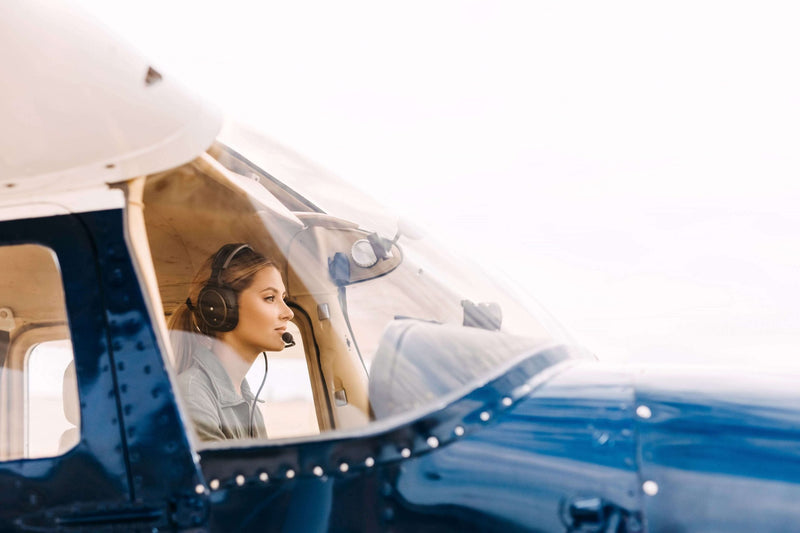
Very safety and detail oriented. Pre-flight briefing explained everything there was. To my knowledge, this flight school is exceptional in their ability.

Every pilot certificate issued in the United States is issued under 14 CFR Part 61. The question is not if Part 61 applies to you — it does. The question is whether the training is also run inside an FAA-approved course under Part 141. Here is the honest comparison, including the places where Part 141 is genuinely the better answer.
Part 61 flight training is training under 14 CFR Part 61, the rule that sets the requirements for every US pilot certificate, without an FAA-approved school course. A private pilot certificate needs at least 40 hours under 14 CFR 61.109, against 35 hours of training in an approved Part 141 course (Part 141 Appendix B).
Source: 14 CFR 61.109, 61.129 and 61.160 and Part 141 Appendix B, checked against the eCFR (current to 14 October 2026), October 2026
14 CFR Part 61 is titled Certification: Pilots, Flight Instructors, and Ground Instructors. It sets out the eligibility, aeronautical knowledge, flight experience and practical test requirements for every certificate and rating the FAA issues — student, sport, recreational, private, commercial, airline transport, flight instructor and ground instructor.
That is worth stating flatly because the phrase “Part 61 versus Part 141” makes it sound like two parallel systems. They are not parallel. Part 61 is the rule that says what you must know and what you must have done in order to hold a certificate. It applies to everybody. A pilot who trains at a Part 141 school still gets a certificate issued under Part 61, still takes a Part 61 practical test, and still holds the same privileges under 14 CFR 61.113 or 61.133 as anybody else.
Part 141 is a rule about schools, not about pilots. A school certificated under 14 CFR Part 141 has submitted a training course outline to the FAA for approval, holds a school certificate, appoints a chief instructor whose qualifications the FAA has accepted, meets facility and record-keeping standards, and is inspected against that approved course. In exchange, students on that approved course may be credited towards certain certificates at lower flight-hour minimums.
So the real question is not which regulation you are certificated under. It is whether the extra structure of an FAA-approved course is worth what it costs you in flexibility. That answer is different for different people, and anybody telling you it is the same for everybody is selling something.

We are not a Part 141 school. That is not a reason to describe Part 141 badly, and the genuine advantages below are real ones.
A Part 141 school flies a training course outline the FAA has reviewed and approved. Every lesson has a defined sequence, defined completion standards and a stage check. If you want a course that is written down, audited and identical for every student, that is a genuine benefit, and Part 61 does not require any school to provide it.
The appendices to Part 141 set lower flight-time minimums for several certificates than the corresponding Part 61 sections do. The commercial certificate is the big one, and the numbers are in the table below.
Progress is checked at defined points by somebody other than your own instructor. It catches drift early. Some students find this reassuring and some find it bureaucratic, and both reactions are valid.
A Part 141 school that has held its approval long enough and meets the FAA’s standards can be granted examining authority, which lets the school administer the practical test in-house for certain certificates rather than sending the student to an FAA-designated examiner. Not every Part 141 school holds this.
GI Bill and VA education benefits for flight training generally run through Part 141 schools or degree programs. Non-immigrant students on an M-1 visa generally need an SEVP-certified school, which in practice means Part 141. If either applies to you, the answer is Part 141 and there is no argument to be had about it.
Part 141 schools are inspected against their approved course and their records. That is a real quality floor. It does not by itself make the instruction good, but it is a floor, and Part 61 schools do not have an equivalent.
This is the only substantive difference most students will ever encounter, and for the private pilot certificate it is almost never the number that decides the outcome.
| Certificate or rating | Part 61 minimum | Part 141 approved course minimum |
|---|---|---|
| Private pilot, airplane single-engine | 40 hours total flight time, 14 CFR 61.109(a) | 35 hours of training, Part 141 Appendix B |
| Instrument rating, airplane | 50 hours cross-country as pilot in command plus 40 hours of actual or simulated instrument time, 14 CFR 61.65 | 35 hours of instrument training, Part 141 Appendix C |
| Commercial pilot, airplane single-engine | 250 hours total time, 14 CFR 61.129(a) | 120 hours of flight training in the approved course, Part 141 Appendix D section 4(a)(1) |
| Flight instructor | Same requirements either way, 14 CFR 61.183 | Part 141 Appendix F course available |
| Airline transport pilot, unrestricted | 1,500 hours, 14 CFR 61.159 | 1,500 hours, 14 CFR 61.159 |
Read the private pilot row carefully, because it is the one that gets oversold. Forty hours against thirty-five is a five-hour difference on paper. In practice AOPA puts the national average for a private pilot certificate at 50 to 70 hours, and almost nobody finishes at either minimum. A five-hour reduction in a minimum you were not going to hit is not a saving. It is a rounding error in the marketing.
The commercial row needs care, because the number everybody repeats is attached to the wrong part. 14 CFR 61.129(a) sets 250 hours of total time; the 190-hour relief in 14 CFR 61.129(i)(3) belongs to an applicant who satisfactorily completed an approved commercial pilot course under part 142, a training center rather than a pilot school. Part 141 Appendix D sets 35 hours of ground training and 120 hours of flight training in the approved course and no total-time figure of its own. What an approved commercial course buys you is a sequenced syllabus and stage checks, not sixty hours of airplane time.
The instrument row is more complicated than the numbers suggest. Part 61 requires 50 hours of cross-country time as pilot in command under 14 CFR 61.65 before the rating is issued, and most people already have that from private pilot flying. The Part 141 approved course requires 35 hours of instrument training against the 40 hours of instrument time in Part 61. Whether that difference is worth anything to you depends on how much cross-country time is already in your logbook.
This is the most frequently muddled point in flight school marketing, so here is the regulation.
An unrestricted airline transport pilot certificate requires 1,500 hours of total time under 14 CFR 61.159. There is no version of Part 61 or Part 141 training that changes that number.
14 CFR 61.160 creates a restricted-privileges ATP certificate at lower totals, and it is worth reading exactly where those reductions come from. They come from military pilot experience, and from graduating an aviation degree program at an institution of higher education that holds an FAA letter of authorization for that credit. The three headline figures in 61.160 are 750 hours for a qualifying military pilot, 1,000 hours for a graduate of an authorized bachelor’s degree program with an aviation major, and 1,250 hours for a graduate of an authorized associate degree program.
Note what is not on that list. Holding a Part 141 school certificate does not, on its own, entitle a school’s graduates to reduced ATP minimums. The credit attaches to the degree program and its authorization, not to the training rule. Many universities that offer those degrees also run their flight training under Part 141, which is exactly why the two get conflated — but if you enroll at a Part 141 flight school that is not part of an authorized degree program, your ATP minimum is 1,500 hours under 61.159, the same as anybody else’s.
If a reduced ATP minimum is the thing you are optimising for, the decision you are making is about a university, not about a flight school. That is a considerably larger decision, it takes years, and it costs what a degree costs. We would rather you knew that before you chose a flight school on the strength of it.
The thing Part 61 buys is judgment. Your instructor can reorder the syllabus around what you are actually struggling with, spend a whole lesson on crosswind landings because that is where you are, take you to a different airport because the pattern at Van Nuys is busy that afternoon, or bring the cross-country forward because the weather next week looks poor. None of that needs an approval.
It also buys schedule. Part 61 fits people who fly on Saturdays, people who travel for work, people returning after a decade away, and people who want to start now and see how it goes. There is no cohort to keep up with and nothing to be behind.
What Part 61 costs you is any assurance of structure. Without an approved course, the quality of the syllabus is entirely a function of the school and the instructor. A disorganised Part 61 school can let a student wander for eighty hours without anybody noticing, and some do. The defense against that is not the regulation. It is a written syllabus the school actually follows, progress checks it actually runs, and a chief instructor who reads the training records. Ask any Part 61 school to show you those three things. If they cannot, that is your answer.
What it does not cost you is a commercial hour reduction, whatever you have read elsewhere. The 190-hour figure people attach to Part 141 is not in Part 141: 14 CFR 61.129(i)(3) grants it to an applicant who has satisfactorily completed an approved commercial pilot course under part 142, and Part 141 Appendix D sets 35 hours of ground training and 120 hours of flight training with no total-time figure of its own.

There is no universally correct answer here, and the schools that claim there is are usually describing themselves.
You are training around a job, a family or a variable schedule. You want to start this month rather than at the beginning of a term. You are returning to flying after a long gap and need training built around what you have retained rather than around lesson one. You are chasing a private pilot certificate or an instrument rating, where the hour differences are small. You want the freedom to change instructors, change aircraft or change pace without leaving an approved course.
You are on a full-time professional timeline and want the 120-hour approved commercial course in Part 141 Appendix D to carry the sequencing for you. You are using GI Bill or VA education benefits. You need an M-1 student visa. You want an FAA-approved syllabus and stage checks as a matter of principle. You are enrolling in an aviation degree program, in which case the training structure comes with the university anyway.
You are getting a private pilot certificate for your own reasons and you are going to fly around the 50 to 70 hours AOPA puts the national average at, like almost everybody does. At that point the five-hour difference between 14 CFR 61.109 and Part 141 Appendix B is noise, and the variables that actually decide your outcome are how often you fly, whether the aircraft is available, and how good the instructor is at teaching.
The flexibility of Part 61 is only an advantage if the school is organized enough to use it well.
We are certificated under 14 CFR Part 61. We have never claimed Part 141 status and we are not going to imply it. What we do is run our training against a written syllabus with defined stages, because the freedom to depart from a sequence is only useful if there is a sequence to depart from.
The practical version of that: every student is issued a training plan at enrollment, progress is recorded against it lesson by lesson, and there are checkpoints before first solo, before the cross-country phase and before the checkride recommendation. Your instructor can and does adjust the order inside that plan. Nobody adjusts the standards.
The programs are also fixed-price rather than hourly estimates, which does more for training discipline than most people expect. The Standard private pilot program is $10,900 for 40 logged hours and meets the 14 CFR 61.109 minimum. The Comprehensive program is $15,900 for 60 logged hours, which is the one that matches what most students actually need. The Premium program is $22,500 in the Cirrus SR22 Turbo. Sport Pilot is $8,400 and the Instrument Rating is $11,700.
The other thing Part 61 lets us do here is use the weather. Van Nuys averages 355 flyable days a year against a 3,000-foot ceiling and five statute miles of visibility. When a morning turns out better than forecast, a Part 61 instructor can simply move the cross-country forward. That is the flexibility argument in one sentence, and it is the version of it that is actually true.
Each of these is common enough that you will hear it on a school tour.
Airline hiring runs on certificates, total time, multi-engine time, instrument currency and the interview. The certificate in your pocket says the same thing under 14 CFR 61.159 or 61.160 whichever school issued the training. Where a degree matters to a particular airline, it is the degree that matters, not the training rule.
The minimums are lower on some courses. The calendar time depends on aircraft availability, instructor availability, weather and how often you show up. A full-time student at a well-run school of either kind finishes faster than a part-time student at the other kind, every time.
Part 61 sets the aeronautical knowledge and experience requirements for every certificate, and the practical test is the same Airman Certification Standards either way. What Part 61 does not mandate is an FAA-approved syllabus at the school. That is a real gap and the fix is to ask to see the school’s own syllabus.
You can. 14 CFR 61.129 issues commercial certificates at 250 hours, 14 CFR 61.183 issues flight instructor certificates, and 14 CFR 61.159 issues the ATP at 1,500 hours. A very large share of the professional pilots flying in the United States trained under Part 61, often while instructing.
Part 61 or Part 141, you learn in an airplane, and whose airplane it is matters more than most people think. Every aircraft on this ramp is ours and inspected on our schedule.


Single-engine training on the Standard and Comprehensive programs is flown in the Cessna, Piper and Diamond aircraft. The Premium program is flown in the Cirrus SR22 Turbo. The Piper Seminole is the twin for the $5,100 multi-engine add-on.
FAA-approved, full-motion, fully enclosed, and never canceled for weather.
Simulator time is built into every private pilot program: 2 hours on Standard and Premium, 5 hours on Comprehensive. A standalone Redbird MCX session is $189, and it is where instrument scan and emergency procedures get cheap repetitions before they cost airplane time.
This is the honest consequence of training without an FAA-approved course outline: the quality of your training is the quality of the person in the right seat. Every instructor here holds a commercial or airline transport pilot certificate plus a flight instructor certificate under 14 CFR 61.183 and a current medical, and the instructor is legally pilot in command on every flight.
There are eleven of them, which matters for two reasons. It means your lesson is not hostage to one person’s calendar. And it means that if the fit is wrong — and sometimes it is, for reasons that have nothing to do with competence — we move you to a different instructor without a fuss and without you having to make a case for it.

Over 120 reviews on Google. Students who came from a structured background mention the same thing: the flexibility is only useful because the plan underneath it is written down.
The line that comes up most in our Google reviews is not the aircraft and not the price. It is the twenty minutes at the table afterwards, where the instructor explains what just happened and what to fix.
Eleven instructors and a fleet we own means the airplane is on the ramp and somebody is there to fly it. Reviewers mention scheduling more often than they mention anything else.
You enroll at $10,900 or $15,900 and you finish at $10,900 or $15,900. Nobody writes a five-star review about a surprise invoice.
All 120+ reviews are on Google. We do not aggregate ratings from anywhere else, and we do not publish a figure we cannot point at.
These are packages, not hourly estimates. The number you enroll at is the number you finish at, and it is the number a lender would be underwriting if you finance.
Sit down with an instructor at Van Nuys, bring the questions you think sound stupid, and book nothing. This is where the numbers get worked out against your actual schedule and your actual budget.
A real lesson. You fly the aircraft, your instructor is legally pilot in command, and the hour is logged as dual instruction. The full price is credited against any program if you enroll within 24 hours.
A full-motion, FAA-approved, fully enclosed simulator. Procedures, instrument scan, radio work and emergencies, and it is never canceled for weather.
The 40-hour package that meets the 14 CFR 61.109 minimum. The cheapest honest way to a private pilot certificate here, and the one to pick if you can fly two or three times a week.
Sixty logged hours instead of forty, because AOPA puts the national average at 50 to 70. This is the package that most often ends at the price it started at.
Forty logged hours flown in the Cirrus SR22 Turbo, glass cockpit throughout, with the CAPS whole-airframe parachute. More airplane than a first certificate needs, and some people want it anyway.
Also published: Sport Pilot $8,400 · Instrument Rating $11,700 · Multi-Engine add-on $5,100 · Solo Certificate $5,500 · Teens aged 10 to 15 $4,200 · zero-to-airline $89,000 · Redbird session $189. Financing starts at $2,500 down through Stratus Financial or our in-house plans, with terms up to 15 years. Enrolled students fly single-engine aircraft at $179 an hour wet inside their package. Aircraft are available to qualified pilots who have checked out with us — call for availability.
Thirty minutes, free, at Van Nuys or on the phone. We will go through which certificate you want, what Part 61 training would look like on your schedule, and where a Part 141 course would genuinely serve you better. If it is the second one, we will say so.
Prefer to write it down first? Use the contact form, or read what a discovery flight actually involves before you decide anything.
Part 61 flight training is training conducted under 14 CFR Part 61, the federal regulation that sets the eligibility, knowledge and flight experience requirements for every US pilot certificate. It does not require the school to hold an FAA-approved course outline, so the instructor sequences the training. Every pilot certificate in the United States is issued under Part 61, including certificates earned at Part 141 schools.
Part 61 governs pilots and certificates. Part 141 governs schools: a Part 141 school holds an FAA-approved training course outline, a chief instructor accepted by the FAA, and defined stage checks, and its approved courses carry lower flight-hour minimums for some certificates. The practical test and the certificate itself are the same either way.
Forty hours of total flight time under 14 CFR 61.109(a), including at least 20 hours of flight training and 10 hours of solo flight. A Part 141 approved course requires 35 hours under Appendix B. AOPA puts the national average for a private pilot certificate at 50 to 70 hours, so the five-hour difference between the two minimums rarely decides anything.
250 hours of total time under 14 CFR 61.129(a) for an airplane single-engine commercial certificate. A Part 141 approved commercial course runs to Part 141 Appendix D, which sets 35 hours of ground training and 120 hours of flight training and no total-time figure of its own. The widely repeated 190-hour route is not a Part 141 provision at all: 14 CFR 61.129(i)(3) grants it to an applicant who completed an approved commercial pilot course under part 142.
Not on its own. The reduced airline transport pilot minimums in 14 CFR 61.160 come from qualifying military pilot experience or from graduating an aviation degree program at an institution of higher education that holds an FAA letter of authorization — 750 hours for military, 1,000 for an authorized bachelor’s program, 1,250 for an authorized associate program. Without one of those, the ATP minimum is 1,500 hours under 14 CFR 61.159 regardless of which part you trained under.
Neither is better in general. Part 61 suits students training around a job or a variable schedule, students returning after a gap, and anyone pursuing a private pilot certificate or instrument rating where the hour differences are small. Part 141 suits full-time career students, GI Bill and VA benefit users, M-1 visa students, and anyone who wants an FAA-approved syllabus with stage checks.
No. Airline hiring runs on certificates, total flight time, multi-engine time, instrument currency and the interview. Both routes produce the same certificate under the same Airman Certification Standards. Where a degree matters to a particular airline, it is the degree that matters, not the training regulation.
Yes. 14 CFR 61.129 issues the commercial certificate at 250 hours, 14 CFR 61.183 sets the flight instructor requirements identically for both routes, and 14 CFR 61.159 issues the unrestricted ATP at 1,500 hours. A large share of professional pilots in the United States trained under Part 61, usually building hours as flight instructors.
We are a Part 61 school at Van Nuys Airport. We run our training against a written syllabus with defined stages and checkpoints before first solo, before the cross-country phase and before the checkride recommendation, but we do not hold a Part 141 school certificate and we do not claim one.
Generally no. VA education benefits for flight training normally run through Part 141 certificated schools or approved degree programs. The rules are specific and the VA is the correct place to confirm your own entitlement — we will not interpret it for you. The same is true of M-1 student visas, which in practice require an SEVP-certified Part 141 school.
The three private pilot packages, what each one includes, the financing options and a realistic timeline built around how often you can actually fly. Sent to you in one email. Nobody will pressure you.
Loved On Google
Every review below is real and shown verbatim, in the reviewer’s own words — written by the people who learned to fly here, not by us.
SAFETY FIRST
Very safety and detail oriented. Pre-flight briefing explained everything there was. To my knowledge, this flight school is exceptional in their ability.
 DISCOVERY FLIGHT
I recently had the chance to take my first-ever discovery flight, and it was nothing short of amazing! From the moment I stepped into the cockpit, the...
 SUNSET CIRRUS
It was a great flight! I did a sunset flight and Alex let us fly an awesome. Website was easy to book, and the plane itself was really fun to fly...
 FLYING LESSON
We had a great flying lesson with Ralph and came away with a much better understanding of both the aircraft and the principles of flight. Ralph is a...
 KIDS LUXURY FLIGHT
I got 2 luxury discovery flights for my kids. I wanted them to have the experience of flying. Our instructor Alex was amazing he made sure they feel...
 HONEYMOON SURPRISE
Last minute booking to surprise my wife on our honeymoon. She had no experience with flying and was scared of flying, but Alex was very easygoing and knew...
 FULL-MOTION SIM
Amazing flight school in van nuys airport. I have been a student here for the past few months and i could not be happier. I started doing a lot of...
 DISCOVERY FOR TWO
I booked a Discovery Flight for Two for my girlfriend's birthday and it was the perfect gift for her. She couldn't have been more excited to get to...
 SIMULATORS
Very professional and great airplanes. I love the flight simulators. The pricing is very fair compared to any other flight school
 TEEN FIRST LESSON
We gifted our teenage son his first flying lesson. He was so excited! Alex greeted us and gave a reassuring brief that made us all feel comfortable and at...
 FIRST-TIME FLYER
Flying is my husband's hobby and I was incredibly anxious and apprehensive about the discovery flight. However, I felt completely safe and at ease once we...
SAFETY FIRST
Very safety and detail oriented. Pre-flight briefing explained everything there was. To my knowledge, this flight school is exceptional in their ability.
DISCOVERY FLIGHT
I recently had the chance to take my first-ever discovery flight, and it was nothing short of amazing! From the moment I stepped into the cockpit, the...
SUNSET CIRRUS
It was a great flight! I did a sunset flight and Alex let us fly an awesome. Website was easy to book, and the plane itself was really fun to fly...
FLYING LESSON
We had a great flying lesson with Ralph and came away with a much better understanding of both the aircraft and the principles of flight. Ralph is a...
KIDS LUXURY FLIGHT
I got 2 luxury discovery flights for my kids. I wanted them to have the experience of flying. Our instructor Alex was amazing he made sure they feel...
HONEYMOON SURPRISE
Last minute booking to surprise my wife on our honeymoon. She had no experience with flying and was scared of flying, but Alex was very easygoing and knew...
FULL-MOTION SIM
Amazing flight school in van nuys airport. I have been a student here for the past few months and i could not be happier. I started doing a lot of...
DISCOVERY FOR TWO
I booked a Discovery Flight for Two for my girlfriend's birthday and it was the perfect gift for her. She couldn't have been more excited to get to...
SIMULATORS
Very professional and great airplanes. I love the flight simulators. The pricing is very fair compared to any other flight school
TEEN FIRST LESSON
We gifted our teenage son his first flying lesson. He was so excited! Alex greeted us and gave a reassuring brief that made us all feel comfortable and at...
FIRST-TIME FLYER
Flying is my husband's hobby and I was incredibly anxious and apprehensive about the discovery flight. However, I felt completely safe and at ease once we...
Reviews shown verbatim, exactly as each reviewer published them.
Aviation News
Notes from the flight line at Van Nuys — weather, regulation changes, checkride questions and the cost of training, written up as they come.
Open 7 days · 9:00 AM – 9:00 PM
Los Angeles Flight School