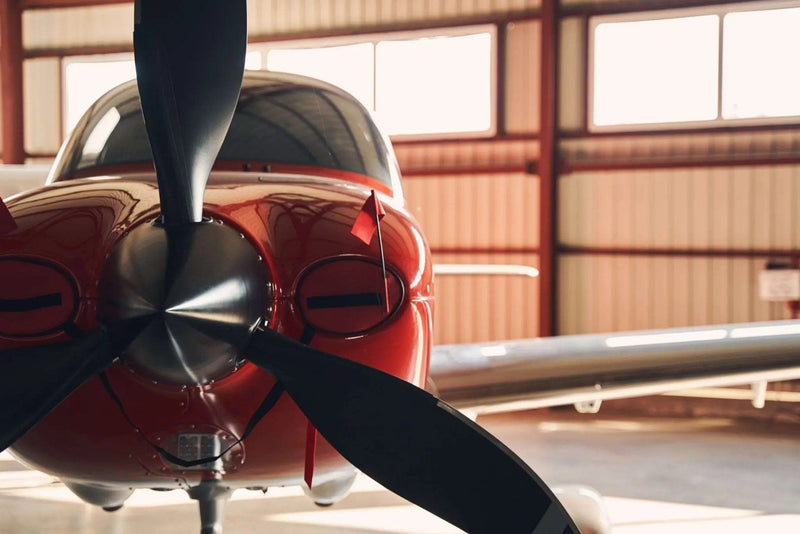
SAFETY FIRST
★★★★★
Very safety and detail oriented. Pre-flight briefing explained everything there was. To my knowledge, this flight school is exceptional in their ability.

Six classes of airspace, three ways to get into them, and one table of weather minimums that trips up more student pilots than anything else on the written. This is the complete reference, with the regulation cited beside every rule, written by instructors who fly under a Class B shelf every day.
US airspace is divided by how much air traffic control involvement a flight gets. Class A is the most controlled and Class G is the least. There is no Class F in the United States.
The letters run in order of restriction, not altitude. Class A sits on top at 18,000 feet MSL, but Class B is the one that will stop you at 3,000 feet over a major city. Class G, the least controlled, is usually the closest to the ground.
Three things change from class to class, and only three: what you need to do to get in, what equipment you must carry, and what weather you need to fly VFR. Everything else is detail. Learn those three columns and the whole system falls into place.
One more distinction worth fixing early. Class B needs an explicit clearance — the controller has to say the words “cleared into the Class Bravo” and nothing else counts. Class C and Class D need two-way radio communication established, which is a lower bar and a different legal test. Confusing those two is the single most common airspace bust, and it is entirely avoidable.
Every entry rule and every weather minimum below is drawn from 14 CFR Part 91. Where a dimension is described as typical it is a charted norm rather than a regulation — read the actual figures off the sectional or terminal area chart for the airspace you are entering.
| Class | Where it is | To enter | Equipment | VFR visibility | Cloud clearance |
|---|---|---|---|---|---|
| A | 18,000 ft MSL up to and including FL600 | IFR clearance. Instrument rating required (14 CFR 91.135) | Two-way radio, Mode C transponder, ADS-B Out | VFR is not permitted | — |
| B | Surface up to roughly 10,000 ft MSL around the busiest airports, built in shelves | An explicit ATC clearance to enter (14 CFR 91.131) | Two-way radio, Mode C transponder, ADS-B Out | 3 statute miles | Clear of clouds |
| C | Typically a 5 NM core from the surface to 4,000 ft above the airport, with a shelf out to 10 NM | Two-way radio communication established before entry (14 CFR 91.130) | Two-way radio, Mode C transponder, ADS-B Out | 3 statute miles | 500 below · 1,000 above · 2,000 horizontal |
| D | Typically a 4 NM radius from the surface to 2,500 ft above the airport | Two-way radio communication established before entry (14 CFR 91.129) | Two-way radio | 3 statute miles | 500 below · 1,000 above · 2,000 horizontal |
| E | Controlled airspace that is not A, B, C or D. Floors at the surface, 700 ft AGL, 1,200 ft AGL or 14,500 ft MSL, up to but not including 18,000 ft MSL | Nothing for VFR. IFR requires a clearance | None required by the class itself below 10,000 ft MSL | 3 SM below 10,000 ft MSL · 5 SM at or above | 500/1,000/2,000 below 10,000 ft MSL · 1,000/1,000/1 SM at or above |
| G | Uncontrolled. Everything beneath the Class E floor | Nothing. No clearance, no radio call required | None required by the class itself | 1 SM by day at or below 1,200 ft AGL · see the full table | Clear of clouds by day at or below 1,200 ft AGL |
There is no Class F airspace in the United States. It exists in ICAO's international scheme and some countries use it; the FAA does not.
Class A runs from 18,000 feet MSL up to and including flight level 600, over the 48 contiguous states, Alaska, and the airspace within 12 nautical miles of the coast. Above FL600 you are back out of it.
Everything in Class A is IFR. There is no VFR in Class A and no weather minimum to memorize, because weather does not change what you are allowed to do there. You need an instrument rating, an instrument-capable aircraft and an ATC clearance under 14 CFR 91.135.
Above 18,000 feet the altimeter goes to 29.92 and altitudes become flight levels, per 14 CFR 91.121. Oxygen requirements under 91.211 have already bitten well below that: crew oxygen after 30 minutes above 12,500 ft MSL, continuously above 14,000, and provided to every occupant above 15,000.
A training aircraft will not take you there. A normally aspirated single runs out of performance a long way below 18,000 feet. We wrote the detail on a separate page: Class A airspace.
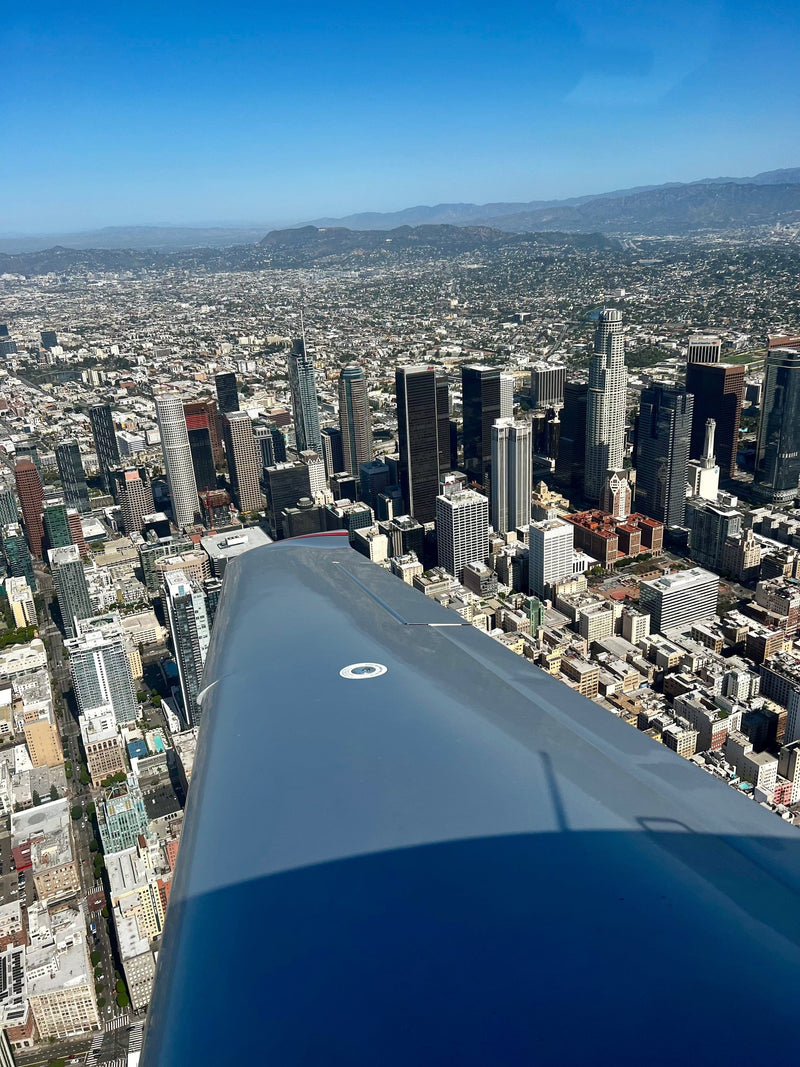
Class B surrounds the busiest airports in the country and is usually drawn as an upside-down wedding cake — a surface core with progressively wider shelves stacked above it, generally topping out around 10,000 feet MSL. Los Angeles, Atlanta, Chicago and about thirty others have one.
You may not enter Class B without an explicit clearance. 14 CFR 91.131(a)(1) requires ATC clearance to operate in it, and the controller must say so. “November One Two Three Alpha Bravo, radar contact” is not a clearance. “Squawk 4271” is not a clearance. “Cleared into the Bravo” is. If you do not hear those words, you stay outside, and if you are not certain, ask.
Equipment is a two-way radio, a Mode C transponder and ADS-B Out. The Mode C requirement extends well beyond the Class B itself: under 14 CFR 91.215(b)(2), a transponder with altitude reporting is required within 30 nautical miles of the primary Class B airport, from the surface to 10,000 feet MSL. That ring is the Mode C veil, and it covers a lot of airports that are nowhere near the Class B.
Certificate rules matter here. A student pilot needs a specific endorsement under 14 CFR 61.95 before operating in Class B airspace, and 14 CFR 91.131(b)(2) requires at least a private pilot certificate to take off or land at a short list of the busiest Class B airports. Los Angeles International is on that list.
Class B has the loosest cloud clearance of any controlled airspace: 3 statute miles visibility and clear of clouds. That looks generous until you understand why. Inside Class B, ATC is separating everybody, so the regulation does not need you to build your own buffer.
Class C surrounds airports with an operating control tower, radar approach control and enough instrument traffic to justify it. Burbank, six miles from our ramp, is one. The usual shape is a 5 nautical mile core from the surface to 4,000 feet above the airport elevation, with a shelf from 1,200 feet up to 4,000 feet extending out to 10 nautical miles.
Entry needs two-way radio communication established, not a clearance — 14 CFR 91.130. The legal test is simple and it turns on your call sign. If you call “Burbank Approach, Cessna One Two Three Alpha Bravo” and the controller replies “Cessna One Two Three Alpha Bravo, standby”, communication is established and you may enter. If the reply is “aircraft calling, standby”, it is not, and you stay out.
Equipment is a two-way radio, a Mode C transponder and ADS-B Out. Weather minimums are 3 statute miles with 500 feet below, 1,000 feet above and 2,000 feet horizontally from cloud.
Class D surrounds airports that have an operating control tower but not the radar and traffic volume of a Class C. It typically runs from the surface to 2,500 feet above the airport elevation, drawn on the chart with a dashed blue line and a ceiling in a dashed box, in hundreds of feet MSL.
Entry is the same test as Class C: two-way radio communication established under 14 CFR 91.129. No transponder is required by Class D itself, though a Mode C veil or an overlying Class B shelf may impose one anyway.
Class D is the most common airspace a student flies in and it is where most of your radio work happens. Van Nuys is a Class D field, so we wrote it out properly: Class D airspace, including what the tower actually says and what happens when it closes for the night.
Class E is every piece of controlled airspace that is not A, B, C or D. It is the most common airspace in the country and the least visible, because flying VFR through it requires no call, no clearance and no equipment.
The floor moves. Over most of the country Class E starts at 1,200 feet AGL, shown by the soft blue vignette on a sectional. Around airports with instrument approaches it drops to 700 feet AGL, shown by the magenta vignette. At a handful of fields it goes all the way to the surface, marked by a dashed magenta line. Away from all of that it starts at 14,500 feet MSL. In every case it stops just below 18,000 feet MSL, where Class A takes over.
Weather minimums step up at 10,000 feet MSL. Below that it is 3 statute miles with 500 below, 1,000 above and 2,000 horizontal. At or above 10,000 feet MSL it becomes 5 statute miles with 1,000 below, 1,000 above and 1 statute mile horizontal. The reason is speed: above 10,000 feet the 250-knot limit in 14 CFR 91.117(a) no longer applies, closure rates go up, and you need to see further.
Class G is uncontrolled airspace, and it is uncontrolled in the specific sense that ATC provides no separation service to anyone in it. It sits underneath the Class E floor, so in most of the country it is a 1,200-foot slab, and around instrument airports it is a 700-foot one.
Nothing is required to enter Class G. No radio, no transponder, no clearance, no call. What changes instead is the weather minimum, and Class G has the loosest one in the regulation: by day, at or below 1,200 feet above the surface, you need 1 statute mile of visibility and you must remain clear of clouds.
That is a rule worth arguing about. One statute mile and clear of clouds is legal and it is also, for most pilots most of the time, a bad idea. Legal minimums are the outer boundary of what the FAA will not prosecute, not a recommendation. Set your own personal minimums higher and write them down before you are sitting in the airplane wanting to go.
Night is different. Above 1,200 feet AGL at night the requirement is 3 statute miles with the standard 500/1,000/2,000 clearances. There is one narrow exception in 14 CFR 91.155(b): an airplane operating in the traffic pattern within half a mile of the runway at an airport in Class G may operate with 1 statute mile visibility and clear of clouds.
This is the table the written exam is built on and the one pilots get wrong most often. The two rows to burn in: Class B is clear of clouds, and Class G by day below 1,200 ft AGL is one mile and clear of clouds. Everything else in controlled airspace below 10,000 ft MSL is 3 statute miles with 500 below, 1,000 above and 2,000 horizontal.
| Airspace | Flight visibility | Distance from clouds |
|---|---|---|
| Class A | Not applicable | Not applicable |
| Class B | 3 statute miles | Clear of clouds |
| Class C | 3 statute miles | 500 ft below · 1,000 ft above · 2,000 ft horizontal |
| Class D | 3 statute miles | 500 ft below · 1,000 ft above · 2,000 ft horizontal |
| Class E, less than 10,000 ft MSL | 3 statute miles | 500 ft below · 1,000 ft above · 2,000 ft horizontal |
| Class E, at or above 10,000 ft MSL | 5 statute miles | 1,000 ft below · 1,000 ft above · 1 statute mile horizontal |
| Class G, 1,200 ft AGL or less — day | 1 statute mile | Clear of clouds |
| Class G, 1,200 ft AGL or less — night | 3 statute miles | 500 ft below · 1,000 ft above · 2,000 ft horizontal |
| Class G, above 1,200 ft AGL but below 10,000 ft MSL — day | 1 statute mile | 500 ft below · 1,000 ft above · 2,000 ft horizontal |
| Class G, above 1,200 ft AGL but below 10,000 ft MSL — night | 3 statute miles | 500 ft below · 1,000 ft above · 2,000 ft horizontal |
| Class G, above 1,200 ft AGL and at or above 10,000 ft MSL | 5 statute miles | 1,000 ft below · 1,000 ft above · 1 statute mile horizontal |
14 CFR 91.155(b) adds a narrow exception: an airplane in the traffic pattern within half a mile of the runway at an airport in Class G airspace may operate at night with 1 statute mile visibility and clear of clouds.
Special use airspace sits on top of the lettered classes rather than replacing them. A Military Operations Area can be inside Class E; a Restricted Area can be under a Class B shelf. You have to check for both.
Prohibited Areas — flight is not permitted, full stop. P-56 over the White House is the famous one. Restricted Areas — hazardous activity such as artillery or guided missiles; entry requires permission from the controlling agency when the area is active. Warning Areas — the same kind of activity, but over international waters beyond 3 nautical miles from the coast, where the United States cannot legally prohibit flight. Military Operations Areas — military training that is separated from IFR traffic; VFR aircraft may legally fly through an active MOA, which does not make it a good idea. Alert Areas — unusual volumes of training or aerial activity; both parties are responsible for collision avoidance. Controlled Firing Areas — activity stops when an aircraft approaches, so they are not charted. National Security Areas — flight is requested to be avoided, and can be made prohibited by regulation.
Temporary flight restrictions are a separate creature, published by NOTAM under 14 CFR 91.137 through 91.145. In Los Angeles they appear for stadium events, wildfires and visiting dignitaries, sometimes with a few hours of notice. Checking for them is not optional and it is not something a chart will do for you.
Below 10,000 feet MSL the limit is 250 knots indicated. At or below 2,500 feet above the surface and within 4 nautical miles of the primary airport of a Class C or Class D surface area, it drops to 200 knots. Beneath the lateral limits of a Class B airspace area, or in a VFR corridor through one, it is also 200 knots.
That last one catches people. You are not in the Class B — you are underneath it, deliberately staying out — and the 200-knot limit applies anyway.
A Mode C transponder is required in Class A, B and C airspace, above the ceiling of and within the lateral limits of Class B and Class C up to 10,000 feet MSL, within 30 nautical miles of a Class B primary airport from the surface to 10,000 feet MSL, and generally at and above 10,000 feet MSL over the 48 states.
ADS-B Out is required in broadly the same airspace under 14 CFR 91.225. If you learn one shape, learn the 30-nautical-mile veil, because it is the one that quietly governs a huge number of general aviation airports that are not themselves inside any Class B.
You will use four of the six classes in your first ten lessons, which is unusual and it is the reason we think this is a good place to learn.
Van Nuys is a Class D field. Every departure begins with two-way radio communication established under 14 CFR 91.129, which means you are handling the Class D entry rule before you have soloed. The LAX Class B shelf sits above, so the vertical limit is a live constraint from day one rather than a written-test question — you learn to check your altitude against a charted shelf floor because busting it is real and it is on you.
Burbank Class C is six miles away and gets used for practice transitions. Climb out of the basin toward the high desert and you are in Class E, then Class G. The whole 30 nautical mile LAX Mode C veil sits over all of it, so transponder and ADS-B rules are simply how you operate rather than something you read about.
The downside is honest: it is a harder place to start. Your first few radio calls will be clumsy on a busy frequency and it feels awful. It stops after about six lessons, and what you get in exchange is a pilot who is not frightened of a tower.

These come up in ground school every month, and every one of them is a rule people think they know.
Two-way radio communication is established when the controller uses your call sign. “Aircraft calling, standby” is not established, and entering on the strength of it is a Class C or Class D violation.
Radar contact, a squawk code and an altitude readback are not a clearance. 14 CFR 91.131 requires ATC to clear you into the Class B and the words have to be said.
Class G switches on 1,200 feet above the surface. Class E and Class G both switch again at 10,000 feet MSL. Mixing the two references is why the 91.155 table feels impossible until it suddenly does not.
All of it is ours, all of it is transponder and ADS-B equipped because we operate inside the LAX Mode C veil, and 14 CFR 91.409(b) puts every airframe on a 100-hour inspection cycle.


Radio phraseology, Class B transitions and Class C handoffs rehearse well in a full-motion simulator, and the instructor can freeze the airplane mid-call to talk about what you just said.
Redbird MCX time is built into every private pilot program — 2 hours on Standard and Premium, 5 hours on Comprehensive. A standalone session is $189.
This reference was written by the instructors who fly under the LAX Class B shelf every working day, and checked against 14 CFR Part 91 rather than against other websites.
Every instructor here holds a commercial or ATP certificate plus a CFI and a current medical, and is legally pilot in command on every training flight. If you find something on this page that is wrong, tell us and we will correct it — that offer is genuine, and we would rather be corrected than cited incorrectly.
There are eleven of them, which matters mostly for scheduling, and it means ground school questions get answered by someone who flew that airspace this week.

Over 120 reviews on Google, all of them five stars, and the same three things come up again and again.
The most repeated line in our Google reviews is about the debrief after the flight, not the airplane.
Eleven instructors and a fleet we own and maintain. A booked Saturday morning stays a booked Saturday morning.
The price you enroll at is the price you finish at. Reviewers mention this more than they mention the flying.
Nobody looking up airspace classes is trying to buy anything, and we are not going to pretend otherwise. If it turns into more than studying, these are the options and the prices.
Sit down with an instructor, bring the questions you have not been able to get answered, and leave with a plan. No pitch.
Sixty minutes in the airplane, hands on the controls, through the airspace this page describes. Loggable dual instruction.
Full-motion, FAA-approved, and never canceled for weather. Good for radio work and airspace entries.
40 logged hours. The certificate that lets you use all of this airspace as pilot in command.
60 logged hours, 10 hours of ground school. Where the national average actually lands.
The rating that turns Class A and hard IFR from theory into something you are legally allowed to do.
Sport Pilot $8,400 · Premium Private Pilot $22,500 · Multi-engine add-on $5,100 · Solo Certificate $5,500 · Teens 10–15 $4,200. Financing from $2,500 down.
The free consultation is thirty minutes with an instructor, in person at 7900 Balboa Blvd or on the phone, and it exists because most people have three or four specific questions that no website answers. If you would rather just go and fly the airspace, the $229 discovery flight is sixty minutes with your hands on the controls and it is credited in full if you enroll within 24 hours.
Every regulation and rulemaking cited on this page, at its primary source. Links open in a new tab.
United States airspace is divided into Class A, B, C, D, E and G. Class A runs from 18,000 ft MSL up to and including FL600 and is IFR only. Class B, C and D surround airports of decreasing traffic volume. Class E is all other controlled airspace, and Class G is uncontrolled. There is no Class F airspace in the United States.
Class B requires an explicit ATC clearance to enter under 14 CFR 91.131 — the controller must clear you into the Class B. Class C only requires that two-way radio communication be established under 14 CFR 91.130, which happens the moment the controller uses your call sign. Class B also has a lower VFR cloud requirement: 3 statute miles and clear of clouds, against 3 statute miles with 500 below, 1,000 above and 2,000 horizontal in Class C.
Under 14 CFR 91.155: Class B is 3 statute miles and clear of clouds. Class C, Class D and Class E below 10,000 ft MSL are 3 statute miles with 500 ft below, 1,000 ft above and 2,000 ft horizontal. Class E at or above 10,000 ft MSL is 5 statute miles with 1,000 below, 1,000 above and 1 statute mile horizontal. Class G by day at or below 1,200 ft AGL is 1 statute mile and clear of clouds. VFR is not permitted in Class A.
No. Class D requires two-way radio communication to be established before entry under 14 CFR 91.129, not a clearance. If the tower replies using your call sign, communication is established and you may enter. If the tower says “remain clear of the Class Delta”, communication is established but you must stay outside until told otherwise.
Class A extends from 18,000 ft MSL up to and including flight level 600, which is 60,000 ft. Above FL600 you are outside it. Class A is IFR only, requires an instrument rating and an ATC clearance under 14 CFR 91.135, and above 18,000 ft the altimeter is set to 29.92 under 14 CFR 91.121.
A two-way radio, a transponder with Mode C altitude reporting under 14 CFR 91.215, and ADS-B Out under 14 CFR 91.225. The Mode C requirement extends to a 30 nautical mile ring around the primary Class B airport from the surface to 10,000 ft MSL, known as the Mode C veil, which covers many airports outside the Class B itself.
No. Class F exists in the ICAO international classification and some countries use it, but the FAA does not designate any Class F airspace. US airspace uses A, B, C, D, E and G only.
200 knots indicated at or below 2,500 ft above the surface within 4 nautical miles of the primary airport of a Class C or Class D surface area, under 14 CFR 91.117(b). Below 10,000 ft MSL generally the limit is 250 knots, and beneath the lateral limits of Class B airspace or in a VFR corridor through it, the limit is again 200 knots.
Airspace with activity that constrains or prohibits flight, layered on top of the lettered classes. There are seven kinds: Prohibited Areas, Restricted Areas, Warning Areas, Military Operations Areas, Alert Areas, Controlled Firing Areas and National Security Areas. Temporary flight restrictions are separate and are published by NOTAM under 14 CFR 91.137 to 91.145.
Van Nuys is a Class D airport, which means two-way radio communication must be established with the tower before entering, under 14 CFR 91.129. It sits beneath the Los Angeles Class B shelf and inside the 30 nautical mile LAX Mode C veil, so a transponder with Mode C and ADS-B Out are required for operations there.
The three private pilot packages, what each one includes, the financing options and a realistic timeline built around how often you can actually fly. Sent to you in one email. Nobody will pressure you.
Loved On Google
Every review below is real and shown verbatim, in the reviewer’s own words — written by the people who learned to fly here, not by us.
SAFETY FIRST
Very safety and detail oriented. Pre-flight briefing explained everything there was. To my knowledge, this flight school is exceptional in their ability.
 DISCOVERY FLIGHT
I recently had the chance to take my first-ever discovery flight, and it was nothing short of amazing! From the moment I stepped into the cockpit, the...
 SUNSET CIRRUS
It was a great flight! I did a sunset flight and Alex let us fly an awesome. Website was easy to book, and the plane itself was really fun to fly...
 FLYING LESSON
We had a great flying lesson with Ralph and came away with a much better understanding of both the aircraft and the principles of flight. Ralph is a...
 KIDS LUXURY FLIGHT
I got 2 luxury discovery flights for my kids. I wanted them to have the experience of flying. Our instructor Alex was amazing he made sure they feel...
 HONEYMOON SURPRISE
Last minute booking to surprise my wife on our honeymoon. She had no experience with flying and was scared of flying, but Alex was very easygoing and knew...
 FULL-MOTION SIM
Amazing flight school in van nuys airport. I have been a student here for the past few months and i could not be happier. I started doing a lot of...
 DISCOVERY FOR TWO
I booked a Discovery Flight for Two for my girlfriend's birthday and it was the perfect gift for her. She couldn't have been more excited to get to...
 SIMULATORS
Very professional and great airplanes. I love the flight simulators. The pricing is very fair compared to any other flight school
 TEEN FIRST LESSON
We gifted our teenage son his first flying lesson. He was so excited! Alex greeted us and gave a reassuring brief that made us all feel comfortable and at...
 FIRST-TIME FLYER
Flying is my husband's hobby and I was incredibly anxious and apprehensive about the discovery flight. However, I felt completely safe and at ease once we...
SAFETY FIRST
Very safety and detail oriented. Pre-flight briefing explained everything there was. To my knowledge, this flight school is exceptional in their ability.
DISCOVERY FLIGHT
I recently had the chance to take my first-ever discovery flight, and it was nothing short of amazing! From the moment I stepped into the cockpit, the...
SUNSET CIRRUS
It was a great flight! I did a sunset flight and Alex let us fly an awesome. Website was easy to book, and the plane itself was really fun to fly...
FLYING LESSON
We had a great flying lesson with Ralph and came away with a much better understanding of both the aircraft and the principles of flight. Ralph is a...
KIDS LUXURY FLIGHT
I got 2 luxury discovery flights for my kids. I wanted them to have the experience of flying. Our instructor Alex was amazing he made sure they feel...
HONEYMOON SURPRISE
Last minute booking to surprise my wife on our honeymoon. She had no experience with flying and was scared of flying, but Alex was very easygoing and knew...
FULL-MOTION SIM
Amazing flight school in van nuys airport. I have been a student here for the past few months and i could not be happier. I started doing a lot of...
DISCOVERY FOR TWO
I booked a Discovery Flight for Two for my girlfriend's birthday and it was the perfect gift for her. She couldn't have been more excited to get to...
SIMULATORS
Very professional and great airplanes. I love the flight simulators. The pricing is very fair compared to any other flight school
TEEN FIRST LESSON
We gifted our teenage son his first flying lesson. He was so excited! Alex greeted us and gave a reassuring brief that made us all feel comfortable and at...
FIRST-TIME FLYER
Flying is my husband's hobby and I was incredibly anxious and apprehensive about the discovery flight. However, I felt completely safe and at ease once we...
Reviews shown verbatim, exactly as each reviewer published them.
Aviation News
Notes from the flight line at Van Nuys — weather, regulation changes, checkride questions and the cost of training, written up as they come.
Open 7 days · 9:00 AM – 9:00 PM
Los Angeles Flight School