SAFETY FIRST
★★★★★
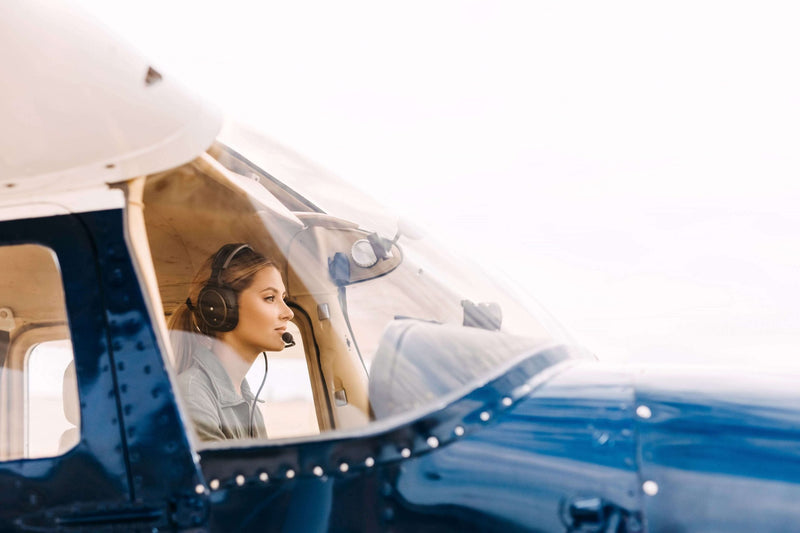
Very safety and detail oriented. Pre-flight briefing explained everything there was. To my knowledge, this flight school is exceptional in their ability.

Airmanship is the gap between a pilot who is legal and a pilot who is safe. It is not a rating, it does not appear on a certificate, and no examiner tests it directly. It is what remains when the checklist runs out and something has to be decided. This page is about what it is, where the idea came from, and how it is actually built.
Airmanship is the consistent use of good judgment and well-developed skill to operate an aircraft safely, and to keep operating it safely when the day stops matching the plan. It is knowledge, plus handling ability, plus discipline, plus an accurate sense of your own limits, and the last of those four is the one that fails first.
The reason the word survives is that no regulation can replace it. The Federal Aviation Regulations describe minimums — the visibility you may legally fly in under 14 CFR 91.155, the fuel you must carry, the currency you must hold. A regulation cannot tell you that today, in this aircraft, after four hours of sleep, with a passenger who wants to get home, three miles of visibility is a bad idea for you even though it is legal for everybody. Airmanship is the name for the pilot who works that out and does not go.
That is why instructors reach for the word so often and define it so rarely. It is a description of character applied to a technical activity. You can recognize it instantly in another pilot and you cannot examine it directly, which is a genuinely awkward property for something this important.
It is also learnable. Not as a syllabus item, but the way any craft is learned: by being taught deliberately, watched closely, and corrected consistently by somebody who already has it. That is most of what a good flight instructor is doing when they appear to be simply sitting there.

Airmanship is a direct construction on seamanship, and it arrived with almost all of its meaning already attached.
Seamanship named something sailors had understood for centuries: that the competent handling of a vessel was a body of practical wisdom, held collectively, passed down by apprenticeship, and larger than any set of written instructions. When aviation needed a word for the same thing, it took that one and changed a syllable. The borrowing carried the assumption with it — that this is a craft, that it is learned from people rather than from documents, and that it is judged by other practitioners rather than measured.
Military aviation kept the term alive through the twentieth century, largely because military flying produced constant evidence that technical skill and safe operation are not the same variable. Pilots who could fly beautifully were lost. Pilots who flew adequately and decided well came home. Anybody who has run a training organization for long enough notices this, and the noticing is what the word is for.
The most influential modern attempt to define it precisely is Tony Kern’s Redefining Airmanship, published by McGraw-Hill in 1997. Kern’s model is worth knowing because it is structural rather than inspirational: a bedrock of discipline and skill, supporting pillars of knowledge — of yourself, your aircraft, your team, your environment and the risk you are carrying — and, resting on top of all of it, situational awareness and judgment. The shape of the model makes the argument. Judgment is a capstone. It has nothing to stand on if the discipline underneath it is missing.
The FAA does not use the word much in its own regulatory text. What it does instead is teach the components under the heading of aeronautical decision-making, which appears in the Pilot’s Handbook of Aeronautical Knowledge (FAA-H-8083-25) and in the Risk Management Handbook. The vocabulary is more clinical. The subject is the same subject.
None of these is dramatic. That is rather the point: airmanship is mostly visible in what does not happen.
The pilot knows what happens next, and after that, and has already decided what to do if it does not. Behind the aircraft is the state where you are reacting to things that have already occurred, and every bad afternoon in a cockpit starts there.
14 CFR 91.103 says the pilot in command must, before beginning a flight, become familiar with all available information concerning that flight. Airmanship is what turns that from a sentence into an hour: the weather you actually read, the notices you actually checked, the runway length you actually calculated rather than assumed.
The same checklist flow, the same callouts, the same pattern altitude, on the tenth easy circuit as on the one where something goes wrong. Discipline is not something you locate under pressure. It is something you are already doing when the pressure arrives.
Not the aircraft’s limits, which are published, but yours, which are not. What you can handle at night, in wind, in unfamiliar airspace, tired, with a passenger talking. The pilots who get into trouble are rarely the ones who overestimated the airplane.
To a passenger, to a controller, to an instructor, to yourself. “I am not comfortable with this.” “Say again.” “Unable.” The word unable is the most underused word in aviation radio and it is always available to you.
A bad approach gets a go-around, immediately, before the internal argument about whether it can be salvaged has started. Pilots with good airmanship go around more often than pilots without it, and they are not embarrassed about it.
These are the tools in the aeronautical decision-making material, and every one of them exists because judgment under load is unreliable unless it has structure to fall back on.
A personal checklist run before the aircraft checklist. Illness, Medication, Stress, Alcohol, Fatigue, Emotion. Six questions about the pilot rather than the airplane, and the reason it exists is that pilots inspect aircraft thoroughly and themselves hardly at all. Alcohol has a regulation attached — 14 CFR 91.17 prohibits acting as a crewmember within 8 hours of consuming alcohol or with a blood alcohol concentration of 0.04 or greater. The other five have nothing behind them but your own honesty, which is exactly why they are on a list.
Four categories for the risk on any given flight. Pilot — experience, currency, fitness, the IMSAFE answers. Aircraft — performance, equipment, fuel, airworthiness, and what it can actually do at the density altitude you have today. V for enVironment — weather, terrain, airspace, runway, light, time of day. External pressures — the meeting, the family waiting, the money already spent, the passenger who took the day off. That last one causes more accidents than weather does, because weather is at least visible.
Perceive the hazard, Process what it means for this flight, Perform the decision — then start again, because the situation has changed since you looked at it. The value of 3P over a linear checklist is that it is explicitly circular. A decision made forty minutes ago on information that has since expired is not a decision. It is a memory.
Detect the change, Estimate what it means, Choose the objective, Identify the actions, Do them, Evaluate the effect. It is a slower, more deliberate loop for in-flight problems, and its real function is to stop a pilot skipping from detection straight to action without ever choosing an objective — which is how people end up doing something decisive and wrong.
Plan, Plane, Pilot, Passengers, Programming. Run at natural decision points: before departure, at top of climb, at the midpoint, before descent, before the approach. The fifth P is the modern addition and it is not decorative — a glass panel and an autopilot are perfectly capable of flying you competently into the wrong place.
These come from the aeronautical decision-making material, and the antidotes are meant to be said silently, in the cockpit, at the moment you catch yourself.
| Attitude | How it sounds in your own head | The antidote |
|---|---|---|
| Anti-authority | “Don’t tell me what to do.” | Follow the rules. They are usually right. |
| Impulsivity | “Do something — quickly.” | Not so fast. Think first. |
| Invulnerability | “It won’t happen to me.” | It could happen to me. |
| Macho | “I can do it.” | Taking chances is foolish. |
| Resignation | “What’s the use?” | I am not helpless. I can make a difference. |
It is easy to read that table as a poster and dismiss it. Do not. The value is not the taxonomy, it is the act of naming, because these attitudes do not arrive announcing themselves as attitudes. They arrive as reasonable-sounding thoughts. The forecast is probably pessimistic. We have come all this way. It is only twenty miles. Each of those is one of the five wearing ordinary clothes.
The one that kills most experienced pilots is invulnerability, and it is built by success. Every flight that goes well is quiet evidence that the margins are larger than they are. A pilot who has scud-run under a low ceiling four times without incident has not learned that it is survivable. They have learned that they survived, which is a different lesson and a much worse one.
Every other exercise of airmanship has a visible product. A good landing is a good landing. A tidy diversion is a story. The decision not to go produces nothing at all: no flight, no logbook entry, a wasted morning, and a passenger who now thinks you are cautious. It is the highest-value decision in aviation and it comes with no reward attached whatsoever.
Which is why it has to be made structurally rather than in the moment. Personal minimums are the mechanism, and they work because they are set at a desk on a Tuesday rather than at the aircraft on a Saturday with everybody waiting. Written down, they are numbers — the ceiling you will accept, the crosswind component you will accept, the latest hour you will depart, the minimum fuel you will land with. Unwritten, they are whatever you feel like at the time, which is the thing they exist to protect you from.
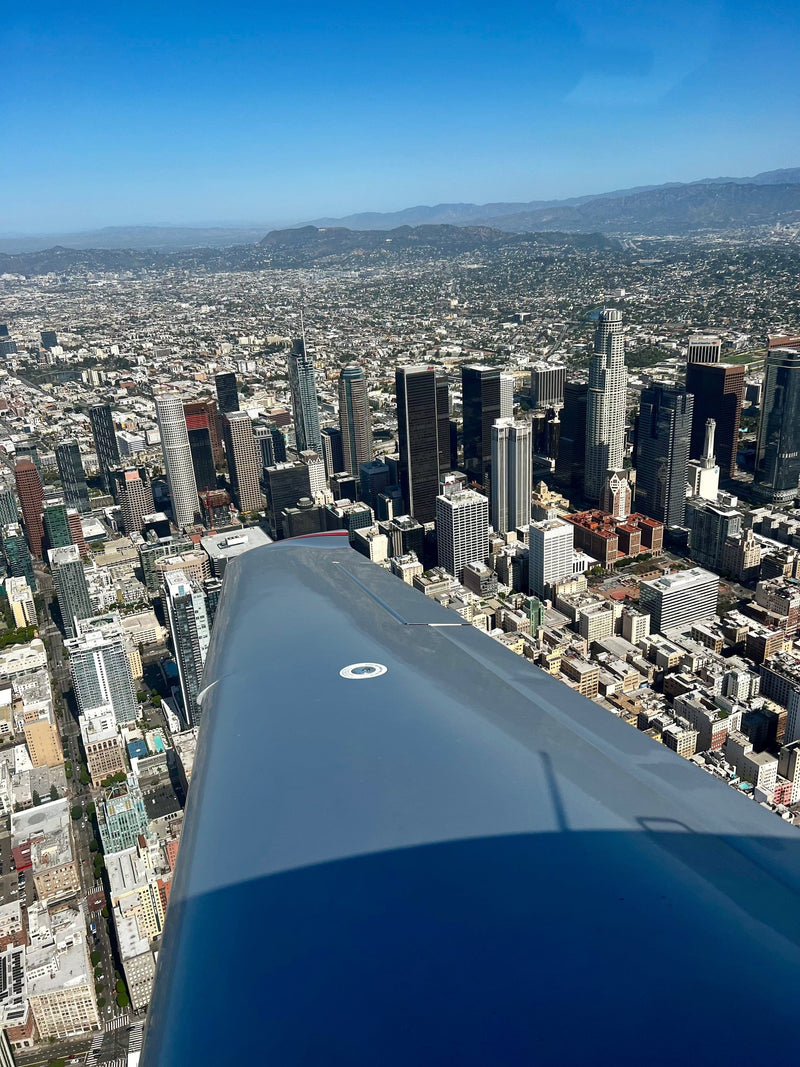
Set them tighter than the regulations. 14 CFR 91.155 will let a private pilot operate in three statute miles of visibility with specified cloud clearances in much of the airspace around Los Angeles. That is a legal minimum, not a recommendation, and a low-time pilot flying in exactly three miles of haze over unfamiliar terrain is operating legally and badly at the same time. Continued visual flight into instrument conditions remains one of the most consistently fatal sequences in general aviation, and it almost never begins with a decision to fly into cloud. It begins with a decision to continue.
The counterweight to all of this is that airmanship is not the same as timidity. A pilot who cancels everything never builds the experience that makes the judgment good, and a personal minimum that never moves is a personal minimum that is not being reviewed. The pilots who are genuinely good at this expand their limits deliberately, in small increments, usually with an instructor in the other seat, and on days chosen for the purpose rather than days they happened to need to fly.

This is the distinction the whole page rests on, and it is written into the regulations themselves.
14 CFR 91.3 makes the pilot in command directly responsible for, and the final authority as to, the operation of the aircraft. The same section allows the pilot in command to deviate from any rule in Part 91 to the extent required to meet an in-flight emergency. Read those two sentences together and you have the FAA’s position stated plainly: the rules are a framework, and the person in the seat is expected to exercise judgment, up to and including departing from the framework when the situation demands it.
14 CFR 91.13 comes at it from the other direction. No person may operate an aircraft in a careless or reckless manner so as to endanger the life or property of another. There is no numeric threshold in that sentence. It is a regulation about judgment, and it exists because a rulebook made entirely of numbers could be complied with perfectly by somebody flying badly.
14 CFR 91.103 requires the pilot in command to become familiar with all available information concerning the flight before beginning it. All available. Not the minimum sufficient, and not what was convenient at the time.
Loss of control in flight is the largest single category of fatal general aviation accidents in the United States, and it has been the FAA and the General Aviation Joint Steering Committee’s stated top priority for over a decade. Most of those aircraft were airworthy. Most of those pilots were current, certificated and legal. That gap — between legal and safe — is the entire territory the word airmanship covers.
You cannot buy this and you cannot test into it. You can be taught it, and the teaching is fairly specific.
The difference between a mediocre lesson and a good one is whether the debrief covers why the instructor made the call they made. A student who learns the maneuver has learned a skill. A student who learns the reasoning has started on the other thing.
First crosswind, first night flight, first busy Class C arrival, first time genuinely uncomfortable. Each of those expands a personal limit, and each is far cheaper to do for the first time with an instructor in the right seat than alone.
Engine failures, partial panel, a deteriorating weather picture, a mishandled approach allowed to run all the way to its conclusion. A Redbird MCX session at $189 lets a decision go wrong in full, which is a lesson an aircraft cannot safely teach.
NTSB reports are the profession’s collective memory and they are free. Read enough of them and the pattern becomes unmistakable: the same four or five sequences, repeated by competent people, almost always with an earlier point at which stopping was available.
Five minutes after shutdown. What went well, what did not, what would I do differently, what was I behind on. Pilots who do this improve for decades. Pilots who do not tend to reach a level in the first few hundred hours and stay there.
Airmanship is developed in an airplane you know well, on a field you know well, with somebody watching closely. Every aircraft on this ramp is ours and flown by our instructors every day.


Single-engine training on the Standard and Comprehensive programs is flown in the Cessna, Piper and Diamond aircraft. The Premium program is flown in the Cirrus SR22 Turbo. The Piper Seminole is the twin for the $5,100 multi-engine add-on.
FAA-approved, full-motion, fully enclosed, and it will let a scenario run all the way to the end.
This is the part of the simulator that matters for judgment rather than for procedures: a decision can be allowed to play out to its actual conclusion, which is something no responsible instructor will do in an airplane. A Redbird MCX session is $189, and simulator hours are built into every private pilot program.
This is the part of flight training that does not fit in a syllabus. Every instructor here holds a commercial or airline transport pilot certificate plus a flight instructor certificate and a current medical, and on every training flight the instructor is legally pilot in command — which means every go or no-go decision your instructor makes in front of you is a real one, with their certificate attached to it.
Watching somebody make those decisions, and hearing why, is how this gets passed on. It is also why we brief and debrief properly rather than treating the ground time as overhead. The most common compliment in our Google reviews is about the debrief, and that is not an accident of scheduling. It is the part of the lesson where the reasoning is visible.

Over 120 reviews on Google, and the subject that recurs is the explanation rather than the flying — which is the only review signal that says anything about how a school teaches judgment.
The line that comes up most in our Google reviews is not the aircraft and not the price. It is the twenty minutes at the table afterwards, where the instructor explains what just happened and what to fix.
Eleven instructors and a fleet we own means the airplane is on the ramp and somebody is there to fly it. Reviewers mention scheduling more often than they mention anything else.
You enroll at $10,900 or $15,900 and you finish at $10,900 or $15,900. Nobody writes a five-star review about a surprise invoice.
All 120+ reviews are on Google. We do not aggregate ratings from anywhere else, and we do not publish a figure we cannot point at.
Airmanship is built over years, and it starts in the first ten hours. These are the published packages and there is no hourly meter attached to any of them.
Sit down with an instructor at Van Nuys, bring the questions you think sound stupid, and book nothing. This is where the numbers get worked out against your actual schedule and your actual budget.
A real lesson. You fly the aircraft, your instructor is legally pilot in command, and the hour is logged as dual instruction. The full price is credited against any program if you enroll within 24 hours.
A full-motion, FAA-approved, fully enclosed simulator. Procedures, instrument scan, radio work and emergencies, and it is never canceled for weather.
The 40-hour package that meets the 14 CFR 61.109 minimum. The cheapest honest way to a private pilot certificate here, and the one to pick if you can fly two or three times a week.
Sixty logged hours instead of forty, because the national average sits between 60 and 75. This is the package that most often ends at the price it started at.
Forty logged hours flown in the Cirrus SR22 Turbo, glass cockpit throughout, with the CAPS whole-airframe parachute. More airplane than a first certificate needs, and some people want it anyway.
Also published: Sport Pilot $8,400 · Instrument Rating $11,700 · Multi-Engine add-on $5,100 · Solo Certificate $5,500 · Teens aged 10 to 15 $4,200 · zero-to-airline $89,000 · Redbird session $189. Financing starts at $2,500 down through Stratus Financial or our in-house plans, with terms up to 15 years. Enrolled students fly single-engine aircraft at $179 an hour wet inside their package. Aircraft are available to qualified pilots who have checked out with us — call for availability.
A discovery flight is a real lesson at $229 for 60 minutes. You fly the aircraft, your instructor is legally pilot in command, and the hour is logged as dual instruction that counts towards the 40 in 14 CFR 61.109. The full price is credited against any program if you enroll within 24 hours.
Prefer to write it down first? Use the contact form, or read what a discovery flight actually involves before you decide anything.
Airmanship is the consistent use of good judgment and well-developed skill to operate an aircraft safely, especially when conditions stop matching the plan. It combines knowledge, handling ability, discipline and an accurate sense of your own limits. It is not a rating and no examiner tests it directly, which is exactly why instructors talk about it so much.
It is built directly on seamanship, the older term for the body of practical wisdom involved in handling a vessel. The borrowing carried the meaning with it: a craft learned by apprenticeship from people who already have it, judged by other practitioners rather than measured on a test. The best-known modern treatment is Tony Kern’s Redefining Airmanship, published in 1997.
Kern’s model puts discipline and skill at the bedrock, pillars of knowledge above them — of yourself, the aircraft, your team, the environment and the risk — and situational awareness and judgment as the capstone resting on all of it. The shape is the argument: judgment has nothing to stand on without the discipline underneath.
IMSAFE is a personal fitness-to-fly checklist: Illness, Medication, Stress, Alcohol, Fatigue, Emotion. It is run before the aircraft checklist because pilots inspect aircraft thoroughly and themselves hardly at all. Only alcohol has a regulation behind it — 14 CFR 91.17 prohibits acting as a crewmember within 8 hours of consuming alcohol or with a blood alcohol concentration of 0.04 or greater.
PAVE sorts the risk on a flight into four categories: Pilot, Aircraft, enVironment and External pressures. The fourth is the one that does the most damage, because the meeting you have to reach, the money already spent and the passenger who took the day off are pressures that never appear on a weather briefing.
Anti-authority, impulsivity, invulnerability, macho and resignation, each with an antidote you say back to it: follow the rules, not so fast, it could happen to me, taking chances is foolish, and I am not helpless. They matter because they never arrive announcing themselves — they arrive as reasonable-sounding thoughts about the forecast being pessimistic.
Perceive the hazard, Process what it means for this flight, Perform the decision — then loop back and do it again, because the situation has changed since you last looked. The circularity is the point: a decision made forty minutes ago on information that has expired is not a decision, it is a memory.
No, and the regulations say so themselves. 14 CFR 91.3 makes the pilot in command the final authority and lets them deviate from any Part 91 rule in an in-flight emergency, while 14 CFR 91.13 prohibits careless or reckless operation with no numeric threshold attached. 14 CFR 91.155 permits three statute miles of visibility in much of the airspace around Los Angeles, and a low-time pilot flying in exactly that over unfamiliar terrain is legal and unwise at the same time.
By flying with an instructor who explains the decision rather than just the maneuver, expanding your personal limits deliberately in small increments, using a simulator for the scenarios an airplane cannot safely teach, reading NTSB accident reports until the patterns are obvious, and debriefing yourself alone for five minutes after every flight. The last one is free and almost nobody does it.
Personal minimums are limits you set for yourself — ceiling, visibility, crosswind component, latest departure time, minimum landing fuel — that are tighter than the legal minimums in 14 CFR 91.155. They work because they are decided at a desk rather than at the aircraft with everybody waiting, and they should be reviewed and expanded deliberately rather than left to erode on a difficult afternoon.
The three private pilot packages, what each one includes, the financing options and a realistic timeline built around how often you can actually fly. Sent to you in one email. Nobody will pressure you.
Loved On Google
Every review below is real and shown verbatim, in the reviewer’s own words — written by the people who learned to fly here, not by us.
SAFETY FIRST
Very safety and detail oriented. Pre-flight briefing explained everything there was. To my knowledge, this flight school is exceptional in their ability.
 DISCOVERY FLIGHT
I recently had the chance to take my first-ever discovery flight, and it was nothing short of amazing! From the moment I stepped into the cockpit, the...
 SUNSET CIRRUS
It was a great flight! I did a sunset flight and Alex let us fly an awesome. Website was easy to book, and the plane itself was really fun to fly...
 FLYING LESSON
We had a great flying lesson with Ralph and came away with a much better understanding of both the aircraft and the principles of flight. Ralph is a...
 KIDS LUXURY FLIGHT
I got 2 luxury discovery flights for my kids. I wanted them to have the experience of flying. Our instructor Alex was amazing he made sure they feel...
 HONEYMOON SURPRISE
Last minute booking to surprise my wife on our honeymoon. She had no experience with flying and was scared of flying, but Alex was very easygoing and knew...
 FULL-MOTION SIM
Amazing flight school in van nuys airport. I have been a student here for the past few months and i could not be happier. I started doing a lot of...
 DISCOVERY FOR TWO
I booked a Discovery Flight for Two for my girlfriend's birthday and it was the perfect gift for her. She couldn't have been more excited to get to...
 SIMULATORS
Very professional and great airplanes. I love the flight simulators. The pricing is very fair compared to any other flight school
 TEEN FIRST LESSON
We gifted our teenage son his first flying lesson. He was so excited! Alex greeted us and gave a reassuring brief that made us all feel comfortable and at...
 FIRST-TIME FLYER
Flying is my husband's hobby and I was incredibly anxious and apprehensive about the discovery flight. However, I felt completely safe and at ease once we...
SAFETY FIRST
Very safety and detail oriented. Pre-flight briefing explained everything there was. To my knowledge, this flight school is exceptional in their ability.
DISCOVERY FLIGHT
I recently had the chance to take my first-ever discovery flight, and it was nothing short of amazing! From the moment I stepped into the cockpit, the...
SUNSET CIRRUS
It was a great flight! I did a sunset flight and Alex let us fly an awesome. Website was easy to book, and the plane itself was really fun to fly...
FLYING LESSON
We had a great flying lesson with Ralph and came away with a much better understanding of both the aircraft and the principles of flight. Ralph is a...
KIDS LUXURY FLIGHT
I got 2 luxury discovery flights for my kids. I wanted them to have the experience of flying. Our instructor Alex was amazing he made sure they feel...
HONEYMOON SURPRISE
Last minute booking to surprise my wife on our honeymoon. She had no experience with flying and was scared of flying, but Alex was very easygoing and knew...
FULL-MOTION SIM
Amazing flight school in van nuys airport. I have been a student here for the past few months and i could not be happier. I started doing a lot of...
DISCOVERY FOR TWO
I booked a Discovery Flight for Two for my girlfriend's birthday and it was the perfect gift for her. She couldn't have been more excited to get to...
SIMULATORS
Very professional and great airplanes. I love the flight simulators. The pricing is very fair compared to any other flight school
TEEN FIRST LESSON
We gifted our teenage son his first flying lesson. He was so excited! Alex greeted us and gave a reassuring brief that made us all feel comfortable and at...
FIRST-TIME FLYER
Flying is my husband's hobby and I was incredibly anxious and apprehensive about the discovery flight. However, I felt completely safe and at ease once we...
Reviews shown verbatim, exactly as each reviewer published them.
Aviation News
Notes from the flight line at Van Nuys — weather, regulation changes, checkride questions and the cost of training, written up as they come.
Open 7 days · 9:00 AM – 9:00 PM
Los Angeles Flight School