SAFETY FIRST
★★★★★
Very safety and detail oriented. Pre-flight briefing explained everything there was. To my knowledge, this flight school is exceptional in their ability.

The coastline runs out, the water goes deep blue, and for about eight minutes there is nothing underneath you at all. Then Catalina comes up out of the haze — Avalon in its horseshoe bay, the isthmus at Two Harbors, and the Airport in the Sky sitting on a plateau 1,602 feet above the Pacific. You fly it. An FAA instructor sits beside you.
Courses & Pricing
Course prices are packages, not hourly rates - the aircraft, your instructor, ground school and simulator time are all in the figure. Van Nuys Airport, KVNY. Financing Available Through Stratus & In-House Plans.

Start Here
The First Hour At The Controls. Credited Toward Your Training If You Enroll Within 24 Hours Of Landing.
All Prices In USD. 7900 Balboa Blvd, Suite 108A, Van Nuys, CA 91406 · Open 9 AM–9 PM, Seven Days. Free In-Person Tour Of The School
Book It Or Gift It
Every discovery flight below can be booked for yourself in the next few minutes, or bought as a gift certificate that is emailed within minutes and never expires. Same flight, same price, either way.
 Most Given
 Two Seats
 The Nice One
 Twin Engine
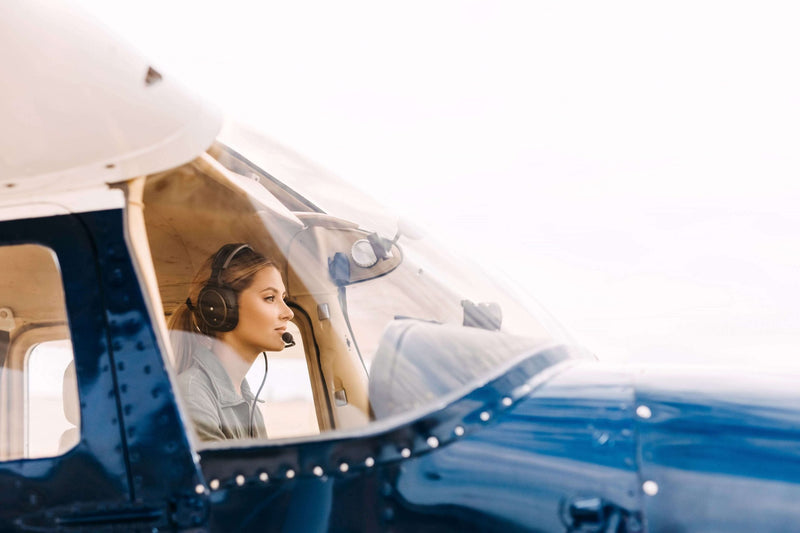
One person, one instructor, and no audience. Hands on the controls from the left seat, briefed before you go and debriefed after you land.
Hands-On Stick TimePre-Flight BriefingLoggable Flight Time
Flight Length
$229Book It Or Gift It
Same Price Either Way
The same flight with a passenger in the back seat, briefed and on the intercom. Couples book it; so do parents who would rather watch than hear about it.
One Passenger SeatPiper Warrior Or ArcherHeadsets For Both
Flight Length
$299Book It Or Gift It
Same Price Either Way
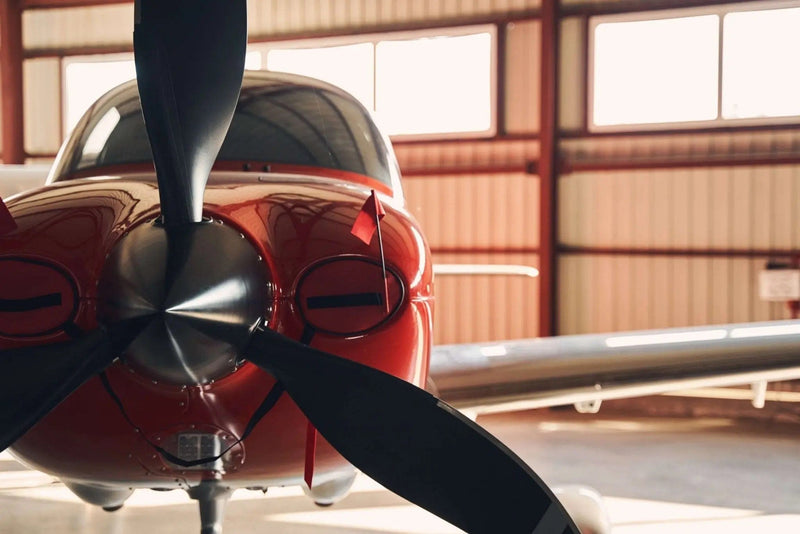
The nicest airplane we put a first-time flyer in. Glass cockpit, air conditioning, leather seats, and a parachute built into the airframe rather than strapped to the person.
Turbocharged Cirrus SR22Air ConditioningWhole-Airframe Parachute
Flight Length
$499Book It Or Gift It
Same Price Either Way
Two engines, and the airplane instrument-rated pilots move into when they start thinking about a career. Flown from the left seat with a multi-engine instructor.
Piper Seminole TwinMulti-Engine DepartureCareer-Track Instructor
Flight Length
$499Book It Or Gift It
Same Price Either Way
Gift It issues a real gift certificate, emailed within minutes, which never expires and credits in full toward training. Flights are limited to 180 lb per person, 370 lb combined. Questions: (818) 290-8249, 9 AM–9 PM, seven days.
SAFETY FIRST
Very safety and detail oriented. Pre-flight briefing explained everything there was. To my knowledge, this flight school is exceptional in their ability.
 DISCOVERY FLIGHT
I recently had the chance to take my first-ever discovery flight, and it was nothing short of amazing! From the moment I stepped into the cockpit, the...
 SUNSET CIRRUS
It was a great flight! I did a sunset flight and Alex let us fly an awesome. Website was easy to book, and the plane itself was really fun to fly...
 FLYING LESSON
We had a great flying lesson with Ralph and came away with a much better understanding of both the aircraft and the principles of flight. Ralph is a...
 KIDS LUXURY FLIGHT
I got 2 luxury discovery flights for my kids. I wanted them to have the experience of flying. Our instructor Alex was amazing he made sure they feel...
 HONEYMOON SURPRISE
Last minute booking to surprise my wife on our honeymoon. She had no experience with flying and was scared of flying, but Alex was very easygoing and knew...
 FULL-MOTION SIM
Amazing flight school in van nuys airport. I have been a student here for the past few months and i could not be happier. I started doing a lot of...
 DISCOVERY FOR TWO
I booked a Discovery Flight for Two for my girlfriend's birthday and it was the perfect gift for her. She couldn't have been more excited to get to...
 SIMULATORS
Very professional and great airplanes. I love the flight simulators. The pricing is very fair compared to any other flight school
 TEEN FIRST LESSON
We gifted our teenage son his first flying lesson. He was so excited! Alex greeted us and gave a reassuring brief that made us all feel comfortable and at...
 FIRST-TIME FLYER
Flying is my husband's hobby and I was incredibly anxious and apprehensive about the discovery flight. However, I felt completely safe and at ease once we...
SAFETY FIRST
Very safety and detail oriented. Pre-flight briefing explained everything there was. To my knowledge, this flight school is exceptional in their ability.
DISCOVERY FLIGHT
I recently had the chance to take my first-ever discovery flight, and it was nothing short of amazing! From the moment I stepped into the cockpit, the...
SUNSET CIRRUS
It was a great flight! I did a sunset flight and Alex let us fly an awesome. Website was easy to book, and the plane itself was really fun to fly...
FLYING LESSON
We had a great flying lesson with Ralph and came away with a much better understanding of both the aircraft and the principles of flight. Ralph is a...
KIDS LUXURY FLIGHT
I got 2 luxury discovery flights for my kids. I wanted them to have the experience of flying. Our instructor Alex was amazing he made sure they feel...
HONEYMOON SURPRISE
Last minute booking to surprise my wife on our honeymoon. She had no experience with flying and was scared of flying, but Alex was very easygoing and knew...
FULL-MOTION SIM
Amazing flight school in van nuys airport. I have been a student here for the past few months and i could not be happier. I started doing a lot of...
DISCOVERY FOR TWO
I booked a Discovery Flight for Two for my girlfriend's birthday and it was the perfect gift for her. She couldn't have been more excited to get to...
SIMULATORS
Very professional and great airplanes. I love the flight simulators. The pricing is very fair compared to any other flight school
TEEN FIRST LESSON
We gifted our teenage son his first flying lesson. He was so excited! Alex greeted us and gave a reassuring brief that made us all feel comfortable and at...
FIRST-TIME FLYER
Flying is my husband's hobby and I was incredibly anxious and apprehensive about the discovery flight. However, I felt completely safe and at ease once we...

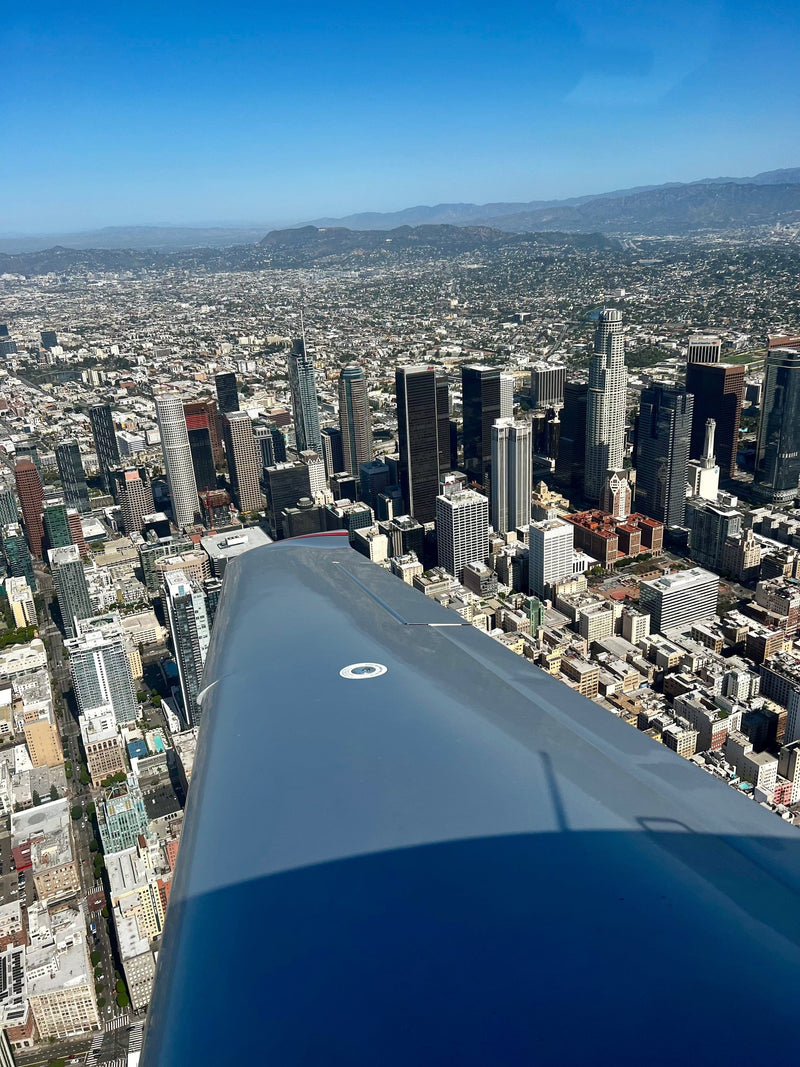
You climb out of Van Nuys, cross the Santa Monica Mountains and pick up the shoreline near Santa Monica. From there it is south along the sand — Venice, Marina del Rey, LAX with the airliners on final off your left wing, then Manhattan and Hermosa and the cliffs at Palos Verdes.
At Palos Verdes the land ends and the channel begins. Twenty-two nautical miles of open Pacific, deep blue and empty except for container ships heading into Long Beach. In a Cirrus that is about eight minutes; in a trainer, twelve. It is the part everybody remembers, because it is the first time most people have been over water with no land in sight in something small enough to feel like flying.
Your instructor will have briefed the crossing thoroughly on the ground: the altitude, the gliding-distance planning, where the flotation equipment is, and what happens in any contingency. It is a routine operation flown constantly out of Southern California, and it is planned like one.
Catalina appears as a dark ridge and then resolves into something genuinely wild — no development to speak of outside Avalon, buffalo on the interior hillsides, coves cut into the cliffs with the water going turquoise over the sand. Avalon itself is a perfect small harbour with the Casino building round and white at the end of it. Two Harbors sits at the narrow waist of the island where you can see water on both sides at once.
AVX sits on a leveled plateau in the middle of the island at 1,602 feet, with the runway ending in a drop on both ends. It is one of the most distinctive airports in the United States and landing there is a genuine achievement to have watched from the front seat. On a 120-minute booking there is time to land, get a buffalo burger at the airfield cafe, and fly home. Ask when you book — landing fees apply and we will quote them with your flight.
The ferry from Long Beach takes about an hour and ten minutes each way and puts you at sea level the whole time. A helicopter charter across the channel is quick but expensive per seat, and it does not show you the coastline on the way. An airplane gives you the entire Los Angeles shoreline, the crossing, and the island from above — and then brings you home in time for dinner.
It is also the only version of the trip where you are flying. A two-hour discovery flight to Catalina means roughly ninety minutes of you at the controls, over the most varied scenery available from any airport in Southern California: mountains, city, coast, open ocean and island, in one flight.
Because it is a longer flight, this is the booking where the aircraft choice genuinely matters. The Cirrus SR22T is fast enough to make the round trip comfortable inside two hours, air conditioned for the cabin, and carries the CAPS whole-airframe parachute — which is not nothing when you are eleven miles from either shore.

Catalina needs 120 minutes of flight time as a round trip without landing, or a longer arrangement if you want to land and eat. Priced per flight, not per person. Talk to us and we will build the right booking.
Trainer aircraft, two people, enough time for the coast and the island. The budget way to do it.
Book 120 MinutesThe right aircraft for this trip. Fast, air conditioned, glass cockpit, whole-airframe parachute. 90 min $549 if you want the coast without the crossing.
Book The CirrusTwo engines for the water crossing, three seats. The most reassuring way to cross the channel.
Book The TwinThe channel crossing is the part people ask about, and it is the part we plan hardest. Here is exactly how it is handled.
The crossing is flown high enough that a suitable landing site stays within gliding range for as much of it as the geometry allows — the standard technique for single-engine flight across the channel.
Flotation gear is aboard for the crossing and its location and use are briefed before engine start, every time.
If the water is what concerns you, book the Piper Seminole. A twin does not become a glider when an engine quits — it keeps flying on the other one.
The SR22T's rocket-deployed whole-airframe parachute is standard equipment and is specifically valued for over-water flight.
AVX sits at 1,602 feet and fogs in independently of the mainland. We check it separately, and if it is out we fly the coast instead or reschedule at no cost.
FAR 91.409(b) requires aircraft used for flight instruction for hire to be inspected every 100 flight hours, on top of the annual inspection.
From Van Nuys, roughly 40 to 50 minutes each way depending on the aircraft and the route down the coast. A 120-minute booking covers the round trip with time over the island; landing at Catalina needs a longer arrangement, which we will build with you.
Yes — the Airport in the Sky (AVX) sits at 1,602 feet in the island's interior and is open to general aviation. Landing is available by arrangement on longer bookings and carries a landing fee we quote up front. The airfield cafe is a short walk from the ramp.
It is a routine crossing flown constantly out of Southern California, and it is planned rather than improvised: altitude chosen for glide range, flotation equipment carried and briefed, weather at both ends checked independently, and a professional instructor in command. If you want additional margin, the twin-engine Piper Seminole is available for the trip.
A 120-minute round trip is $499 for two in a trainer, $949 in the luxury Cirrus SR22T, or $899 in the twin-engine Seminole. Prices are per flight, not per person. Landing at AVX adds a landing fee we will quote with your booking.
Yes. Your instructor handles the takeoff and landing at both ends; you fly the coast, the crossing and the island. That works out at roughly ninety minutes at the controls on a two-hour booking.
For an experience, comfortably. The ferry takes about 70 minutes each way at sea level. The flight takes 40 to 50, shows you the entire LA coastline on the way, gives you the island from above, and you are the one flying it. The ferry is cheaper if the point is simply to get to Avalon for the day.
Catalina takes a bit of planning. Call (818) 290-8249 and we will build the booking around whether you want to land, eat, and how long you have.
The three private pilot packages, what each one includes, the financing options and a realistic timeline built around how often you can actually fly. Sent to you in one email. Nobody will pressure you.
Loved On Google
Every review below is real and shown verbatim, in the reviewer’s own words — written by the people who learned to fly here, not by us.
SAFETY FIRST
Very safety and detail oriented. Pre-flight briefing explained everything there was. To my knowledge, this flight school is exceptional in their ability.
DISCOVERY FLIGHT
I recently had the chance to take my first-ever discovery flight, and it was nothing short of amazing! From the moment I stepped into the cockpit, the...
SUNSET CIRRUS
It was a great flight! I did a sunset flight and Alex let us fly an awesome. Website was easy to book, and the plane itself was really fun to fly...
FLYING LESSON
We had a great flying lesson with Ralph and came away with a much better understanding of both the aircraft and the principles of flight. Ralph is a...
KIDS LUXURY FLIGHT
I got 2 luxury discovery flights for my kids. I wanted them to have the experience of flying. Our instructor Alex was amazing he made sure they feel...
HONEYMOON SURPRISE
Last minute booking to surprise my wife on our honeymoon. She had no experience with flying and was scared of flying, but Alex was very easygoing and knew...
FULL-MOTION SIM
Amazing flight school in van nuys airport. I have been a student here for the past few months and i could not be happier. I started doing a lot of...
DISCOVERY FOR TWO
I booked a Discovery Flight for Two for my girlfriend's birthday and it was the perfect gift for her. She couldn't have been more excited to get to...
SIMULATORS
Very professional and great airplanes. I love the flight simulators. The pricing is very fair compared to any other flight school
TEEN FIRST LESSON
We gifted our teenage son his first flying lesson. He was so excited! Alex greeted us and gave a reassuring brief that made us all feel comfortable and at...
FIRST-TIME FLYER
Flying is my husband's hobby and I was incredibly anxious and apprehensive about the discovery flight. However, I felt completely safe and at ease once we...
SAFETY FIRST
Very safety and detail oriented. Pre-flight briefing explained everything there was. To my knowledge, this flight school is exceptional in their ability.
DISCOVERY FLIGHT
I recently had the chance to take my first-ever discovery flight, and it was nothing short of amazing! From the moment I stepped into the cockpit, the...
SUNSET CIRRUS
It was a great flight! I did a sunset flight and Alex let us fly an awesome. Website was easy to book, and the plane itself was really fun to fly...
FLYING LESSON
We had a great flying lesson with Ralph and came away with a much better understanding of both the aircraft and the principles of flight. Ralph is a...
KIDS LUXURY FLIGHT
I got 2 luxury discovery flights for my kids. I wanted them to have the experience of flying. Our instructor Alex was amazing he made sure they feel...
HONEYMOON SURPRISE
Last minute booking to surprise my wife on our honeymoon. She had no experience with flying and was scared of flying, but Alex was very easygoing and knew...
FULL-MOTION SIM
Amazing flight school in van nuys airport. I have been a student here for the past few months and i could not be happier. I started doing a lot of...
DISCOVERY FOR TWO
I booked a Discovery Flight for Two for my girlfriend's birthday and it was the perfect gift for her. She couldn't have been more excited to get to...
SIMULATORS
Very professional and great airplanes. I love the flight simulators. The pricing is very fair compared to any other flight school
TEEN FIRST LESSON
We gifted our teenage son his first flying lesson. He was so excited! Alex greeted us and gave a reassuring brief that made us all feel comfortable and at...
FIRST-TIME FLYER
Flying is my husband's hobby and I was incredibly anxious and apprehensive about the discovery flight. However, I felt completely safe and at ease once we...
Reviews shown verbatim, exactly as each reviewer published them.
Aviation News
Notes from the flight line at Van Nuys — weather, regulation changes, checkride questions and the cost of training, written up as they come.
Open 7 days · 9:00 AM – 9:00 PM
Los Angeles Flight School