

Somewhere in the second month of training, a student usually notices that their instructor has started writing paragraphs in the back of their logbook. Not the flight entries, which go in the front, but blocks of text on the endorsement pages, each one signed, dated, and stamped with a certificate number and an expiry date. Those paragraphs are the legal machinery of learning to fly. Without the right one, on the right date, a solo flight is an unlicensed flight, a checkride cannot start, and a knowledge test cannot be taken.
Here is what each of them is, when you get it, how long it lasts, and what the examiner will be looking for on the day.

Why The Endorsements Live In Your Logbook
Until 2016 a student pilot certificate was a paper form, and the instructor wrote the solo endorsements on the back of it. That ended when the FAA moved to plastic student pilot certificates issued through IACRA. The plastic card carries no endorsements at all, so everything an instructor once wrote on the certificate now goes in the logbook, and the logbook has to be with you on every solo flight. If you have not applied for the certificate yet, our student pilot certificate guide covers the application, and the IACRA guide covers the website it goes through.
The wording of each endorsement is not something instructors improvise. The FAA publishes the recommended text in Advisory Circular 61-65, and most instructors use it word for word, either from a stamp, a sticker, or a template in an electronic logbook. Examiners know the standard wording, and an endorsement that says something different gets a second look.
Before You Can Fly Alone
The first cluster comes just before your first solo, and it is the one students remember, because it is the one that turns a lesson into a licence to take the aircraft up alone.
The pre-solo knowledge test endorsement, under FAR 61.87(b), says you have taken and passed a written test your instructor wrote, covering the airspace and procedures at the airport you will solo from, the rules in Parts 61 and 91 that apply to a student, and the flight characteristics and limitations of the aircraft. Every question you got wrong has to be reviewed with the instructor before the endorsement is signed. At Van Nuys that test is heavy on the Class D procedures, the runway layout, and what to do if the radio quits under the Bravo shelf.
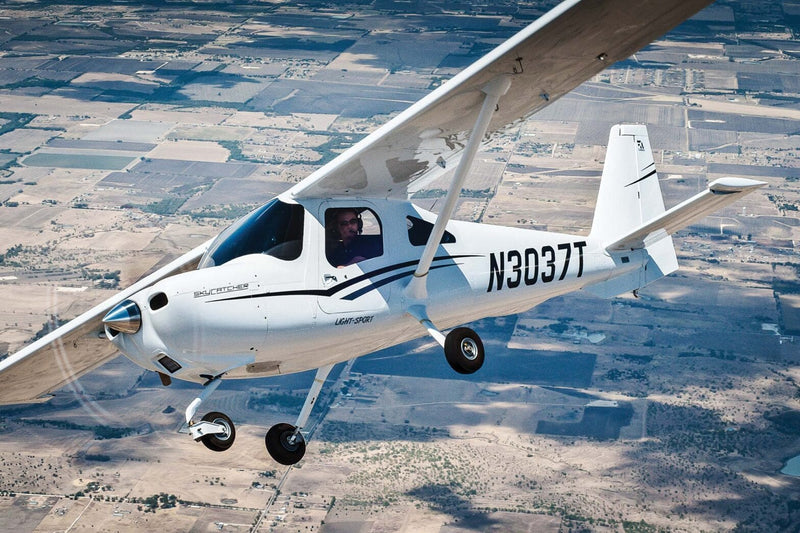
The pre-solo flight training endorsement, under 61.87(c), says you have been trained in the maneuvers on the 61.87(d) list for the make and model you will fly, and that the instructor has found you proficient and safe to solo in it. It is specific to the aircraft. A student endorsed for the Piper Warrior is not endorsed for the Skycatcher.
Then there is the one with an expiry date. The 90-day solo endorsement, under 61.87(n), is what makes each solo flight legal, and it has to have been signed within the ninety days before the flight. Every ninety days the instructor flies with you, confirms you are still up to standard, and signs a new one. If it lapses, you do not solo until it is renewed, however good your last flight was. Students who take a break over the holidays sometimes come back to find this is the first thing that needs doing.
Leaving The Airport Alone
The solo endorsement lets you fly in the local area. Going anywhere else takes more paper.
Solo flight to another airport within 25 nautical miles, under 61.93(b)(1), lets you practise landings somewhere other than home, which at Van Nuys usually means Whiteman or Burbank. The instructor has to have flown that specific route with you first, in both directions, and the endorsement names the airport.
The solo cross-country training endorsement, under 61.93(c)(1), says you have completed the cross-country training in 61.93(e) for the make and model and are proficient to make solo cross-country flights in it. This one is done once. It is separate from the next one, which is done for every single flight.
The per-flight solo cross-country endorsement, under 61.93(c)(2), is the instructor looking at your planning for that day's flight, your weather briefing, and the conditions, and signing that the flight can be made safely. It names the destination. If the weather changes and you decide to go somewhere else, the endorsement no longer covers you. This is why the morning of a solo cross-country involves a conversation before it involves an aircraft. Our post on the first cross-country from Van Nuys describes what that morning is like.
Two more come up for some students and not others. Solo flight at night, under 61.87(o), needs night training and its own endorsement; most students at Van Nuys fly their night hours with an instructor and never need it. Solo flight in Class B airspace, under 61.95, needs training in that specific Class B and an endorsement within the last ninety days. Van Nuys is Class D, sitting underneath the LAX Bravo, so a student flying the local area does not enter Class B and does not need this one, but anyone planning to fly through the Bravo alone does.
Before The Written
To take the private pilot knowledge test you need an endorsement under 61.35(a)(1) and 61.103(d) saying you have completed the required ground training, or a home-study course, and are prepared for the test. If you did the ground school on your own, the instructor has to review what you studied before signing. The test report you get afterwards is valid for 24 calendar months, and the checkride has to happen inside that window. Everything about the test itself is on our FAA written exam guide.
Before The Checkride
The last endorsements are the ones the examiner reads first. Under 61.103(f) and 61.39(a)(6), the instructor certifies that you have received and logged the training required for the certificate, that you have had flight training within the two calendar months before the practical test, that you are prepared for it, and that any subject areas you got wrong on the knowledge test have been reviewed with you and you now know them. The examiner will look at the knowledge test report, find the codes for the missed questions, and check that the endorsement covers them.
The two-calendar-month rule catches people. If your last lesson with the instructor who signs you off was on 3 July, the endorsement is valid until 30 September, not 3 September. Calendar months count to the end of the month. If a checkride gets pushed back by weather or an examiner's schedule and the window closes, you fly with your instructor again and get a new one. It happens, and it is not a problem, but it is one more reason not to book a checkride for the last day of a window.
Everything the examiner does with those endorsements, and with the rest of the paperwork, is in our FAA checkride guide, and the page on private pilot license requirements lists the hours behind each one.
How To Keep Them Straight
Three habits save trouble. Keep the endorsement pages together at the back of the logbook, in date order, rather than scattered wherever there was space. Photograph every endorsement the day it is signed, so a lost logbook does not mean lost endorsements. And before any solo, look at the date on the 90-day endorsement yourself rather than assuming your instructor has. It is your certificate on the line, and the habit of checking your own paperwork is one of the things the endorsements are quietly teaching.
If you are just starting out and none of this exists in your logbook yet, that is the normal state of affairs. The first entry is a discovery flight, and it counts.




Comments (0)
There are no comments for this article. Be the first one to leave a message!