SAFETY FIRST
★★★★★
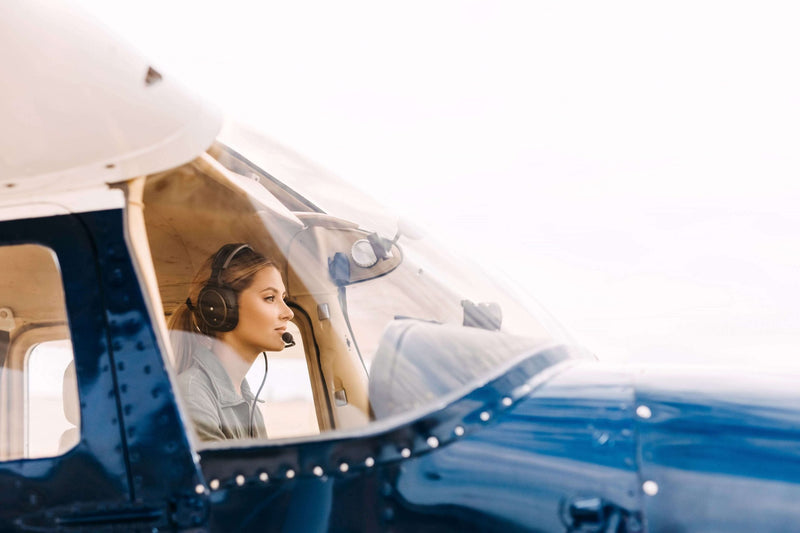
Very safety and detail oriented. Pre-flight briefing explained everything there was. To my knowledge, this flight school is exceptional in their ability.

MOSAIC is the FAA final rule published at 90 FR 35034 on 24 July 2025. Most of it took effect on 22 October 2025 and a second set of amendments on 24 July 2026. It replaced the 1,320 lb light-sport definition in 14 CFR 1.1 with a 59-knot stall-speed test in 14 CFR 61.316, and made night flying legal for sport pilots under 14 CFR 61.329.
MOSAIC stands for Modernization of Special Airworthiness Certification. It is a single FAA final rule, published in the Federal Register at 90 FR 35034 on 24 July 2025, and the part of it that governs what a sport pilot may fly took effect on 22 October 2025.
The rule did two separate jobs. It rewrote the pilot side — 14 CFR part 61 subpart J, which is the sport pilot certificate — and it rewrote the aircraft side, creating a new 14 CFR part 22 for non-type-certificated aircraft. The split in the effective dates is by amendatory instruction number rather than by subject. Most of the rule took effect on 22 October 2025; a second set of amendments — including removal of the § 1.1 light-sport aircraft definition and the new light-sport airworthiness requirements in 14 CFR part 22 — took effect on 24 July 2026.
Three changes matter to anybody deciding what to train for. The definition of “light-sport aircraft” in 14 CFR 1.1, with its 1,320 lb maximum takeoff weight, has been struck out, and 14 CFR 61.316 has decided sport pilot aircraft eligibility since 22 October 2025 in any case. A new section, 14 CFR 61.316, replaced it with performance and design criteria that contain no weight figure at all. And 14 CFR 61.329 created a route to night privileges where the previous rule had a flat prohibition.
Almost every flight school site in Los Angeles still describes the old regime. We were describing it ourselves until we went and read the rule. If a page tells you a sport pilot flies two-seat aircraft under 1,320 lb in daylight only, it was written before October 2025 and nobody has been back to it.

A sport pilot may fly any aircraft meeting 14 CFR 61.316. The single test that decides it for airplanes is VS1: the stalling speed with no flaps, at maximum certificated takeoff weight and the most critical center of gravity, must be 59 knots CAS or less.
| Criterion | Before MOSAIC | Since 22 October 2025 | Governing rule |
|---|---|---|---|
| Maximum takeoff weight | 1,320 lb (1,430 lb on floats) | No weight limit exists in the rule | 14 CFR 61.316 |
| Stall speed VS1 | 45 kt CAS | 59 kt CAS for airplanes, at max certificated takeoff weight and most critical CG. 45 kt CAS still applies to non-airplanes | 14 CFR 61.316(a)(1) |
| Seats | 2 | Up to 4 for airplanes; 2 for other categories | 14 CFR 61.316(a)(2) |
| Cabin | Unpressurised | Unpressurised, if a cabin is fitted | 14 CFR 61.316(a)(3) |
| Landing gear | Fixed | Fixed — unless you hold the endorsement in 14 CFR 61.331(a) for retractable gear | 14 CFR 61.316(a)(8) and (b) |
| Propeller | Fixed or ground-adjustable | Fixed, ground-adjustable or automated controllable-pitch. A manual controllable-pitch propeller needs 14 CFR 61.331(b) | 14 CFR 61.316(a)(9) and (b) |
| Where the definition lives | 14 CFR 1.1, tied to the light-sport airworthiness category | 14 CFR 61.316, tied to the airframe's own published numbers | 90 FR 35034 |
The aircraft must have met these criteria since its original certification — that wording is in 14 CFR 61.316(a) and it is the part people miss. Read the eligibility test in full on our MOSAIC aircraft eligibility page.
The 1,320 lb figure was never a rule about pilots. It sat inside the definition of “light-sport aircraft” in 14 CFR 1.1, and sport pilot privileges pointed at that definition. MOSAIC deleted the definition. Look up 14 CFR 1.1 today and there is no entry between “Lighter-than-air aircraft” and “Load factor”, and the number 1,320 does not appear in the section at all.
What replaced it is not another weight. It is a performance test. 14 CFR 61.316(a)(1) asks what the airplane stalls at, clean, at its heaviest legal takeoff weight and worst center of gravity. If that number is 59 knots CAS or less, the airplane is inside sport pilot privileges regardless of what it weighs. If it is 60, the airplane is outside, and no amount of paperwork changes that.
This is a better rule and it is worth saying why. Weight is a proxy for how much energy an aircraft carries into an accident. Stall speed is the thing itself. A rule written around VS1 lets manufacturers add structure, fuel and a fourth seat without gaming a number, and it lets an existing airplane that was always docile qualify on its own merits.
The 1,320 lb number survives in one honest place: as the actual maximum gross weight of specific airframes. Our Cessna 162 Skycatcher has a 1,320 lb maximum takeoff weight. That is a fact about the airplane. It is no longer a fact about the law.

There is no way to answer that from a list, because the FAA has not published one. Eligibility turns on a single published figure — VS1 at maximum certificated takeoff weight — which lives in the aircraft's FAA-approved flight manual and its type certificate data sheet.
The number that decides it is the published VS1 at maximum certificated takeoff weight and the most critical center of gravity. Some flight manuals publish VS and VS0 and make you work for VS1. The type certificate data sheet is the other primary source.
14 CFR 61.316(a)(1) says knots CAS. Flight manuals often give the stall speed in KIAS, and at low speed and high angle of attack the two can differ by several knots. An airplane that looks like it clears 59 knots on the indicated figure can fail on the calibrated one.
14 CFR 61.316(a) requires the aircraft to have met the criteria since its original certification. Fitting vortex generators, re-rigging flaps or applying for a lower gross weight does not create eligibility. This is the trap most likely to cost a buyer real money.
We are not going to publish one either, and be skeptical of any school that does. Aviation media has asserted flatly that whole classes of four-seat trainers “now qualify”. That claim is only true airframe by airframe, and it is checkable in about ten minutes if you have the right book.
14 CFR 61.315(c)(4) still limits a sport pilot to one passenger. A four-seat airplane inside 61.316 flies with two seats empty. The aircraft got bigger; the load did not.
If you own an airplane or are about to buy one, bring the flight manual and the TCDS to a free consultation and we will read the numbers with you. That is a half-hour conversation, not a sales meeting, and it is the honest way to answer this question.
Yes, since 22 October 2025, and it is the change most people have not heard about. 14 CFR 61.315(c)(5) now prohibits night flight “except as provided in § 61.329”, and 14 CFR 61.329 sets out four things you have to do — one of which stops most sport pilots cold.
14 CFR 61.329(a) requires 3 hours of night flight training from an authorized instructor, in the category and class you want the privilege in. Airplane single-engine land training does not buy you night privileges in anything else.
14 CFR 61.329(a)(1): at least one cross-country flight at night with a landing at an airport at least 25 nautical miles from the departure airport. From Van Nuys that is an easy leg — Camarillo, Santa Paula and Ontario are all comfortably outside 25 NM.
14 CFR 61.329(a)(2): 10 takeoffs and 10 landings to a full stop at night. Done at Van Nuys, under a control tower, in the middle of the LA basin's lights, which is about as demanding a night environment as general aviation offers.
14 CFR 61.329(b) requires you to either hold a medical certificate issued under part 67 or meet the conditions of 14 CFR 61.113(i), which is BasicMed. A US driver license alone is enough for day flying under 14 CFR 61.23(c)(1) and it is not enough at night. If you chose sport pilot specifically to avoid the medical, night is still closed to you.
14 CFR 61.329(c): a logbook endorsement certifying you met the training requirements and are proficient at night in that category and class. No checkride, no new certificate, no FAA paperwork — the endorsement is the privilege.
Night training is priced inside our packages when you take it as part of a course. Bought on its own after certification it is a short block of instruction — call us and we will scope it against your logbook rather than quote a number that will not fit your situation.
Most of subpart J is exactly where it was. MOSAIC widened the aircraft and opened night; it left the operating limits in 14 CFR 61.315 essentially untouched, and it left the medical basis in 14 CFR 61.23(c) and 61.303(b) alone.
| Limit | Still the rule | Citation |
|---|---|---|
| Passengers | One. Not two, not three, however many seats the airplane has. | 14 CFR 61.315(c)(4) |
| Altitude | 10,000 ft MSL, or 2,000 ft AGL, whichever is higher. | 14 CFR 61.315(c)(11) |
| Visibility | 3 statute miles flight or surface visibility, and visual reference to the surface. | 14 CFR 61.315(c)(12) and (c)(13) |
| Class A airspace | Prohibited outright. | 14 CFR 61.315(c)(6) |
| Class B, C and D, and towered airports | Prohibited without the training and endorsement in 14 CFR 61.325. That includes Class D, and therefore Van Nuys itself. | 14 CFR 61.315(c)(7) |
| Compensation or hire | No carrying passengers or property for hire, and no flying for hire. Expense sharing is limited to fuel, oil, airport expenses and rental, and you pay at least half. | 14 CFR 61.315(b) and (c)(1)–(3) |
| Medical | A valid US driver license in place of a medical certificate, subject to the four conditions in 14 CFR 61.303(b). | 14 CFR 61.23(c)(1) |
| Flight time | 20 hours total: 15 dual, 5 solo, 2 hours cross-country training, and 2 hours of test preparation in the two calendar months before the practical test. | 14 CFR 61.313 |
| Minimum age | 17 years old, or 16 for glider and balloon. | 14 CFR 61.305 |
The Class D point is worth reading twice. A sport pilot without the 14 CFR 61.325 endorsement cannot legally operate at Van Nuys. Every student who trains here gets that endorsement as a matter of course, because there is no way to do a lesson without it — see sport pilot endorsements for the full set.
MOSAIC narrowed the gap; it did not close it. The private certificate still buys three passengers, unrestricted altitude, flight in visibility a sport pilot may not use, and night flying that does not depend on holding a medical.
| Sport pilot | Private pilot | Rule | |
|---|---|---|---|
| Minimum flight time | 20 hours | 40 hours | 61.313 / 61.109 |
| Our package price | $8,400 | $10,900 standard | — |
| Medical | US driver license, subject to 61.303(b) | Third-class medical certificate, or BasicMed once you have held one | 61.23 |
| Passengers | One | Every seat in the aircraft | 61.315(c)(4) |
| Aircraft | Must meet 14 CFR 61.316 — 59 kt VS1, up to 4 seats, unpressurised | No 61.316 restriction. Complex, high-performance and pressurised aircraft need their own endorsements | 61.316 / 61.31 |
| Night | Permitted under 61.329, but only with a part 67 medical or BasicMed | Included in the certificate, with the 61.57(b) currency rules | 61.329 |
| Altitude ceiling | 10,000 ft MSL or 2,000 ft AGL, whichever is higher | None below Class A | 61.315(c)(11) |
| Minimum visibility | 3 statute miles, surface in sight | Part 91 VFR minimums for the airspace | 61.315(c)(12) |
| Towered airports | Needs the 61.325 endorsement | Included | 61.325 |
| Builds toward a career | Hours count, but the certificate does not | Yes — instrument, commercial and CFI all build on it | — |
The full side-by-side, including what each one feels like to actually use in the LA basin, is on our sport pilot vs private pilot license page.
For most people the answer did not change: if you can hold a third-class medical and you want to carry a family, train for the private certificate. MOSAIC moved the line for exactly one group — people who cannot or will not go through an FAA medical, and who now get a much larger choice of airplane.
Sport pilot, and MOSAIC made it a materially better deal. The aircraft you may fly is now decided by stall speed rather than by a weight cap that ruled out almost everything comfortable. Twenty hours, $8,400, and a driver license under 14 CFR 61.23(c)(1).
Private, unless you can get BasicMed. 14 CFR 61.329 legalised night for sport pilots but tied it to a part 67 medical or BasicMed under 61.113(i), and BasicMed under 14 CFR 61.23(c)(3) requires that you held a medical certificate at some point after 14 July 2006.
Private. 14 CFR 61.315(c)(4) survived MOSAIC completely intact. A four-seat airplane flown by a sport pilot carries one passenger and two empty seats.
Private, then instrument, then commercial. Sport pilot hours are logged time and they count toward everything later, but the certificate itself is not a step on that ladder. Our pilot career roadmap lays out the order.
Neither, yet. Fly a $229 discovery flight first. It is a real lesson, the hour is loggable dual instruction, and the full price is credited against any program if you enroll within 24 hours.
It depends entirely on that airframe's published VS1, and that is a ten-minute answer if you bring the flight manual. Do not buy training on an assumption about eligibility.
The second half of MOSAIC is about manufacturers, and it took effect on 24 July 2026. It created 14 CFR part 22, “Design, Production, and Airworthiness Requirements for Non-Type Certificated Aircraft”, added by Amendment 22-1 at 90 FR 35208.
The light-sport airworthiness category did not disappear. 14 CFR 21.190 still issues a special airworthiness certificate for a light-sport category aircraft, and it now points at part 22 for the design and production standards. What changed is that the category and the pilot privilege have been decoupled. A sport pilot's privileges are set by 14 CFR 61.316, not by whether the aircraft holds a light-sport airworthiness certificate.
That decoupling is the whole point. A standard-category airplane that meets 61.316 is available to a sport pilot. A light-sport-category airplane that does not meet 61.316 is not. Airworthiness category and pilot privilege are now two separate questions, and conflating them is the most common error we see in second-hand explanations of this rule.
For a student in 2026, the practical effect is that the pool of trainers is going to keep growing. We are not going to speculate about which models arrive or when. What we will say is that the aircraft you learn in matters less than it used to, because the certificate is no longer defined by the aircraft.

We own and maintain what you train in. Sport training here is flown in the two-seat Cessna 162, and since MOSAIC the certificate itself reaches further than that one aircraft does.


We will not tell you which of these is now sport-pilot eligible without opening the book. The Arrow's retractable gear and manual controllable-pitch propeller engage both 14 CFR 61.331 endorsements before 61.316 is even reached, and we have not verified a VS1 figure for it to publication standard. The Seminole is a twin, and 14 CFR 61.316(a)(5) requires an aircraft on which the loss of partial power would not adversely affect directional control. We do not print a stall speed for the Seminole or the SR22 Turbo, and we do not offer either as a sport pilot airplane. For anything else, ask and we will read the flight manual figure with you. Full detail on the training aircraft at Van Nuys page.
FAA-approved, fully enclosed, and it moves. When the whole certificate is 20 hours, an hour spent flying badly in the airplane is expensive. The same hour in the simulator, with the instructor able to freeze the scenario and talk, is not.
Radio phraseology, pattern work and emergency drills transfer straight to the aircraft, and a simulator session is never canceled for weather. A standalone Redbird session is $189 if you want to try one before you enroll.
Every instructor here holds a commercial or ATP certificate plus a CFI and a current medical, and the instructor is legally pilot in command on every flight you take. There are eleven of them, which is the difference between a lesson happening on Tuesday and a lesson happening whenever one person has a gap.
MOSAIC is barely a year old in practice. We briefed the whole instructor group on 14 CFR 61.316 and 61.329 rather than leaving people to pick it up from forums, because the failure mode here is an instructor endorsing a privilege the regulation does not actually grant. If you ask your instructor here why a particular airplane does or does not qualify, you will get the section number and the flight manual page, not an opinion.

Three things come up again and again in what people write about training here, and none of them is the price.
The most repeated compliment in our reviews is not the airplane and it is not the ramp. It is that somebody sat down afterwards and explained what happened.
Eleven instructors and a fleet we own and maintain ourselves. Reviewers mention scheduling more than anything else, which tells you what most schools get wrong.
What you enroll at is what you finish at. On an $8,400 package that promise is the entire point, and people write about it because it is not universal.
Every option below gives you two routes. Book it now if you are ready, or book a free consultation and talk to a human first. Financing runs from $2,500 down through Stratus Financial and our own in-house plans.
The full FAA sport pilot certificate, flown from Van Nuys. No FAA medical certificate required — a valid US driver license under 14 CFR 61.23(c)(1). Aircraft, instruction, ground school and simulator time in one package price.
Three passengers, no 14 CFR 61.316 aircraft restriction, no 10,000 ft ceiling, and the foundation every later rating is built on. Needs a third-class medical certificate before solo.
Our most chosen private pilot program. 55 hours single-engine, 5 hours in the Redbird and 10 hours of ground school, which is roughly the national average built into the price.
For people whose whole ambition is the moment the instructor climbs out. Not a certificate to carry passengers, but every hour counts toward sport or private afterwards.
A real lesson. You fly the aircraft, the time is loggable dual instruction, and the full $229 is credited against any program if you enroll within 24 hours.
An hour in the full-motion Redbird MCX with an instructor. A cheap way to find out whether you can handle radio work before you spend anything on an airplane.
Twenty minutes into a discovery flight you will know more about which certificate you want than any comparison table can tell you. If you own an airplane and want to know whether 14 CFR 61.316 covers it, the consultation is free and takes about half an hour.
Every regulation and rulemaking cited on this page, at its primary source. Links open in a new tab.
MOSAIC is the FAA's Modernization of Special Airworthiness Certification final rule, published at 90 FR 35034 on 24 July 2025. Most of the rule took effect on 22 October 2025; a second set of amendments, including removal of the § 1.1 light-sport aircraft definition and the new light-sport airworthiness requirements in 14 CFR part 22, took effect on 24 July 2026. Both are in force now.
Any aircraft meeting 14 CFR 61.316. For airplanes that means a stall speed (VS1) of no more than 59 knots CAS at maximum certificated takeoff weight and the most critical center of gravity, a maximum of four seats, an unpressurised cabin, fixed landing gear and a fixed, ground-adjustable or automated controllable-pitch propeller. There is no weight limit in the rule at all.
No. The definition of light-sport aircraft in 14 CFR 1.1, which contained the 1,320 lb maximum takeoff weight, was removed by MOSAIC on 24 July 2026, and had already stopped deciding sport pilot eligibility on 22 October 2025 when 14 CFR 61.316 took effect. The number 1,320 no longer appears in 14 CFR 1.1. It survives only as the actual maximum gross weight of particular airframes, such as the Cessna 162 Skycatcher.
Yes, under 14 CFR 61.329, after 3 hours of night flight training, one night cross-country with a landing at an airport at least 25 nautical miles away, 10 night takeoffs and 10 full-stop landings, and an instructor endorsement. 14 CFR 61.329(b) also requires either a medical certificate issued under part 67 or BasicMed under 14 CFR 61.113(i), so a driver license alone still limits you to daylight.
Read the published VS1 at maximum certificated takeoff weight in the FAA-approved flight manual or the type certificate data sheet, and check it is 59 knots CAS or less. The FAA has published no list of eligible aircraft. 14 CFR 61.316(a) also requires the aircraft to have met the criteria since its original certification, so a modification cannot bring an aircraft into compliance.
One. 14 CFR 61.315(c)(4) was not changed by MOSAIC. A sport pilot may now fly an airplane with up to four seats under 14 CFR 61.316, but two of those seats stay empty.
Yes. 14 CFR 61.315(c)(7) bars a sport pilot from Class B, C and D airspace and from any airport with an operating control tower without the endorsement in 14 CFR 61.325, which requires radio and navigation training plus three takeoffs and landings to a full stop at a towered airport. Van Nuys is Class D, so every student who trains here holds it.
Yes, for day flying. 14 CFR 61.23(c)(1) permits sport pilot privileges on a valid US driver license in an aircraft meeting 14 CFR 61.316, subject to the four conditions in 14 CFR 61.303(b): comply with every restriction and limitation on your driver license and with any judicial or administrative order about driving; have been found eligible for at least a third-class medical at your most recent application; have not had a medical certificate suspended or revoked or a Special Issuance withdrawn; and not know, or have reason to know, of any medical condition that would make you unable to operate an aircraft in a safe manner.
14 CFR part 22, Design, Production, and Airworthiness Requirements for Non-Type Certificated Aircraft, was added by Amendment 22-1 at 90 FR 35208 and took effect 24 July 2026. 14 CFR 21.190 still issues light-sport category airworthiness certificates and now points at part 22 for the standards. Sport pilot privileges are set by 14 CFR 61.316, not by the aircraft's airworthiness category.
$8,400 for the complete sport pilot package at LA Flight School, covering aircraft, instruction, ground school and simulator time. The FAA minimum is 20 hours under 14 CFR 61.313. Financing starts from $2,500 down, and a $229 discovery flight is credited in full against the program if you enroll within 24 hours.
The three private pilot packages, what each one includes, the financing options and a realistic timeline built around how often you can actually fly. Sent to you in one email. Nobody will pressure you.
Loved On Google
Every review below is real and shown verbatim, in the reviewer’s own words — written by the people who learned to fly here, not by us.
SAFETY FIRST
Very safety and detail oriented. Pre-flight briefing explained everything there was. To my knowledge, this flight school is exceptional in their ability.
 DISCOVERY FLIGHT
I recently had the chance to take my first-ever discovery flight, and it was nothing short of amazing! From the moment I stepped into the cockpit, the...
 SUNSET CIRRUS
It was a great flight! I did a sunset flight and Alex let us fly an awesome. Website was easy to book, and the plane itself was really fun to fly...
 FLYING LESSON
We had a great flying lesson with Ralph and came away with a much better understanding of both the aircraft and the principles of flight. Ralph is a...
 KIDS LUXURY FLIGHT
I got 2 luxury discovery flights for my kids. I wanted them to have the experience of flying. Our instructor Alex was amazing he made sure they feel...
 HONEYMOON SURPRISE
Last minute booking to surprise my wife on our honeymoon. She had no experience with flying and was scared of flying, but Alex was very easygoing and knew...
 FULL-MOTION SIM
Amazing flight school in van nuys airport. I have been a student here for the past few months and i could not be happier. I started doing a lot of...
 DISCOVERY FOR TWO
I booked a Discovery Flight for Two for my girlfriend's birthday and it was the perfect gift for her. She couldn't have been more excited to get to...
 SIMULATORS
Very professional and great airplanes. I love the flight simulators. The pricing is very fair compared to any other flight school
 TEEN FIRST LESSON
We gifted our teenage son his first flying lesson. He was so excited! Alex greeted us and gave a reassuring brief that made us all feel comfortable and at...
 FIRST-TIME FLYER
Flying is my husband's hobby and I was incredibly anxious and apprehensive about the discovery flight. However, I felt completely safe and at ease once we...
SAFETY FIRST
Very safety and detail oriented. Pre-flight briefing explained everything there was. To my knowledge, this flight school is exceptional in their ability.
DISCOVERY FLIGHT
I recently had the chance to take my first-ever discovery flight, and it was nothing short of amazing! From the moment I stepped into the cockpit, the...
SUNSET CIRRUS
It was a great flight! I did a sunset flight and Alex let us fly an awesome. Website was easy to book, and the plane itself was really fun to fly...
FLYING LESSON
We had a great flying lesson with Ralph and came away with a much better understanding of both the aircraft and the principles of flight. Ralph is a...
KIDS LUXURY FLIGHT
I got 2 luxury discovery flights for my kids. I wanted them to have the experience of flying. Our instructor Alex was amazing he made sure they feel...
HONEYMOON SURPRISE
Last minute booking to surprise my wife on our honeymoon. She had no experience with flying and was scared of flying, but Alex was very easygoing and knew...
FULL-MOTION SIM
Amazing flight school in van nuys airport. I have been a student here for the past few months and i could not be happier. I started doing a lot of...
DISCOVERY FOR TWO
I booked a Discovery Flight for Two for my girlfriend's birthday and it was the perfect gift for her. She couldn't have been more excited to get to...
SIMULATORS
Very professional and great airplanes. I love the flight simulators. The pricing is very fair compared to any other flight school
TEEN FIRST LESSON
We gifted our teenage son his first flying lesson. He was so excited! Alex greeted us and gave a reassuring brief that made us all feel comfortable and at...
FIRST-TIME FLYER
Flying is my husband's hobby and I was incredibly anxious and apprehensive about the discovery flight. However, I felt completely safe and at ease once we...
Reviews shown verbatim, exactly as each reviewer published them.
Aviation News
Notes from the flight line at Van Nuys — weather, regulation changes, checkride questions and the cost of training, written up as they come.
Open 7 days · 9:00 AM – 9:00 PM
Los Angeles Flight School