SAFETY FIRST
★★★★★
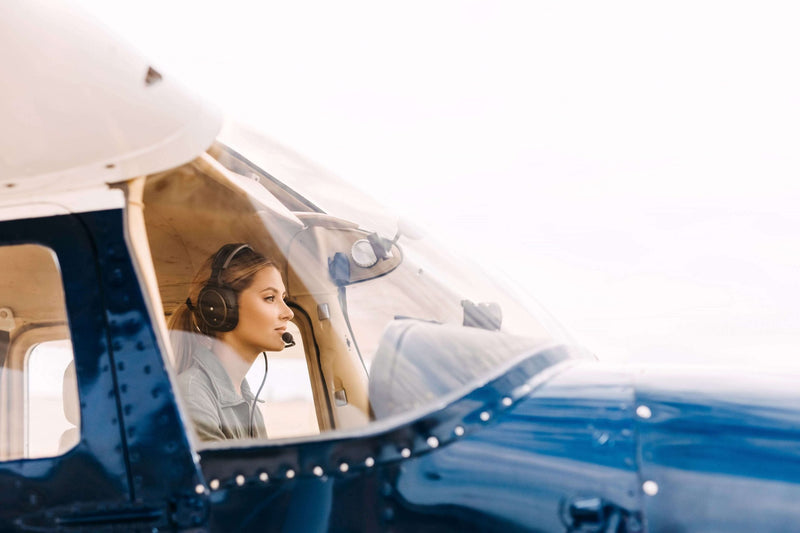
Very safety and detail oriented. Pre-flight briefing explained everything there was. To my knowledge, this flight school is exceptional in their ability.

The route from no experience to a commercial cockpit is long but entirely mapped, and this page sets out each certificate, what it costs and roughly when it happens.
Nobody walks out of a flight school and into an airline. The path is a sequence of certificates and a long accumulation of hours, and it takes most people somewhere between two and four years from their first lesson. Understanding the shape of it early is worth a great deal, because almost everyone who stalls partway through does so for a reason that was visible from the start: money that ran out, a schedule that could not hold, or a medical that should have been sorted first.
The sequence itself is fixed by regulation. A private pilot certificate comes first, then an instrument rating, then a commercial certificate. Multi-engine training sits alongside those, and a flight instructor certificate usually follows. After that comes the part nobody can shorten: the airline transport pilot certificate requires 1,500 hours of flight time in the general case, and you build those hours by flying for a living in the roles a commercial certificate opens up.
That last stage is why so many commercial pilots teach. Instructing pays you to fly while you accumulate the hours an airline will eventually want, and it is the single most reliable way to turn a fresh commercial certificate into experience. It also makes you a better pilot, because there is no faster route to understanding a maneuver than explaining it to somebody who has never seen it. Most of the instructors on this field came up exactly that way.
We are honest about what we can and cannot promise. We can give you the training, the aircraft, the simulator and instructors who have been doing this for more than fifteen years. We cannot promise anybody a job, and you should be wary of any school that does. What we can tell you is which certificates matter, in which order, what each one costs at our published prices, and what a realistic calendar looks like for someone with your schedule.

Courses & Pricing
Course prices are packages, not hourly rates - the aircraft, your instructor, ground school and simulator time are all in the figure. Van Nuys Airport, KVNY. Financing Available Through Stratus & In-House Plans.

Start Here
The First Hour At The Controls. Credited Toward Your Training If You Enroll Within 24 Hours Of Landing.
All Prices In USD. 7900 Balboa Blvd, Suite 108A, Van Nuys, CA 91406 · Open 9 AM–9 PM, Seven Days. Free In-Person Tour Of The School
Book It Or Gift It
Every discovery flight below can be booked for yourself in the next few minutes, or bought as a gift certificate that is emailed within minutes and never expires. Same flight, same price, either way.
 Most Given
 Two Seats
 The Nice One
 Twin Engine
One person, one instructor, and no audience. Hands on the controls from the left seat, briefed before you go and debriefed after you land.
Hands-On Stick TimePre-Flight BriefingLoggable Flight Time
Flight Length
$229Book It Or Gift It
Same Price Either Way
The same flight with a passenger in the back seat, briefed and on the intercom. Couples book it; so do parents who would rather watch than hear about it.
One Passenger SeatPiper Warrior Or ArcherHeadsets For Both
Flight Length
$299Book It Or Gift It
Same Price Either Way
The nicest airplane we put a first-time flyer in. Glass cockpit, air conditioning, leather seats, and a parachute built into the airframe rather than strapped to the person.
Turbocharged Cirrus SR22Air ConditioningWhole-Airframe Parachute
Flight Length
$499Book It Or Gift It
Same Price Either Way
Two engines, and the airplane instrument-rated pilots move into when they start thinking about a career. Flown from the left seat with a multi-engine instructor.
Piper Seminole TwinMulti-Engine DepartureCareer-Track Instructor
Flight Length
$499Book It Or Gift It
Same Price Either Way
Gift It issues a real gift certificate, emailed within minutes, which never expires and credits in full toward training. Flights are limited to 180 lb per person, 370 lb combined. Questions: (818) 290-8249, 9 AM–9 PM, seven days.
The first phase is the private pilot certificate, and it takes most students six to nine months at two lessons a week. Get the FAA medical done early in it. Anyone aiming at a professional career should apply for a first-class medical from the outset rather than a third-class, because the standards are higher and it is far better to discover a problem in month one than after spending tens of thousands. An aviation medical examiner can advise before you formally apply.
The second phase is the instrument rating and the commercial certificate, and it is where the flying becomes precise rather than merely competent. Instrument work is heavily simulator-supported here, which keeps the cost down, while the commercial phase is about hour-building and refining maneuvers to a tighter standard. Complex time in the Piper Arrow II and multi-engine time in the Seminole both belong to this stretch, and the pace depends almost entirely on how many days a week you can fly.
The third phase is time. Once you hold a commercial certificate you can be paid to fly, and the ATP threshold of 1,500 hours arrives through work rather than tuition. Flight instruction is the usual route, and a flight instructor certificate is the qualification for it. Others build hours towing banners, flying surveys, ferrying aircraft or in charter operations. Come and talk it through in person at Van Nuys Airport: we are at 7900 Balboa Blvd, Suite 108A. From the 405, leave at Victory Boulevard or Sherman Way and run west to Balboa Boulevard, then turn north and the airport fence is on your right. From the 101, come off at Balboa in Encino and drive four miles north. Parking is free in our own lot outside the door, with no gate and nobody to pay. Call (818) 290-8249 between 9 AM and 9 PM.

Private, instrument, multi-engine and complex time are all flown in our own fleet on the same field. You are never sent elsewhere for a stage, never re-inducted into another school's paperwork, and never waiting weeks for a twin to become available somewhere across town. Continuity across a three-year path is worth more than any single feature.
Our instructors are FAA-certified with more than fifteen years of experience, and they teach the professional syllabus regularly rather than occasionally. That shows in the small things: how checkride standards are explained, how a commercial maneuver is broken down, and how honestly the hard parts of the career are described.
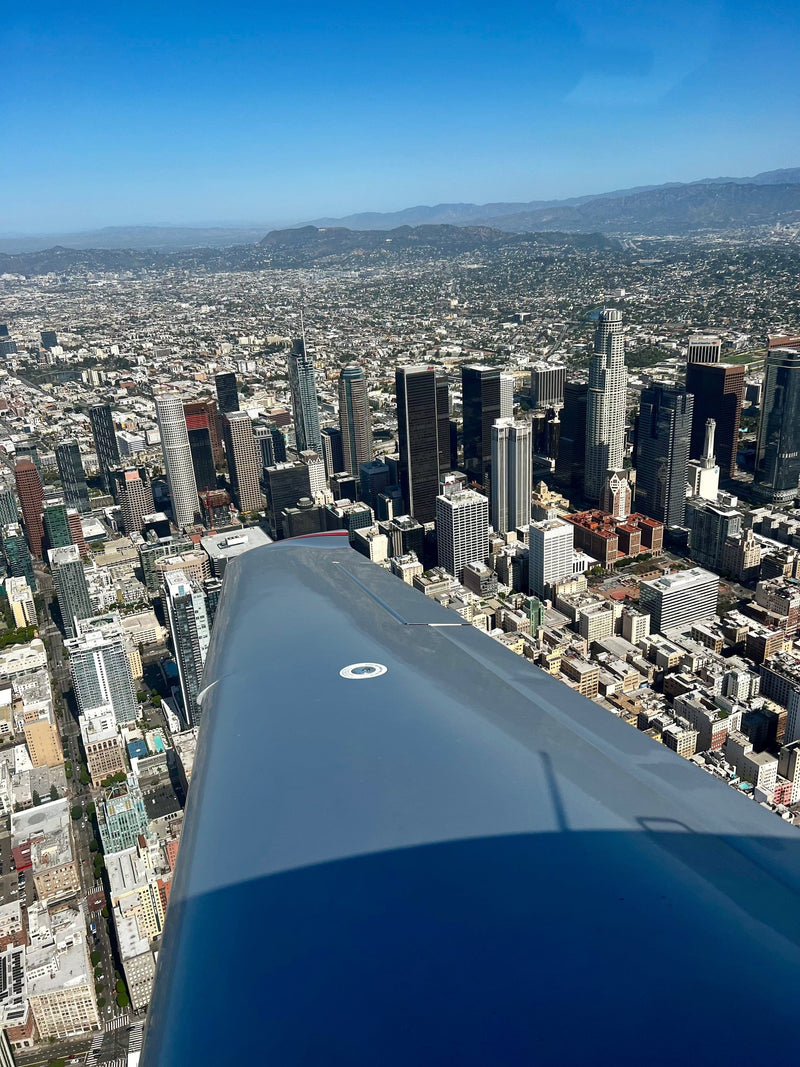
Van Nuys is one of the busiest general aviation airports in the country, sitting beneath the Los Angeles Class B shelf with Burbank a few miles east. You learn to work a busy frequency, hold a tight pattern and manage traffic conflicts as routine. Pilots who trained in quiet airspace spend their first professional year catching up on exactly this.
The Redbird MCX is a full-motion device with configurable weather and failures. For the instrument and commercial phases, that means approaches, engine failures and system malfunctions can be practiced until they are routine, at $189 for a one-hour session rather than in the aircraft. Over a professional program the saving is substantial.
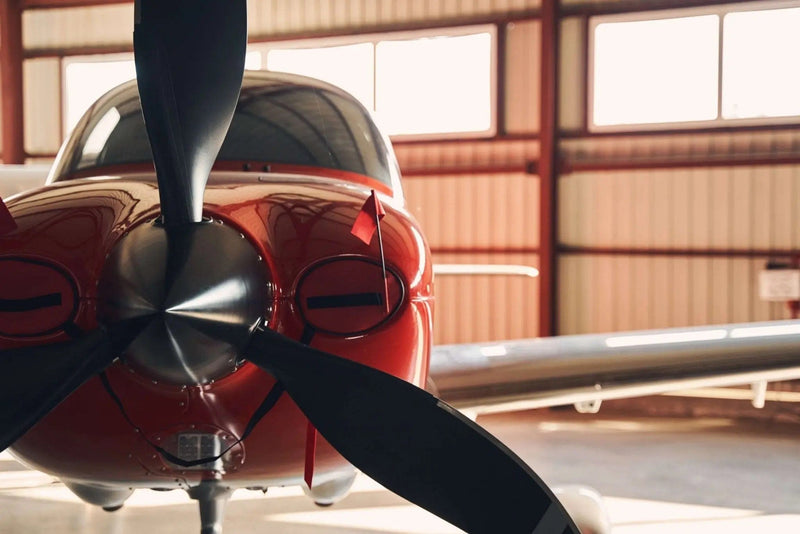
Early hours are flown in the Cessna 162 Skycatcher, the Diamond DA20 and the Piper Warrior. The Warrior in particular is the aircraft most career students settle into, because it is a low-wing four-seater with the systems and the handling that later training assumes. None of these are museum pieces kept for photographs; they fly most days, which is exactly what a student needing frequent lessons should be looking for when comparing schools.
Beyond primary training the fleet steps up in the way a professional syllabus requires. The Piper Arrow II provides retractable gear and a constant-speed propeller for complex time, the Cirrus SR22 Turbo introduces a full glass cockpit and turbocharged performance, and the twin-engine Piper Seminole carries the multi-engine rating, a $5,100 package on its own. That progression, from a fixed-gear trainer to a twin, is the physical shape of a commercial pilot's early logbook, and all of it happens on our ramp at Van Nuys Airport.

The airlines are the best-known destination, but they are not the only one and rarely the first.
The most common first professional job, and the one that builds hours fastest while teaching you the material properly. It requires a flight instructor certificate on top of your commercial, and it is how a large share of airline pilots reached 1,500 hours.
On-demand operators fly light twins and turboprops out of fields like Van Nuys constantly. Entry usually requires meaningful experience beyond a fresh commercial certificate, but it is a route that pays well and builds serious cross-country and instrument time.
Pipeline patrol, aerial photography, mapping and traffic reporting all employ commercial pilots in single-engine aircraft. The flying is repetitive by design, which is precisely why it accumulates hours quickly and teaches genuine precision.
The destination most students have in mind, reached through an airline transport pilot certificate and generally 1,500 hours of flight time. Getting there is a matter of years and experience rather than of any single course, and no school can shorten the hours requirement.
Two to four years for most people, depending almost entirely on how many days a week you can fly. The certificates themselves can be completed in twelve to eighteen months of consistent training. Accumulating the 1,500 hours that an ATP generally requires is the longer part, and it happens while you are already being paid to fly.
Our Airline Pilot Program is $89,000 and covers the route from no experience to airline-ready as one package. Taken rating by rating instead, the private certificate starts at $10,900, the instrument rating is $11,700 and the multi-engine rating is $5,100. Financing runs through Stratus Financial or our own interest-free in-house plan.
No, and we would be cautious of any school that does. What we provide is the training, the aircraft, the simulator and instructors who have been teaching professionally for over fifteen years. Hiring depends on your hours, your record, your medical and the state of the industry when you finish, none of which a flight school controls.
Because it solves the hours problem. A commercial certificate lets you be paid to fly, but most operators want experience you will not yet have, whereas instructing is available immediately after a flight instructor certificate. You are paid while building toward 1,500 hours, and teaching the fundamentals repeatedly makes you sharper than any amount of solo hour-building.
Apply for a first-class medical from the beginning if a professional career is the goal. Airline transport pilots must hold one, and the standards are stricter than for the third-class certificate a private pilot needs. Discovering a disqualifying condition at the start costs you an examination fee; discovering it three years in costs you far more.
The certificates, yes. We fly seven days a week until 9 PM, so evening and weekend training is realistic. The hour-building phase is harder to combine with another career, since flying for a living is how those hours normally accumulate. Many students plan the transition so that they change jobs once the commercial certificate is finished.
Not to hold any FAA certificate. Degrees are not a regulatory requirement for a commercial certificate or an ATP, and plenty of professional pilots do not have one. Some employers still view one favorably, and certain reduced-hour ATP pathways are tied to approved degree programs, so it is worth understanding the options before you decide.
A discovery flight, which starts at $229 for sixty minutes with you handling the controls. It is loggable time and it counts toward your first certificate, so nothing is wasted. If you enroll within 24 hours, the whole cost comes off your program. Book a free consultation at the same time and we will map the calendar with you.
Bring your schedule and your questions to a free in-person consultation at Suite 108A and we will lay the certificates, the timeline and the costs out on paper. Call (818) 290-8249 any day between 9 AM and 9 PM.
The three private pilot packages, what each one includes, the financing options and a realistic timeline built around how often you can actually fly. Sent to you in one email. Nobody will pressure you.
Loved On Google
Every review below is real and shown verbatim, in the reviewer’s own words — written by the people who learned to fly here, not by us.
SAFETY FIRST
Very safety and detail oriented. Pre-flight briefing explained everything there was. To my knowledge, this flight school is exceptional in their ability.
 DISCOVERY FLIGHT
I recently had the chance to take my first-ever discovery flight, and it was nothing short of amazing! From the moment I stepped into the cockpit, the...
 SUNSET CIRRUS
It was a great flight! I did a sunset flight and Alex let us fly an awesome. Website was easy to book, and the plane itself was really fun to fly...
 FLYING LESSON
We had a great flying lesson with Ralph and came away with a much better understanding of both the aircraft and the principles of flight. Ralph is a...
 KIDS LUXURY FLIGHT
I got 2 luxury discovery flights for my kids. I wanted them to have the experience of flying. Our instructor Alex was amazing he made sure they feel...
 HONEYMOON SURPRISE
Last minute booking to surprise my wife on our honeymoon. She had no experience with flying and was scared of flying, but Alex was very easygoing and knew...
 FULL-MOTION SIM
Amazing flight school in van nuys airport. I have been a student here for the past few months and i could not be happier. I started doing a lot of...
 DISCOVERY FOR TWO
I booked a Discovery Flight for Two for my girlfriend's birthday and it was the perfect gift for her. She couldn't have been more excited to get to...
 SIMULATORS
Very professional and great airplanes. I love the flight simulators. The pricing is very fair compared to any other flight school
 TEEN FIRST LESSON
We gifted our teenage son his first flying lesson. He was so excited! Alex greeted us and gave a reassuring brief that made us all feel comfortable and at...
 FIRST-TIME FLYER
Flying is my husband's hobby and I was incredibly anxious and apprehensive about the discovery flight. However, I felt completely safe and at ease once we...
SAFETY FIRST
Very safety and detail oriented. Pre-flight briefing explained everything there was. To my knowledge, this flight school is exceptional in their ability.
DISCOVERY FLIGHT
I recently had the chance to take my first-ever discovery flight, and it was nothing short of amazing! From the moment I stepped into the cockpit, the...
SUNSET CIRRUS
It was a great flight! I did a sunset flight and Alex let us fly an awesome. Website was easy to book, and the plane itself was really fun to fly...
FLYING LESSON
We had a great flying lesson with Ralph and came away with a much better understanding of both the aircraft and the principles of flight. Ralph is a...
KIDS LUXURY FLIGHT
I got 2 luxury discovery flights for my kids. I wanted them to have the experience of flying. Our instructor Alex was amazing he made sure they feel...
HONEYMOON SURPRISE
Last minute booking to surprise my wife on our honeymoon. She had no experience with flying and was scared of flying, but Alex was very easygoing and knew...
FULL-MOTION SIM
Amazing flight school in van nuys airport. I have been a student here for the past few months and i could not be happier. I started doing a lot of...
DISCOVERY FOR TWO
I booked a Discovery Flight for Two for my girlfriend's birthday and it was the perfect gift for her. She couldn't have been more excited to get to...
SIMULATORS
Very professional and great airplanes. I love the flight simulators. The pricing is very fair compared to any other flight school
TEEN FIRST LESSON
We gifted our teenage son his first flying lesson. He was so excited! Alex greeted us and gave a reassuring brief that made us all feel comfortable and at...
FIRST-TIME FLYER
Flying is my husband's hobby and I was incredibly anxious and apprehensive about the discovery flight. However, I felt completely safe and at ease once we...
Reviews shown verbatim, exactly as each reviewer published them.
Aviation News
Notes from the flight line at Van Nuys — weather, regulation changes, checkride questions and the cost of training, written up as they come.
Open 7 days · 9:00 AM – 9:00 PM
Los Angeles Flight School