SAFETY FIRST
★★★★★
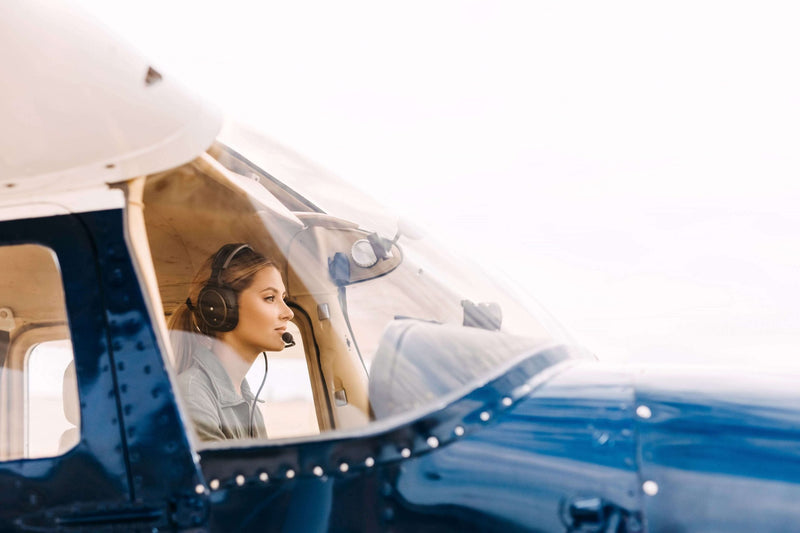
Very safety and detail oriented. Pre-flight briefing explained everything there was. To my knowledge, this flight school is exceptional in their ability.

The full FAA private pilot certificate, flown from Van Nuys twenty minutes east through the pass, at a published price with the checkride included.
The private pilot certificate has a fixed shape and it is worth knowing before you spend anything. The FAA requires forty hours minimum: twenty with an instructor, ten solo, plus cross-country legs to set distances, three hours at night including ten takeoffs and landings, instrument reference training, a written knowledge exam and a practical test flown with a designated examiner. Our standard program is $10,900 and covers the lot. It is one package rather than a meter running underneath you, and there is no separate invoice waiting at the checkride.
Simi Valley sends us a particular sort of student, and a lot of them work shifts. This city houses a great many police officers, firefighters, paramedics and hospital staff, and a four-on three-off rotation is close to ideal for flight training. Weekday mornings, when everyone else is at a desk, are the smoothest air of the day and the easiest slots to book. Somebody with two free Tuesdays a month and a Thursday will out-progress an office worker fighting for Saturday mornings every single time.
The other thing Simi people bring is a feel for the weather here. You already know the valley runs hot in summer and that the wind funnels through the passes at both ends. In an airplane those become numbers: density altitude that lengthens a takeoff roll on a hundred-degree afternoon, and mechanical turbulence downwind of a ridge. This is not advanced material at Van Nuys. It is what the second half of a normal lesson is about, and it is why pilots trained here handle heat and terrain calmly.
There is no airfield inside the city, so everyone here drives somewhere. The choice is west toward the coast or east through the pass, and the eastern option puts you at a field with two runways, a full-time tower, seven aircraft types and a full-motion simulator about twenty minutes away. Before committing, a discovery flight is $229 for one seat or $299 for two, it is a genuine logged lesson, and the cost is credited if you enroll within a day.

Whole-program pricing, published, with nothing added at the end.
The full FAA Private Pilot Certificate. Where most students start.
Learn MoreThe widest margin of hours for students who want no surprises.
Learn MoreThe rating that makes a license useful in Southern California weather.
Learn MoreYou fly the aircraft from the left seat with an instructor beside you. The time is loggable and counts toward a certificate.
The SR22 Turbo, glass cockpit. 90 min $699, 120 min $949.
Learn MoreFAA-approved full-motion MCX, on the field at Van Nuys.
Learn MoreJoin the 118 eastbound at whichever ramp is nearest, climb through the pass past Rocky Peak, and drop down into Chatsworth. The obvious exit is Balboa Boulevard, but Tampa or Reseda work just as well: come off, run south to Nordhoff or Roscoe, and take either one east to Balboa. It adds a couple of signals and skips the queue that forms at the Balboa off-ramp when the freeway is busy. Twenty to twenty-five minutes on a normal day.
The two times to avoid are the eastbound climb between about seven and half past eight in the morning, and the westbound return after five, when the pass does most of its damage. Mid-morning and early evening you are driving against everybody else. If the 118 is closed outright, Santa Susana Pass Road drops you into Chatsworth Street and you can work east and south from there without touching the freeway at all.
Because the drive is the expensive part of your day, most students from Simi book longer visits rather than short ones, and pair a flight with ground instruction or simulator time on the same trip. We are at 7900 Balboa Boulevard, Suite 108A, in a shared hangar complex, so aim for the suite number rather than a sign. Parking is free in our own lot and you can leave the car there all afternoon.

Van Nuys has parallel runways, continuous air traffic control and a traffic mix from trainers to business jets. You are talking to ground, tower and departure from your earliest lessons. That is uncomfortable for a fortnight and permanently normal afterwards, and it is the difference between a pilot who uses busy airports and one who avoids them.
The Simi Hills and the Santa Susanas sit right at the edge of the practice area. Ridge turbulence, sink on the lee side and mountain wind are taught over ground you already know from the road. Learning that here, with an instructor beside you, is far better than meeting it for the first time on your own somewhere new.
Van Nuys is inland and 800 feet up, so it clears earlier and more often than coastal fields in the marine layer season. Over a nine-month course, lessons flown rather than rescheduled is what decides both the finish date and the final cost. It is the strongest practical argument for driving east rather than west.
Instrument at $11,700, multi-engine at $5,100 in the Seminole, and the full airline program at $89,000 with financing through Stratus Financial. Nobody has to change schools, learn an unfamiliar fleet or rebuild a relationship with a new instructor halfway through. Whatever you want next is already on this ramp.
You will start in a Cessna 162 Skycatcher, a Piper Warrior or a Diamond DA20. Moving between them costs nothing, because the aircraft sits inside the program price rather than on a separate line. All three carry modern radios and GPS, so the navigation you learn is the navigation you keep. They were chosen for temperament rather than badge: honest handling, easy recovery, and a tendency to make a twenty-hour student's mistakes small and instructive. The DA20's canopy in particular gives a downward view that makes ground reference work over the hills much easier to judge.
Beyond the certificate the fleet keeps offering somewhere to go. The Piper Arrow II has retractable gear and a constant-speed propeller. The Cirrus SR22 Turbo brings a glass panel, turbocharging, air conditioning and a parachute for the whole airframe. The Piper Seminole is the twin used for every $5,100 multi-engine rating taught here. The Redbird MCX full-motion simulator is $189 for a sixty-minute session, and on a gusty Simi afternoon it turns a canceled lesson into instrument approaches and engine failures flown properly.

Four things that stand out flying west over the pass toward your own valley.
A small white concrete cross on the bare hill at the western end of town, with the trail switchbacking up to it. From two thousand feet it is the clearest single marker on that side of the valley.
Flat cut benches and pale access roads high in the Simi Hills, left from decades of rocket engine testing on that ridge. Nothing else up there looks anything like it, and it is visible long before the town is.
The straightened channel running the full length of the valley floor, dry for most of the year and lined with bike path. It is the tidiest line on the ground here and an easy feature to navigate along.
Long horizontal benches cut into the hillside on the eastern edge of town, each one a different shade of earth. Unglamorous, unmistakable, and one of the first landmarks students learn to use coming back over the pass.
Twenty to twenty-five minutes on the 118 outside peak hours. The eastbound climb over the pass slows between seven and half past eight in the morning and the westbound return does the same after five. Booking mid-morning or early evening means driving against the flow both ways, which is what most of our Simi students end up doing.
We do not fly from Camarillo. Our aircraft, our instructors and our office are at Van Nuys Airport, 7900 Balboa Blvd, Suite 108A, and Simi Valley is simply where a lot of our students drive in from. Camarillo is a fine airport, but it lies west past Moorpark and sits low and close to the coast, where the marine layer takes mornings away in late spring. Van Nuys is inland, higher, and has two parallel runways, a full-time tower, seven aircraft types and a full-motion simulator. For a full certificate the eastern drive usually works out shorter and more reliable.
The standard program is $10,900, which includes ground school, dual instruction, solo hours, the written exam and the checkride. Comprehensive is $15,900 and premium accelerated is $22,500. If you want to reach solo and stop there, that program is $5,500. Stratus Financial and in-house payment plans are both available.
Yes, and shift workers often do better than anyone else. We fly nine in the morning to nine at night, seven days a week, and lessons are booked individually rather than in fixed weekly slots. Weekday mornings on your days off are both the calmest air and the easiest availability, and there is no weekend-only queue for aircraft here.
Forty is the FAA minimum and few people finish exactly there. Fifty-five to seventy is the realistic range. Frequency is what moves that number, not talent. Two flights a week keeps skills compounding, whereas one flight a fortnight means paying to recover ground you had already covered, which is how a nine-month project turns into a two-year one.
It affects performance, which is a lesson rather than a problem. Hot air means a longer takeoff roll, a weaker climb and a real need to plan ahead. On the worst afternoons we move the slot earlier or use the Redbird MCX simulator, $189 for a sixty-minute session, instead.
Yes. There is no minimum age for lessons, first solo is legal at sixteen and the private certificate at seventeen. The teen package is $4,200 and works around a school timetable using evenings and weekend mornings. A lot of local families book a $299 discovery flight for two first so a parent can sit behind and hear the whole lesson.
Call (818) 290-8249 and book either a discovery flight or the free in-person consultation. We are at 7900 Balboa Boulevard, Suite 108A, open nine to nine every day of the week. If you have logged any hours anywhere before, bring the logbook and we will tell you exactly what remains rather than starting you again at zero.
Take the 118 east on a day off, park free outside the door, and fly back over the Simi Hills with your hands on the controls. Call (818) 290-8249 and we will find a slot that suits your rota.
The three private pilot packages, what each one includes, the financing options and a realistic timeline built around how often you can actually fly. Sent to you in one email. Nobody will pressure you.
Loved On Google
Every review below is real and shown verbatim, in the reviewer’s own words — written by the people who learned to fly here, not by us.
SAFETY FIRST
Very safety and detail oriented. Pre-flight briefing explained everything there was. To my knowledge, this flight school is exceptional in their ability.
 DISCOVERY FLIGHT
I recently had the chance to take my first-ever discovery flight, and it was nothing short of amazing! From the moment I stepped into the cockpit, the...
 SUNSET CIRRUS
It was a great flight! I did a sunset flight and Alex let us fly an awesome. Website was easy to book, and the plane itself was really fun to fly...
 FLYING LESSON
We had a great flying lesson with Ralph and came away with a much better understanding of both the aircraft and the principles of flight. Ralph is a...
 KIDS LUXURY FLIGHT
I got 2 luxury discovery flights for my kids. I wanted them to have the experience of flying. Our instructor Alex was amazing he made sure they feel...
 HONEYMOON SURPRISE
Last minute booking to surprise my wife on our honeymoon. She had no experience with flying and was scared of flying, but Alex was very easygoing and knew...
 FULL-MOTION SIM
Amazing flight school in van nuys airport. I have been a student here for the past few months and i could not be happier. I started doing a lot of...
 DISCOVERY FOR TWO
I booked a Discovery Flight for Two for my girlfriend's birthday and it was the perfect gift for her. She couldn't have been more excited to get to...
 SIMULATORS
Very professional and great airplanes. I love the flight simulators. The pricing is very fair compared to any other flight school
 TEEN FIRST LESSON
We gifted our teenage son his first flying lesson. He was so excited! Alex greeted us and gave a reassuring brief that made us all feel comfortable and at...
 FIRST-TIME FLYER
Flying is my husband's hobby and I was incredibly anxious and apprehensive about the discovery flight. However, I felt completely safe and at ease once we...
SAFETY FIRST
Very safety and detail oriented. Pre-flight briefing explained everything there was. To my knowledge, this flight school is exceptional in their ability.
DISCOVERY FLIGHT
I recently had the chance to take my first-ever discovery flight, and it was nothing short of amazing! From the moment I stepped into the cockpit, the...
SUNSET CIRRUS
It was a great flight! I did a sunset flight and Alex let us fly an awesome. Website was easy to book, and the plane itself was really fun to fly...
FLYING LESSON
We had a great flying lesson with Ralph and came away with a much better understanding of both the aircraft and the principles of flight. Ralph is a...
KIDS LUXURY FLIGHT
I got 2 luxury discovery flights for my kids. I wanted them to have the experience of flying. Our instructor Alex was amazing he made sure they feel...
HONEYMOON SURPRISE
Last minute booking to surprise my wife on our honeymoon. She had no experience with flying and was scared of flying, but Alex was very easygoing and knew...
FULL-MOTION SIM
Amazing flight school in van nuys airport. I have been a student here for the past few months and i could not be happier. I started doing a lot of...
DISCOVERY FOR TWO
I booked a Discovery Flight for Two for my girlfriend's birthday and it was the perfect gift for her. She couldn't have been more excited to get to...
SIMULATORS
Very professional and great airplanes. I love the flight simulators. The pricing is very fair compared to any other flight school
TEEN FIRST LESSON
We gifted our teenage son his first flying lesson. He was so excited! Alex greeted us and gave a reassuring brief that made us all feel comfortable and at...
FIRST-TIME FLYER
Flying is my husband's hobby and I was incredibly anxious and apprehensive about the discovery flight. However, I felt completely safe and at ease once we...
Reviews shown verbatim, exactly as each reviewer published them.
Aviation News
Notes from the flight line at Van Nuys — weather, regulation changes, checkride questions and the cost of training, written up as they come.
Open 7 days · 9:00 AM – 9:00 PM
Los Angeles Flight School