SAFETY FIRST
★★★★★
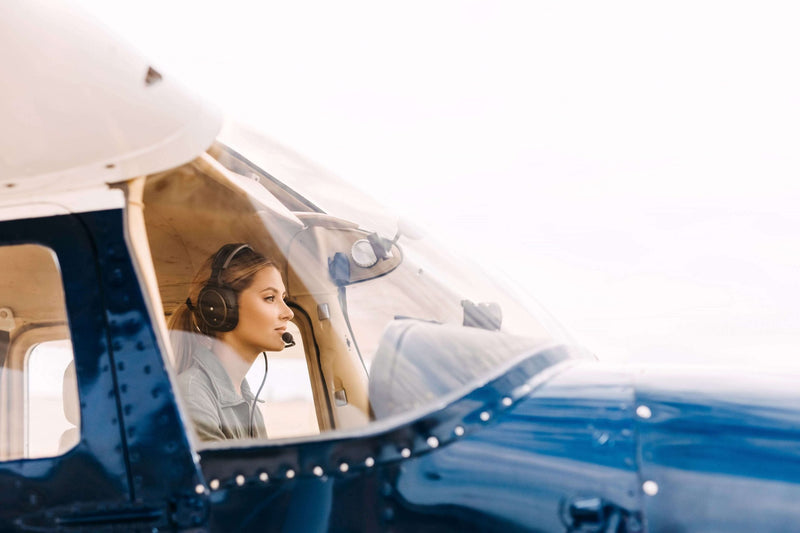
Very safety and detail oriented. Pre-flight briefing explained everything there was. To my knowledge, this flight school is exceptional in their ability.

One ridge stands between Beverly Hills and the field where most of this city learns to fly, and there are three good ways over it depending on the hour.
Beverly Hills has no airfield and never will, so every pilot who lives here trains somewhere else. The nearest serious option is over the Santa Monica Mountains at Van Nuys, twenty to twenty-five minutes by Beverly Glen or Benedict Canyon and a little longer by the 405 when the pass is busy. That ridge is the entire inconvenience. On the far side of it sits a fleet that runs from a light sport trainer to a turbocharged Cirrus and a twin, along with a control tower that never closes.
The people who start from these postcodes are usually short of time rather than short of resolve. Physicians from the medical blocks on Bedford and Roxbury, lawyers and agents out of the Century City towers, business owners whose weeks are set by other people's calendars. Most of them already fly constantly as passengers and have worked out that a Tuesday in Santa Barbara or Paso Robles costs the same day either way. The certificate is what moves them from the back of the airplane to the front of it.
It is worth knowing what the year ahead actually looks like. The first stage is handling: climbs, turns, stalls, and a great many circuits until landings stop being an event. Somewhere between fifteen and twenty-five hours your instructor gets out and you fly alone, which is the day people remember. Then navigation, night flying, and the solo cross-countries, one of which must run at least a hundred and fifty nautical miles. Then the written exam, then a checkride with an FAA examiner.
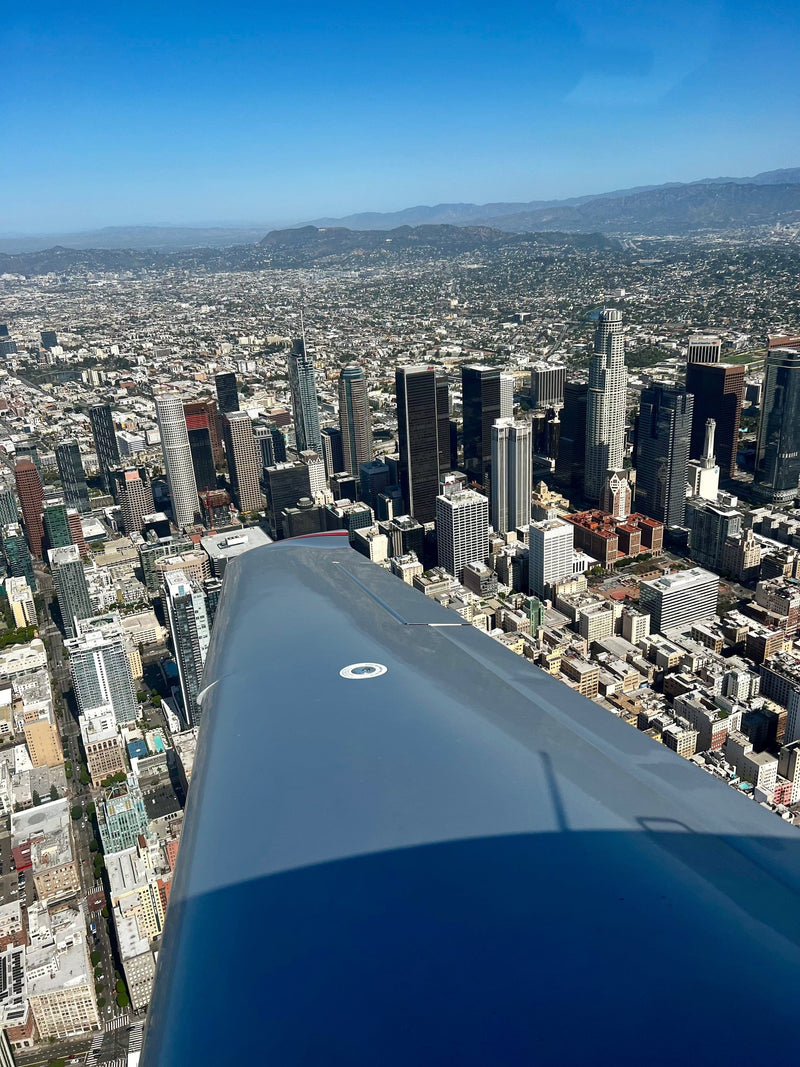
The flying itself is the part nobody from here anticipates. A night lesson departing west turns you over a basin lit from Downtown to the water, with the Beverly Hills grid standing out as the darkest, greenest block on the plain because of the trees. Daytime, you are over the Santa Monica Mountains within ten minutes and the coast a few minutes after that. Very few cities give a student pilot scenery like this on a routine Tuesday evening lesson.

Whole-course prices, quoted before you start rather than assembled afterwards.
The full FAA Private Pilot Certificate. Where most students start.
Learn MoreThe widest margin of hours for students who want no surprises.
Learn MoreThe rating that makes a license useful in Southern California weather.
Learn MoreYou fly the aircraft from the left seat with an instructor beside you. The time is loggable and counts toward a certificate.
The SR22 Turbo, glass cockpit. 90 min $699, 120 min $949.
Learn MoreFAA-approved full-motion MCX, on the field at Van Nuys.
Learn MoreThe canyon route is usually quickest. Take Beverly Glen Boulevard north from Sunset, climb to Mulholland Drive and drop down the far side into Sherman Oaks at Ventura Boulevard. From there it is the 101 west for five miles and off at Balboa Boulevard, then north across Victory to the airport. Benedict Canyon into Beverly Drive does the same job slightly further west. Twenty to twenty-five minutes outside the peaks, and it is a genuinely pleasant drive at night.
The 405 is the alternative and it is either the fastest option or the worst one. Join at Wilshire or Santa Monica Boulevard, climb the Sepulveda Pass, then leave at Victory or Roscoe and head west to Balboa. Between four and seven on a weekday afternoon this is the road to avoid. Sepulveda Boulevard runs beside it over the same hill and keeps moving when the freeway does not, which is worth knowing on a Friday.
Once you are here, parking is free in our own open lot outside Suite 108A. No gate arm, no ticket, no valet, and about fifteen paces from the car to the briefing table. Our last lessons start at nine in the evening, seven days a week, which is why so many people from this side of the hill fly after dinner and drive both ways in twenty minutes. Call (818) 290-8249 on your first visit and we will meet you outside.

The written exam is knowledge, not flying, and none of it requires you to be at the airport. Regulations, weather, navigation and aircraft systems can be studied at home or between meetings with your instructor checking progress and signing you off for the test. That keeps your time on the field for the part that actually needs an aircraft.
Night hours are a syllabus requirement rather than an extra, so the evening slots that fit a working day are also productive training. Departures after dark from Van Nuys give you the whole basin lit up, plus landings in conditions many pilots avoid for years. Our last lesson of the day starts at nine.
Your instructor puts you forward for the checkride when your flying meets the standard, which for most people lands somewhere past the legal minimum of forty hours. We would rather tell you that plainly at the start than let a package run out and produce an awkward conversation two weeks before the test.
A certificate is only worth what you do with it, so what happens after the checkride matters as much as the course itself. The same Warriors, Cessna 162s, Arrow and Cirrus stay open to you once you qualify, after a checkout flown with one of our own instructors. No membership, no monthly minimum, and the airplanes are the ones you already learned in.
Training starts in the Cessna 162 Skycatcher, the Piper Warrior or the Diamond DA20. These are deliberately unexciting aircraft, which is the point: they are stable, forgiving, and because a package covers the aircraft and the instructor together, you can repeat a lesson that did not go well without watching an invoice. The DA20 has a bubble canopy and the visibility that comes with it, the Warrior a low wing and honest manners, the 162 a high wing that keeps the ground in sight for navigation exercises over the mountains.
The step up is there whenever you want it. The Piper Arrow II brings retractable gear and a constant-speed propeller. The Cirrus SR22 Turbo has a glass panel, turbocharging and a parachute built into the airframe, and it is the aircraft most people from this part of town picture when they imagine owning one. The twin-engine Piper Seminole is where the $5,100 multi-engine rating is flown. The Redbird MCX full-motion simulator, $189 for a sixty-minute session, is where instrument procedures get learned without burning fuel.

Four things that make the city obvious from the air.
A tight cluster of high-rise standing alone on an otherwise low plain, marking the western edge of the city. At night it is the brightest thing between Downtown and the ocean and makes an excellent visual reference point.
The decorated tower beside the school running track is unmistakable once somebody has pointed it out, because nothing else that shape stands in the middle of a campus. It sits right on the line between the flats and Century City.
Wide flat building pads cut in steps into the hillside above Sunset, each with a pool catching the light. From above the geometry of the grading is far more obvious than it is from the street.
The Beverly Hills Hotel sits in dense palms where Sunset Boulevard bends, and the roof color gives it away instantly in daylight. Students use it to line up the transition from the flats to the canyons behind.
Twenty to twenty-five minutes over Beverly Glen or Benedict Canyon outside the peaks. The 405 through the Sepulveda Pass is faster mid-morning and considerably slower between four and seven. Evening lessons avoid the problem in both directions, and our last slot of the day begins at nine at night.
Santa Monica is closer on paper and is scheduled to close at the end of 2028, which is a poor foundation for a course that runs a year and a rating that runs longer. Hawthorne is mostly business aviation. Van Nuys is the nearest field with a full training fleet, a twin, a simulator and a tower staffed around the clock, and it is where we are based, in Suite 108A at 7900 Balboa Boulevard.
The standard private pilot course is $10,900 and the comprehensive version is $15,900, which builds in more hours for an unpredictable schedule. The solo certificate is $5,500 if you want a smaller first target. An instrument rating afterwards is $11,700. Financing is available through Stratus Financial or through in-house payment plans.
The FAA requires forty. Most people flying around a demanding job need sixty to seventy-five, and the biggest factor is how many days pass between lessons. Two flights a week keeps you near the lower end; a flight every three weeks pushes you past the upper one and costs accordingly.
Yes, and most of our students from this area are doing exactly that. We instruct seven days a week from nine in the morning to nine at night, and you can block-book slots months ahead. If you are away for a fortnight we plan a review flight for your return rather than pretend the gap did not happen.
A third-class medical from an FAA-designated examiner, which you need before your first solo rather than before your first lesson. Get it early anyway, because it is the one item that can stop a plan outright. Most applicants clear it without difficulty, and there are examiners close by on the Westside.
Regularly. Departures to the west take you across the Santa Monica Mountains, and the coastal routes bring you back with the whole basin on one side. You will also learn to work under the shelves of Los Angeles Class B airspace, which is the skill that separates pilots trained here from pilots who trained somewhere quiet.
A discovery flight from $229. You fly the aircraft yourself for a full sixty minutes with an instructor beside you, the time is logged in your name and counts toward the certificate, and if you enroll within twenty-four hours the cost is credited against your course. If you would rather talk first, the consultation is free.
Come over Beverly Glen one evening, look at the aircraft and get honest numbers against your own diary before deciding anything. Call (818) 290-8249 for a free consultation, or book a $229 discovery flight and fly the basin at dusk yourself.
The three private pilot packages, what each one includes, the financing options and a realistic timeline built around how often you can actually fly. Sent to you in one email. Nobody will pressure you.
Loved On Google
Every review below is real and shown verbatim, in the reviewer’s own words — written by the people who learned to fly here, not by us.
SAFETY FIRST
Very safety and detail oriented. Pre-flight briefing explained everything there was. To my knowledge, this flight school is exceptional in their ability.
 DISCOVERY FLIGHT
I recently had the chance to take my first-ever discovery flight, and it was nothing short of amazing! From the moment I stepped into the cockpit, the...
 SUNSET CIRRUS
It was a great flight! I did a sunset flight and Alex let us fly an awesome. Website was easy to book, and the plane itself was really fun to fly...
 FLYING LESSON
We had a great flying lesson with Ralph and came away with a much better understanding of both the aircraft and the principles of flight. Ralph is a...
 KIDS LUXURY FLIGHT
I got 2 luxury discovery flights for my kids. I wanted them to have the experience of flying. Our instructor Alex was amazing he made sure they feel...
 HONEYMOON SURPRISE
Last minute booking to surprise my wife on our honeymoon. She had no experience with flying and was scared of flying, but Alex was very easygoing and knew...
 FULL-MOTION SIM
Amazing flight school in van nuys airport. I have been a student here for the past few months and i could not be happier. I started doing a lot of...
 DISCOVERY FOR TWO
I booked a Discovery Flight for Two for my girlfriend's birthday and it was the perfect gift for her. She couldn't have been more excited to get to...
 SIMULATORS
Very professional and great airplanes. I love the flight simulators. The pricing is very fair compared to any other flight school
 TEEN FIRST LESSON
We gifted our teenage son his first flying lesson. He was so excited! Alex greeted us and gave a reassuring brief that made us all feel comfortable and at...
 FIRST-TIME FLYER
Flying is my husband's hobby and I was incredibly anxious and apprehensive about the discovery flight. However, I felt completely safe and at ease once we...
SAFETY FIRST
Very safety and detail oriented. Pre-flight briefing explained everything there was. To my knowledge, this flight school is exceptional in their ability.
DISCOVERY FLIGHT
I recently had the chance to take my first-ever discovery flight, and it was nothing short of amazing! From the moment I stepped into the cockpit, the...
SUNSET CIRRUS
It was a great flight! I did a sunset flight and Alex let us fly an awesome. Website was easy to book, and the plane itself was really fun to fly...
FLYING LESSON
We had a great flying lesson with Ralph and came away with a much better understanding of both the aircraft and the principles of flight. Ralph is a...
KIDS LUXURY FLIGHT
I got 2 luxury discovery flights for my kids. I wanted them to have the experience of flying. Our instructor Alex was amazing he made sure they feel...
HONEYMOON SURPRISE
Last minute booking to surprise my wife on our honeymoon. She had no experience with flying and was scared of flying, but Alex was very easygoing and knew...
FULL-MOTION SIM
Amazing flight school in van nuys airport. I have been a student here for the past few months and i could not be happier. I started doing a lot of...
DISCOVERY FOR TWO
I booked a Discovery Flight for Two for my girlfriend's birthday and it was the perfect gift for her. She couldn't have been more excited to get to...
SIMULATORS
Very professional and great airplanes. I love the flight simulators. The pricing is very fair compared to any other flight school
TEEN FIRST LESSON
We gifted our teenage son his first flying lesson. He was so excited! Alex greeted us and gave a reassuring brief that made us all feel comfortable and at...
FIRST-TIME FLYER
Flying is my husband's hobby and I was incredibly anxious and apprehensive about the discovery flight. However, I felt completely safe and at ease once we...
Reviews shown verbatim, exactly as each reviewer published them.
Aviation News
Notes from the flight line at Van Nuys — weather, regulation changes, checkride questions and the cost of training, written up as they come.
Open 7 days · 9:00 AM – 9:00 PM
Los Angeles Flight School