SAFETY FIRST
★★★★★
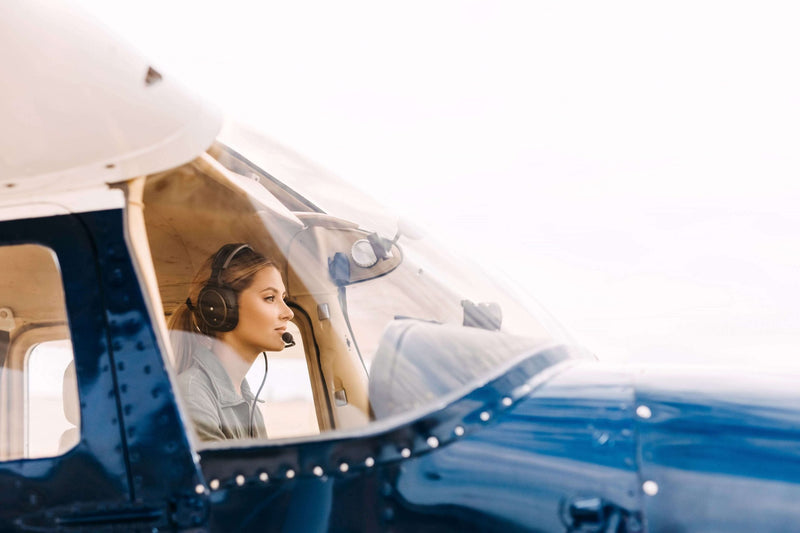
Very safety and detail oriented. Pre-flight briefing explained everything there was. To my knowledge, this flight school is exceptional in their ability.

Whiteman sits nine miles northeast of us across the top of the Valley, and pilots who start there often finish their ratings on the Balboa ramp instead.
Whiteman Airport sits on Osborne Street in Pacoima, a county field with one runway laid at an angle across the street grid, about 4,120 feet of asphalt at just over a thousand feet of elevation. It is a real airport with real aviation on it, and plenty of Valley pilots made their first landing there. What it is not is a place with a two-seat trainer, a retractable, a turbocharged single, a twin and a full-motion simulator parked in a row. That is nine miles southwest.
The people who ring us from this corner of the Valley are usually specific about what they want. Pacoima, Sun Valley, Arleta and Sylmar are full of households where somebody already works around aircraft, freight or heavy machinery, and where a career decision gets made with a spreadsheet rather than a daydream. Los Angeles Mission College is four miles up Eldridge Avenue and turns out students weighing a professional pilot path against a four-year degree. We get asked about payback periods more often than about the view.
For that conversation, the number that matters is $89,000. That is the Airline Pilot Program: no flight experience at the start, and private, instrument, commercial, multi-engine and instructor certificates at the end, which is the point where you are employable as a flight instructor and start building hours toward an airline. It takes eighteen months to two years at a serious pace. Stratus Financial lends against it and we run in-house payment plans, and we will show you the stage-by-stage figures before you sign anything.
There is also a plain operational reason to come across. Van Nuys has two parallel runways, the long one at 8,001 feet, a tower that runs all day, and SoCal Approach handing traffic overhead from the moment you leave the pattern. You learn to sequence behind Gulfstreams, read a runway-hold instruction correctly first time, and speak on frequency like a professional because there is no room to do otherwise. A check airman notices that within twenty minutes.

Courses & Pricing
Course prices are packages, not hourly rates - the aircraft, your instructor, ground school and simulator time are all in the figure. Van Nuys Airport, KVNY. Financing Available Through Stratus & In-House Plans.

Start Here
The First Hour At The Controls. Credited Toward Your Training If You Enroll Within 24 Hours Of Landing.
All Prices In USD. 7900 Balboa Blvd, Suite 108A, Van Nuys, CA 91406 · Open 9 AM–9 PM, Seven Days. Free In-Person Tour Of The School
Book It Or Gift It
Every discovery flight below can be booked for yourself in the next few minutes, or bought as a gift certificate that is emailed within minutes and never expires. Same flight, same price, either way.
 Most Given
 Two Seats
 The Nice One
 Twin Engine
One person, one instructor, and no audience. Hands on the controls from the left seat, briefed before you go and debriefed after you land.
Hands-On Stick TimePre-Flight BriefingLoggable Flight Time
Flight Length
$229Book It Or Gift It
Same Price Either Way
The same flight with a passenger in the back seat, briefed and on the intercom. Couples book it; so do parents who would rather watch than hear about it.
One Passenger SeatPiper Warrior Or ArcherHeadsets For Both
Flight Length
$299Book It Or Gift It
Same Price Either Way
The nicest airplane we put a first-time flyer in. Glass cockpit, air conditioning, leather seats, and a parachute built into the airframe rather than strapped to the person.
Turbocharged Cirrus SR22Air ConditioningWhole-Airframe Parachute
Flight Length
$499Book It Or Gift It
Same Price Either Way
Two engines, and the airplane instrument-rated pilots move into when they start thinking about a career. Flown from the left seat with a multi-engine instructor.
Piper Seminole TwinMulti-Engine DepartureCareer-Track Instructor
Flight Length
$499Book It Or Gift It
Same Price Either Way
Gift It issues a real gift certificate, emailed within minutes, which never expires and credits in full toward training. Flights are limited to 180 lb per person, 370 lb combined. Questions: (818) 290-8249, 9 AM–9 PM, seven days.
From Whiteman the simple version is Van Nuys Boulevard. It starts up in Pacoima and runs diagonally southwest across the whole Valley, cutting the grid at an angle no other street does. Take it as far as Saticoy Street, turn west, and run past Woodley and Hayvenhurst until you reach Balboa Boulevard. The airport fence is on your left before you get there. About nine miles, and between fifteen and twenty-five minutes depending on the lights.
The freeway alternative is the 118. Join it at the 5 or at Woodman Avenue, head west past Sepulveda, and come off at Balboa Boulevard heading south. That is three miles down Balboa past Nordhoff and Roscoe, with the airport's western boundary sitting on your left the whole way. It is quicker in the evening and no quicker at eight in the morning, when the 118 westbound carries everyone coming from Santa Clarita and Sylmar.
The address is 7900 Balboa Boulevard, Suite 108A. Our car park is directly outside the door and costs nothing; there is no structure, no gate and no ticket to validate. Several unrelated aviation companies operate out of the same complex, which is entirely normal at Van Nuys, so look for the suite number when you arrive. Somebody is here from nine in the morning until nine at night, seven days a week, on (818) 290-8249.

A career pilot spends their working life at towered fields with radar service and mixed traffic. Learning that environment from your first lesson, rather than adapting to it after your checkride, saves months later. Van Nuys is one of the busiest general aviation airports anywhere, which is inconvenient for a week and valuable for a decade.
Commercial training needs a complex aircraft and multi-engine training needs a twin. Both live on our ramp, so you are not chasing a Seminole at another airport or waiting for a rental slot to open somewhere across town. The aircraft you check out in is the aircraft you have been flying around all year.
The Redbird MCX is full-motion and FAA-approved, and it is where instrument procedures, engine failures and bad-day decision making get practiced properly. At $189 for a sixty-minute session it is the cheapest seat in the building. Career students use it hardest, because repetition is what makes a procedure automatic under real pressure.
Our FAA-certified instructors carry fifteen years or more of experience each, which shows up in the small corrections rather than the big ones. They will tell you when your landings are not ready for a checkride, and they will tell you when a training plan is not working. That honesty is the whole value of the relationship.
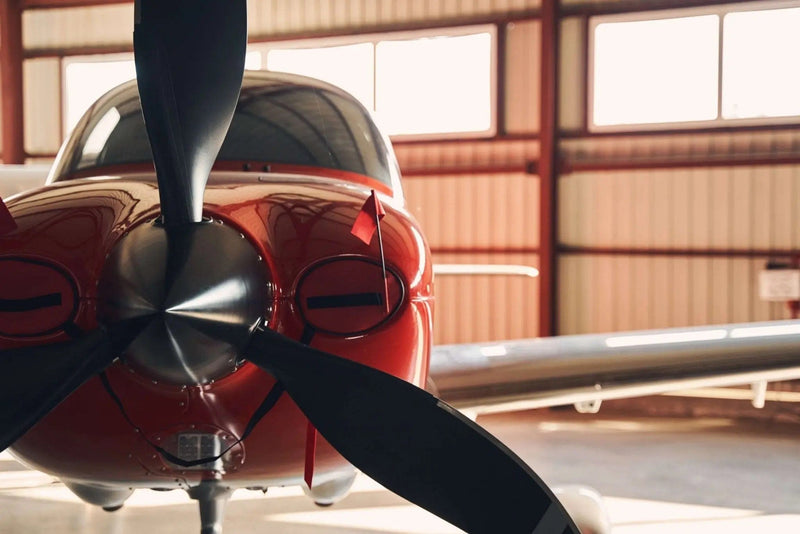
Primary training happens in the Cessna 162 Skycatcher, the Diamond DA20 or the Piper Warrior. All three are covered by the package you enroll on, and this is where the early hours of a career track are spent and where a budget is either kept or quietly lost. The DA20 in particular rewards clean footwork, and instructors like putting a professionally minded student into it early, because sloppy rudder use has nowhere at all to hide in an airplane like that.
Later stages move to heavier metal. The Piper Arrow II brings retractable gear and a constant-speed propeller, which is what the commercial certificate requires you to be competent in. The Piper Seminole is the twin, and the multi-engine rating flown in it is a $5,100 package. The Cirrus SR22 Turbo adds a glass panel much closer to what you will meet in a modern flight deck. The Redbird MCX sits alongside all of them. Every one of these aircraft is parked at Van Nuys Airport, on our ramp at 7900 Balboa Boulevard, never at Whiteman, and all of them are booked through the same desk.

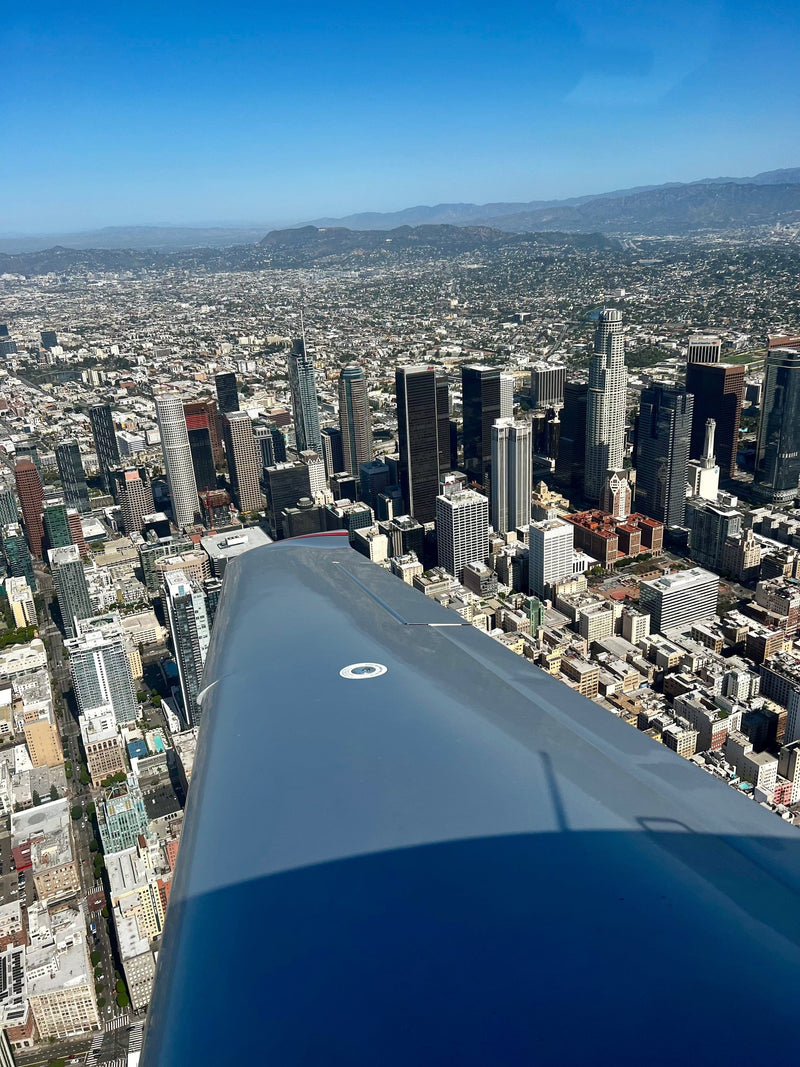
Fly the short hop from Van Nuys toward Pacoima and these come up under the nose.
Between Sheldon Street and Tuxford the ground opens into old gravel excavations, pale terraced holes several storeys deep sitting in the middle of a residential grid. Nothing on the ground prepares you for how big they look from a thousand feet.
The single strip sits at an angle to every street around it, which makes it easy to spot from three miles out against the Pacoima grid. Watching a field you know from the ground appear as a diagram beneath you is where most students stop being nervous.
The concrete channel cuts diagonally through the street grid and runs past the park named for Ritchie Valens, who grew up beside it. From the air it is the one line in Pacoima that ignores the surveyors entirely.
North of the 210 the hillsides carry a fan of transmission lines and a switchyard where power arrives from the Pacific Northwest. It is an unglamorous landmark and an unmistakable one, marking where the Valley floor gives up.
Nine miles across the top of the Valley. Van Nuys Boulevard southwest to Saticoy and then west to Balboa is the surface route, usually fifteen to twenty-five minutes. The 118 west to the Balboa exit is the freeway version. In the air the two fields are about seven miles apart, which is a five-minute flight.
Yes, and several people do exactly that. Bring your logbook and we will look at where you actually are rather than where the hours say you should be. Prior instruction transfers; nobody starts again. If you want to keep flying from Whiteman between lessons, that is your business.
The Airline Pilot Program is $89,000 from zero experience to instructor certificate. Bought separately the stages are $10,900 for the private, $11,700 for the instrument rating and $5,100 for the multi-engine, plus commercial and instructor training. The package exists because it is cheaper than assembling it piece by piece and because it keeps you moving.
Most people reach flight instructor in eighteen months to two years if they train several times a week rather than fitting it around everything else. Instructing is where you build hours toward the 1,500 that airlines require. Training part-time is entirely possible, but be realistic that it stretches the timeline and increases total cost.
Not for a regional. What you need is the certificates, the flight hours and a first-class medical. Some major carriers still prefer a degree, and plenty of pilots complete one while instructing. For students at Mission College already weighing the two paths, doing them in parallel is common and works.
Get a first-class medical from an FAA-designated examiner before you spend real money, not after. It is the same examination as a third-class but held to tighter standards, and it is far better to find out about an issue in month one than in month fourteen.
There is a lot immediately outside Suite 108A and it costs nothing. No gate, no meter, no attendant. The building holds several unrelated aviation businesses, so head for the suite number rather than the street number. Arrive about fifteen minutes early for your first visit and bring photo identification.
You should. A sixty-minute session in the Redbird MCX is $189 and a discovery flight in an actual airplane starts at $229, and on that flight you fly the aircraft yourself for most of the time. The time is logged in your name. Enroll within twenty-four hours and the entire cost comes off your training.
If you are already flying out of Pacoima, or costing out a professional path from Sylmar or Sun Valley, come and look at the fleet and the simulator in person. The consultation is free and the phone is (818) 290-8249.
The three private pilot packages, what each one includes, the financing options and a realistic timeline built around how often you can actually fly. Sent to you in one email. Nobody will pressure you.
Loved On Google
Every review below is real and shown verbatim, in the reviewer’s own words — written by the people who learned to fly here, not by us.
SAFETY FIRST
Very safety and detail oriented. Pre-flight briefing explained everything there was. To my knowledge, this flight school is exceptional in their ability.
 DISCOVERY FLIGHT
I recently had the chance to take my first-ever discovery flight, and it was nothing short of amazing! From the moment I stepped into the cockpit, the...
 SUNSET CIRRUS
It was a great flight! I did a sunset flight and Alex let us fly an awesome. Website was easy to book, and the plane itself was really fun to fly...
 FLYING LESSON
We had a great flying lesson with Ralph and came away with a much better understanding of both the aircraft and the principles of flight. Ralph is a...
 KIDS LUXURY FLIGHT
I got 2 luxury discovery flights for my kids. I wanted them to have the experience of flying. Our instructor Alex was amazing he made sure they feel...
 HONEYMOON SURPRISE
Last minute booking to surprise my wife on our honeymoon. She had no experience with flying and was scared of flying, but Alex was very easygoing and knew...
 FULL-MOTION SIM
Amazing flight school in van nuys airport. I have been a student here for the past few months and i could not be happier. I started doing a lot of...
 DISCOVERY FOR TWO
I booked a Discovery Flight for Two for my girlfriend's birthday and it was the perfect gift for her. She couldn't have been more excited to get to...
 SIMULATORS
Very professional and great airplanes. I love the flight simulators. The pricing is very fair compared to any other flight school
 TEEN FIRST LESSON
We gifted our teenage son his first flying lesson. He was so excited! Alex greeted us and gave a reassuring brief that made us all feel comfortable and at...
 FIRST-TIME FLYER
Flying is my husband's hobby and I was incredibly anxious and apprehensive about the discovery flight. However, I felt completely safe and at ease once we...
SAFETY FIRST
Very safety and detail oriented. Pre-flight briefing explained everything there was. To my knowledge, this flight school is exceptional in their ability.
DISCOVERY FLIGHT
I recently had the chance to take my first-ever discovery flight, and it was nothing short of amazing! From the moment I stepped into the cockpit, the...
SUNSET CIRRUS
It was a great flight! I did a sunset flight and Alex let us fly an awesome. Website was easy to book, and the plane itself was really fun to fly...
FLYING LESSON
We had a great flying lesson with Ralph and came away with a much better understanding of both the aircraft and the principles of flight. Ralph is a...
KIDS LUXURY FLIGHT
I got 2 luxury discovery flights for my kids. I wanted them to have the experience of flying. Our instructor Alex was amazing he made sure they feel...
HONEYMOON SURPRISE
Last minute booking to surprise my wife on our honeymoon. She had no experience with flying and was scared of flying, but Alex was very easygoing and knew...
FULL-MOTION SIM
Amazing flight school in van nuys airport. I have been a student here for the past few months and i could not be happier. I started doing a lot of...
DISCOVERY FOR TWO
I booked a Discovery Flight for Two for my girlfriend's birthday and it was the perfect gift for her. She couldn't have been more excited to get to...
SIMULATORS
Very professional and great airplanes. I love the flight simulators. The pricing is very fair compared to any other flight school
TEEN FIRST LESSON
We gifted our teenage son his first flying lesson. He was so excited! Alex greeted us and gave a reassuring brief that made us all feel comfortable and at...
FIRST-TIME FLYER
Flying is my husband's hobby and I was incredibly anxious and apprehensive about the discovery flight. However, I felt completely safe and at ease once we...
Reviews shown verbatim, exactly as each reviewer published them.
Aviation News
Notes from the flight line at Van Nuys — weather, regulation changes, checkride questions and the cost of training, written up as they come.
Open 7 days · 9:00 AM – 9:00 PM
Los Angeles Flight School