Chatsworth sits in the far northwest corner of the San Fernando Valley, hard up against the Simi Hills, and the sandstone at Stoney Point marks where the flat ground stops. There is no airport out here. The nearest runway of any consequence is ours, about nine miles southeast, and you get to it without touching a freeway. Very few places in Los Angeles County can say that. Most people spend longer driving to a decent gym than a Chatsworth resident spends driving to a flight lesson.
This is also a neighborhood with unusual technical literacy. The industrial strip along Nordhoff, Plummer and De Soto has held aerospace and defense work for decades, and up in the hills above town the old Santa Susana Field Laboratory tested rocket engines for the Apollo program. Enough Chatsworth households contain someone who reads a systems diagram for a living that our instructors have learned to skip the reassurance and go straight to the numbers. It is a good way to teach.
That background changes what students want. People who calibrate instruments for a living do not want to be told flying is magical; they want the syllabus, the hour requirements, the checkride standards and the honest cost. So: forty hours is the legal minimum for a private certificate and roughly sixty to seventy is what most people actually need. The Standard Private Pilot program is $10,900. Nothing about that is hidden behind a consultation, though the consultation is free if you want it.
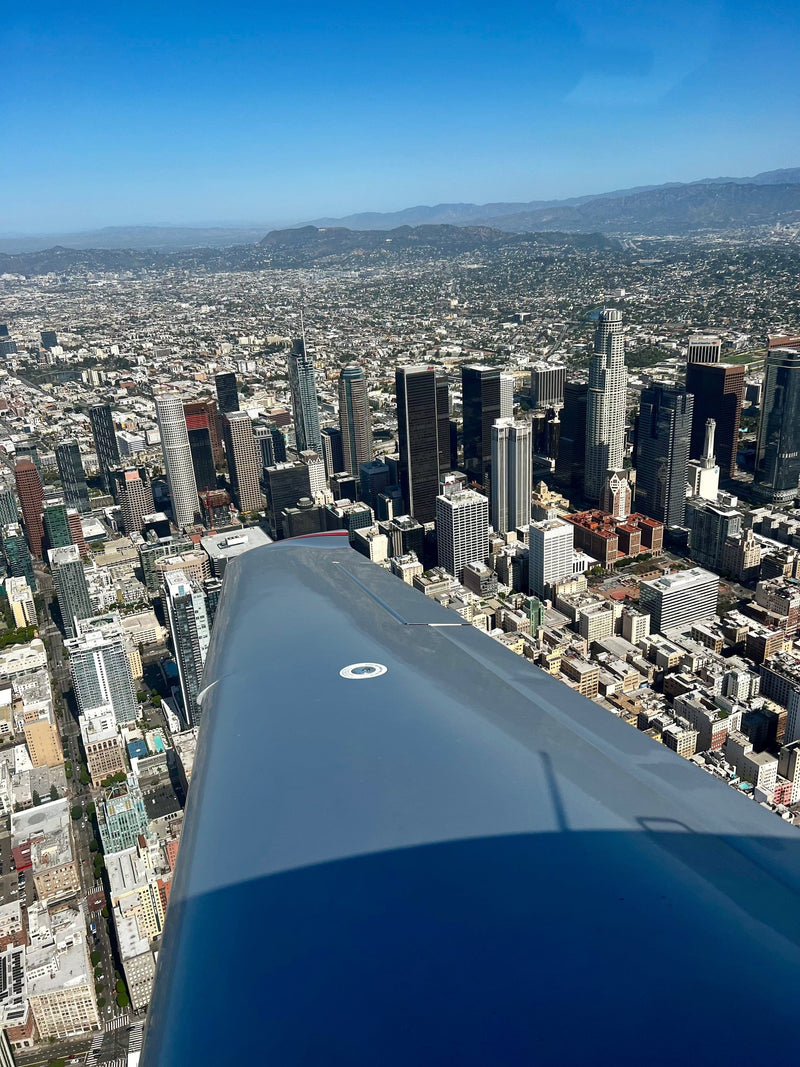
The flying out of the northwest end of the field also happens to be the interesting kind. The practice areas over the Simi Hills and the Santa Susana Pass start almost immediately after departure, which means terrain, ridge lift, mechanical turbulence off the pass and real density altitude in August. You learn mountain awareness because it is unavoidable, not as an optional endorsement later. For a Chatsworth student the training environment is quite literally the view from the back window.


 Most Given