SAFETY FIRST
★★★★★
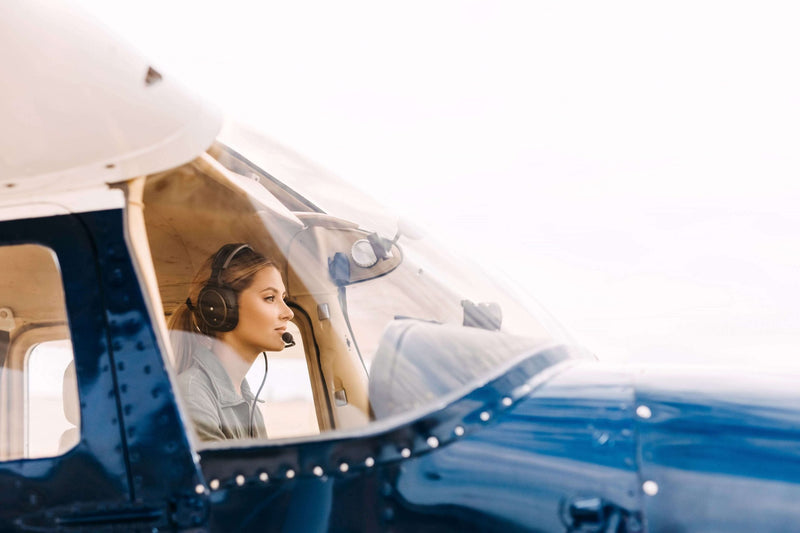
Very safety and detail oriented. Pre-flight briefing explained everything there was. To my knowledge, this flight school is exceptional in their ability.

An academy sells you sequence and pace, not certificates. The certificates come from the FAA and the hour requirements behind them are published in Part 61, so this page lists all of them — private through ATP — alongside what our $89,000 zero-to-airline program covers and the eighteen months in the middle that no training package pays for.
Every pilot certificate in the United States is issued by the FAA against the same standards, tested by the same designated examiners, using the same airman certification standards. An academy cannot give you a better one. What an academy sells is a sequence: a fixed order, a full-time timetable, a cohort moving at the same pace, and somebody whose job it is to keep you moving through it.
For the right student that is worth a great deal. Momentum is the single strongest predictor of whether anybody finishes flight training, and a structure that puts you in an aircraft four times a week removes the main way people fail, which is drifting.
What you trade is money timing and flexibility. Academy models generally want a large sum early, often financed, and they assume you are not working. If your life breaks the timetable — a job, a family, an illness — a cohort model has nowhere to put you, and the thing that was keeping you moving becomes the thing charging you to wait.
We run the same sequence without the cohort. You can fly four times a week and finish on an academy timeline, or twice a week around a job, and you pay for each stage as you reach it. Nobody is chasing you, which is the honest downside, so if you know you need to be chased then a full-time academy is genuinely the better purchase.

These numbers are not ours and no school can move them. They are the legal minimums in 14 CFR Part 61, and every academy, university and Part 61 school in the country is working to the same list.
| Stage | Regulation | Hour requirement | What it lets you do |
|---|---|---|---|
| Student pilot, first solo | 14 CFR 61.83, 61.87 | No fixed hours; typically 15 to 25 | Fly the aircraft alone in the traffic pattern. Requires a medical certificate in hand |
| Private pilot certificate | 14 CFR 61.109 | 40 hours total, 20 dual, 10 solo | Carry passengers, not for compensation. National average to finish is 60 to 75 hours |
| Instrument rating | 14 CFR 61.65 | 50 hours cross-country as pilot in command, 40 hours actual or simulated instrument | Fly in cloud, in the system. No airline hires a pilot without it |
| Commercial pilot certificate | 14 CFR 61.129 | 250 hours total, 100 as pilot in command, 50 cross-country, 10 in a complex or technically advanced aircraft | Be paid to fly. Most of the gap to 250 is time you build rather than instruction you buy |
| Multi-engine rating | 14 CFR 61.63 | No fixed hours; proficiency plus a practical test | Fly twins. Our add-on in the Piper Seminole is $5,100 |
| Flight instructor certificate | 14 CFR 61.183 | Commercial certificate, instrument rating, 15 hours as pilot in command in the category and class | Be paid to teach. This is how almost everybody funds the hours to 1,500 |
| Airline transport pilot | 14 CFR 61.159 | 1,500 hours total, 500 cross-country, 100 night, 75 instrument | The certificate US airlines hire against. 61.160 reduces it to 1,000 for approved degree holders |
All six are answerable in one email. If an academy will not answer them in writing, that is your answer.
Life interrupts training more often than money does. Ask exactly what happens to your place, your fees and your progress if you stop for three months, and get it in writing. Cohort programs are the least forgiving structure in aviation training on this point.
A quoted total is built on an assumed number of hours. Ask which number, and ask what an hour beyond it costs. A program priced at 40 hours for a private certificate when the national average is 60 to 75 is not cheaper, it is differently invoiced.
Type the tail numbers into the FAA N-Number Inquiry at registry.faa.gov and it returns the registered owner, free. A fleet the school owns is a fleet the school controls the maintenance and the schedule of. A brokered one is not.
No school does airline hiring, so no school can commit an airline to anything. Conditional refunds, partner pathways and interview arrangements are all real things that exist, and none of them is a job. Establish exactly what is being promised before you borrow against it.
Aviation financing frequently begins repayments before you are earning, which means during the instructing years when you earn least. Ask when the first payment falls, what the rate is, and whether there is a deferral. The financing structure decides more careers than the syllabus does.
Reaching 1,500 hours means finding somewhere to teach. A school with its own fleet and steady student demand is a plausible place to do that; a school that trains far more people than it employs is not. Nobody can promise you a position, but you can ask how many instructors they have and how often they hire.
In Los Angeles the professional training is concentrated at the towered general aviation fields, and we run ours from 7900 Balboa Blvd, Suite 108A at Van Nuys Airport, 9AM to 9PM, seven days a week. The full sequence is on one ramp: single-engine trainers, a complex Piper Arrow for the commercial requirement, a Piper Seminole for the multi-engine rating, a Cirrus SR22 Turbo, and a Redbird MCX simulator indoors.
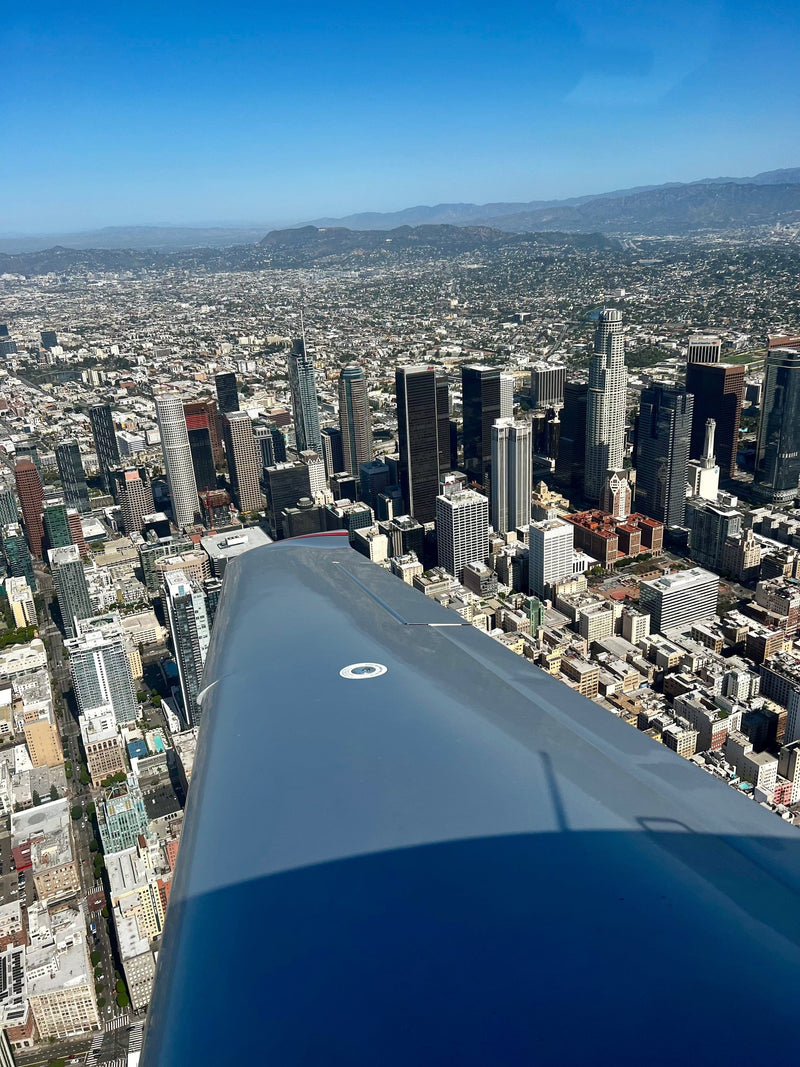
Van Nuys does something for a professional student that a quiet field cannot. It is a Class D field directly under the LAX Class B shelf, sharing the pattern with jets and helicopters, so clearances, sequencing and crisp radio work are habits you build from lesson one rather than skills you bolt on before a first airline interview. That is the part of training that transfers unchanged to every airport you will ever operate into.
The weather cooperates too. We measured twelve months of NOAA ASOS observations across fifteen airports and 355 days a year at Van Nuys cleared the ceiling and visibility threshold most schools use for training, published in full in our flyable days study. For anyone on a full-time timeline, canceled days are the most expensive thing on the calendar.
If you are still choosing between schools rather than between routes, use the framework on flight schools near me. If a degree is still on the table, aviation school near me covers the R-ATP hour reduction that only the university route carries. And the broad version of all of it is on our home page under flight school near me.

The same sequence, the same aircraft, the same instructors. What changes is who controls the timetable and when the money moves.
Fly four times a week and the commercial certificate with an instrument rating lands in about two years. Fly twice a week around a job and it takes longer. Both are supported, and you can change between them without renegotiating anything.
Private certificate, then instrument, then commercial. You are not signing one large loan on day one against a career decision you have made on a single discovery flight. Financing through Stratus Financial or an in-house plan starts at $2,500 down.
Complex time for 14 CFR 61.129 in the Piper Arrow, multi-engine in the Seminole, glass cockpit in the Cirrus. You do not have to move schools halfway through the commercial requirements, which is a real and common cost.
A full-time schedule needs redundancy. One instructor on holiday should not stop your week, and a commercial course losing its instructor at hour 180 is expensive in a way nobody quotes for.
The Redbird MCX is FAA-approved and full-motion. Instrument procedures, approaches and emergencies are learned there rather than at $179 an hour in the aircraft, and a session is never canceled for weather.
$10,900 for the Standard private certificate, $11,700 instrument, $5,100 multi-engine, $89,000 for the whole zero-to-airline sequence. Every figure states what it includes, and none of them moves after you enroll.
Between a commercial certificate at roughly 250 hours and an ATP at 1,500 there is a gap of about 1,250 hours, and almost everybody closes it by instructing. That stage runs 18 months to two years full-time in Southern California, it pays instructor money, and it comes with none of the benefits of whatever job you left.
That stretch is where career changers stop. Not because the flying is hard, and almost never because they failed anything. They run out of money, or the loan repayment schedule collides with the pay drop, and they take a job that pays properly and never come back. It is the most predictable failure in this industry and it is the one least discussed on training websites.
The practical defenses are unglamorous. Finish the commercial certificate and the instrument rating while you still have an income, because those are the hardest parts to fund from instructor pay. Do not borrow more than you can service through a lean two years. Understand when your first loan repayment falls due. And plan for at least one bad airline hiring year, because the cycles in this industry have wrong-footed far better forecasters than any flight school.
We put this on the page rather than in a conversation after you have paid, because the people who plan for it are the ones who finish.

The commercial certificate requires complex or technically advanced time under 14 CFR 61.129, and the multi-engine rating requires a twin. Both are ours, on this ramp, and the registrations come back to us.


A zero-to-airline sequence touches five of these six airframes before the commercial checkride. None of them is sub-leased, so none of them disappears the weekend an owner wants it back.
Full-motion, fully enclosed and FAA-approved. The instrument rating is the longest and most expensive stage of a professional sequence, and it is the stage that moves fastest when a maneuver can be stopped mid-air, talked through and started again.
Academy pace runs on this device. A session costs $189, it is never lost to weather, and it keeps a full-time sequence moving on the days the aircraft cannot.
Certification is quickly dealt with: commercial or ATP, a flight instructor certificate, a current medical, and legal command of the aircraft every time you fly together. The number that decides an academy-length course is eleven, because that is how many calendars there are to schedule against.
The standard industry model treats instructing as a waiting room, and a CFI who arrives at 250 hours and leaves at 1,500 lasts about fourteen months. On a private pilot course you might not notice. On a two-year professional sequence you will change instructor twice, and each change costs three to five hours of somebody working out what you can already do.
We hire instructors who want to teach here rather than people counting down. You are matched to one, you keep them, and you can change if the fit is wrong — which you should do early rather than politely enduring it, because a bad instructor match is the most common reason a course stalls and never restarts.

All of them on Google. Read the ones written by people on the professional route and three points recur.
Hearing what the instructing years actually pay at the inquiry stage, not at hour 260.
Four lessons a week is only a plan if the aircraft and the instructor are both ours to commit.
Eighteen months is long enough for a metered price to drift a very long way. Ours is fixed at enrollment.
Each figure below is a published total rather than a deposit against a running meter. Financing is available from $2,500 down.
The full professional ladder run end to end, on aircraft that belong to the school teaching it.
The sensible first stage if you are paying as you go, because it is costed against what people really fly.
50 hours of cross-country as pilot in command and 40 hours of instrument time. The rating that makes the commercial certificate worth having.
| Everything else, published | Price |
|---|---|
| Discovery Flight For One — 60 minutes, credited in full on enrollment | $229 |
| Redbird MCX full-motion simulator session | $189 |
| Standard Private Pilot program, 40 hours logged | $10,900 |
| Premium Private Pilot program, Cirrus SR22 Turbo | $22,500 |
| Solo Certificate program | $5,500 |
| Package hourly rate, single-engine, wet, enrolled students | $179 |
A career this size deserves a cheaper test than a deposit. A discovery flight is $229 for 60 minutes, you fly the aircraft from the left seat, the hour is loggable dual instruction toward the 40 that 14 CFR 61.109 requires, and the full amount is credited if you enroll within 24 hours. If you want the route mapped against your own timeline and finances first, the consultation is free and nobody will push a program at you on it.
A flight academy is a full-time, structured, often residential training program that runs from zero experience to a commercial pilot certificate, usually in twelve to twenty months with a cohort. It does not issue different certificates from any other school: every FAA certificate is tested to the same standards by the same designated examiners. What an academy sells is sequence and pace.
Our published zero-to-airline program is $89,000 and covers the private certificate, instrument rating, commercial certificate and instructor certificates. That figure is training only. It does not include living costs during the eighteen months to two years of instructing that follow, which is the part most people underestimate.
1,500 hours of total flight time for an unrestricted airline transport pilot certificate under 14 CFR 61.159, including 500 hours of cross-country, 100 hours of night and 75 hours of instrument time. Holders of an FAA-authorized bachelor degree in aviation can qualify for a restricted ATP at 1,000 hours under 14 CFR 61.160, and military pilots at 750.
250 hours of total time under 14 CFR 61.129, including 100 hours as pilot in command, 50 hours of cross-country and 10 hours in a complex or technically advanced aircraft. Most of the gap between finishing your instrument rating and reaching 250 is time you build rather than instruction you buy, which is why the commercial stage costs far less than the hour count suggests.
Full-time academy programs typically run twelve to twenty months from zero to a commercial certificate with an instrument rating. Training at the same pace at a Part 61 school takes about the same time; the difference is that the academy fixes the timetable and the Part 61 school leaves it to you. Reaching 1,500 hours afterwards adds another 18 months to two years.
No school does airline hiring, so no school can commit an airline to anything. Partner pathway arrangements, conditional refunds and interview introductions are real products that exist, and none of them is employment. Establish in writing exactly what is being offered before borrowing against it.
No, but almost everybody does, because instructing is the one route that pays you while you build the time. Under 14 CFR 61.183 you need a commercial certificate, an instrument rating and 15 hours as pilot in command in the category and class to become a flight instructor. The alternatives, such as banner towing, aerial survey and pipeline patrol, exist but are far fewer in Southern California.
Only because of how often you fly, not because of the structure. A student flying four times a week finishes at a similar point whether the school calls itself an academy or not; a student flying twice a month takes years either way. Frequency is the variable, and it is the cheapest purchase in flight training because infrequent flying wastes the first twenty minutes of every lesson on re-learning.
That depends entirely on the school and it is the single most important question to get answered in writing. Cohort-based programs have the least flexibility, because your place is tied to a group moving on a fixed schedule. At a Part 61 school like ours your training simply waits, and you resume where you stopped.
No. The FAA requires no college degree for any pilot certificate and no US airline requires one to be hired. A degree carries exactly one regulatory benefit: the reduced ATP minimum under 14 CFR 61.160, which applies to holders of specifically FAA-authorized aviation degrees rather than to any degree at all.
We run the full professional sequence at 7900 Balboa Blvd, Suite 108A at Van Nuys Airport, 9AM to 9PM seven days a week, with single-engine trainers, a complex Piper Arrow, a Piper Seminole twin, a Cirrus SR22 Turbo and a Redbird MCX simulator on site. Van Nuys is a Class D field under the LAX Class B shelf, so professional radio work and busy airspace are part of training from the first lesson.
The three private pilot packages, what each one includes, the financing options and a realistic timeline built around how often you can actually fly. Sent to you in one email. Nobody will pressure you.
Loved On Google
Every review below is real and shown verbatim, in the reviewer’s own words — written by the people who learned to fly here, not by us.
SAFETY FIRST
Very safety and detail oriented. Pre-flight briefing explained everything there was. To my knowledge, this flight school is exceptional in their ability.
 DISCOVERY FLIGHT
I recently had the chance to take my first-ever discovery flight, and it was nothing short of amazing! From the moment I stepped into the cockpit, the...
 SUNSET CIRRUS
It was a great flight! I did a sunset flight and Alex let us fly an awesome. Website was easy to book, and the plane itself was really fun to fly...
 FLYING LESSON
We had a great flying lesson with Ralph and came away with a much better understanding of both the aircraft and the principles of flight. Ralph is a...
 KIDS LUXURY FLIGHT
I got 2 luxury discovery flights for my kids. I wanted them to have the experience of flying. Our instructor Alex was amazing he made sure they feel...
 HONEYMOON SURPRISE
Last minute booking to surprise my wife on our honeymoon. She had no experience with flying and was scared of flying, but Alex was very easygoing and knew...
 FULL-MOTION SIM
Amazing flight school in van nuys airport. I have been a student here for the past few months and i could not be happier. I started doing a lot of...
 DISCOVERY FOR TWO
I booked a Discovery Flight for Two for my girlfriend's birthday and it was the perfect gift for her. She couldn't have been more excited to get to...
 SIMULATORS
Very professional and great airplanes. I love the flight simulators. The pricing is very fair compared to any other flight school
 TEEN FIRST LESSON
We gifted our teenage son his first flying lesson. He was so excited! Alex greeted us and gave a reassuring brief that made us all feel comfortable and at...
 FIRST-TIME FLYER
Flying is my husband's hobby and I was incredibly anxious and apprehensive about the discovery flight. However, I felt completely safe and at ease once we...
SAFETY FIRST
Very safety and detail oriented. Pre-flight briefing explained everything there was. To my knowledge, this flight school is exceptional in their ability.
DISCOVERY FLIGHT
I recently had the chance to take my first-ever discovery flight, and it was nothing short of amazing! From the moment I stepped into the cockpit, the...
SUNSET CIRRUS
It was a great flight! I did a sunset flight and Alex let us fly an awesome. Website was easy to book, and the plane itself was really fun to fly...
FLYING LESSON
We had a great flying lesson with Ralph and came away with a much better understanding of both the aircraft and the principles of flight. Ralph is a...
KIDS LUXURY FLIGHT
I got 2 luxury discovery flights for my kids. I wanted them to have the experience of flying. Our instructor Alex was amazing he made sure they feel...
HONEYMOON SURPRISE
Last minute booking to surprise my wife on our honeymoon. She had no experience with flying and was scared of flying, but Alex was very easygoing and knew...
FULL-MOTION SIM
Amazing flight school in van nuys airport. I have been a student here for the past few months and i could not be happier. I started doing a lot of...
DISCOVERY FOR TWO
I booked a Discovery Flight for Two for my girlfriend's birthday and it was the perfect gift for her. She couldn't have been more excited to get to...
SIMULATORS
Very professional and great airplanes. I love the flight simulators. The pricing is very fair compared to any other flight school
TEEN FIRST LESSON
We gifted our teenage son his first flying lesson. He was so excited! Alex greeted us and gave a reassuring brief that made us all feel comfortable and at...
FIRST-TIME FLYER
Flying is my husband's hobby and I was incredibly anxious and apprehensive about the discovery flight. However, I felt completely safe and at ease once we...
Reviews shown verbatim, exactly as each reviewer published them.
Aviation News
Notes from the flight line at Van Nuys — weather, regulation changes, checkride questions and the cost of training, written up as they come.
Open 7 days · 9:00 AM – 9:00 PM
Los Angeles Flight School