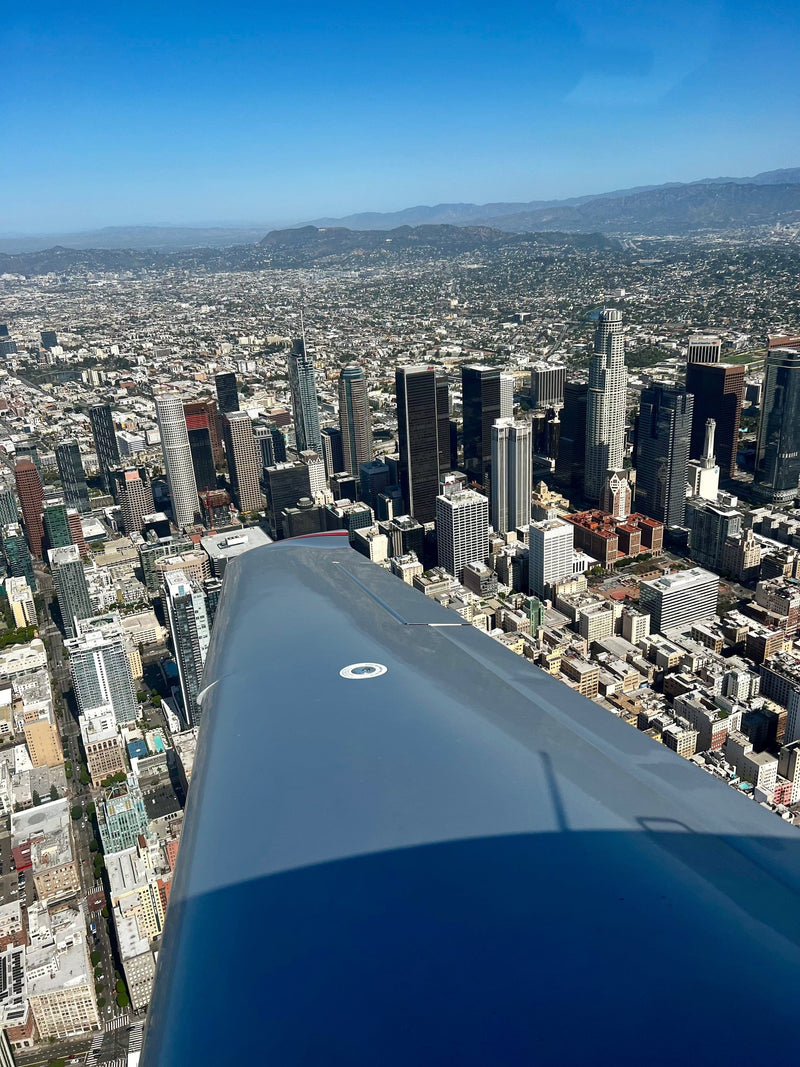
Van Nuys had 355 days in the twelve months to 1 August 2026 that met a 3,000 ft ceiling and 5 statute miles of visibility, which is the bar most schools apply to student solo and early dual work. On the looser basic-VFR standard of 1,000 ft and 3 miles it was 363 days. We pulled the raw NOAA ASOS observations for fifteen training airports and counted them ourselves, because ‘around 300 days’ is a number the whole industry repeats without a source.
The result that actually changes how you should book lessons is not the annual total. It is the time of day. In June at Van Nuys only 40% of 7AM observations met training minima. By 11AM that was 93%, and from 1PM it sat at 97 to 100%. The marine layer burns off; it does not stop the day.
So if you are booking early-morning lessons in late spring and early summer, expect some of them to move rather than to be flown. Book afternoons in June and mornings in the autumn, and your cancellation rate drops close to nothing. That is a scheduling decision, and it is worth more to your budget than any discount.
For context from the same study: Burbank came in at 356 days, Santa Monica at 343, Whiteman at 334, Torrance at 332. Hillsboro, Oregon managed 277. Training in Los Angeles is roughly three months a year of extra flying compared with the Pacific Northwest, and that is the single largest reason LA training finishes faster.


 Most Given