SAFETY FIRST
★★★★★
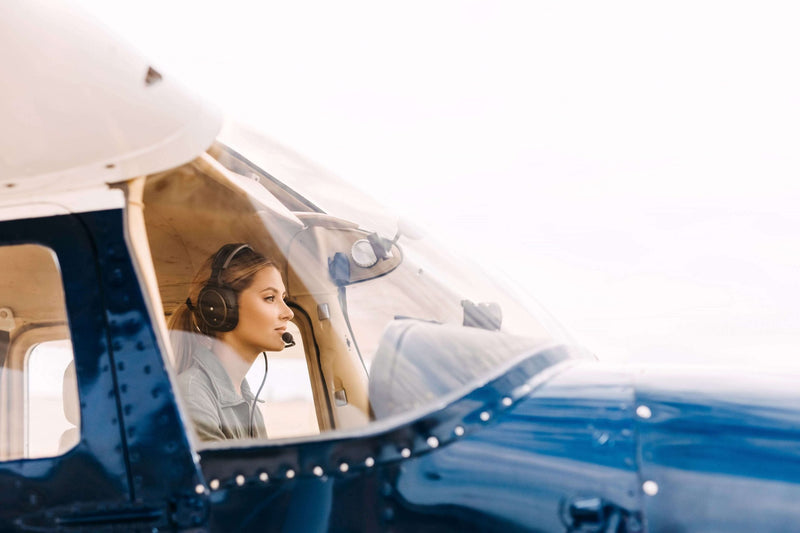
Very safety and detail oriented. Pre-flight briefing explained everything there was. To my knowledge, this flight school is exceptional in their ability.

A full-motion, FAA-approved, fully enclosed flight simulator at Van Nuys. It produces real turbulence, real engine sound and real motion, and it never leaves the building. There is a stop button, the door opens from the inside, and you can do the whole thing in stages. Nothing else in this market offers that.
The Redbird MCX is an FAA-approved advanced aviation training device. It is a fully enclosed cockpit on a motion platform with a wraparound visual system, real instruments, real controls and real engine sound. When it hits turbulence it pitches and rolls under you. When you pull the power back it goes quiet. Your inner ear believes it, which is the entire reason it is useful.
It is also bolted to a floor in Suite 108A. The door is a door. You can stop the session mid-sentence, stand up and walk out into an air-conditioned room, and then get back in ten minutes later and do it again. No aircraft can offer you that, and no amount of reassurance in an airport lounge can either.
For somebody working through a fear of flying, that combination — real physiological input, zero physical exposure — is the textbook definition of a graded exposure step. It is what a psychologist would design if they had access to one, and most of them do not.

We build pilots. We are not a clinic, and this page is not medical advice.
A simulator session is the gentlest exposure step we have, and it is still exposure. If your response to the idea of flying includes panic symptoms, the right order is a licensed psychologist first, then this, then an aircraft.
Plenty of people arrive here already doing that work, sometimes with a plan from their psychologist that says exactly what to attempt and what to avoid. Bring it. We will run the session to that plan rather than to ours, and we will stop when the plan says stop.
If the thought of a flight brings on a racing heart, shortness of breath, sweating or a sense of dread you cannot talk yourself out of, that is a clinical picture and a licensed psychologist is the right first call. Cognitive behavioral therapy and graded exposure therapy have the strongest evidence behind them for specific phobias.
Plenty of people arrive here after doing that work, with a therapist who has suggested real-world exposure as the next stage. Some bring their therapist’s notes. That is a good use of an hour in the Redbird or in the aircraft, and we will work to whatever plan you have been given.
Two things, both honest: exposure to the real thing with a professional pilot sitting beside you, and an explanation of what is happening while it happens. No claims beyond that. We do not diagnose, we do not publish a success rate, and we will tell you on the phone if we think you should talk to someone else first.
Nothing in this list is a demonstration of how brave you can be. You set the intensity and you can turn any of it off mid-session.
We start at zero and go up in steps you approve. Most people want to know what moderate feels like without the possibility of it getting worse without permission. Here, it cannot: the intensity is a setting and the setting is under discussion.
Engine spool-up, the push, the rotation, the gear noise, then the power reduction that feels like an engine failing and is a noise abatement procedure. We can fly that single 90-second sequence five times in a row until it stops producing a response. You cannot do that in an aircraft.
A marine layer over Van Nuys, a night arrival, a crosswind, low visibility. Being shown what the crew is actually doing in cloud is one of the more reliably calming things we do, because it replaces an imagined situation with a procedural one.
A legitimate first session. Sit in it, get used to the smell and the noise, look at the instruments, ask what each one does, and leave. Some people need that before anything moves, and it is not a wasted $189.
If your fear has a specific shape — an engine stopping, a go-around, a very firm landing — we can fly it. Watching a trained pilot handle the thing you have been imagining, calmly and by a checklist, changes the picture more than being told it is unlikely.
The whole value of a simulator is the pause button. Fly two minutes, stop, talk about what your body just did, fly it again. That repetition is exactly what graded exposure work is built from, and it is impossible in the air.
An honest comparison, including where the simulator is worse.
| Redbird MCX — $189 | Discovery flight — $229 | |
|---|---|---|
| Can you stop it? | Instantly, and get out | You can ask to land; a few minutes back to Van Nuys |
| Motion | Real, on a motion platform, intensity you set | Real, and set by the weather that morning |
| Repeat the same 90 seconds? | As many times as you like | Not practically |
| Weather cancellations | None, ever | Rare — Van Nuys averages 355 flyable days a year |
| Does your body fully believe it? | Mostly. Part of you knows the floor is attached | Completely |
| Loggable time | Counts inside a training program | Logged as dual instruction toward a certificate |
| Best for | A first exposure step, and rehearsing a specific moment | Actually inverting the loss of control |
If you are unsure, do the simulator first and the aircraft two to three weeks later. That ordering is what we suggest to almost everybody who calls about this. Read more about the discovery flight for nervous flyers before you decide.
Ninety seconds of the Redbird MCX at Van Nuys, so the thing you are booking is not an abstraction.
A session is $189 and runs about an hour, and we will spend as much of that hour on the ground with the door open as you want. Simulator hours are also built into every private pilot program — 2 hours on the Standard and Premium programs and 5 on the Comprehensive — so nothing you do here is wasted if this turns into training.
This is the list we work through in the simulator. Each of these can be flown, stopped, discussed and flown again.
| What you hear or feel | When | What it actually is |
|---|---|---|
| A rising whine, then a solid thunk under the floor | At the gate, before pushback | Hydraulic pumps coming up to pressure, then the door or jetbridge latching. Nothing has moved yet. |
| A rhythmic barking, like a large dog, every couple of seconds | On the ground and during taxi | On Airbus A320-family jets this is the Power Transfer Unit, a pump that borrows pressure from one hydraulic system to feed another when the second engine is not running. It is famous, it is normal, and it stops once both engines are turning. |
| Engines spool up, a firm push into the seat | Takeoff roll | Takeoff thrust. The push you feel is roughly a quarter of the force gravity is already applying to you sitting still. |
| A heavy clunk and the wind noise suddenly drops | 10 to 20 seconds after the wheels leave | The landing gear folding into the wheel wells and the doors closing over it. The aircraft gets quieter and faster at the same time, which is why the drop in noise feels like a loss of power. |
| The engine note falls away sharply and the nose lowers | Between 800 and 3,000 feet above the airport | A thrust cutback. FAA Advisory Circular 91-53A lets crews reduce power for noise abatement at no less than 800 feet above field elevation and hold the profile to 3,000 feet. This is the single most misread moment in airline flying: it feels exactly like an engine quitting, and it is a scheduled power reduction the crew makes on purpose. |
| A grinding, whirring noise, and the wing visibly gets thinner | Climbing through roughly 1,000 to 3,000 feet | Flaps and slats retracting on a speed schedule. Big wing for slow flight, small wing for fast flight. The wing is meant to change shape. |
| Small repeated jolts, like a car on a cattle grid | Any phase of flight | Air is not smooth. It has texture, layers and rising columns over hot ground, and the aircraft is riding over them. Nothing is breaking. |
| The wingtip flexing up and down several feet | Turbulence, and on every takeoff | The wing is a spring, deliberately. It is designed to bend so that gust loads are absorbed rather than resisted. A wing that did not move would be the problem. |
| Engines go quiet and the floor seems to fall away | Top of descent, 30 to 40 minutes before landing | Power back towards idle to start down. The sinking feeling is your inner ear reporting a change in vertical speed of a few hundred feet a minute, which it exaggerates badly. |
| A rumble and a shudder, and panels lift off the top of the wing | Descent, and again after touchdown | Speedbrakes and spoilers. They spoil the lift on purpose to let the aircraft come down or stay down. |
| A whine, then a firm mechanical thump under your feet | Five to ten minutes before landing | Landing gear extending and locking. The thump is the locks engaging, and the crew wants to hear it. |
| A loud roar immediately after the wheels touch | Landing rollout | Reverse thrust. Loudest noise of the whole flight, made while you are already on the ground doing 130 knots and slowing. |
Power reduction altitudes are from FAA Advisory Circular 91-53A, Noise Abatement Departure Profile. Everything else on this table is what the aircraft is doing mechanically at that moment.
The honest version, with what each figure measures.
Turbulence is texture in the air, not damage to the aircraft. Warm ground heats a column of air, the column rises, the aircraft flies through it and gets pushed up. Then it flies out of it and stops being pushed. Over the San Fernando Valley on an August afternoon that happens every few seconds, which is why flight instructors here schedule first lessons before 10am.
The structural side is not a matter of opinion. Under 14 CFR 25.337(b) a transport-category airliner is certificated to a positive limit maneuvering load factor of at least 2.5g. Under 14 CFR 25.303 a safety factor of 1.5 is applied on top of that, and under 14 CFR 25.305 the structure has to carry the resulting ultimate load without failing for at least three seconds. When Boeing ran that test on the 787 in March 2010 the wingtips bent about 25 feet upward at 150% of limit load and the wing did not break. Turbulence you would describe as bad is a fraction of one g.
The injury data is worth stating precisely, because it is usually quoted wrongly. The NTSB safety study Preventing Turbulence-Related Injuries in Air Carrier Operations (SS-21/01) examined 111 turbulence-related accidents on US Part 121 airlines from 2009 through 2018. Those accidents produced 123 seriously injured people. Of those, 97 were flight attendants and 26 were passengers. No flight crew member was seriously injured. That is 26 passengers over ten years of US airline flying, and the common factor in almost every case is being out of a seatbelt.
None of that means your fear is silly. It means the thing your body is bracing for — structural failure — is not the thing that is happening, and the one action that measurably matters is the one you already control: keep the belt fastened when you are sitting down.
The Redbird is configured to fly like the single-engine aircraft on our ramp, which is why the transition to the real thing is short.


Single-engine training is flown in the Cessna, Piper and Diamond aircraft. The Cirrus SR22 Turbo carries a whole-airframe CAPS parachute, which is the aircraft most nervous first-timers ask about by name.
A simulator session is run by an instructor, not by you and a manual. Every instructor here holds a commercial or airline transport pilot certificate plus a flight instructor certificate, and on a session like this their job is narration as much as instruction: what is about to happen, why, and what you will feel.
Tell whoever books you that this is about a fear of flying rather than about training. It changes the plan, the pace and who we put you with. There are eleven instructors and some are better at this particular hour than others.

Over 120 reviews, all on Google. The simulator gets mentioned by parents, by instrument students, and by people who came in specifically because they were frightened.
The line that comes up most in our Google reviews is about the briefing table, not the flight. People who arrive nervous mention being told what was about to happen before it happened.
Eleven instructors and a fleet we own means an hour on the ground before an hour in the air is a scheduling decision, not a favor.
You book at $229 or $189 and that is what it costs. Reviewers mention the absence of surprises about as often as they mention the view.
All 120+ reviews are on Google. We do not aggregate ratings from anywhere else, and we do not publish a figure we cannot point at.
In that order deliberately. If you want to talk to somebody before you book a box that moves, that is the more sensible sequence and it costs nothing.
Sit down with an instructor at Van Nuys and ask everything, including the questions you think sound stupid. Nothing is booked at the end of it unless you want it booked. If we think a psychologist should see you before an aircraft does, we will say so here.
A full-motion, FAA-approved, fully enclosed simulator on the ground. Turbulence, engine sounds, weather and motion, with a stop button and a door you can open. The safest possible first exposure, and it is never canceled for weather.
A real aircraft, a real hour, and you fly it. Your instructor is legally pilot in command and can take the controls at any moment. The time is logged as dual instruction, and the full price is credited against any program if you enroll within 24 hours.
Bring the person who talked you into this. One of you flies, the other sits behind and watches. The 90 and 120-minute versions are $399 and $499.
The shortest legal route to flying yourself: day VFR, one passenger, no Class B airspace without an endorsement. A real certificate with real limits, and a smaller commitment than a private pilot license.
The 40-hour package that meets the FAR 61.109 minimum. Most people who start this because they were frightened of flying never intended to get a license, and then did.
The Comprehensive Private Pilot program is $15,900 for 60 logged hours and the Premium program is $22,500 in the Cirrus SR22 Turbo. Instrument Rating $11,700, Multi-Engine add-on $5,100, Solo Certificate $5,500, Teens aged 10 to 15 $4,200. Financing starts at $2,500 down through Stratus Financial or our in-house plans. Enrolled students fly single-engine aircraft at $179 an hour wet inside their package. Aircraft are available to qualified pilots who have checked out with us — call for availability.
Half an hour with an instructor at Van Nuys or on the phone, at no cost. Describe what actually happens to you and we will tell you what a first session should contain — which is sometimes sitting in it with the door open and the motion off.
Prefer to write it down first? Use the contact form, or read what a discovery flight actually involves before you decide anything.
Start with 20 minutes in this simulator, then fly 60 minutes over Los Angeles in our Cirrus SR22, the airplane that carries its own parachute. One guest comes along free.
It is the gentlest real exposure step available, because it gives your body genuine motion, engine noise and turbulence while the machine stays bolted to a floor. A Redbird MCX session at Van Nuys is $189 for about an hour, the intensity of everything is a setting you control, and you can stop and get out at any second. That ability to repeat a single frightening 90 seconds is impossible in an aircraft.
A full-motion, FAA-approved advanced aviation training device: a fully enclosed cockpit on a motion platform with a wraparound visual system, real instruments and real engine sound. It pitches and rolls in turbulence and goes quiet when the power comes back, which is why your inner ear responds to it the way it responds to an aircraft.
$189 for a session at Van Nuys Airport, running about an hour with an instructor beside you throughout. Simulator hours also count inside our private pilot programs, 2 hours on the Standard and Premium and 5 on the Comprehensive, so the time is not wasted if this turns into training.
Yes, and the intensity is a setting rather than a surprise. We start at zero and increase in steps you agree to, and we can turn it off mid-session. Being able to experience moderate turbulence knowing it cannot get worse without your permission is the specific thing a simulator offers and an aircraft cannot.
It is better as a first step and weaker as a final one. The simulator wins on stopping, repeating and never being canceled for weather. The aircraft wins on completeness, because part of you always knows the simulator is attached to the building. The sequence we suggest is a $189 simulator session first and a $229 discovery flight two to three weeks later.
None. You are not being assessed and there is no syllabus to keep up with. A first session can be entirely on the ground with the door open, looking at the instruments and asking what each one does, and that is a legitimate use of the hour.
At any second. Say stop and the motion stops, the door opens from the inside, and you can stand up and walk out into the office. There is no argument about the money and no encouragement to push through, because pushing through is not how exposure work is supposed to run.
Almost certainly. The most common one is the power reduction shortly after takeoff, which feels like an engine failing and is a noise abatement thrust cutback made at no less than 800 feet above field elevation under FAA Advisory Circular 91-53A. We can fly that 90-second sequence repeatedly until it stops producing a response.
It makes no difference. The simulator is indoors and is never canceled for weather, which is why it is also the option we suggest for anyone who cannot face the uncertainty of a booking that might move. Van Nuys averages 355 flyable days a year for the aircraft, but the Redbird is available on all of them.
No. We are a flight school, not a clinic, and we do not diagnose anything or publish a success rate. What we provide is exposure to a realistic version of flying with a professional pilot beside you and an explanation of what is happening while it happens. If you need clinical support, a licensed psychologist using cognitive behavioral therapy and graded exposure is the right person, and we are happy to be the step after that.
The three private pilot packages, what each one includes, the financing options and a realistic timeline built around how often you can actually fly. Sent to you in one email. Nobody will pressure you.
Loved On Google
Every review below is real and shown verbatim, in the reviewer’s own words — written by the people who learned to fly here, not by us.
SAFETY FIRST
Very safety and detail oriented. Pre-flight briefing explained everything there was. To my knowledge, this flight school is exceptional in their ability.
 DISCOVERY FLIGHT
I recently had the chance to take my first-ever discovery flight, and it was nothing short of amazing! From the moment I stepped into the cockpit, the...
 SUNSET CIRRUS
It was a great flight! I did a sunset flight and Alex let us fly an awesome. Website was easy to book, and the plane itself was really fun to fly...
 FLYING LESSON
We had a great flying lesson with Ralph and came away with a much better understanding of both the aircraft and the principles of flight. Ralph is a...
 KIDS LUXURY FLIGHT
I got 2 luxury discovery flights for my kids. I wanted them to have the experience of flying. Our instructor Alex was amazing he made sure they feel...
 HONEYMOON SURPRISE
Last minute booking to surprise my wife on our honeymoon. She had no experience with flying and was scared of flying, but Alex was very easygoing and knew...
 FULL-MOTION SIM
Amazing flight school in van nuys airport. I have been a student here for the past few months and i could not be happier. I started doing a lot of...
 DISCOVERY FOR TWO
I booked a Discovery Flight for Two for my girlfriend's birthday and it was the perfect gift for her. She couldn't have been more excited to get to...
 SIMULATORS
Very professional and great airplanes. I love the flight simulators. The pricing is very fair compared to any other flight school
 TEEN FIRST LESSON
We gifted our teenage son his first flying lesson. He was so excited! Alex greeted us and gave a reassuring brief that made us all feel comfortable and at...
 FIRST-TIME FLYER
Flying is my husband's hobby and I was incredibly anxious and apprehensive about the discovery flight. However, I felt completely safe and at ease once we...
SAFETY FIRST
Very safety and detail oriented. Pre-flight briefing explained everything there was. To my knowledge, this flight school is exceptional in their ability.
DISCOVERY FLIGHT
I recently had the chance to take my first-ever discovery flight, and it was nothing short of amazing! From the moment I stepped into the cockpit, the...
SUNSET CIRRUS
It was a great flight! I did a sunset flight and Alex let us fly an awesome. Website was easy to book, and the plane itself was really fun to fly...
FLYING LESSON
We had a great flying lesson with Ralph and came away with a much better understanding of both the aircraft and the principles of flight. Ralph is a...
KIDS LUXURY FLIGHT
I got 2 luxury discovery flights for my kids. I wanted them to have the experience of flying. Our instructor Alex was amazing he made sure they feel...
HONEYMOON SURPRISE
Last minute booking to surprise my wife on our honeymoon. She had no experience with flying and was scared of flying, but Alex was very easygoing and knew...
FULL-MOTION SIM
Amazing flight school in van nuys airport. I have been a student here for the past few months and i could not be happier. I started doing a lot of...
DISCOVERY FOR TWO
I booked a Discovery Flight for Two for my girlfriend's birthday and it was the perfect gift for her. She couldn't have been more excited to get to...
SIMULATORS
Very professional and great airplanes. I love the flight simulators. The pricing is very fair compared to any other flight school
TEEN FIRST LESSON
We gifted our teenage son his first flying lesson. He was so excited! Alex greeted us and gave a reassuring brief that made us all feel comfortable and at...
FIRST-TIME FLYER
Flying is my husband's hobby and I was incredibly anxious and apprehensive about the discovery flight. However, I felt completely safe and at ease once we...
Reviews shown verbatim, exactly as each reviewer published them.
Aviation News
Notes from the flight line at Van Nuys — weather, regulation changes, checkride questions and the cost of training, written up as they come.
Open 7 days · 9:00 AM – 9:00 PM
Los Angeles Flight School