SAFETY FIRST
★★★★★
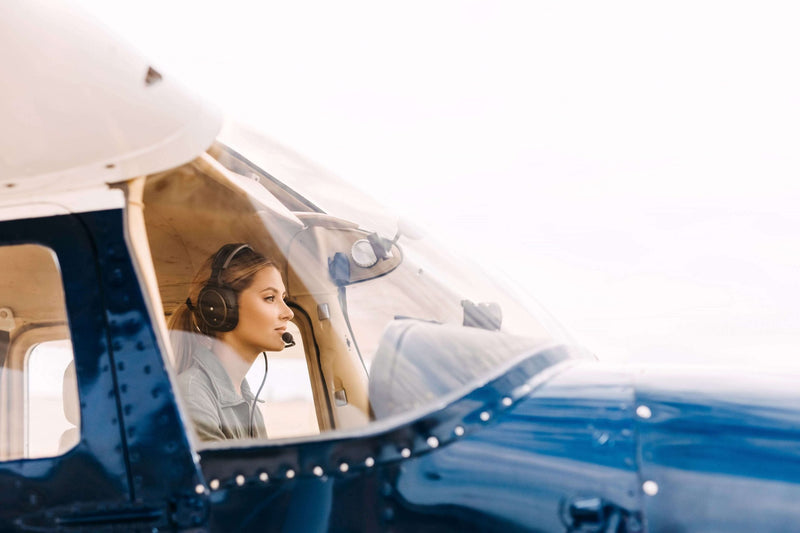
Very safety and detail oriented. Pre-flight briefing explained everything there was. To my knowledge, this flight school is exceptional in their ability.

We are not at Whiteman. Our hangar is at Van Nuys Airport, a twenty-minute drive southwest of Osborne Street, and if you grew up watching the pattern over Pacoima, the certificate that lets you join it costs $10,900.
Households in Pacoima, Arleta, Sylmar and Lake View Terrace have listened to light aircraft in the circuit for two generations. Whiteman sits on Osborne Street with its single strip cut across the street grid, and on a warm Saturday the touch-and-go traffic tracks out over Hansen Dam and back all afternoon. Plenty of people around here can identify a Cessna by sound from the kitchen. What almost none of them were ever told is how ordinary the step from listening to flying actually is, or what it costs.
It costs $10,900 for the standard private pilot program, and it takes most working adults four to six months. That buys the complete FAA Private Pilot Certificate: instruction, solo flying, ground school, exam preparation and the practical test. If the number is the obstacle rather than the ambition, the solo certificate at $5,500 takes you to the point where you fly the aircraft alone and stop there, and every hour counts if you carry on later. The teen package is $4,200 and the local high schools produce a steady handful of takers.
Whiteman is a genuine airport and nobody here would say otherwise; a lot of Valley pilots made their first landing on it. What it does not have parked in a row is a two-seat trainer, a complex single, a turbocharged Cirrus, a light twin and a full-motion simulator. Those sit nine miles southwest at our own field, Van Nuys Airport, on the Balboa side, along with maintenance in the same building. For a student who wants to start and finish everything in one place, that concentration is the whole argument.
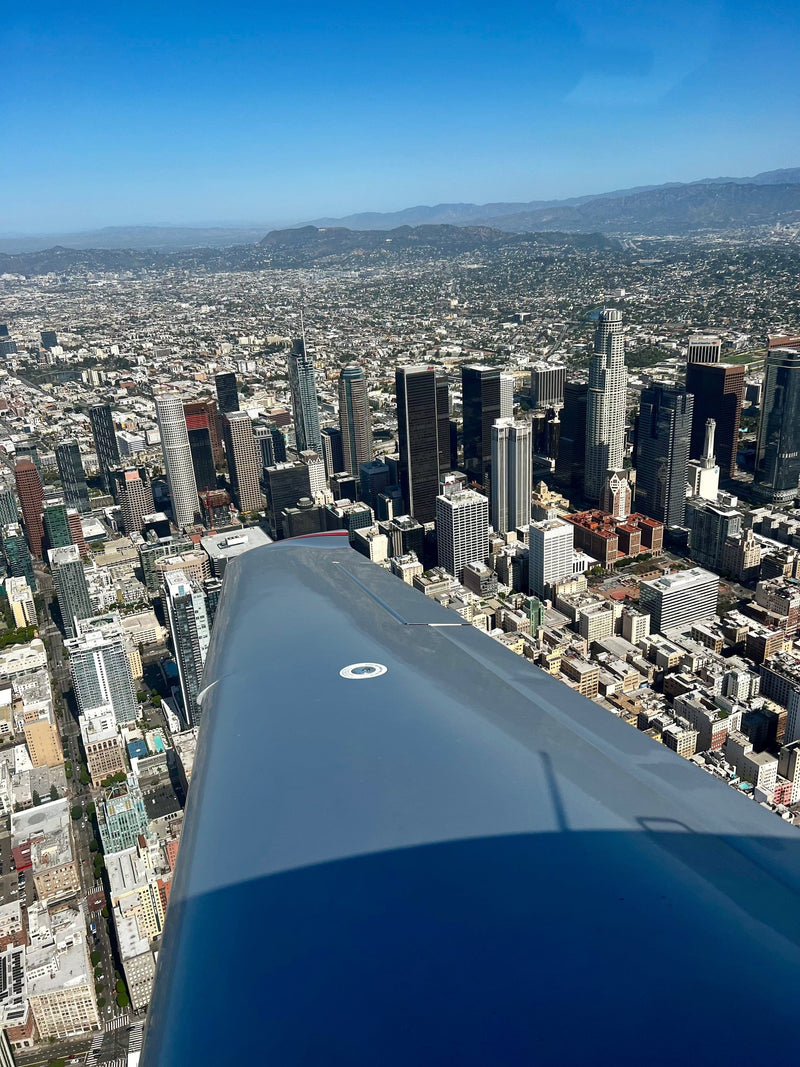
There is a second argument, and it is about the ground rather than the aircraft. Departing Van Nuys you can be over open country in ten minutes in three directions, whereas the northeast Valley runs straight into rising terrain. Sylmar, Big Tujunga and the Angeles front range are exactly the sort of country a private pilot must learn to read properly, and you will spend your training doing it with an 8,001-foot runway and a full-time tower behind you rather than ahead of you.

Courses & Pricing
Course prices are packages, not hourly rates - the aircraft, your instructor, ground school and simulator time are all in the figure. Van Nuys Airport, KVNY. Financing Available Through Stratus & In-House Plans.

Start Here
The First Hour At The Controls. Credited Toward Your Training If You Enroll Within 24 Hours Of Landing.
All Prices In USD. 7900 Balboa Blvd, Suite 108A, Van Nuys, CA 91406 · Open 9 AM–9 PM, Seven Days. Free In-Person Tour Of The School
Book It Or Gift It
Every discovery flight below can be booked for yourself in the next few minutes, or bought as a gift certificate that is emailed within minutes and never expires. Same flight, same price, either way.
 Most Given
 Two Seats
 The Nice One
 Twin Engine
One person, one instructor, and no audience. Hands on the controls from the left seat, briefed before you go and debriefed after you land.
Hands-On Stick TimePre-Flight BriefingLoggable Flight Time
Flight Length
$229Book It Or Gift It
Same Price Either Way
The same flight with a passenger in the back seat, briefed and on the intercom. Couples book it; so do parents who would rather watch than hear about it.
One Passenger SeatPiper Warrior Or ArcherHeadsets For Both
Flight Length
$299Book It Or Gift It
Same Price Either Way
The nicest airplane we put a first-time flyer in. Glass cockpit, air conditioning, leather seats, and a parachute built into the airframe rather than strapped to the person.
Turbocharged Cirrus SR22Air ConditioningWhole-Airframe Parachute
Flight Length
$499Book It Or Gift It
Same Price Either Way
Two engines, and the airplane instrument-rated pilots move into when they start thinking about a career. Flown from the left seat with a multi-engine instructor.
Piper Seminole TwinMulti-Engine DepartureCareer-Track Instructor
Flight Length
$499Book It Or Gift It
Same Price Either Way
Gift It issues a real gift certificate, emailed within minutes, which never expires and credits in full toward training. Flights are limited to 180 lb per person, 360 lb combined. Questions: (818) 290-8249, 9 AM–9 PM, seven days.
The surface route is the one locals settle on. Take Osborne Street southwest away from the airport, turn south on Woodman Avenue and run down through Arleta and Panorama City to Roscoe Boulevard. Head west on Roscoe past Van Nuys Boulevard, Sepulveda and Woodley, and turn north on Balboa Boulevard. That is roughly ten miles, about twenty minutes with a fair run of lights, and it involves no freeway at all, which people who commute the 5 tend to appreciate.
If you would rather use a freeway, the 210 heading west turns into the 118 at the Interstate 5 interchange, and you stay on it across the top of the Valley to the Balboa Boulevard exit. From there it is three miles south past Devonshire, Nordhoff and Roscoe with the airport boundary on your left. That version is quick in the middle of the day and slow at eight in the morning, when everything from Santa Clarita is heading the same way. From Sylmar, the 405 south to the Roscoe exit is simpler still.
Our address is 7900 Balboa Boulevard, Suite 108A. The car park is free and sits directly outside the door with no barrier, no ticket and no structure to negotiate. Several unrelated aviation businesses share the same hangar complex, which is completely normal at a field this size, so look for the suite rather than only the street number. We answer (818) 290-8249 between nine in the morning and nine at night, every day of the week.

The main runway here is 8,001 feet with a parallel strip alongside it. On a hot afternoon, when a light aircraft climbs as though the field were thousands of feet higher, that length converts a nervous calculation into a non-event. Beginners make better landings when the tarmac ahead is not the thing they are thinking about.
Van Nuys runs a control tower and sits beneath the Los Angeles Class B shelf with Hollywood Burbank a few miles east. You will be speaking to controllers from your first lesson to your last, so clearances and sequencing become routine rather than frightening. Pilots who learn somewhere quiet spend their first year sounding unsure on frequency.
Santa Anas funnel hard through the passes above Sylmar and there are afternoons each autumn when a student should not be solo. The Redbird MCX is a full-motion simulator at $189 for a one-hour session, it is built into the private packages, and time in it counts toward your training. Weather can stop the flying without stopping the progress, which keeps a course on schedule.
Program prices are fixed and published, from $5,500 for the solo certificate to $22,500 for the premium private course, and each one covers the aircraft, the instructor, ground school and simulator time. Stratus Financial lends against training and we run payment plans ourselves. The consultation where we go through your figures costs nothing and takes about thirty minutes.
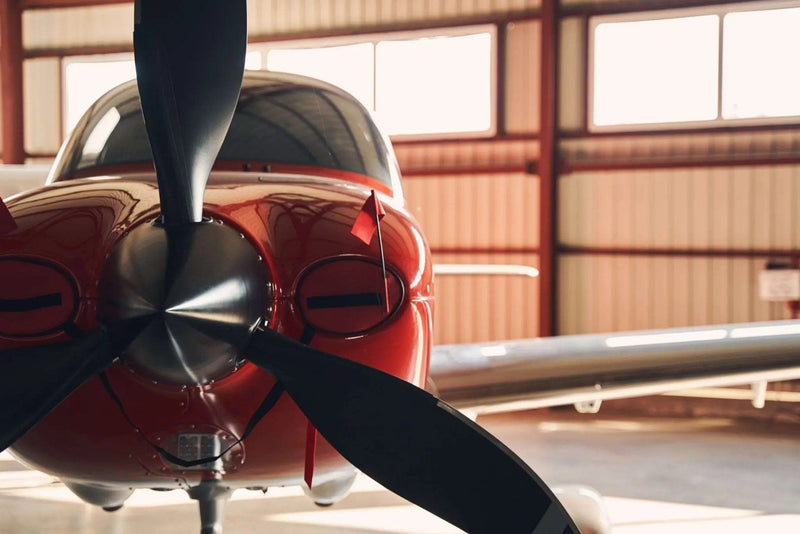
Training starts in the Cessna 162 Skycatcher, the Piper Warrior or the Diamond DA20, all of them inside your package rather than billed on the side. They are honest, forgiving airplanes that tell you clearly what your hands and feet are doing, and the machine you learn in is the machine you keep booking afterwards. Having more than one type available also means that an inspection week does not turn into a fortnight of your training simply evaporating from the calendar.
Past the certificate the ramp keeps going. The Piper Arrow II adds retractable gear and a constant-speed propeller, the Cirrus SR22 Turbo brings a full glass panel and a whole-airframe parachute, and the Piper Seminole gives you two engines and carries the $5,100 multi-engine rating. Inside the building at Suite 108A the Redbird MCX full-motion simulator is $189 for a one-hour session, and it is where an engine failure or a low approach can be repeated a dozen times in an evening without a drop of fuel or an ounce of risk.

Four features that make the northeast Valley legible from a couple of thousand feet.
The long dark sheet of water held in the hills above Sylmar, where the aqueduct finally arrives from the Owens Valley. It is the biggest single thing at the top of the Valley and visible from most of the way down it.
A narrow road climbing north into the front range past the Pacoima Reservoir, with steep unbuilt slopes on both sides. From the air it is where the street grid gives up and the mountains take over entirely.
Rail, road and industry running together in one straight diagonal band through Pacoima and Sylmar toward the Newhall Pass. Trains on it are easy to spot from above and it makes a reliable line to navigate along.
The wall of the Angeles National Forest rises abruptly behind Tujunga, dark and folded with fire roads scratched across it. Crossing that boundary is the moment students realize how quickly Los Angeles becomes wilderness.
About nine miles as the aircraft flies and ten by road. Osborne to Woodman to Roscoe to Balboa takes roughly twenty minutes on surface streets, and the 118 version is similar outside the morning peak. Most students from Pacoima and Arleta treat it as a short errand rather than a journey.
You can learn to fly there and people do, but Whiteman is not our field; we fly from Van Nuys Airport. What you will not find on that field is the whole ladder in one place: a two-seat trainer, a retractable single, a turbocharged Cirrus, a light twin, a full-motion simulator and maintenance in the same complex. Coming to us means never changing schools mid-certificate.
It is free and it is directly outside Suite 108A at 7900 Balboa Boulevard. No gate, no ticket, no structure. The complex houses several unrelated aviation firms, which is standard at Van Nuys, so head for the suite number when you arrive rather than hunting for a company sign on the street.
Standard is $10,900, comprehensive $15,900 and premium $22,500. The certificate is identical; what differs is how much instructor time, simulator time and contingency is included from the start. Financing is available through Stratus Financial or on in-house payment plans, and the consultation to work through the numbers is free.
Yes. Sixteen is the legal age to fly solo and seventeen to hold the certificate, so starting at sixteen lines the two up neatly. The teen package is $4,200. We have taught plenty of students from the high schools around San Fernando and Sylmar, and the discipline it demands tends to show up in their schoolwork too.
Twice a week is the pattern that works. At that rate an adult typically reaches the checkride in four to six months and lands near sixty hours. Once a fortnight and each lesson gets spent recovering skill instead of adding it, which stretches both the timeline and the final bill considerably.
Very likely, as a destination. You would depart our ramp at Van Nuys and land at Whiteman, and a short hop to a nearby field is a normal exercise; landing at an airport you have known from the ground your whole life is a good day. Students also fly out to Camarillo, Santa Paula and Agua Dulce, each of which teaches something different about wind, terrain and runway length.
You need a third-class medical from an FAA-designated aviation medical examiner before you fly solo, so it is worth arranging in your first few weeks rather than at the end. Most people pass without any trouble. If something in your history concerns you, mention it at the consultation and we will tell you honestly what to expect.
You have heard these aircraft over Pacoima for years, so come down Osborne and Roscoe and stand next to one. The consultation is free, the parking is free, and (818) 290-8249 is answered from nine in the morning until nine at night.
The three private pilot packages, what each one includes, the financing options and a realistic timeline built around how often you can actually fly. Sent to you in one email. Nobody will pressure you.
Loved On Google
Every review below is real and shown verbatim, in the reviewer’s own words — written by the people who learned to fly here, not by us.
SAFETY FIRST
Very safety and detail oriented. Pre-flight briefing explained everything there was. To my knowledge, this flight school is exceptional in their ability.
 DISCOVERY FLIGHT
I recently had the chance to take my first-ever discovery flight, and it was nothing short of amazing! From the moment I stepped into the cockpit, the...
 SUNSET CIRRUS
It was a great flight! I did a sunset flight and Alex let us fly an awesome. Website was easy to book, and the plane itself was really fun to fly...
 FLYING LESSON
We had a great flying lesson with Ralph and came away with a much better understanding of both the aircraft and the principles of flight. Ralph is a...
 KIDS LUXURY FLIGHT
I got 2 luxury discovery flights for my kids. I wanted them to have the experience of flying. Our instructor Alex was amazing he made sure they feel...
 HONEYMOON SURPRISE
Last minute booking to surprise my wife on our honeymoon. She had no experience with flying and was scared of flying, but Alex was very easygoing and knew...
 FULL-MOTION SIM
Amazing flight school in van nuys airport. I have been a student here for the past few months and i could not be happier. I started doing a lot of...
 DISCOVERY FOR TWO
I booked a Discovery Flight for Two for my girlfriend's birthday and it was the perfect gift for her. She couldn't have been more excited to get to...
 SIMULATORS
Very professional and great airplanes. I love the flight simulators. The pricing is very fair compared to any other flight school
 TEEN FIRST LESSON
We gifted our teenage son his first flying lesson. He was so excited! Alex greeted us and gave a reassuring brief that made us all feel comfortable and at...
 FIRST-TIME FLYER
Flying is my husband's hobby and I was incredibly anxious and apprehensive about the discovery flight. However, I felt completely safe and at ease once we...
SAFETY FIRST
Very safety and detail oriented. Pre-flight briefing explained everything there was. To my knowledge, this flight school is exceptional in their ability.
DISCOVERY FLIGHT
I recently had the chance to take my first-ever discovery flight, and it was nothing short of amazing! From the moment I stepped into the cockpit, the...
SUNSET CIRRUS
It was a great flight! I did a sunset flight and Alex let us fly an awesome. Website was easy to book, and the plane itself was really fun to fly...
FLYING LESSON
We had a great flying lesson with Ralph and came away with a much better understanding of both the aircraft and the principles of flight. Ralph is a...
KIDS LUXURY FLIGHT
I got 2 luxury discovery flights for my kids. I wanted them to have the experience of flying. Our instructor Alex was amazing he made sure they feel...
HONEYMOON SURPRISE
Last minute booking to surprise my wife on our honeymoon. She had no experience with flying and was scared of flying, but Alex was very easygoing and knew...
FULL-MOTION SIM
Amazing flight school in van nuys airport. I have been a student here for the past few months and i could not be happier. I started doing a lot of...
DISCOVERY FOR TWO
I booked a Discovery Flight for Two for my girlfriend's birthday and it was the perfect gift for her. She couldn't have been more excited to get to...
SIMULATORS
Very professional and great airplanes. I love the flight simulators. The pricing is very fair compared to any other flight school
TEEN FIRST LESSON
We gifted our teenage son his first flying lesson. He was so excited! Alex greeted us and gave a reassuring brief that made us all feel comfortable and at...
FIRST-TIME FLYER
Flying is my husband's hobby and I was incredibly anxious and apprehensive about the discovery flight. However, I felt completely safe and at ease once we...
Reviews shown verbatim, exactly as each reviewer published them.
Aviation News
Notes from the flight line at Van Nuys — weather, regulation changes, checkride questions and the cost of training, written up as they come.
Open 7 days · 9:00 AM – 9:00 PM
Los Angeles Flight School