Look up from Culver City and there is traffic constantly overhead, none of which you can join. LAX is three miles south-west and out of the question. Hawthorne runs mostly to business jets. Santa Monica is scheduled to close at the end of 2028, so beginning a two-year course there means planning your own relocation from the first lesson. The nearest field that can carry somebody from a first flight to a multi-engine rating without a change of school sits sixteen miles north, on the other side of the Sepulveda Pass.
The people who make that drive from this part of town mostly work around the studios and the tech offices that have grown into them: Sony on Washington, the newer campuses in the Hayden Tract, the Playa Vista blocks built around Howard Hughes's old assembly hangar. It is an industry of irregular weeks, which is fatal to a Tuesday evening class and no problem at all for flight training. You book the slot you can keep, and if a shoot runs long you move it.
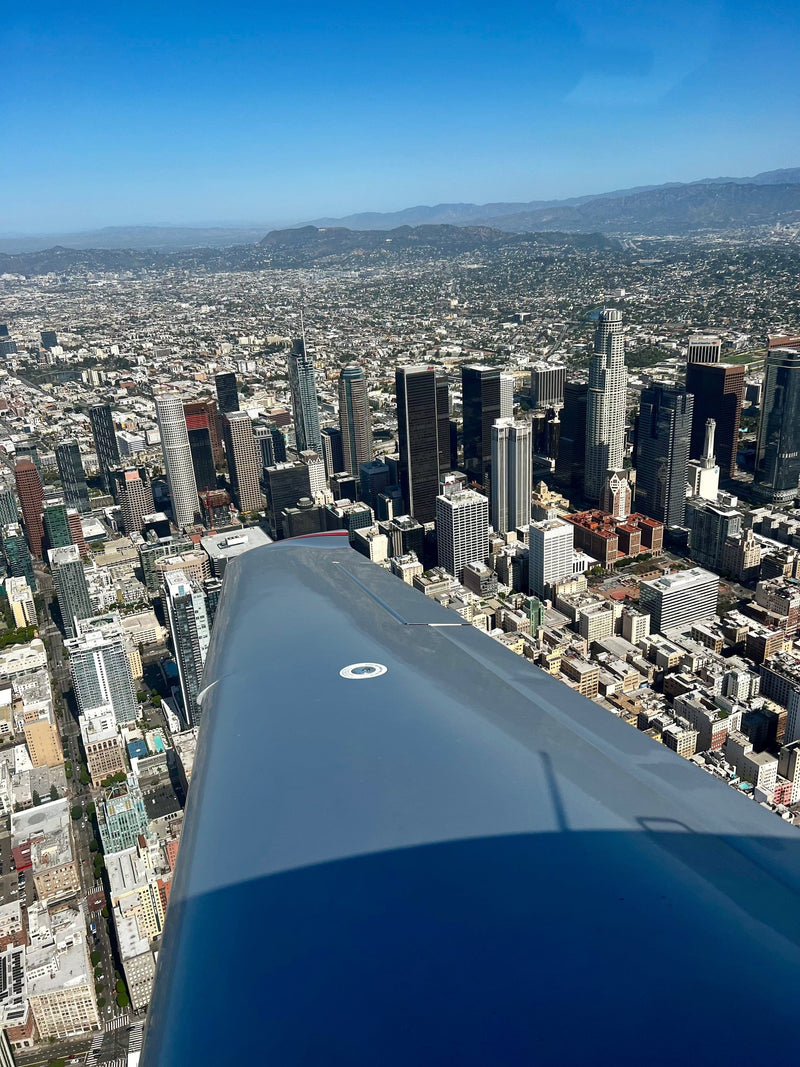
There is a reward specific to living here. Once your instructor lets you off the leash, the coastal route home passes directly over your own postcode: down from Malibu, along the sand at the bluffs, past Marina del Rey with the runways of LAX laid out ahead and the Class B floor overhead. Culver City appears as a neat rectangle of low white buildings between the Baldwin Hills and the creek. Recognizing your own street from two thousand feet is a strange and durable pleasure.
What the certificate buys afterwards is time, which is the scarce commodity on this side of town. Catalina is roughly thirty minutes once you are feet-wet, Santa Barbara about forty-five, and Palm Springs and Big Bear inside sixty, none of it involving the 405 in either direction. Renting a Warrior or a Cessna 162 from our ramp at Van Nuys afterwards keeps all of that within reach without buying an airplane or a hangar.


 Most Given