SAFETY FIRST
★★★★★
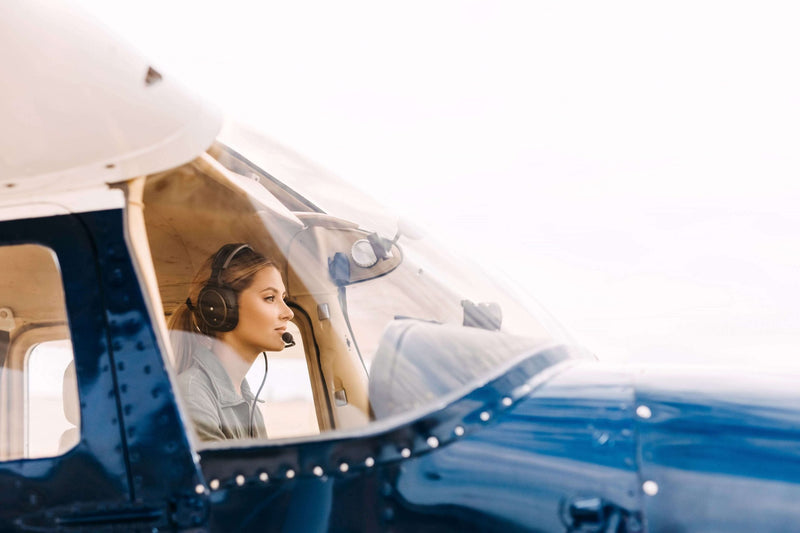
Very safety and detail oriented. Pre-flight briefing explained everything there was. To my knowledge, this flight school is exceptional in their ability.

Hidden costs are not usually dishonesty. They are what happens when a school sells you an hourly meter and stays quiet about everything that gets bolted onto it. We sell packages at set prices instead, so this page is the opposite article: what is already inside the number, and the things we deliberately do not bill for.
Book It Or Gift It
Every discovery flight below can be booked for yourself in the next few minutes, or bought as a gift certificate that is emailed within minutes and never expires. Same flight, same price, either way.
 Most Given
 Two Seats
 The Nice One
 Twin Engine
One person, one instructor, and no audience. Hands on the controls from the left seat, briefed before you go and debriefed after you land.
Hands-On Stick TimePre-Flight BriefingLoggable Flight Time
Flight Length
$229Book It Or Gift It
Same Price Either Way
The same flight with a passenger in the back seat, briefed and on the intercom. Couples book it; so do parents who would rather watch than hear about it.
One Passenger SeatPiper Warrior Or ArcherHeadsets For Both
Flight Length
$299Book It Or Gift It
Same Price Either Way
The nicest airplane we put a first-time flyer in. Glass cockpit, air conditioning, leather seats, and a parachute built into the airframe rather than strapped to the person.
Turbocharged Cirrus SR22Air ConditioningWhole-Airframe Parachute
Flight Length
$499Book It Or Gift It
Same Price Either Way
Two engines, and the airplane instrument-rated pilots move into when they start thinking about a career. Flown from the left seat with a multi-engine instructor.
Piper Seminole TwinMulti-Engine DepartureCareer-Track Instructor
Flight Length
$499Book It Or Gift It
Same Price Either Way
Gift It issues a real gift certificate, emailed within minutes, which never expires and credits in full toward training. Flights are limited to 180 lb per person, 370 lb combined. Questions: (818) 290-8249, 9 AM–9 PM, seven days.
SAFETY FIRST
Very safety and detail oriented. Pre-flight briefing explained everything there was. To my knowledge, this flight school is exceptional in their ability.
 DISCOVERY FLIGHT
I recently had the chance to take my first-ever discovery flight, and it was nothing short of amazing! From the moment I stepped into the cockpit, the...
 SUNSET CIRRUS
It was a great flight! I did a sunset flight and Alex let us fly an awesome. Website was easy to book, and the plane itself was really fun to fly...
 FLYING LESSON
We had a great flying lesson with Ralph and came away with a much better understanding of both the aircraft and the principles of flight. Ralph is a...
 KIDS LUXURY FLIGHT
I got 2 luxury discovery flights for my kids. I wanted them to have the experience of flying. Our instructor Alex was amazing he made sure they feel...
 HONEYMOON SURPRISE
Last minute booking to surprise my wife on our honeymoon. She had no experience with flying and was scared of flying, but Alex was very easygoing and knew...
 FULL-MOTION SIM
Amazing flight school in van nuys airport. I have been a student here for the past few months and i could not be happier. I started doing a lot of...
 DISCOVERY FOR TWO
I booked a Discovery Flight for Two for my girlfriend's birthday and it was the perfect gift for her. She couldn't have been more excited to get to...
 SIMULATORS
Very professional and great airplanes. I love the flight simulators. The pricing is very fair compared to any other flight school
 TEEN FIRST LESSON
We gifted our teenage son his first flying lesson. He was so excited! Alex greeted us and gave a reassuring brief that made us all feel comfortable and at...
 FIRST-TIME FLYER
Flying is my husband's hobby and I was incredibly anxious and apprehensive about the discovery flight. However, I felt completely safe and at ease once we...
SAFETY FIRST
Very safety and detail oriented. Pre-flight briefing explained everything there was. To my knowledge, this flight school is exceptional in their ability.
DISCOVERY FLIGHT
I recently had the chance to take my first-ever discovery flight, and it was nothing short of amazing! From the moment I stepped into the cockpit, the...
SUNSET CIRRUS
It was a great flight! I did a sunset flight and Alex let us fly an awesome. Website was easy to book, and the plane itself was really fun to fly...
FLYING LESSON
We had a great flying lesson with Ralph and came away with a much better understanding of both the aircraft and the principles of flight. Ralph is a...
KIDS LUXURY FLIGHT
I got 2 luxury discovery flights for my kids. I wanted them to have the experience of flying. Our instructor Alex was amazing he made sure they feel...
HONEYMOON SURPRISE
Last minute booking to surprise my wife on our honeymoon. She had no experience with flying and was scared of flying, but Alex was very easygoing and knew...
FULL-MOTION SIM
Amazing flight school in van nuys airport. I have been a student here for the past few months and i could not be happier. I started doing a lot of...
DISCOVERY FOR TWO
I booked a Discovery Flight for Two for my girlfriend's birthday and it was the perfect gift for her. She couldn't have been more excited to get to...
SIMULATORS
Very professional and great airplanes. I love the flight simulators. The pricing is very fair compared to any other flight school
TEEN FIRST LESSON
We gifted our teenage son his first flying lesson. He was so excited! Alex greeted us and gave a reassuring brief that made us all feel comfortable and at...
FIRST-TIME FLYER
Flying is my husband's hobby and I was incredibly anxious and apprehensive about the discovery flight. However, I felt completely safe and at ease once we...
If a school sells you an hourly rate, every single thing that is not the aircraft has to be priced separately afterwards. The pre-flight briefing. The debrief. The ground lesson on airspace. The syllabus. The mock checkride. Fuel, if the rate was dry. None of that is sinister. It is just the arithmetic of selling time by the hour, and it is why two quotes that look identical in March feel very different in October.
It also quietly changes how you train. When a debrief has a meter running on it, students cut debriefs short, and the debrief is where most of the actual learning happens. We have watched people become worse pilots because of a billing model.
So we stopped selling hours and started selling programs. You buy the Standard Private Pilot Program at $10,900, or the Comprehensive at $15,900, or the Premium at $22,500, and the aircraft, the instructor, the ground school, the simulator hours and your books are all already inside that number. There is nothing left over to surprise you with.

The same table other schools publish as a list of extras. Here it is as a list of inclusions, because that is what a package price means.
| What you get | Standard $10,900 | Comprehensive $15,900 | Premium $22,500 |
|---|---|---|---|
| Single-Engine aircraft (Cessna · Piper · Diamond) | 38 hrs | 55 hrs | — |
| Cirrus SR22 Turbo, full glass cockpit | — | — | 38 hrs |
| Redbird full-motion simulator | 2 hrs | 5 hrs | 2 hrs |
| Dual flight instruction | 30 hrs | 50 hrs | 30 hrs |
| Ground school | 3 hrs | 10 hrs | 3 hrs |
| Books & training materials | included | included | included |
| Fuel — every hour is wet | included | included | included |
| Pre-flight briefings and post-flight debriefs | included | included | included |
| Mock oral and practice checkride | included | included | included |
| Logged flight time on completion | 40 hrs | 60 hrs | 40 hrs |
Enrolled students fly at the $179 an hour package rate, wet and single-engine. Wet means fuel is in the number, so nothing moves when the price of Avgas does. Financing starts from $2,500 down with monthly plans.
Short list, because it should be. Every one of these appears as a line item on invoices elsewhere in this industry and never on ours.
Inside every program price — 3 hours on Standard and Premium, 10 on Comprehensive, plus every pre-flight briefing and every debrief. Not discounted, not bundled at a lower rate. There is no ground instruction line on your invoice at all.
Every hour we fly you is wet. The $179 package hour is $179 whatever Avgas did that week, and there has never been a separate fuel surcharge here.
Syllabus, logbook, charts and course books are inside the program price. You are not sent to a pilot shop with a list on your first day.
The mock oral and the practice checkride with a second instructor are included. They are also the single best protection against having to sit a checkride twice.
The price you enroll at is the price you finish at, for the duration of that program. If the market moves, that is our problem, not yours. Ask any school you are considering the same question and get the answer in writing.
The $229 is credited in full against any program if you enroll within 24 hours. In practice that makes trying it free for anyone who goes on to train with us.
A package price is not a claim that flight training has no requirements. It is a claim that we have stopped turning those requirements into line items.
Every FAA certificate ends with a practical test in front of a designated examiner, and the examiner is an independent professional rather than a member of our staff. What we do about it is prepare you properly: the mock oral and the practice checkride are inside your program, and they are the reason most of our students only sit it once.
An FAA medical certificate from an aviation medical examiner is required before your first solo on the private track, and it is the one item that can genuinely stop training, so we tell every student to sort it in the first fortnight rather than the last. Sport pilots do not need one at all, which is part of why the Sport Pilot Program at $8,400 exists.
The knowledge test is administered by an approved testing center, not by us. The preparation for it is ground school, and ground school is already in your package — 3 hours on Standard and Premium, 10 on Comprehensive. Students who sit it early finish faster, so we push hard on that.
A fixed price only works if the school controls the aircraft. Not a broker's rental, not a tired trainer with 12,000 hours on the airframe — every aircraft on this ramp is ours, inspected on our schedule.


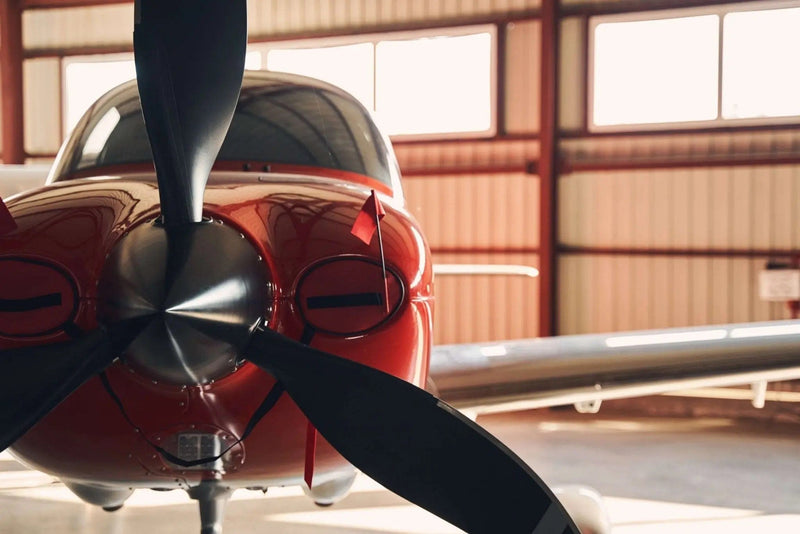
Single-engine training on the Standard and Comprehensive programs is flown in the Cessna, Piper and Diamond aircraft. The Premium program is flown in the Cirrus SR22 Turbo with its full glass cockpit.
The simulator is the clearest example of what a package price changes. When the hours are already bought, instructors use it for the things it is genuinely better at instead of weighing it against the aircraft on price. FAA-approved, fully enclosed, and it moves.
Simulator hours are built into every private pilot program — 2 hours on Standard and Premium, 5 hours on Comprehensive. A standalone Redbird session is $189.
Every instructor here holds a commercial or ATP certificate plus a CFI and a current medical, and the instructor is legally pilot in command on every flight. That is worth saying out loud on a page about money, because it means the person in the right seat carries the responsibility as well as the teaching.
There are eleven of them, which is why scheduling works. A school with two instructors cannot give you two slots a week in February, and a stretched-out certificate is the most expensive hidden cost in this industry.
They fly here as a career rather than treating the school as a waiting room for an airline class date. You are matched to an instructor at enrollment and you can change if the fit is wrong, at no cost and without restarting anything.

On Google, the same three things come up again and again.
The number you enroll at is the number you finish at. On a page about hidden costs, this is the review line that matters most.
The most repeated compliment in our reviews is not the aircraft or the price — it is the debrief.
Eleven instructors and a fleet we own means lessons happen when we say they will.
All three produce the same FAA private pilot certificate. What differs is how many hours are written into the package and which flight deck you learn in.
Forty hours logged. The right package if you can fly twice a week or more, and the one most of our students take.
Sixty logged hours and ten hours of ground school. If your calendar is realistically weekly rather than twice weekly, this is the number that protects you.
The same 40-hour structure as Standard, flown in the Cirrus SR22 Turbo with its full glass cockpit and airframe parachute.
Every program is one fixed price with the aircraft, the instructor, ground school, simulator time and your books and materials inside it. Enrolled students fly at the $179 an hour package rate, wet, single-engine. Financing is available from $2,500 down with monthly plans, through Stratus Financial or an in-house plan.
Bring the awkward questions to a free consultation, or just go flying first. Both cost less than being wrong about a school.
Sit down with an instructor, look at your calendar, and leave with a written plan and a package recommendation. No obligation and no sales pitch.
You fly the aircraft, the time is loggable dual instruction, and the full price is credited against any program if you enroll within 24 hours. 90 min $299, 120 min $399.
One fixed price, 40 hours logged, ground school, Redbird simulator time and materials included. Financing from $2,500 down with monthly plans.
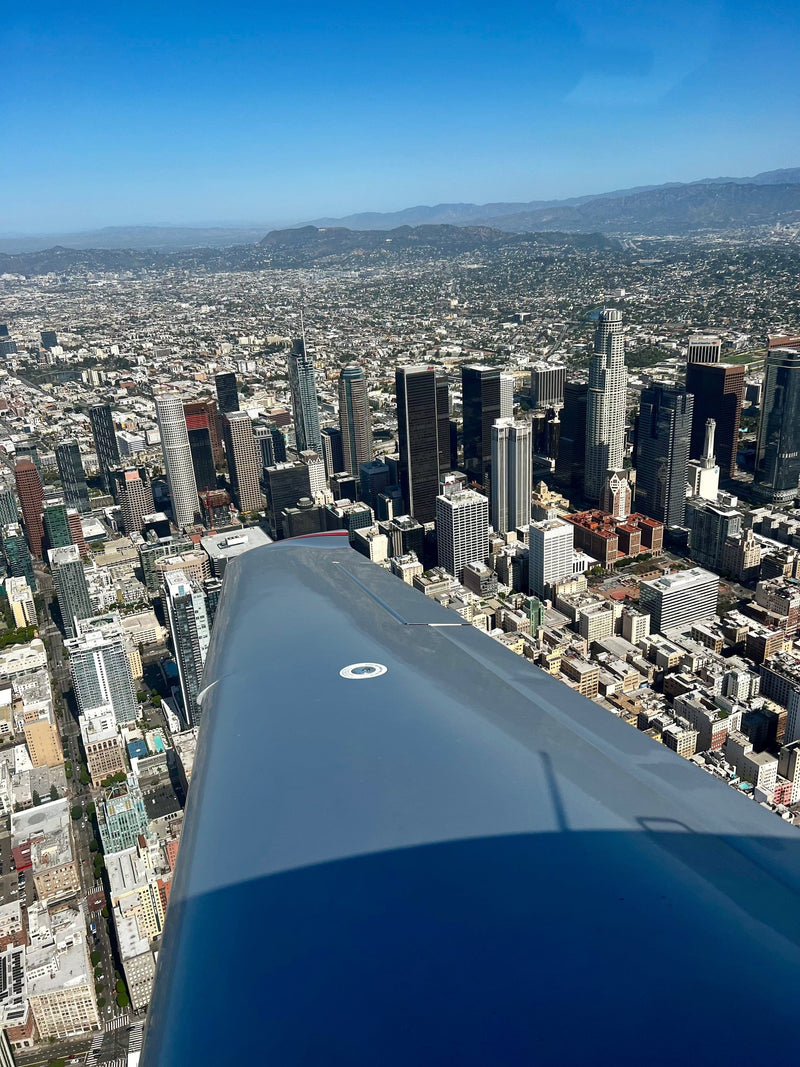
Sixty minutes over Los Angeles with your hands on the controls, logged as real dual instruction. Enroll within 24 hours and the whole $229 comes off your program. Call (818) 290-8249, 9am to 9pm, seven days. 7900 Balboa Blvd, Suite 108A, Van Nuys.
At a school that bills by the hour they are usually ground instruction, briefings, fuel surcharges when fuel is not in the quoted number, training materials and mid-training rate rises. We sell packages at set prices instead, so all five of those are already inside the number. The Standard Private Pilot Program is $10,900 and there is no ground instruction line on your invoice.
The aircraft, the instructor, ground school, Redbird simulator time and your books and training materials. On the Standard Private Pilot Program at $10,900 that means 38 hours single-engine, 2 simulator hours, 30 hours of dual instruction and 3 hours of ground school for 40 hours logged.
No. Ground school is inside every program price, along with every pre-flight briefing and every post-flight debrief. The Standard and Premium programs include 3 hours of ground school and the Comprehensive includes 10, and none of it appears as a separate charge.
Yes. Every hour we fly is wet, which means fuel is in the number. The $179 an hour package rate for enrolled students is $179 whatever the price of Avgas does that month, and there has never been a fuel surcharge here.
Many can and do. Ours cannot: the price you enroll at is the price you finish at for the duration of that program, whether that is the $10,900 Standard or the $22,500 Premium. Ask any school you are considering the same question and get the answer in writing rather than as a reassurance across a desk.
Yes. Every FAA certificate ends with a practical test in front of a designated examiner who is independent of the school. What we do about it is included: the mock oral and the practice checkride with a second instructor are inside all three private pilot packages.
On the private pilot track you need an FAA medical certificate before your first solo, issued by an aviation medical examiner rather than by us. Sport pilots do not need one at all, which is one reason the Sport Pilot Program at $8,400 suits some people better. Get it sorted in your first fortnight, not your last.
Financing starts from $2,500 down with monthly plans, through Stratus Financial or through our own in-house payment plans. The financed amount is the package price you enrolled at, because that price does not move during the program.
The three private pilot packages, what each one includes, the financing options and a realistic timeline built around how often you can actually fly. Sent to you in one email. Nobody will pressure you.
Loved On Google
Every review below is real and shown verbatim, in the reviewer’s own words — written by the people who learned to fly here, not by us.
SAFETY FIRST
Very safety and detail oriented. Pre-flight briefing explained everything there was. To my knowledge, this flight school is exceptional in their ability.
DISCOVERY FLIGHT
I recently had the chance to take my first-ever discovery flight, and it was nothing short of amazing! From the moment I stepped into the cockpit, the...
SUNSET CIRRUS
It was a great flight! I did a sunset flight and Alex let us fly an awesome. Website was easy to book, and the plane itself was really fun to fly...
FLYING LESSON
We had a great flying lesson with Ralph and came away with a much better understanding of both the aircraft and the principles of flight. Ralph is a...
KIDS LUXURY FLIGHT
I got 2 luxury discovery flights for my kids. I wanted them to have the experience of flying. Our instructor Alex was amazing he made sure they feel...
HONEYMOON SURPRISE
Last minute booking to surprise my wife on our honeymoon. She had no experience with flying and was scared of flying, but Alex was very easygoing and knew...
FULL-MOTION SIM
Amazing flight school in van nuys airport. I have been a student here for the past few months and i could not be happier. I started doing a lot of...
DISCOVERY FOR TWO
I booked a Discovery Flight for Two for my girlfriend's birthday and it was the perfect gift for her. She couldn't have been more excited to get to...
SIMULATORS
Very professional and great airplanes. I love the flight simulators. The pricing is very fair compared to any other flight school
TEEN FIRST LESSON
We gifted our teenage son his first flying lesson. He was so excited! Alex greeted us and gave a reassuring brief that made us all feel comfortable and at...
FIRST-TIME FLYER
Flying is my husband's hobby and I was incredibly anxious and apprehensive about the discovery flight. However, I felt completely safe and at ease once we...
SAFETY FIRST
Very safety and detail oriented. Pre-flight briefing explained everything there was. To my knowledge, this flight school is exceptional in their ability.
DISCOVERY FLIGHT
I recently had the chance to take my first-ever discovery flight, and it was nothing short of amazing! From the moment I stepped into the cockpit, the...
SUNSET CIRRUS
It was a great flight! I did a sunset flight and Alex let us fly an awesome. Website was easy to book, and the plane itself was really fun to fly...
FLYING LESSON
We had a great flying lesson with Ralph and came away with a much better understanding of both the aircraft and the principles of flight. Ralph is a...
KIDS LUXURY FLIGHT
I got 2 luxury discovery flights for my kids. I wanted them to have the experience of flying. Our instructor Alex was amazing he made sure they feel...
HONEYMOON SURPRISE
Last minute booking to surprise my wife on our honeymoon. She had no experience with flying and was scared of flying, but Alex was very easygoing and knew...
FULL-MOTION SIM
Amazing flight school in van nuys airport. I have been a student here for the past few months and i could not be happier. I started doing a lot of...
DISCOVERY FOR TWO
I booked a Discovery Flight for Two for my girlfriend's birthday and it was the perfect gift for her. She couldn't have been more excited to get to...
SIMULATORS
Very professional and great airplanes. I love the flight simulators. The pricing is very fair compared to any other flight school
TEEN FIRST LESSON
We gifted our teenage son his first flying lesson. He was so excited! Alex greeted us and gave a reassuring brief that made us all feel comfortable and at...
FIRST-TIME FLYER
Flying is my husband's hobby and I was incredibly anxious and apprehensive about the discovery flight. However, I felt completely safe and at ease once we...
Reviews shown verbatim, exactly as each reviewer published them.
Aviation News
Notes from the flight line at Van Nuys — weather, regulation changes, checkride questions and the cost of training, written up as they come.
Open 7 days · 9:00 AM – 9:00 PM
Los Angeles Flight School