Flight Training for Culver City at Van Nuys Airport
Twenty-one miles north of the Baldwin Hills, at a field with two parallel runways, its own tower, and airplanes you can book the same week.
A town that has always had airplanes over it
Culver City has spent a century underneath other people's aircraft. On an ordinary westerly day the arrivals into LAX file in over the Baldwin Hills with the gear already down, four or five stacked above La Cienega at once, and nobody on the sidewalk bothers looking up. A mile down Ballona Creek, Hughes Aircraft built airplanes on the flats that are now Playa Vista, and the wooden hangar where the Spruce Goose was assembled still stands. Flying is not exotic here. It has just always belonged to somebody else.
What Culver City does not have is a place to learn it. The nearest field sits four miles west with a shortened runway and a calendar nobody will guarantee, and the next one south is wedged under the LAX shelf with one strip and a lot of jet traffic. Van Nuys is twenty-one miles north: two parallel runways, a control tower whose staff talk to student pilots every hour of the day, and a fleet running from a Cessna 162 through a Cirrus SR22 to a twin-engine Seminole.
The people who come to us from Culver City tend to have weeks that never repeat. Post supervisors and colorists around the Hayden Tract, editors in the Helms building, engineers at the Playa Vista campuses, producers on the Washington Boulevard lots who are in Atlanta for a month and then home for three weeks with nothing booked. A standing Tuesday afternoon slot dies the first time a shoot moves. Booking each lesson on its own, at a school open until nine at night, survives it.
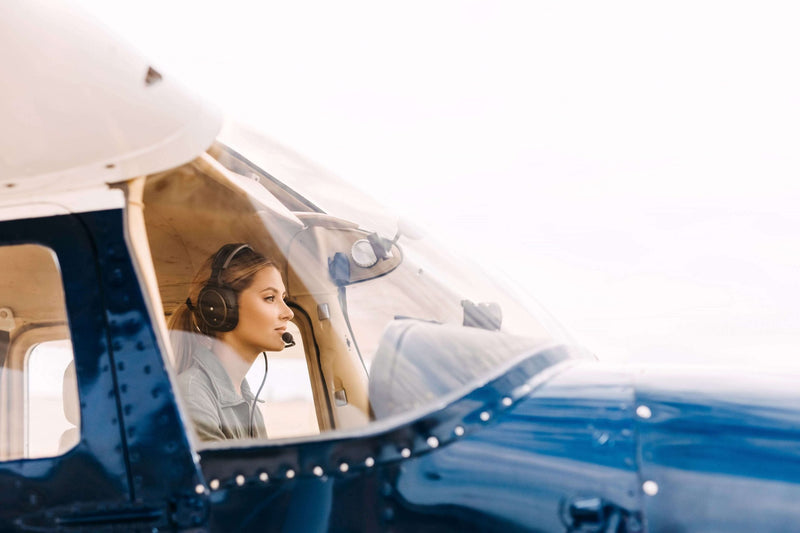
The honest way to find out whether you want this is one hour. A discovery flight costs $229 and you fly the airplane yourself, hands on the yoke from shortly after the wheels leave the ground, while the instructor works the radio. Turn south out of Van Nuys and the oil derricks on the Baldwin Hills and the concrete line of Ballona Creek are beneath you inside fifteen minutes. Enroll within twenty-four hours and the whole fee comes off your course.
Ways in, with the price written down
Six starting points, each quoted as a full program rather than an hourly rate.
Standard Private Pilot
The full FAA Private Pilot Certificate. Where most students start.
Learn morePremium Private Pilot
The widest margin of hours for students who want no surprises.
Learn moreInstrument Rating
The rating that makes a licence useful in Southern California weather.
Learn moreTry it first — a discovery flight from Van Nuys
You fly the aircraft from the left seat with an instructor beside you. The time is loggable and counts toward a certificate.
Luxury Cirrus For Two
The SR22 Turbo, glass cockpit. 90 min $549, 120 min $699.
Learn moreRedbird Simulator Session
FAA-approved full-motion MCX, on the field at Van Nuys.
Learn moreCulver City to 7900 Balboa Blvd, Suite 108A
The default is the 405. Join it at Venice Boulevard, at Washington, or off the 90 from the Marina side, and head north. You pass Westwood, climb the Sepulveda Pass with the Getty on the ridge to your left, cross at the Skirball and drop onto the valley floor at Sherman Oaks. Come off at Sherman Way, turn west, and drive two and a half miles until Balboa Boulevard arrives with the airport fence behind it.
Timing is the whole game on this route and it would be dishonest to pretend otherwise. Between four and seven in the evening the northbound pass can turn thirty-five minutes into seventy. Mid-morning is clean, and so is anything after eight at night, which is why a fair number of Culver City students take the last slot of the day. If the freeway has stopped entirely, Sepulveda Boulevard parallels it the whole way north.
When you arrive, park in our own lot at 7900 Balboa Boulevard. It is free, with no meter, no attendant and no gate code, and nobody moves you along after ninety minutes. Come to Suite 108A. The building is a shared hangar complex holding several unrelated aviation businesses, so the suite number matters more than the street number on a first visit. We fly from nine in the morning until nine at night, every day.
Why Westside students drive over the hill
Two runways and a tower used to students
Van Nuys runs parallel runways with a tower working general aviation all day. You learn radio work properly, in real traffic, from your third or fourth lesson. Pilots trained at quiet uncontrolled fields have to pick this up later, usually badly and usually somewhere they would rather not be experimenting.
The whole ladder on one ramp
Cessna 162, Piper Warrior, Diamond DA20, Piper Arrow II, Cirrus SR22 Turbo and Piper Seminole all sit on one ramp, and your package covers the aircraft and the instructor together. Everything from a first lesson to a multi-engine rating sits within a hundred yards of the same office. You never change schools to move up.
Hours built for irregular weeks
Nine in the morning to nine at night, every day including weekends. If a project ends on a Thursday you can fly Friday, Saturday and Sunday and make up a fortnight. If it starts again you stop, and nothing expires. That is the actual reason Culver City students finish rather than stall.
Prices you can check before you come
Every figure here is a complete program cost, and the in-person consultation beforehand is free. Financing goes through Stratus Financial or an in-house payment plan. We would rather steer you to the $10,900 course that matches how often you can genuinely fly than the $22,500 one that does not.
The airplanes on the ramp
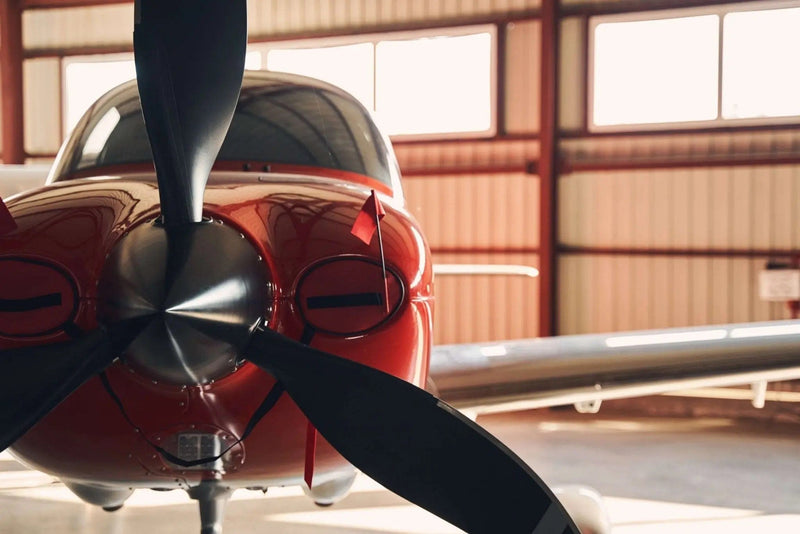
Most Culver City students begin in the Cessna 162 Skycatcher or the Piper Warrior. They are honest trainers that show you exactly what your hands and feet are doing wrong, which is precisely what you want from an airplane in the first forty hours of instruction. The Diamond DA20 is the one to request on a clear afternoon: the bubble canopy wraps right around you, and heading south there is nothing between your eyes and the Santa Monica Mountains but plexiglass.
After the certificate the ramp keeps going. The Piper Arrow II has retractable gear and a constant-speed propeller, which is what commercial work and complex time both require of you. The Cirrus SR22 Turbo is a real traveling machine, with a glass panel and a parachute for the whole airframe. The Piper Seminole is the twin you take the multi-engine rating in, and that rating is a $5,100 package. The Redbird MCX full-motion simulator is $189 for a sixty-minute session, and what you do in it counts toward the certificate.
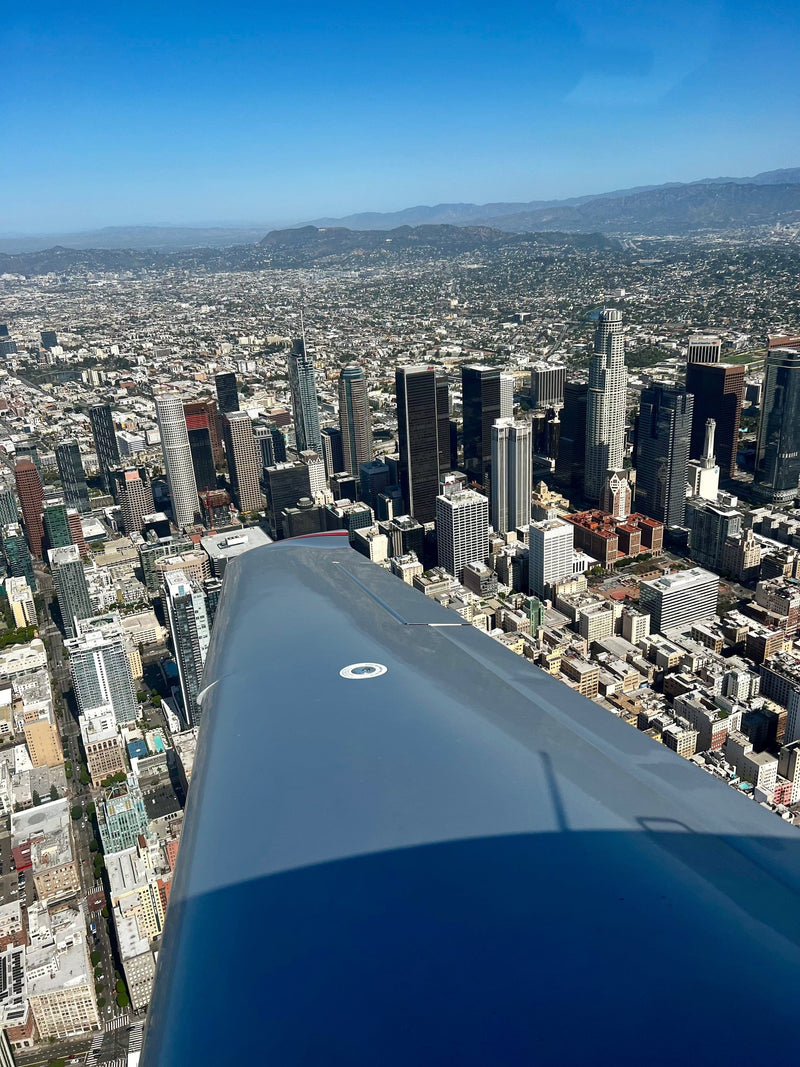
Culver City from two and a half thousand feet
Turn left out of Van Nuys, cross the mountains, and the town is laid out below in about fifteen minutes.
The Inglewood Oil Field
A bare khaki hillside covered in pumping units and terraced service roads, sitting improbably inside a dense city. The staircase of the Culver City Stairs is cut into its northern face.
The Washington Boulevard lots
The Sony soundstages read as a solid block of white roofs with the arch on the corner, and the Culver Studios' colonial front sits a few streets east. From above, much of the town is one production campus.
Ballona Creek
A dead-straight concrete channel running southwest from Syd Kronenthal Park to the harbor at Marina del Rey, the bike path threading alongside it. It is the clearest navigation feature on the Westside and student pilots use it constantly.
The LAX arrival stream
On a westerly day you can see the line of airliners on final over Inglewood, evenly spaced, descending on the same invisible wire. Watching that from well above and clear of it teaches you more about airspace than a chapter would.
Common questions
Thirty-five minutes on a clean run up the 405, and closer to seventy northbound through the Sepulveda Pass between four and seven in the evening. Mid-morning and late evening are both reliable. Sepulveda Boulevard parallels the freeway and is the local bypass when the 405 stops.
Geographically yes, practically less so. The coastal field nearest you has a shortened runway and no long-term certainty, and the one south of you sits under the LAX Class B shelf with a single runway. Van Nuys has parallel runways, a tower, maintenance in the same complex, and a fleet that goes trainer to twin.
In our own lot at 7900 Balboa Boulevard, free, with no meter and no time limit. Walk to Suite 108A. The complex is shared with several unrelated aviation companies with similar-sounding names, so search the suite number rather than the street address. Call (818) 290-8249 if you cannot find the door.
The standard program is $10,900 and the comprehensive version, with a much larger block of instruction included, is $15,900. The largest package we offer is $22,500. A solo certificate on its own is $5,500 and the sport pilot license is $8,400. Each of those is a whole-program figure covering aircraft, instructor and ground school.
It is the most common situation we deal with from your side of town. We are open nine to nine, seven days, and lessons are booked one at a time rather than as a weekly slot you forfeit when a shoot moves. Students fly four times in a week between projects, then nothing for a month.
Not for your first lessons, but you need at least an FAA third-class medical before flying solo, issued by an Aviation Medical Examiner. Several practice within reach of the Westside. Most healthy adults pass without difficulty. If a condition worries you, settle the medical before spending on training.
No. You handle the controls for most of it, the instructor is teaching rather than performing, and the hour goes in a logbook as instruction counting toward a certificate. It is $229 for sixty minutes, $299 for ninety, $399 for two hours. Enroll within twenty-four hours and all of it is credited.
Yes. The Airline Pilot Program takes someone with no flight time through to airline-ready for $89,000, covering private, instrument, commercial and multi-engine plus the hours between. Most people fund it through Stratus Financial or an in-house plan. The consultation beforehand is free and we will lay out the timeline honestly.
Book a discovery flight and see the Westside from above
Call (818) 290-8249 and take a mid-morning slot, when the pass is moving and the air over the Santa Monica Mountains is still smooth. We are at 7900 Balboa Boulevard, Suite 108A, open nine to nine daily.