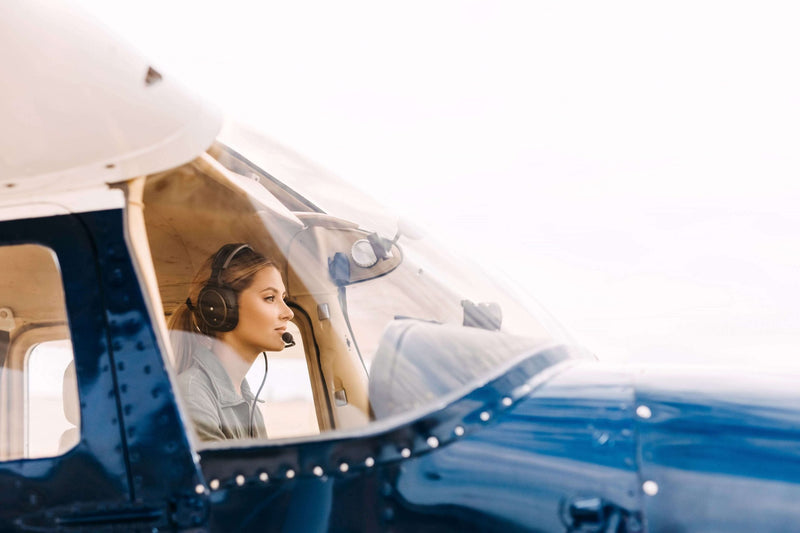
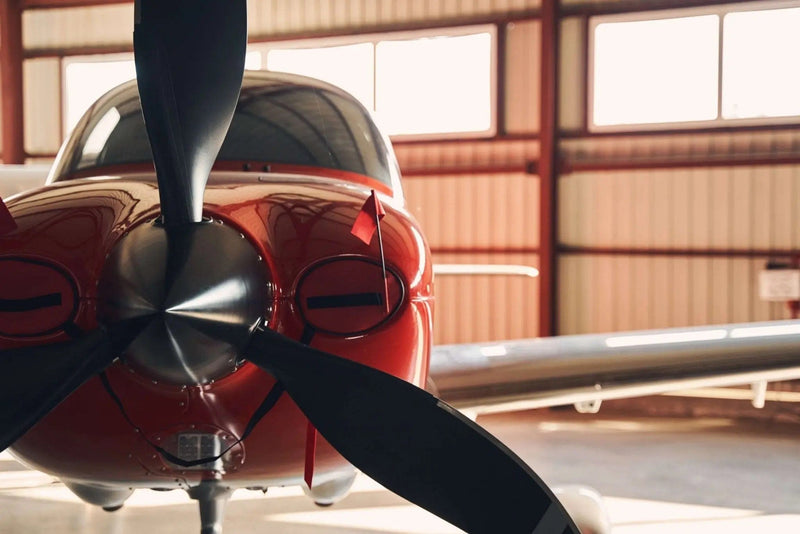
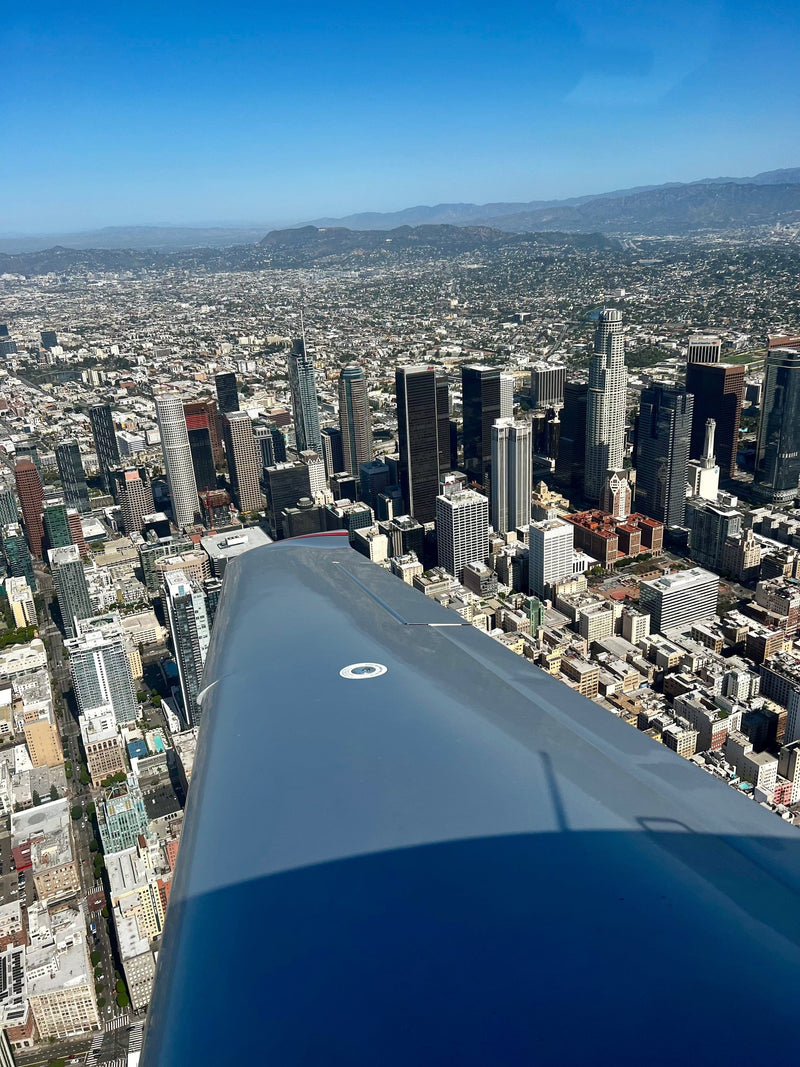
Los Angeles from the air, departing Van Nuys Airport
Enrollment received

We Have Your Enrollment Form

Your enrollment form has arrived and an enrollment specialist will call to go through your goals, your paperwork and your schedule. Below is everything that happens between now and your first lesson at Van Nuys Airport.

Enrollment specialist will callDocument checklist belowFinancing and payment plans
Suite 108A7900 Balboa Blvd, Van Nuys
5.0★on Google, 53 reviews
2,000+discovery flights flown
9 AM – 9 PMseven days a week
Meeting location

Getting to Suite 108A for lesson one

You will be making this drive regularly, so it is worth learning the shortest version of it now. The school sits at 7900 Balboa Blvd on the west boundary of Van Nuys Airport, a block south of Roscoe Blvd. Almost everyone arrives on Balboa itself: north from the 101 through Encino and Lake Balboa, or south from the 118 above Granada Hills. Both approaches take you past the Sepulveda Basin or the golf courses respectively.

If you are coming from the far side of the Valley, Sherman Way, Victory Blvd and Roscoe Blvd all cut straight across and meet Balboa within a mile of the door, which usually beats a freeway detour. From Santa Clarita, the 405 south to the Roscoe exit is the standard run. From Pasadena and Glendale, the 134 west to the 101 north is reliable outside the evening peak on the Ventura Freeway.

Book your lessons for the early morning if you can. The air over the Valley is smoothest before the sea breeze builds, traffic on Balboa is light before eight, and you will be away before the day heats up. Whichever gate you use, put the street address rather than the airport name into a navigation app, because Balboa Blvd serves several separate airport entrances along its length, and only one of them is ours.

Parking is free and there is no barrier. Coming in from Balboa Blvd, turn right immediately and follow the road down to the visitor spaces; Suite 108A is on the hangar side, marked with the suite number.

For your first lesson, allow an extra fifteen minutes for paperwork.(818) 290-8249
The entrance to LA Flight School at 7900 Balboa Blvd, Suite 108A, Van Nuys
What happens next

The enrollment process, step by step

Six things stand between this form and your first logbook entry.

1

The specialist calls you

Someone from the enrollment desk rings to confirm what you submitted and to talk through which programme actually fits. This is a longer conversation than a general enquiry, because we are now planning a real schedule against a real budget. Have your calendar open. If the call lands badly, name a better time and we will use it.

2

Choosing the programme properly

Enrolment is where the vague becomes specific. We settle whether you are aiming at a Sport Pilot License, a Private Pilot Certificate, or straight through to an airline career, and which package that maps to. The differences are in included instruction and aircraft time, so price and pace end up pinned down at the same time.

3

Identity and citizenship documents

Federal rules require flight schools to verify identity and citizenship before training toward a certificate begins. For a US citizen that is normally a valid passport, or an original birth certificate together with a government photo ID. Non-citizens go through the TSA Alien Flight Student Program, which takes time, so we start it early rather than late.

4

Medical certificate and student pilot certificate

You need an FAA medical certificate from an aviation medical examiner before you can fly solo, and a student pilot certificate applied for through the FAA's IACRA system. Neither is difficult, but both have lead times. We point you at examiners nearby and help with IACRA, which trips people up more often than the medical.

5

Scheduling and payment

We agree how often you will fly and block the slots, because a booked slot is far more likely to happen than a good intention. At the same time we settle payment: in full, an in-house plan, or financing arranged through Stratus Financial. Nothing here needs to be decided in a rush on the phone.

6

Ground school and your first lesson

You get the study material and a plan for the FAA written knowledge test, which is best started early rather than crammed at the end. Then your first lesson goes on the calendar. You fly it from the left seat with an instructor beside you, and the hour goes into a logbook that is now yours.

Training packages

Course packages and what they cost

Solo Certificate

$5,500

Train to your first solo, sport or private track.

Learn more

Sport Pilot License

$8,400

The fastest route to flying legally as pilot in command.

Learn more
Most popular

Standard Private Pilot

$10,900

The full FAA Private Pilot Certificate. Where most students start.

Learn more

Comprehensive Private Pilot

$15,900

More simulator and ground time built into the package.

Learn more

Premium Private Pilot

$22,500

The widest margin of hours for students who want no surprises.

Learn more

Instrument Rating

$11,700

The rating that makes a licence useful in Southern California weather.

Learn more

Multi-Engine Rating

$5,100

A short add-on rating flown in the Piper Seminole.

Learn more

Airline Pilot Program

$89,000

Zero time to airline-ready, financing available.

Learn more

Teen Flight Training

$4,200

Ages 10 to 15, built around the school calendar.

Learn more
Every course above is a package, not an hourly rate — the price covers the aircraft, your instructor, ground school and the simulator time in that package. Financing is available through Stratus Financial and through in-house payment plans, and a discovery flight is credited in full against any package if you enrol within 24 hours. All training is flown from Van Nuys Airport (KVNY), 7900 Balboa Blvd, Suite 108A.
Discovery flights

Try it first — a discovery flight from Van Nuys

You fly the aircraft from the left seat with an instructor beside you.

Discovery Flight For One

$229/ 60 min

You fly it. 90 min $299, 120 min $399.

Learn more

Discovery Flight For Two

$299/ 60 min

Bring a passenger. 90 min $399, 120 min $499.

Learn more

Luxury Cirrus For Two

$399/ 60 min

The SR22 Turbo, glass cockpit. 90 min $549, 120 min $699.

Learn more

Multi-Engine Discovery

$499/ 60 min

The Piper Seminole twin. 90 min $699, 120 min $899.

Learn more

Redbird Simulator Session

$189/ 1 hr

FAA-approved full-motion MCX, on the field at Van Nuys.

Learn more
Van Nuys

The places your training will take you

Cross-country flights are where a licence stops being theory.

Early lessons stay close to home, in the practice area north-west of the field and in the traffic pattern at Van Nuys itself. Once you are handling the aircraft comfortably, the syllabus pushes you outward: first to quieter airports twenty minutes away for landing practice, then on proper cross-country legs where you plan a route, work out fuel and time, talk to controllers you have never spoken to, and land somewhere you have not seen before.

That is the part most students remember. Southern California is unusually generous for this, because within sixty minutes of Van Nuys you can reach coastline, desert, mountains and an island, all with paved runways and fuel on the field. The weather is flyable most days of the year, which matters enormously when you are trying to finish a certificate on a schedule instead of waiting out an entire season of bad weather.

The Los Angeles basin seen from the left seat
From the air

What you fly over

✈️

Camarillo Airport

Thirty-odd miles west past the Santa Susanas, and the classic first cross-country from Van Nuys. Long runway, friendly tower, warplanes parked on the ramp.

🍊

Santa Paula Airport

A small strip in the citrus groves of the Santa Clara River valley. Uncontrolled and narrow, and a good test of your radio calls.

🏝️

Catalina's Airport in the Sky

A runway on a ridge in the middle of the island, twenty-six miles offshore. It is the trip almost every student here wants to make.

🌅

Santa Barbara Airport

A busier controlled field up the coast with airline traffic mixed in. Flying there teaches you to handle a real terminal environment without any drama.

The fleet

Which aircraft you will fly, and when

You will start in the Cessna 162 Skycatcher, the Diamond DA20 or the Piper Warrior, depending on availability and on what fits you best physically. These are the aeroplanes you learn to land in, and you will spend most of your hours in one of them. All three are covered by the package you enrol on, aircraft and instructor together, so the choice is about what fits you rather than what it adds to the bill.

Later in your training the fleet opens up. The Piper Arrow II gives you retractable gear and a constant-speed propeller, the Cirrus SR22 Turbo puts you in a glass cockpit with an airframe parachute, and the Piper Seminole is the twin you would use for the $5,100 multi-engine rating. Instrument work leans heavily on the Redbird MCX full-motion simulator, $189 for a sixty-minute session, which is where approaches become cheap enough to repeat properly. All of it is on our own ramp at Van Nuys Airport, beside Suite 108A at 7900 Balboa Boulevard.

The Redbird MCX full-motion simulator at LA Flight School
Before you come

What to sort out this week

Five things you can start before the specialist calls.

1

Find your documents

Dig out your passport, or your original birth certificate and a photo ID. These have to be seen in person before training toward a certificate starts, and hunting for a birth certificate is the single commonest cause of a delayed first lesson.

2

Book the medical early

An FAA medical from an aviation medical examiner is needed before solo, and appointments are not always same-week. If you take regular medication or have any history at all, raise it with us first, because there is usually a straightforward route through it.

3

Block out your flying time

Decide which two or three slots a week are genuinely protected, and treat them like a standing appointment. Students who fly twice a week finish; students who fly when convenient tend to spend more money relearning what they already knew.

4

Start the written test early

The FAA knowledge test can be studied for from day one and passed long before your practical test. Getting it out of the way removes the most common bottleneck we see at the end of a private pilot course, when everything else is ready.

5

Sort the money before you start

Whether that means paying a package up front, taking an in-house plan or applying to Stratus Financial, have it settled before lesson one. Running out of budget halfway through is the most expensive thing that can happen to a student pilot.

Your options

Programme prices and how people pay

The Standard Private Pilot programme is $10,900, the Comprehensive is $15,900 and the Premium is $22,500; the differences are in included instruction and aircraft hours rather than in the certificate you end up holding. Below them, the Sport Pilot License is $8,400 and the Solo Certificate is $5,500 for people who want a defined first milestone. The Teen Flight Training Package is $4,200, and teenagers can begin training well before they are old enough to hold the certificate itself at seventeen.

If you are going further, the Instrument Rating is $11,700, the Multi-Engine Rating is $5,100 as an add-on in the Seminole, and the Airline Pilot Program from zero hours to airline-ready is $89,000. Financing runs through Stratus Financial, who lend specifically for flight training, and we also offer in-house payment plans that spread the cost across the course rather than demanding it at the start. The specialist goes through both of those options with you in detail on the call itself.

An instructor briefing a student beside the aircraft at Van Nuys
FAQ

Common questions

Usually the same day, and always within one working day. We are staffed from 9 AM to 9 PM seven days a week, so evening callbacks are normal. If you want a specific window, ring (818) 290-8249.

No. The form starts a conversation and reserves nothing. No payment is taken until you have chosen a programme and agreed how you are paying for it.

Photo ID plus proof of citizenship, which for US citizens means a passport or an original birth certificate with a government photo ID. These are checked in person at Suite 108A. Non-US citizens need TSA approval first.

Not to begin lessons, but yes before you fly solo. Book it early with an aviation medical examiner, because lead times vary and it is the item most likely to hold up progress.

It depends almost entirely on how often you fly. Two or three lessons a week typically means several months; once a fortnight can stretch beyond a year and cost more, because each gap costs you relearning. Consistency is cheaper than intensity.

No. You can pay a programme in full, use an in-house payment plan, or finance through Stratus Financial. Most students use one of the latter two. The specialist will walk through what each option means month to month.

There is no upper age limit for a private pilot certificate, only the medical standard. People start in their fifties and sixties here regularly and do perfectly well. The honest constraint is time available to fly.

Yes. You can begin training at any age, solo at sixteen with a student pilot certificate and medical, and hold a private pilot certificate at seventeen. The Teen Flight Training Package at $4,200 exists for exactly this.

Talk to us

Anything you want answered first

Call (818) 290-8249 between 9 AM and 9 PM, any day, and an instructor will talk it through with you. We hold a 5.0 rating on Google across 53 reviews and our instructors are FAA-certified with over fifteen years of experience.

Standard Private Pilot
$10,900
A discovery flight is credited in full if you enrol within 24 hours
See the private pilot course or call (818) 290-8249