SAFETY FIRST
★★★★★
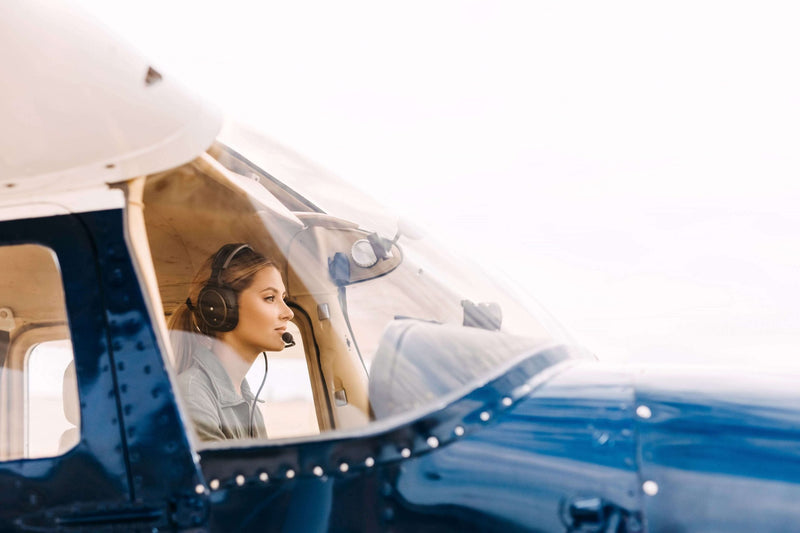
Very safety and detail oriented. Pre-flight briefing explained everything there was. To my knowledge, this flight school is exceptional in their ability.

Nine miles west of Coldwater Canyon there is a towered airport, seven aircraft types and a certificate course that can be flown around a production schedule.
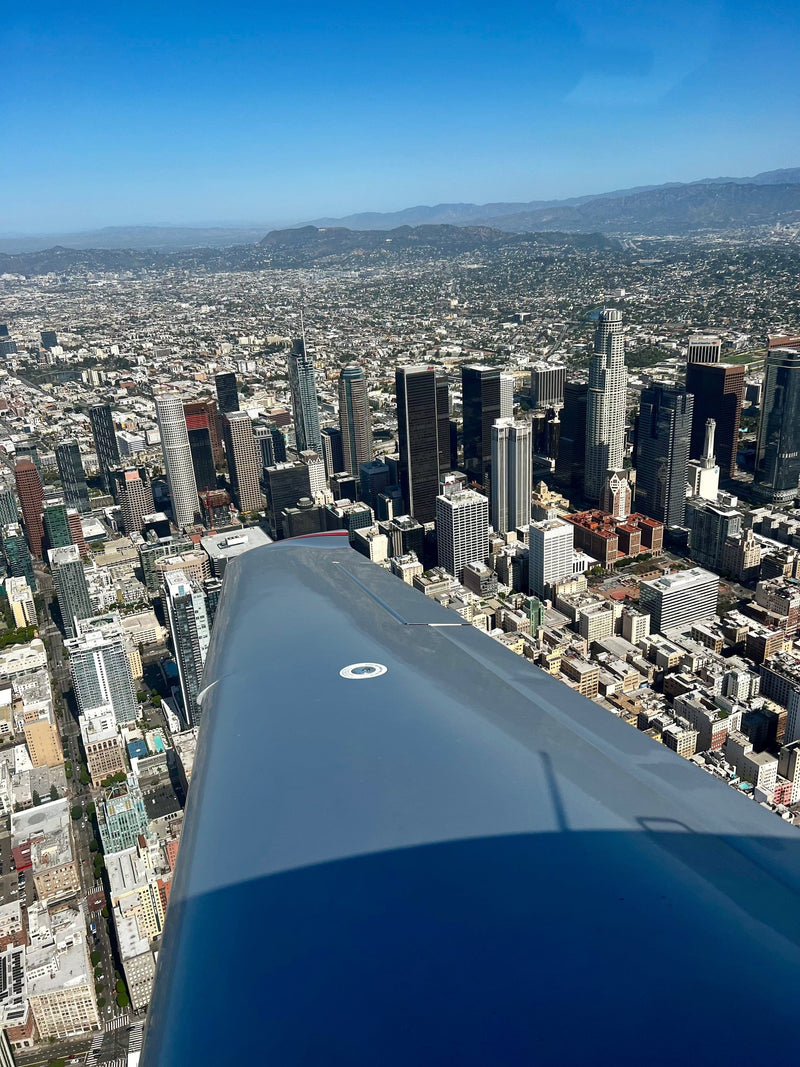
Studio City is pinched into the eastern corner of the valley, with the hills on one side, the Cahuenga Pass funnelling everything toward town, and the river running behind the houses. From the ground it is a set of routes you have memorized. From two thousand feet it resolves into one legible shape in about ninety seconds, and most people from this neighborhood say the same thing on their first flight: they finally understand where they live. That reaction is a good sign for the rest of the training. The school is at Van Nuys Airport, Suite 108A at 7900 Balboa Boulevard; Studio City is where our students drive from.
The training pattern here is unusual because the work is. A lot of Studio City students are freelance and their year has a shape to it: weeks of nothing followed by months of no time at all. That is workable, and it is better handled honestly than pretended away. Fly hard through a hiatus, get to solo or beyond, then hold currency with a lesson or two a month once you are back on a show. It costs a little more in total hours than a steady schedule, and we will tell you roughly how much before you start.
What the certificate is worth here is mostly range. Santa Barbara for a location scout is forty minutes rather than a day gone. Bakersfield, Paso Robles, Mammoth, Las Vegas all become single-day trips flown by you at your own hours, which is the part that matters when your call times move. And on a clear evening you can take one passenger up after work and show them the whole basin lit from the Sepulveda Basin to the harbor, which is a better use of an evening than most.
Nothing about the money is hidden. A discovery flight with you at the controls is $229 for sixty minutes, logged as instruction in your own name. The standard private certificate is $10,900, the comprehensive course $15,900, and the instrument rating afterward is $11,700. Enroll within twenty-four hours of that first flight and the $229 comes off the tuition. Stratus Financial and an in-house payment plan spread whichever course you pick, and the first consultation is free and genuinely no-obligation.

These are whole prices for whole programs, not hourly rates waiting to be added up.
The full FAA Private Pilot Certificate. Where most students start.
Learn MoreThe widest margin of hours for students who want no surprises.
Learn MoreThe rating that makes a license useful in Southern California weather.
Learn MoreYou fly the aircraft from the left seat with an instructor beside you. The time is loggable and counts toward a certificate.
The SR22 Turbo, glass cockpit. 90 min $699, 120 min $949.
Learn MoreFAA-approved full-motion MCX, on the field at Van Nuys.
Learn MoreThe obvious route is the 101 west. Join it at Laurel Canyon, Coldwater or Woodman, run through Sherman Oaks and Encino, and leave at Balboa Boulevard heading north. From the exit it is a straight two-mile run up past Burbank Boulevard and Victory, with the basin's golf courses on your left, until our building appears on the right just short of Roscoe. Twenty minutes when the freeway is behaving, and it usually is outside the evening squeeze.
The quiet alternative avoids the freeway entirely and is worth learning. Take Whitsett or Coldwater north to Burbank Boulevard, then west across Sherman Oaks and through the Sepulveda Basin to Balboa, and turn north there. It is a few minutes longer on paper and considerably calmer at half past five, when the westbound 101 through Sherman Oaks stops pretending. Moorpark to Woodman to Victory Boulevard works as a third option if the first two are both blocked.
Parking is our own lot at 7900 Balboa Boulevard, free and ungated, with spaces directly outside the door. The office is Suite 108A, and that detail matters because the address is a shared hangar complex containing several unrelated aviation companies, a few of them with similar names. Look for the suite number rather than a sign at the roadside. Come fifteen minutes before your slot with photo identification and closed shoes, and the aircraft will be fueled and waiting for you.

Twenty minutes each way means a lesson slots into an evening rather than consuming one. A cancellation for wind costs you nothing more than a text and a rebooking. Students who can fly on a Tuesday because it is easy end up finishing certificates that students with a long drive quietly abandon.
We fly seven days a week from nine until nine, so night lessons and weekend blocks are normal rather than favors. If you disappear onto a show for eight weeks, your file, your instructor and your syllabus are all still here when you surface, and we will tell you honestly what the gap has cost you.
Two parallel runways with jets, helicopters and trainers all working at once teaches you radio discipline early, because there is no way at all to avoid it. Pilots who learn at quiet fields often stay nervous on the microphone for years. Yours becomes ordinary somewhere around the fourth or fifth lesson.
The same ramp holds a complex single, a twin, a glass-panel Cirrus and a full-motion simulator, with maintenance on site. Whether you stop at the private certificate or carry on toward an instrument rating or a commercial one, nothing about the next step means starting again with strangers at another field.
First lessons happen in the Cessna 162 Skycatcher or the Piper Warrior, both covered by your package along with the instructor. They are deliberately plain aircraft, light on the controls and forgiving of an inelegant landing, and they report every lazy input straight back to you, which is exactly what a training airplane should do. The Diamond DA20 is the one people ask for by name, with a bubble canopy and a view that takes in the hills and the basin at once. The Redbird MCX full-motion simulator is $189 for a sixty-minute session.
The simulator earns its place here more than most, because it lets somebody with an unpredictable week rehearse emergencies, radio work and instrument scan without an aircraft or a weather forecast. Beyond it, the Piper Arrow II offers retractable gear and a constant-speed propeller for complex time. The Cirrus SR22 Turbo has a glass cockpit and a whole-airframe parachute and will get you to Monterey before dinner. The Piper Seminole is the twin used for multi-engine training, which is a $5,100 package.

Head east out of Van Nuys and the whole neighborhood is under the wing in four minutes.
The playing fields and stacked buildings pressed against the hillside where Coldwater starts to climb. It is the clearest single structure on that side of the neighborhood and an easy turning point on the way back.
The long wedge of green beside the river on Whitsett, where the golf course and its driving range sat for decades. Green that size and that shape in the middle of a street grid is visible from a long way off.
The narrow cut climbing from Ventura Boulevard up to Mulholland, with houses stacked on stilts either side of it. From above, the road disappears and reappears through the trees the whole way to the ridge.
The high ground closing off the eastern end of the valley, with the letters on Mount Lee facing away from you toward the basin. Approaching from the west you see the backs of them and the fire road behind.
About twenty minutes on the 101 west to Balboa Boulevard, and a few minutes more using Burbank Boulevard across the basin instead. In the evening peak the surface route is often the faster of the two. It is close enough to fly on a weeknight and be home for dinner, which is the main reason students from here keep momentum.
In our own lot at 7900 Balboa Boulevard, free and ungated, immediately outside the entrance. Head for Suite 108A. The address is a shared hangar site with several separate aviation businesses in it, so navigate by the suite number rather than looking for signage from the road on your first visit.
Yes, and plenty of people here do. We fly nine to nine every day, so evenings and weekends are ordinary bookings. Long gaps do cost you hours, because each return starts with revision, so the sensible pattern is to fly hard when you are free and hold currency with a lesson or two a month when you are not.
The standard course is $10,900. The comprehensive version, with substantially more instruction and simulator time included, is $15,900, and the premium course is $22,500. The FAA written exam fee and the examiner's fee at the checkride sit on top. Your first flight is credited in full if you enroll within a day of flying it.
Forty is the FAA minimum and very few people finish there. Sixty to seventy hours is realistic for an adult flying twice a week, and more if the flying is spread thin. Frequency is the one variable you genuinely control, and it affects the final bill more than any other decision you will make.
Regularly. Departures and arrivals bring you over the eastern end of the valley, and cross-country work toward Burbank, the pass and the basin passes right across it. Maneuveres like stalls and steep turns are flown further out over open ground, where there is more room underneath and smoother air to learn in.
Not for the first lessons, but you cannot solo without one. An FAA aviation medical examiner issues it and there are several in the valley and over the hill. Start the process in your first week or two; if something in your history needs extra paperwork, you want to know that early rather than at hour twenty.
Almost always. It is $229 for sixty minutes, you fly the aircraft yourself with an instructor beside you, and the time is logged toward a certificate whether or not you continue. If you do enroll within twenty-four hours, the entire fee comes off your program, so the honest answer is that it costs you nothing to find out.
Call (818) 290-8249 and take an evening slot; nine miles west on the 101 or across Burbank Boulevard puts you here in twenty minutes. We are at 7900 Balboa Blvd, Suite 108A, open nine to nine daily, with free parking and a free consultation.
The three private pilot packages, what each one includes, the financing options and a realistic timeline built around how often you can actually fly. Sent to you in one email. Nobody will pressure you.
Loved On Google
Every review below is real and shown verbatim, in the reviewer’s own words — written by the people who learned to fly here, not by us.
SAFETY FIRST
Very safety and detail oriented. Pre-flight briefing explained everything there was. To my knowledge, this flight school is exceptional in their ability.
 DISCOVERY FLIGHT
I recently had the chance to take my first-ever discovery flight, and it was nothing short of amazing! From the moment I stepped into the cockpit, the...
 SUNSET CIRRUS
It was a great flight! I did a sunset flight and Alex let us fly an awesome. Website was easy to book, and the plane itself was really fun to fly...
 FLYING LESSON
We had a great flying lesson with Ralph and came away with a much better understanding of both the aircraft and the principles of flight. Ralph is a...
 KIDS LUXURY FLIGHT
I got 2 luxury discovery flights for my kids. I wanted them to have the experience of flying. Our instructor Alex was amazing he made sure they feel...
 HONEYMOON SURPRISE
Last minute booking to surprise my wife on our honeymoon. She had no experience with flying and was scared of flying, but Alex was very easygoing and knew...
 FULL-MOTION SIM
Amazing flight school in van nuys airport. I have been a student here for the past few months and i could not be happier. I started doing a lot of...
 DISCOVERY FOR TWO
I booked a Discovery Flight for Two for my girlfriend's birthday and it was the perfect gift for her. She couldn't have been more excited to get to...
 SIMULATORS
Very professional and great airplanes. I love the flight simulators. The pricing is very fair compared to any other flight school
 TEEN FIRST LESSON
We gifted our teenage son his first flying lesson. He was so excited! Alex greeted us and gave a reassuring brief that made us all feel comfortable and at...
 FIRST-TIME FLYER
Flying is my husband's hobby and I was incredibly anxious and apprehensive about the discovery flight. However, I felt completely safe and at ease once we...
SAFETY FIRST
Very safety and detail oriented. Pre-flight briefing explained everything there was. To my knowledge, this flight school is exceptional in their ability.
DISCOVERY FLIGHT
I recently had the chance to take my first-ever discovery flight, and it was nothing short of amazing! From the moment I stepped into the cockpit, the...
SUNSET CIRRUS
It was a great flight! I did a sunset flight and Alex let us fly an awesome. Website was easy to book, and the plane itself was really fun to fly...
FLYING LESSON
We had a great flying lesson with Ralph and came away with a much better understanding of both the aircraft and the principles of flight. Ralph is a...
KIDS LUXURY FLIGHT
I got 2 luxury discovery flights for my kids. I wanted them to have the experience of flying. Our instructor Alex was amazing he made sure they feel...
HONEYMOON SURPRISE
Last minute booking to surprise my wife on our honeymoon. She had no experience with flying and was scared of flying, but Alex was very easygoing and knew...
FULL-MOTION SIM
Amazing flight school in van nuys airport. I have been a student here for the past few months and i could not be happier. I started doing a lot of...
DISCOVERY FOR TWO
I booked a Discovery Flight for Two for my girlfriend's birthday and it was the perfect gift for her. She couldn't have been more excited to get to...
SIMULATORS
Very professional and great airplanes. I love the flight simulators. The pricing is very fair compared to any other flight school
TEEN FIRST LESSON
We gifted our teenage son his first flying lesson. He was so excited! Alex greeted us and gave a reassuring brief that made us all feel comfortable and at...
FIRST-TIME FLYER
Flying is my husband's hobby and I was incredibly anxious and apprehensive about the discovery flight. However, I felt completely safe and at ease once we...
Reviews shown verbatim, exactly as each reviewer published them.
Aviation News
Notes from the flight line at Van Nuys — weather, regulation changes, checkride questions and the cost of training, written up as they come.
Open 7 days · 9:00 AM – 9:00 PM
Los Angeles Flight School