SAFETY FIRST
★★★★★
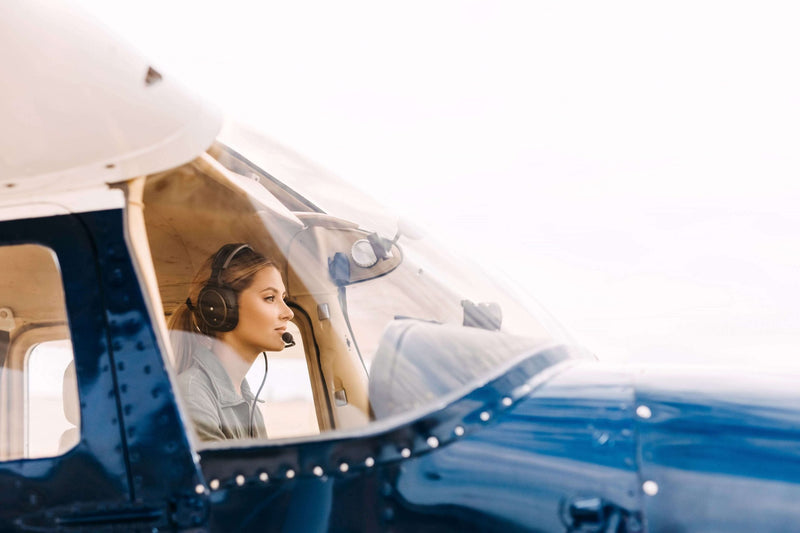
Very safety and detail oriented. Pre-flight briefing explained everything there was. To my knowledge, this flight school is exceptional in their ability.

The hardest part of the certificate is not the theory, it is landing well in wind, and the field nine miles from Chatsworth is a good place to learn it.
Everyone arrives thinking the written exam will be the obstacle. It is not. The obstacle is the last twenty feet before the wheels touch, repeated until your hands stop asking your brain for permission. That is why circuits dominate the early syllabus and why the airport you learn at matters. Van Nuys runs two parallel runways with a tower that keeps light aircraft moving, so a circuits lesson gives you landings rather than forty minutes of queueing behind somebody else's departure.
Chatsworth is well placed for that kind of repetitive, unglamorous practice, because the drive is nine miles of ordinary street and no freeway is required. Horse properties north of Devonshire, the manufacturing along Lassen and Plummer, the households strung up toward the sandstone: from any of them the airport is a fifteen to twenty minute trip. Short journeys are what let students fly twice a week, and flying twice a week is what separates a certificate finished in eight months from one abandoned in the second year.
The certificate itself is fixed by regulation. Forty flight hours minimum, ten of them solo, three cross-country flights, three hours at night, a written knowledge exam and a practical test with an FAA-designated examiner. Our standard program is $10,900, covering aircraft, instructor and ground school. Most working adults log sixty to seventy hours in practice. There is no version of this where the number is smaller for people who fly less often, and we would rather say that at the start.
Chatsworth people tend to want the license for something. This is the far corner of the county, where a weekend in Bishop or Mammoth costs most of a day each way on the 14 and the 395, and where Big Bear and the Kern Valley are similarly awkward by road. A private certificate turns those into ninety-minute flights over the top of the mountains you can already see from the end of your street. The utility is real, not a brochure line.

Courses & Pricing
Course prices are packages, not hourly rates - the aircraft, your instructor, ground school and simulator time are all in the figure. Van Nuys Airport, KVNY. Financing Available Through Stratus & In-House Plans.

Start Here
The First Hour At The Controls. Credited Toward Your Training If You Enroll Within 24 Hours Of Landing.
All Prices In USD. 7900 Balboa Blvd, Suite 108A, Van Nuys, CA 91406 · Open 9 AM–9 PM, Seven Days. Free In-Person Tour Of The School
Book It Or Gift It
Every discovery flight below can be booked for yourself in the next few minutes, or bought as a gift certificate that is emailed within minutes and never expires. Same flight, same price, either way.
 Most Given
 Two Seats
 The Nice One
 Twin Engine
One person, one instructor, and no audience. Hands on the controls from the left seat, briefed before you go and debriefed after you land.
Hands-On Stick TimePre-Flight BriefingLoggable Flight Time
Flight Length
$229Book It Or Gift It
Same Price Either Way
The same flight with a passenger in the back seat, briefed and on the intercom. Couples book it; so do parents who would rather watch than hear about it.
One Passenger SeatPiper Warrior Or ArcherHeadsets For Both
Flight Length
$299Book It Or Gift It
Same Price Either Way
The nicest airplane we put a first-time flyer in. Glass cockpit, air conditioning, leather seats, and a parachute built into the airframe rather than strapped to the person.
Turbocharged Cirrus SR22Air ConditioningWhole-Airframe Parachute
Flight Length
$499Book It Or Gift It
Same Price Either Way
Two engines, and the airplane instrument-rated pilots move into when they start thinking about a career. Flown from the left seat with a multi-engine instructor.
Piper Seminole TwinMulti-Engine DepartureCareer-Track Instructor
Flight Length
$499Book It Or Gift It
Same Price Either Way
Gift It issues a real gift certificate, emailed within minutes, which never expires and credits in full toward training. Flights are limited to 180 lb per person, 370 lb combined. Questions: (818) 290-8249, 9 AM–9 PM, seven days.
The quickest version uses the 118 for four junctions only. Join it at Topanga Canyon Boulevard or De Soto, run east past Reseda and Hayvenhurst, and come off at Balboa Boulevard. Turn south and stay on Balboa for about four miles, down past Devonshire, Nordhoff and Roscoe, until the airport boundary opens on your left. Number 7900 is on that side of the road, Suite 108A faces our own lot, and the whole trip is nine miles from most of Chatsworth.
If the 118 is misbehaving, Nordhoff Street does the same job entirely on the surface. East from Topanga Canyon Boulevard through Northridge, past the university campus, all the way across to Balboa, then south for about a mile and a half. Plummer Street works the same way a little to the north. Neither road is quick, exactly, but both are predictable, and predictability is what a training schedule actually needs. Fifteen to twenty minutes is the usual figure whichever line you choose.
Parking is free, in our own lot, right outside the door, with no gate, no ticket machine and nobody to pay. You can leave the car there all afternoon for a long block lesson without anyone minding. Several unrelated aviation businesses share the hangar complex, which is entirely normal at Van Nuys, so aim for Suite 108A rather than the street number on its own. On a first visit ring (818) 290-8249 from Balboa and somebody will come out and find you.

At a single-runway field a circuits lesson can turn into a queue with the engine running. Van Nuys separates light training traffic from the heavier arrivals, so you get the landings you paid for. Students routinely fly eight or ten circuits in a lesson here, which is the sort of repetition that turns a landing from an event into a habit.
The afternoon breeze through the Valley is reliable and it is rarely straight down the runway. That is a gift for a student: crosswind technique gets practiced in real conditions rather than described at a table. By the time you take the checkride you will have landed in conditions that make most first-time passengers grip the seat, without noticing.
Terrain flying is not a separate course out here. The Santa Susanas and the ridge toward Santa Clarita are minutes from the circuit, so you meet rising ground, density altitude in summer and the way air behaves near a ridge while you are still a student. That is genuinely useful for anyone who later flies north over the passes.
From this corner of the county the road trips are the long ones. Bishop, Mammoth, Kernville, Big Bear and the eastern Sierra all sit behind mountains and hours of highway. Once you are certificated the aircraft you trained in stays available to you, and the Cirrus SR22 Turbo is there when the trip is long enough to want the speed.
Landings get learned in the Cessna 162 Skycatcher, the Piper Warrior or the Diamond DA20, and your package lets you move between them without paying more. The Warrior is heavier on the controls, the DA20 lighter and quicker to respond, and flying both teaches you more about wind than either alone. All are simple, honest airplanes with modern radios and GPS. We keep several available so a maintenance inspection on one airframe never becomes a fortnight without a lesson for you.
The rest of the ramp is what comes later. A Piper Arrow II with retractable gear and a constant-speed propeller for the complex endorsement, a Cirrus SR22 Turbo with a glass panel and an airframe parachute, and a twin-engine Piper Seminole for the $5,100 multi-engine rating. Indoors, the Redbird MCX full-motion simulator is $189 for a sixty-minute session and takes the cost out of the repetitive work: engine failures, diversions and instrument approaches flown ten times in a single sitting until they are dull.

Four things that will orient you the moment you turn back toward home.
Large pale rectangles of arena sand, round pens and long barns spread across lots far bigger than anything south of the 118. From above they mark the boundary between suburb and the older, more rural Chatsworth.
The high ridge north of town with its cluster of antenna masts and the graded platforms of the old missile radar site near the summit. It is the tallest thing in view and useful as a fixed reference on every flight.
A wide sandy channel dropping out of the Simi Hills and running south-east into the Valley grid. Dry and pale for most of the year, it cuts a clean diagonal across an otherwise rectangular landscape.
A large block of lawns, playing fields and flat roofs sitting on its own in the middle of the housing along Nordhoff. It is the obvious halfway mark between the airport and Chatsworth.
Fifteen to twenty minutes for nine miles. The 118 east to the Balboa exit then four miles south is the quick way. Nordhoff or Plummer east to Balboa keeps you on the surface and takes about the same time. Nothing on this route is dependent on the 405, which is why lesson times from here hold up so well.
For nearly everyone, yes. Straight and level flight is learned in one lesson and stalls in two or three, but the flare and the touchdown take repetition and nothing substitutes for it. That is why the early syllabus is heavy on circuits. Once landings are consistent the rest of the certificate goes considerably faster than students expect.
Rarely, and when it is strong it is often the more useful lesson. Crosswind landings are a required skill and one you want practiced properly rather than described. Instructors call it on the day against your experience level. In genuinely unsuitable conditions we move the session to the Redbird simulator, $189 for sixty minutes, instead of losing it.
The standard program is $10,900, comprehensive is $15,900 and premium is $22,500. Each covers the aircraft, the instructor, ground school and simulator time, so you are buying a certificate rather than a running meter. A discovery flight comes off the package in full if you enroll within twenty-four hours, and financing is available through Stratus Financial or an in-house payment plan. Your medical, the written exam and the examiner's fee are separate and paid to those parties directly.
Yes. There is no minimum age for instruction, solo flight is legal at sixteen and the certificate can be held at seventeen. The teen package is $4,200. Starting in the ninth or tenth year at school leaves plenty of time, and the hours logged stay valid permanently even if there is a gap for university afterwards.
Two, if you can hold them. That is the pattern that finishes a certificate in six to nine months. One a week works but stretches the calendar past a year and adds hours, because each lesson starts with revision. Less than that and the total cost climbs steadily. Blocks can be booked weeks ahead to protect the slots.
Anywhere in the country in suitable weather. From here the natural runs are north and east: Santa Paula and Santa Barbara along the coast, Bakersfield over the ridge, Kernville, Big Bear, and the Owens Valley up toward Bishop and Mammoth. Those are ninety-minute flights against half-day drives, which is the whole argument for the certificate.
You park outside the door, meet an instructor, see the aircraft and the simulator and go through cost, scheduling and timelines with the numbers written down. It is free and nothing is decided on the spot. Call (818) 290-8249 to arrange it, any day of the week between nine in the morning and nine at night.
Come down Nordhoff one afternoon and watch a few circuits from the ramp before you decide anything. Call (818) 290-8249 for a free consultation, or book the $229 discovery flight and take the controls yourself.
The three private pilot packages, what each one includes, the financing options and a realistic timeline built around how often you can actually fly. Sent to you in one email. Nobody will pressure you.
Loved On Google
Every review below is real and shown verbatim, in the reviewer’s own words — written by the people who learned to fly here, not by us.
SAFETY FIRST
Very safety and detail oriented. Pre-flight briefing explained everything there was. To my knowledge, this flight school is exceptional in their ability.
 DISCOVERY FLIGHT
I recently had the chance to take my first-ever discovery flight, and it was nothing short of amazing! From the moment I stepped into the cockpit, the...
 SUNSET CIRRUS
It was a great flight! I did a sunset flight and Alex let us fly an awesome. Website was easy to book, and the plane itself was really fun to fly...
 FLYING LESSON
We had a great flying lesson with Ralph and came away with a much better understanding of both the aircraft and the principles of flight. Ralph is a...
 KIDS LUXURY FLIGHT
I got 2 luxury discovery flights for my kids. I wanted them to have the experience of flying. Our instructor Alex was amazing he made sure they feel...
 HONEYMOON SURPRISE
Last minute booking to surprise my wife on our honeymoon. She had no experience with flying and was scared of flying, but Alex was very easygoing and knew...
 FULL-MOTION SIM
Amazing flight school in van nuys airport. I have been a student here for the past few months and i could not be happier. I started doing a lot of...
 DISCOVERY FOR TWO
I booked a Discovery Flight for Two for my girlfriend's birthday and it was the perfect gift for her. She couldn't have been more excited to get to...
 SIMULATORS
Very professional and great airplanes. I love the flight simulators. The pricing is very fair compared to any other flight school
 TEEN FIRST LESSON
We gifted our teenage son his first flying lesson. He was so excited! Alex greeted us and gave a reassuring brief that made us all feel comfortable and at...
 FIRST-TIME FLYER
Flying is my husband's hobby and I was incredibly anxious and apprehensive about the discovery flight. However, I felt completely safe and at ease once we...
SAFETY FIRST
Very safety and detail oriented. Pre-flight briefing explained everything there was. To my knowledge, this flight school is exceptional in their ability.
DISCOVERY FLIGHT
I recently had the chance to take my first-ever discovery flight, and it was nothing short of amazing! From the moment I stepped into the cockpit, the...
SUNSET CIRRUS
It was a great flight! I did a sunset flight and Alex let us fly an awesome. Website was easy to book, and the plane itself was really fun to fly...
FLYING LESSON
We had a great flying lesson with Ralph and came away with a much better understanding of both the aircraft and the principles of flight. Ralph is a...
KIDS LUXURY FLIGHT
I got 2 luxury discovery flights for my kids. I wanted them to have the experience of flying. Our instructor Alex was amazing he made sure they feel...
HONEYMOON SURPRISE
Last minute booking to surprise my wife on our honeymoon. She had no experience with flying and was scared of flying, but Alex was very easygoing and knew...
FULL-MOTION SIM
Amazing flight school in van nuys airport. I have been a student here for the past few months and i could not be happier. I started doing a lot of...
DISCOVERY FOR TWO
I booked a Discovery Flight for Two for my girlfriend's birthday and it was the perfect gift for her. She couldn't have been more excited to get to...
SIMULATORS
Very professional and great airplanes. I love the flight simulators. The pricing is very fair compared to any other flight school
TEEN FIRST LESSON
We gifted our teenage son his first flying lesson. He was so excited! Alex greeted us and gave a reassuring brief that made us all feel comfortable and at...
FIRST-TIME FLYER
Flying is my husband's hobby and I was incredibly anxious and apprehensive about the discovery flight. However, I felt completely safe and at ease once we...
Reviews shown verbatim, exactly as each reviewer published them.
Aviation News
Notes from the flight line at Van Nuys — weather, regulation changes, checkride questions and the cost of training, written up as they come.
Open 7 days · 9:00 AM – 9:00 PM
Los Angeles Flight School