SAFETY FIRST
★★★★★
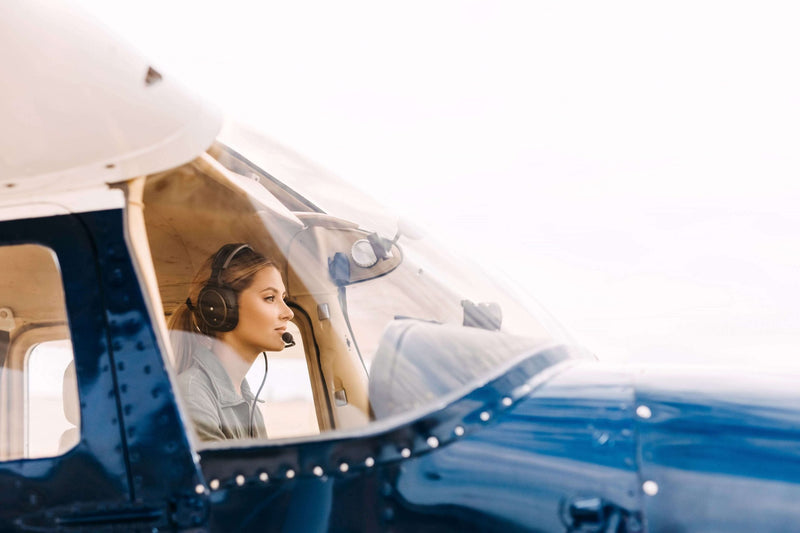
Very safety and detail oriented. Pre-flight briefing explained everything there was. To my knowledge, this flight school is exceptional in their ability.

Burbank spends its whole life listening to airplanes, and the certificate that lets you be the reason for the noise is nine miles west of Magnolia Park.
Most people in Burbank who ring us are not in the industry. They work at Providence Saint Joseph, or for the city itself, or at Burbank Water and Power, or they teach at Burroughs, or they run one of the shops along Magnolia. They have watched aircraft go over Magnolia Park and the Rancho since childhood without ever finding out what any of it involves. This page is about the certificate that turns that into a license, what it contains, and what it costs.
The FAA private pilot certificate is a legal document, not a course of lessons. It requires a minimum of forty flight hours, a written knowledge exam, three solo cross-country flights, night flying, a third-class medical and a practical test with an examiner who does not work for us. Our standard program is $10,900. Most working adults finish between sixty and seventy hours, and what decides which end of that range you land on is how many weeks you skip.
Burbank is nine miles from the training ramp at Van Nuys, all of it on flat Valley ground, and that distance does more work than any sales argument. Flight training rewards frequency the way language learning does. Two lessons a week and the aircraft begins to feel ordinary by month two. One lesson a fortnight and you spend half of each hour rebuilding what you had. A nine-mile drive is what makes twice a week survive a bad Tuesday.
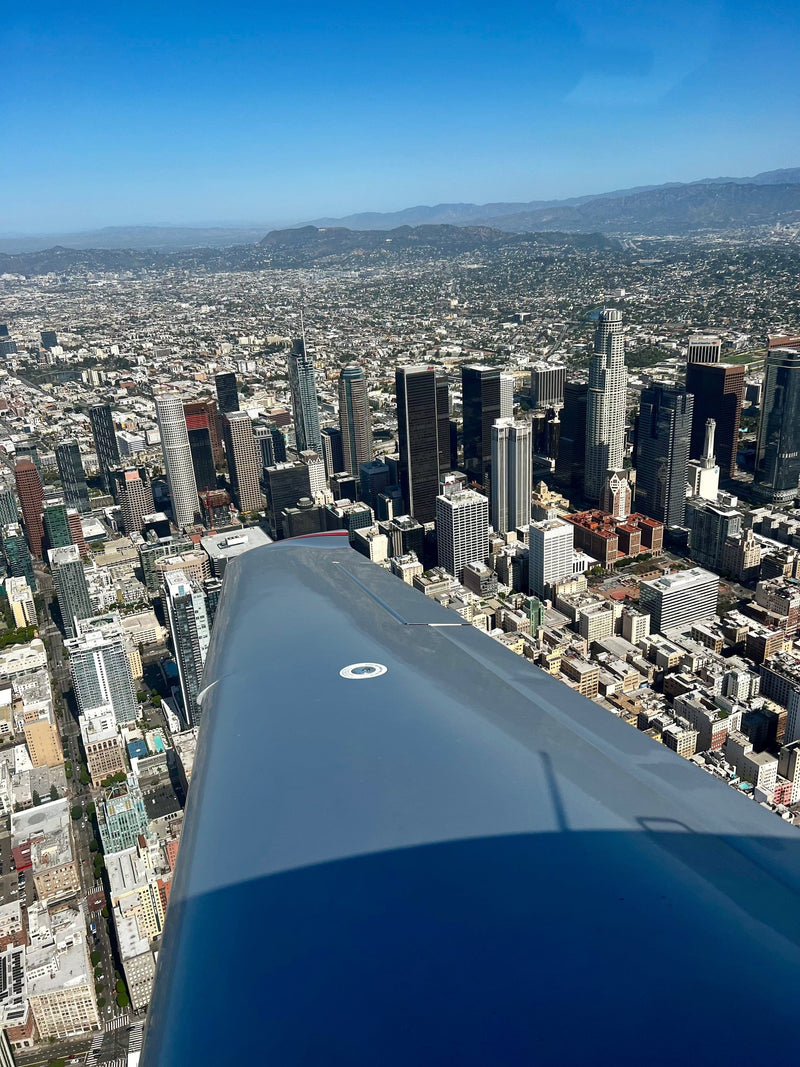
There is a second Burbank advantage that becomes obvious around your fourth lesson. You already know this ground from underneath, so the moment the Valley appears from 2,500 feet you are navigating rather than sightseeing. Students from here pick out the Verdugo ridge, the reservoir above Sun Valley and the bend of the river before an instructor has to point at anything. Familiar terrain is the cheapest teaching aid in aviation, and you happen to live in the middle of it.

Real prices, and every hour flown counts toward the rating above it.
The full FAA Private Pilot Certificate. Where most students start.
Learn MoreThe widest margin of hours for students who want no surprises.
Learn MoreThe rating that makes a license useful in Southern California weather.
Learn MoreYou fly the aircraft from the left seat with an instructor beside you. The time is loggable and counts toward a certificate.
The SR22 Turbo, glass cockpit. 90 min $699, 120 min $949.
Learn MoreFAA-approved full-motion MCX, on the field at Van Nuys.
Learn MoreThe freeway version is quick and dull, which is what you want. The 134 west out of Burbank, merge onto the 101 north of Universal City, and stay on it through Studio City and Sherman Oaks to the Balboa Boulevard exit in Encino. Turn north on Balboa and hold it for about three miles, across Ventura, Burbank Boulevard, Victory and Sherman Way. The airport fence appears on your right, and 7900 with Suite 108A sits on that side of the street.
Twenty to twenty-five minutes most of the day. The 101 through Sherman Oaks is the one stretch that misbehaves, generally westbound between four and seven, and when it does the surface streets running parallel are faster than they look. Burbank Boulevard and Victory both go west across the whole Valley and both cross Balboa, so a blocked freeway costs you five minutes rather than a lesson. Evening slots after seven are the easiest run of the day.
Our lot is free and it is our own, immediately outside the door, with no barrier, no ticket and no shuttle bus. If your idea of an airport is the terminal on Hollywood Way, this end takes some adjusting to: you park, you walk twenty yards, and your instructor is already at the aircraft. The complex houses a number of separate aviation businesses, so head for Suite 108A. On a first visit ring (818) 290-8249 from Balboa.

In July the ramp at Van Nuys can sit above a hundred degrees and the air thins enough that a light aircraft needs noticeably more runway. That is not a hazard, it is a lesson, and you will do the performance arithmetic properly because you have to. Summer lessons are best booked early or after six, when the air is dense and the ride is smooth.
Almost nobody fails the FAA knowledge test on ability. They fail it by leaving it until the aircraft training is finished and then never finding a fortnight to sit down. Ground school runs alongside your flying for exactly this reason. Get the written passed early and the last months become flying and nothing else, which is when progress accelerates.
You do not burn a lesson getting somewhere to train. Airborne off Van Nuys, the maneuvering areas north and west open up almost immediately, with the Sepulveda Basin below and the Santa Susana and Verdugo ranges giving you obvious references. Stalls, steep turns and ground reference work all happen within sight of roads you drive, which makes debriefs concrete.
Tuition covers aircraft, instructor and ground instruction. Your medical examination, the FAA written exam fee and the examiner's fee for the checkride are paid to those people directly, and a headset is yours to buy or borrow. We would rather you saw that list at a free consultation than discovered it in month five. Stratus Financial and in-house plans cover the rest.
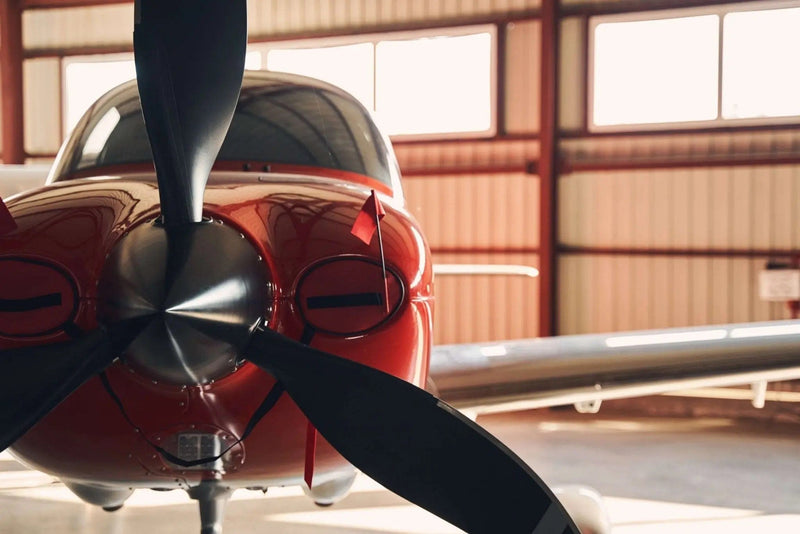
Training starts in the Cessna 162 Skycatcher, the Piper Warrior or the Diamond DA20, all included in the course price, and you can move between them at no penalty. They are simple airplanes on purpose. A trainer should let a student get something wrong at a safe height and put it right without the aircraft making a drama of it, and all three do that while carrying modern radios and GPS, so nothing you learn on the panel has to be unlearned later. Several of each are on the ramp, so one aircraft going in for inspection never costs you a fortnight.
After the certificate the ramp keeps going. The Piper Arrow II has retractable gear and a constant-speed propeller for a complex endorsement. The Cirrus SR22 Turbo is glass-panel with a parachute built into the airframe, and it will take four people to Monterey in comfort. The twin-engine Piper Seminole is used for the $5,100 multi-engine rating later on. Indoors, the Redbird MCX full-motion simulator is $189 for a sixty-minute session, and it is where engine failures and instrument approaches get repeated until they are boring.

Four features that tell you exactly where you are on the way back.
An actual private lake, dark green and roughly oval, hidden behind houses off Riverside Drive and invisible from any public road. From the air it is the clearest single mark on the eastern Valley floor.
A domed monument at Valhalla Memorial Park on Victory, where several early aviators are buried. You will see the pale dome and the cemetery lawns just short of the Burbank airport boundary.
Long green shelves cut into the north face of the Hollywood Hills above the river. They mark the Burbank city line better than any map and are visible from most of the way across the Valley.
The old locomotives sit in a fenced yard at the top corner of Griffith Park, with the zoo enclosures curling away to the south. Together they anchor the gap where the river turns north into Burbank.
Nine miles, twenty to twenty-five minutes for most of the day. The 134 west to the 101, off at Balboa Boulevard and three miles north. Burbank Boulevard and Victory run the same way on the surface if the freeway is stacked. Evenings after seven are the quickest run you will get.
Yes, and it is one of the real benefits of training here. We are based at Van Nuys Airport, and Hollywood Burbank sits five nautical miles east of us, so its airspace is part of your working environment from the early lessons. You learn to talk to controllers and accept a clearance while it is still routine, rather than meeting it years later on a nervous cross-country.
You can. It is a public airport, and a private certificate entitles you to use it subject to the tower's instructions and whatever fees the operator charges. Most local pilots do it once and then go back to Van Nuys Airport, where our aircraft live and where every lesson starts and ends. Arriving somewhere you have only ever left as a passenger is a strange, good feeling.
The standard program is $10,900 and covers aircraft, instructor time and ground school. Comprehensive is $15,900 and premium is $22,500, both with more hours built in. Your medical, the written exam fee and the examiner's fee are paid separately to those parties. Financing runs through Stratus Financial or our own payment plans.
Six to nine months at two lessons a week, which is the pattern most Burbank students settle into. Twelve to eighteen months at one lesson a week, and the total hours climb, so the slower route is also the dearer one. Nothing about the certificate expires while you are working on it, but the skills fade between long gaps.
Ideally during the middle of your flight training, not at the end. Ground school runs alongside the flying and prepares you for it. The test is multiple choice, taken at an approved center, and the result stays valid for two years. Passing it early takes real pressure off the final months.
Then we add them to your plan and quote the figure before you fly them, never after. The comprehensive package at $15,900 and the premium at $22,500 build the extra time in from the start, which is the cheaper answer if you already suspect you will need it. We say so plainly because it happens to some students and pretending otherwise helps nobody. Flying twice a week is the single best insurance against it.
Call (818) 290-8249 and book a free consultation or a discovery flight. Bring your diary, because scheduling is the real decision, and any questions about cost or medicals. Nothing else is required for a first lesson, and we are open every day from nine in the morning until nine at night.
Come west along the 134 one evening and look at a training aircraft properly instead of from underneath. Call (818) 290-8249 for a free consultation, or book the $229 discovery flight and fly it yourself.
The three private pilot packages, what each one includes, the financing options and a realistic timeline built around how often you can actually fly. Sent to you in one email. Nobody will pressure you.
Loved On Google
Every review below is real and shown verbatim, in the reviewer’s own words — written by the people who learned to fly here, not by us.
SAFETY FIRST
Very safety and detail oriented. Pre-flight briefing explained everything there was. To my knowledge, this flight school is exceptional in their ability.
 DISCOVERY FLIGHT
I recently had the chance to take my first-ever discovery flight, and it was nothing short of amazing! From the moment I stepped into the cockpit, the...
 SUNSET CIRRUS
It was a great flight! I did a sunset flight and Alex let us fly an awesome. Website was easy to book, and the plane itself was really fun to fly...
 FLYING LESSON
We had a great flying lesson with Ralph and came away with a much better understanding of both the aircraft and the principles of flight. Ralph is a...
 KIDS LUXURY FLIGHT
I got 2 luxury discovery flights for my kids. I wanted them to have the experience of flying. Our instructor Alex was amazing he made sure they feel...
 HONEYMOON SURPRISE
Last minute booking to surprise my wife on our honeymoon. She had no experience with flying and was scared of flying, but Alex was very easygoing and knew...
 FULL-MOTION SIM
Amazing flight school in van nuys airport. I have been a student here for the past few months and i could not be happier. I started doing a lot of...
 DISCOVERY FOR TWO
I booked a Discovery Flight for Two for my girlfriend's birthday and it was the perfect gift for her. She couldn't have been more excited to get to...
 SIMULATORS
Very professional and great airplanes. I love the flight simulators. The pricing is very fair compared to any other flight school
 TEEN FIRST LESSON
We gifted our teenage son his first flying lesson. He was so excited! Alex greeted us and gave a reassuring brief that made us all feel comfortable and at...
 FIRST-TIME FLYER
Flying is my husband's hobby and I was incredibly anxious and apprehensive about the discovery flight. However, I felt completely safe and at ease once we...
SAFETY FIRST
Very safety and detail oriented. Pre-flight briefing explained everything there was. To my knowledge, this flight school is exceptional in their ability.
DISCOVERY FLIGHT
I recently had the chance to take my first-ever discovery flight, and it was nothing short of amazing! From the moment I stepped into the cockpit, the...
SUNSET CIRRUS
It was a great flight! I did a sunset flight and Alex let us fly an awesome. Website was easy to book, and the plane itself was really fun to fly...
FLYING LESSON
We had a great flying lesson with Ralph and came away with a much better understanding of both the aircraft and the principles of flight. Ralph is a...
KIDS LUXURY FLIGHT
I got 2 luxury discovery flights for my kids. I wanted them to have the experience of flying. Our instructor Alex was amazing he made sure they feel...
HONEYMOON SURPRISE
Last minute booking to surprise my wife on our honeymoon. She had no experience with flying and was scared of flying, but Alex was very easygoing and knew...
FULL-MOTION SIM
Amazing flight school in van nuys airport. I have been a student here for the past few months and i could not be happier. I started doing a lot of...
DISCOVERY FOR TWO
I booked a Discovery Flight for Two for my girlfriend's birthday and it was the perfect gift for her. She couldn't have been more excited to get to...
SIMULATORS
Very professional and great airplanes. I love the flight simulators. The pricing is very fair compared to any other flight school
TEEN FIRST LESSON
We gifted our teenage son his first flying lesson. He was so excited! Alex greeted us and gave a reassuring brief that made us all feel comfortable and at...
FIRST-TIME FLYER
Flying is my husband's hobby and I was incredibly anxious and apprehensive about the discovery flight. However, I felt completely safe and at ease once we...
Reviews shown verbatim, exactly as each reviewer published them.
Aviation News
Notes from the flight line at Van Nuys — weather, regulation changes, checkride questions and the cost of training, written up as they come.
Open 7 days · 9:00 AM – 9:00 PM
Los Angeles Flight School