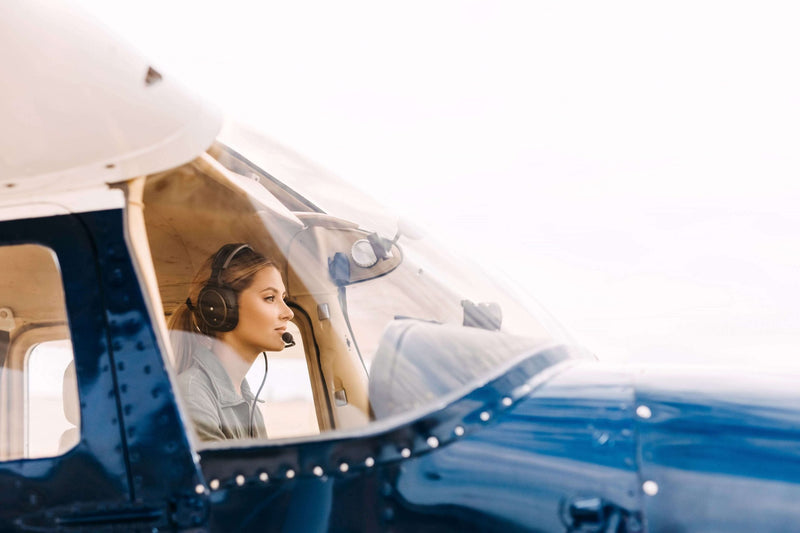
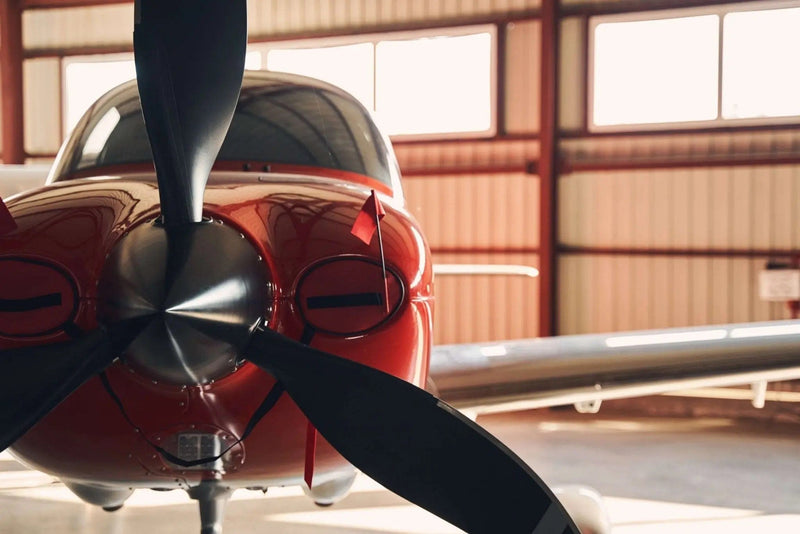
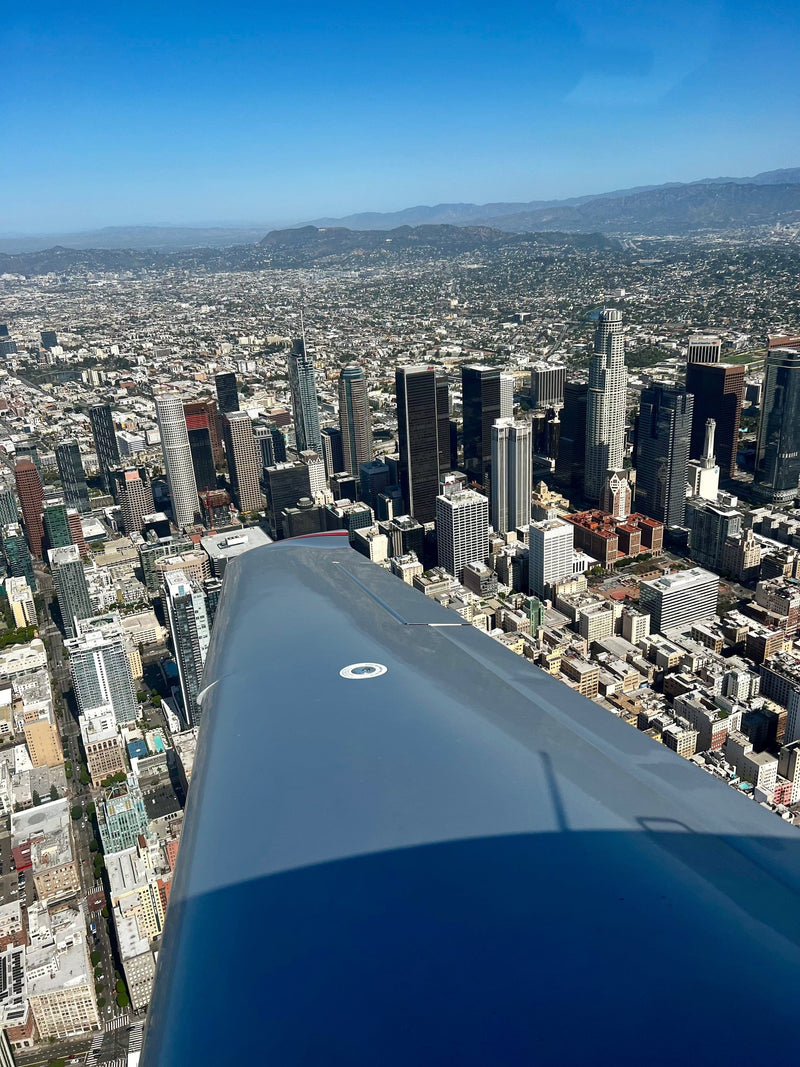
Topanga Flight School at Van Nuys Airport
Seven aircraft, a full-motion simulator and instructors with fifteen years or more, a canyon drive north of the ridge you already live on.
One road in, and then a third dimension
Everything about living in Topanga is organised around a single road. When it is open, the canyon is fifteen minutes from the beach and twenty from the Valley. When a slide closes it above Fernwood, or a red-flag day shuts the top, the same trip becomes ninety minutes around the long way. Residents here measure distance in conditions rather than miles, which is exactly the habit a pilot has to learn, and it makes canyon people unusually good students. To be clear about where we are: LA Flight School is at Van Nuys Airport, Suite 108A at 7900 Balboa Boulevard. Topanga is where our students drive from, not where the school sits.
An aircraft does not solve a road closure, but it changes the map permanently. With a certificate in your pocket, Santa Ynez is forty minutes for lunch among the vineyards, Catalina is a twenty-five-minute hop to a runway on a plateau, Santa Paula is a short trip to a field full of antique aeroplanes, and Big Bear is close enough for a winter afternoon. None of it involves a terminal, a queue or a booking made three weeks ahead. You show up, you preflight, you go.
The students who come to us from the canyon are a mixed group: builders and electricians who work across the county, remote software people, retired teachers, therapists, a fair number of musicians, and teenagers whose parents have finally accepted that this is not a passing enthusiasm. What they share is a practical streak. People who maintain their own water tanks and clear their own brush tend to like a syllabus that says exactly what is required, and they tend to ask sharp questions about maintenance.
Training here is not mysterious. Each lesson pairs a ground briefing with roughly sixty minutes in the air, working through a defined sequence: control, climbs and descents, stalls, ground reference, circuits, emergencies, navigation, night flying, then a checkride with an FAA examiner. Ground school covers the written exam. The Redbird MCX simulator fills in procedures that are wasteful to practise in an aeroplane. It is a course with a syllabus and an end point, not an open-ended arrangement with a meter.
What you can train for here
Every price below is for a complete programme, not an hourly rate.
Standard Private Pilot
The full FAA Private Pilot Certificate. Where most students start.
Learn morePremium Private Pilot
The widest margin of hours for students who want no surprises.
Learn moreInstrument Rating
The rating that makes a licence useful in Southern California weather.
Learn moreTry it first — a discovery flight from Van Nuys
You fly the aircraft from the left seat with an instructor beside you. The time is loggable and counts toward a certificate.
Luxury Cirrus For Two
The SR22 Turbo, glass cockpit. 90 min $549, 120 min $699.
Learn moreRedbird Simulator Session
FAA-approved full-motion MCX, on the field at Van Nuys.
Learn moreThree ways out of the canyon
From the middle and upper canyon the obvious route is north on Topanga Canyon Boulevard over the divide into Woodland Hills, then east across the Valley on any of the main boulevards to Balboa and north to the airport. Thirty-five to forty-five minutes on an ordinary day. It is the shortest option and the one nearly everyone uses, though the top of the grade slows on weekday mornings when the whole canyon is heading down to the 101 at once.
From the lower canyon and the beach end, the coast highway and Malibu Canyon Road can be quicker than climbing back up. Take Las Virgenes north over the pass, join the 101 eastbound at Calabasas, and stay on it to the Balboa exit. It is a longer distance but a faster road, and it entirely avoids the canyon's slow section. The third option, Old Topanga Canyon Road to Mulholland and down into Calabasas, is the one to know when the 27 is closed.
Whichever way you come, the destination is 7900 Balboa Boulevard, Suite 108A, in a shared hangar complex on the east side of the field. Parking is our own and free, with no barrier and no ticket, and you can leave the car there for a long session. Because the drive is the costly part of your day, many canyon students book a flight and a ground or simulator session back to back rather than making two trips.
Why canyon residents train at Van Nuys
Seven types on one ramp
Two-seat trainers, a four-seat Piper, a retractable Arrow, a turbocharged Cirrus with a glass cockpit, a twin-engine Seminole and a full-motion Redbird, all in the same place. You will never reach a rating that requires an aircraft living somewhere else, and you will never have to introduce yourself to a new school halfway through.
Instructors who have been here a while
Our FAA-certified instructors have fifteen years or more of experience, much of it in this airspace and this terrain. That matters when the lesson involves canyon wind, ridge turbulence or a hot afternoon over the hills, because the answers come from having flown it repeatedly rather than from a textbook chapter about it.
A tower and a real traffic mix
Parallel runways, controllers working all day and everything from trainers to intercontinental business jets sharing the pattern. You learn clearances, sequencing and readbacks as ordinary parts of flying. Pilots who trained somewhere quiet often spend years steering around busy airports, which quietly shrinks what their certificate is good for.
Hours that suit an unusual week
Nine in the morning to nine at night, seven days, with lessons booked individually rather than as a standing weekly slot. Tradespeople, remote workers and people with irregular schedules all fit into that better than into a fixed timetable. The consultation beforehand is free, in person, and involves no flying at all.
The aeroplanes, and what each is for
The Piper Warrior, the Cessna 162 Skycatcher and the Diamond DA20 do most of the early work. Your package covers the aircraft and the instructor together, so moving between those three types costs you nothing. The Warrior is the stable four-seat tourer that most people end up renting afterwards; the Skycatcher is lighter and quicker on the controls; the DA20's canopy gives a view of the ground that makes turns around a point far easier to fly well over uneven terrain. Every one of them has current radios and GPS, so the habits you build are the ones you keep.
Then there is the equipment for later. The Piper Arrow II introduces retractable gear and a constant-speed propeller, which is the complex time a commercial certificate wants. The Cirrus SR22 Turbo is turbocharged, air conditioned, glass-panelled and carries a parachute for the entire aircraft. The Piper Seminole carries every multi-engine student we teach, and that rating is a $5,100 package. And the Redbird MCX, $189 for a sixty-minute session, runs approaches, failures and unusual attitudes on the ground, which is where those things belong.
The Santa Monica Mountains from above
Four features of your own ridge that look completely different from the air.
The antennas on Saddle Peak
A cluster of masts and small buildings on the highest point of the ridge east of the canyon, visible from most of the Valley on a clear day. From the air it is the single most reliable marker in these mountains.
Tuna Canyon's switchbacks
A narrow road folding back on itself again and again as it drops from the ridge toward the coast highway. It looks improbable from a thousand feet, and it is the clearest sign you have reached the seaward side.
The burn mosaic on the slopes
Patches of different-aged chaparral across the hillsides, each one the outline of an old fire. The pattern is invisible from the road and obvious from above, and it is a quiet history of the last fifty years here.
The oaks along Old Topanga
A separate green valley running north-west from the main canyon, darker and denser than the chaparral around it. From the air it is plainly a different landscape rather than just a different road.
Common questions
Two alternatives. From the lower canyon, take the coast highway to Malibu Canyon and Las Virgenes north over the pass to the 101, then east to Balboa. From the upper canyon, Old Topanga Canyon Road connects to Mulholland and drops into Calabasas. Both are longer in miles and usually fine in time. We will always move a lesson rather than have you drive a closed road.
Thirty-five to forty-five minutes from the middle of the canyon on the 27 and across the Valley, and closer to fifty from the beach end. Weekday mornings are the slow period at the top of the grade. Most canyon students book mid-morning or evening, which is also when the air is calmest and the schedule least crowded.
It is nearer the coast end of the canyon, but it sits in the marine layer belt where late spring and early summer mornings are routinely lost. Our own field, Van Nuys, is inland, has two parallel runways, seven aircraft types and a full-motion simulator, and it clears far earlier. Across a whole certificate the reliability is generally worth more than the distance.
Not with students in strong offshore wind, no. Those days move, and they often become simulator sessions in the Redbird MCX at $189 for sixty minutes, which is where emergency procedures and instrument approaches are best practised anyway. We will call you before you leave the canyon rather than let you make the drive for nothing.
The standard private pilot programme is $10,900, comprehensive is $15,900 and premium accelerated is $22,500. A sport licence is $8,400, a solo certificate is $5,500 and the teen package is $4,200. Adding an instrument rating later is $11,700 and multi-engine is $5,100. Financing is available through Stratus Financial or in-house payment plans.
Yes, that is rather the point. What we sell are packages rather than blocks of flying time, so you will not find a rate card on this page. Ring (818) 290-8249 and the desk at Suite 108A will tell you what is free and when. Checkouts are done here with the instructors who trained you, so the move to renting is a real process rather than a paperwork exercise.
Bring the logbook to a free consultation. Depending on how long it has been, you may need a flight review, some refresher dual and a current medical rather than anything like starting again. Plenty of people come back after a decade away and are flying safely inside a handful of lessons.
Call (818) 290-8249. We are at 7900 Balboa Boulevard, Suite 108A, open nine in the morning to nine at night, every day of the week. You can book a discovery flight, a sixty-minute simulator session, or just the free in-person consultation with no aircraft involved and no obligation attached.
Come up out of the canyon and fly
Pick a clear morning, drive over the top, and look down on your own ridge from an aircraft you are flying yourself. Call (818) 290-8249 and we will sort out the details.